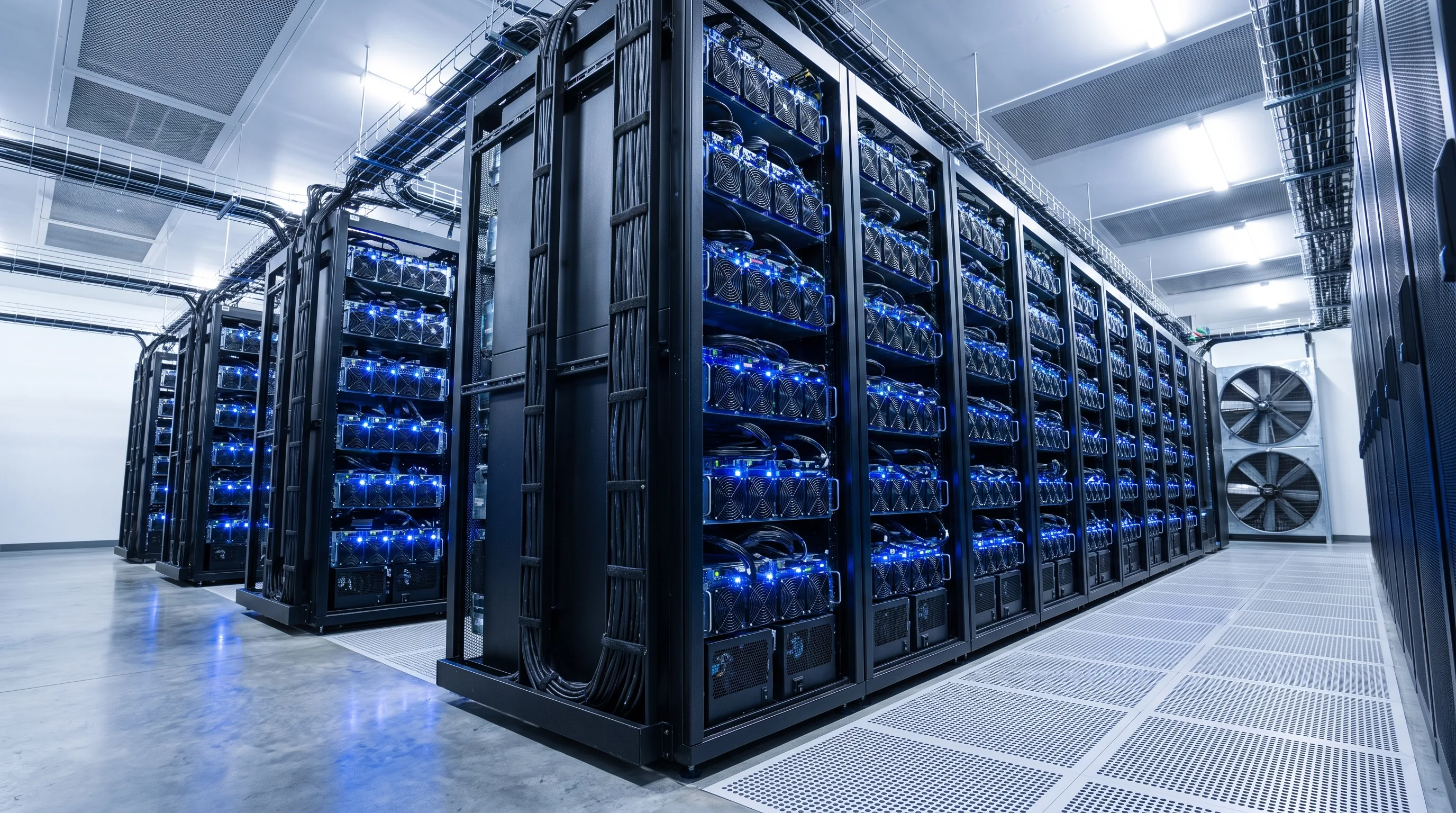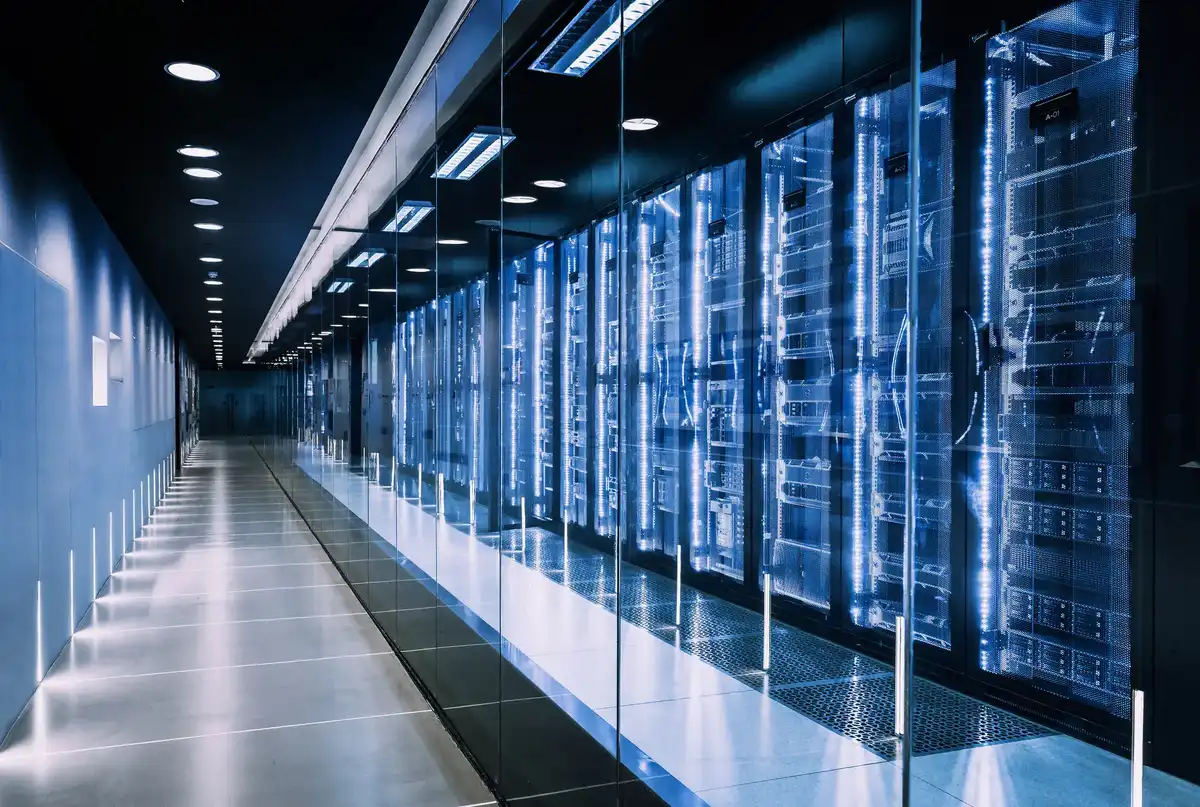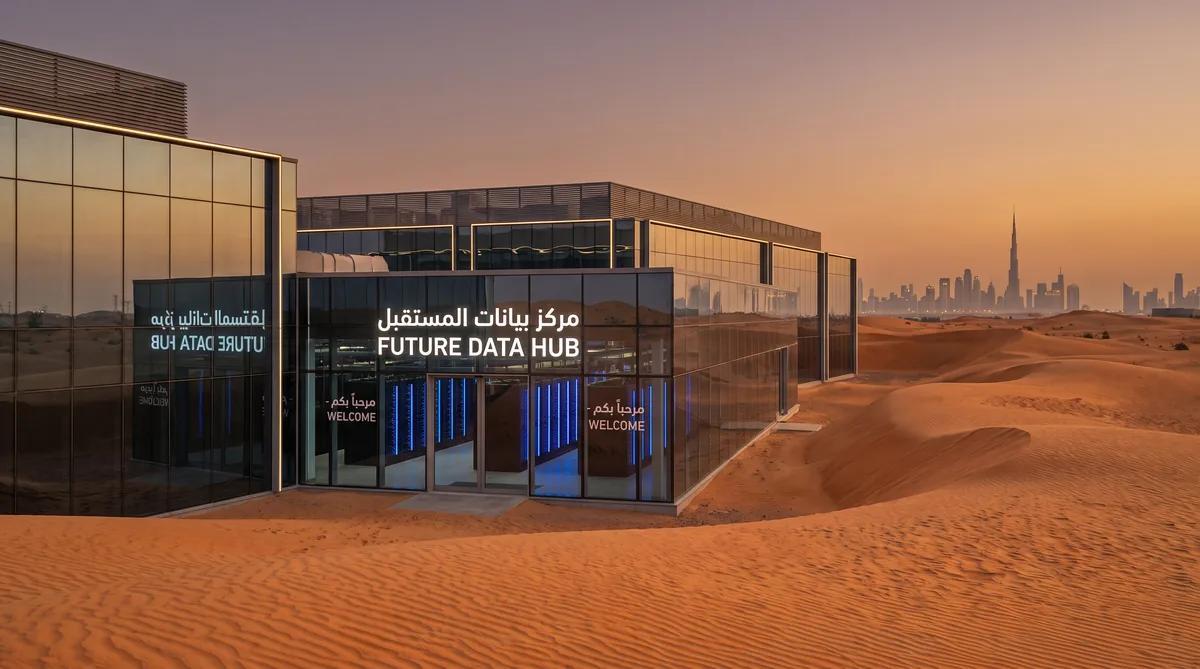
Bitcoin hosting -- also known as ASIC colocation or mining hosting -- is the practice of placing your mining hardware in a professionally managed data center facility. For a detailed breakdown, see our complete bitcoin colocation guide. The hosting provider supplies the power, cooling, physical space, and network connectivity. You retain ownership of the mining equipment and the Bitcoin it produces.
For most miners operating beyond a handful of machines, hosting is the practical path to profitable mining. Running ASICs at home or in a self-managed facility introduces challenges around noise (80+ dB per unit), heat dissipation, electrical capacity, and power costs that specialized hosting facilities are built to solve.
What Is Bitcoin Hosting?
At its core, bitcoin hosting is a real estate and energy service for mining hardware. A hosting provider operates a facility purpose-built or retrofitted for high-density compute equipment, offering:
- Electrical infrastructure: Utility-grade power distribution with transformers, switchgear, and PDUs rated for continuous high-draw loads
- Cooling systems: Air, evaporative, or immersion cooling designed to handle the thermal output of hundreds or thousands of ASICs
- Network connectivity: Low-latency internet connections optimized for mining pool communication
- Physical security: Access controls, surveillance, and environmental monitoring
- Operational support: Hardware deployment, monitoring, firmware updates, and troubleshooting
The miner ships their ASICs to the facility, the hosting provider racks and connects them, and the machines begin hashing. Revenue flows to the miner's wallet. The hosting provider charges a rate -- typically per kilowatt-hour consumed -- that covers power, cooling overhead, and facility operations.
This model differs from managed mining (where the provider also owns the hardware) and cloud mining (where you buy hash power without owning any equipment). For a detailed comparison, see our ASIC hosting vs managed mining guide.
How ASIC Colocation Works
The Deployment Process
- Contract and power reservation: You sign a hosting agreement specifying power allocation (in kW or MW), rate per kWh, contract duration, and SLA terms. Review our contract terms guide for key clauses to negotiate.
- Hardware shipping: ASICs are shipped directly to the hosting facility. Most providers handle receiving, inspection, and inventory logging.
- Racking and configuration: The provider installs your miners in racks or immersion tanks, connects power and networking, and configures pool settings per your instructions.
- Monitoring and operation: Once online, the provider monitors hashrate, temperature, and power draw. You typically receive a dashboard with real-time metrics.
- Maintenance: The facility handles routine tasks -- replacing fans, cleaning dust filters, rebooting unresponsive units. Some providers include this in the hosting rate; others charge per-incident fees.
What You Are Responsible For
- Purchasing and shipping your ASIC hardware
- Selecting and configuring your mining pool
- Managing your Bitcoin wallet and revenue
- Deciding when to upgrade or retire hardware
- Paying the monthly hosting invoice
Power Economics: The Single Biggest Cost
Electricity is the dominant operating expense in bitcoin mining, typically representing 70-85% of total hosting costs. The difference between a $0.04/kWh facility and a $0.07/kWh facility compounds dramatically at scale.
Typical Hosting Power Rates by Region (2026)
| Region | Rate Range ($/kWh) | Common Power Source | Notes |
|---|---|---|---|
| US (Texas) | $0.035-0.055 | Wind, natural gas, grid | Demand-response programs can offset costs |
| US (Pacific NW) | $0.030-0.050 | Hydroelectric | Limited capacity, long waitlists |
| UAE (Free Zones) | $0.050-0.075 | Natural gas, solar hybrid | No income tax on mining revenue |
| Paraguay | $0.030-0.045 | Hydroelectric (Itaipu) | Regulatory uncertainty |
| Kazakhstan | $0.035-0.050 | Coal, natural gas | Regulatory changes in recent years |
| Nordic (Sweden, Norway) | $0.040-0.060 | Hydro, wind | Cool climate reduces cooling costs |
Rates are indicative ranges for hosted mining contracts and vary by provider, commitment length, and scale. Verify current rates before signing agreements.
When evaluating power costs, look beyond the headline rate. Ask whether the quoted rate includes cooling overhead (PUE adjustment), transformer losses, and any demand or capacity charges. A facility quoting $0.04/kWh with a PUE of 1.3 delivers an effective rate of $0.052/kWh at the miner. For a deeper analysis, see our guide on bitcoin mining electricity costs and ROI.
Cooling Systems for Mining Infrastructure
ASICs generate substantial heat. A single Antminer S21 draws approximately 3,500 watts and converts nearly all of it to thermal energy. At scale, a 1 MW mining operation produces enough heat to warm a small building. The cooling system's effectiveness directly impacts uptime, hardware lifespan, and ultimately, operating costs.
Air Cooling
The most common approach for ASIC hosting. Large fans push ambient air across the miners, and exhaust fans expel the heated air. In hot climates, evaporative cooling or refrigeration supplements the airflow.
- Advantages: Low capital cost, simple maintenance, well-understood technology
- Limitations: Less effective above 35 degrees C ambient; higher PUE (typically 1.2-1.4); noise levels require industrial zoning
- Best for: Standard-density deployments in temperate or cool climates
Immersion Cooling
Miners are submerged in a dielectric fluid that absorbs heat directly from the components. A heat exchanger removes the thermal energy from the fluid.
- Advantages: PUE as low as 1.02-1.05; extends hardware lifespan by eliminating dust and vibration; enables overclocking; works well in hot climates
- Limitations: Higher upfront facility cost; requires specialized maintenance; fluid replacement adds operating expense
- Best for: Hot-climate deployments, high-density configurations, operators seeking maximum efficiency
Hydro Cooling
Purpose-built miners like the Antminer S21 Hydro use internal liquid cooling loops that connect to an external coolant distribution system. This approach is a middle ground between air and full immersion.
- Advantages: Higher hash rates than air-cooled equivalents; quieter operation; good heat density management
- Limitations: Requires compatible hardware; more complex plumbing infrastructure; leak risk
- Best for: New deployments with hydro-capable ASICs where noise reduction or heat reuse is valued
Uptime, SLAs, and What They Actually Mean
Uptime is the percentage of time your miners are online and hashing. Every hour of downtime is lost revenue. A 99.5% uptime SLA allows approximately 44 hours of downtime per year. A 99.9% SLA allows roughly 8.7 hours.
What Causes Downtime
- Power outages: Utility failures, transformer maintenance, or grid instability. Quality facilities use UPS systems and backup generators to minimize impact.
- Cooling failures: If cooling systems fail, miners must be shut down to prevent thermal damage. Redundant cooling (N+1 or 2N) is critical.
- Network issues: Internet connectivity problems prevent miners from submitting shares to pools. Multiple ISP connections provide redundancy.
- Scheduled maintenance: Electrical switchgear testing, cooling system servicing, and facility upgrades. Professional hosting providers schedule these during low-difficulty periods when possible.
- Hardware failures: Individual miner failures do not affect facility uptime, but if your hosting contract includes hardware management, the provider's response time matters.
SLA Red Flags
- SLAs that exclude "scheduled maintenance" from uptime calculations (some providers schedule 4+ hours monthly)
- Financial remedies capped at a small percentage of monthly fees (if the penalty for downtime is trivial, the SLA is decorative)
- No distinction between partial and total outages (losing 10% of power is different from a full facility shutdown)
For a complete framework on evaluating SLAs, see our colocation SLA guide.
Bitcoin Hosting: UAE vs United States
The UAE and the United States represent two of the most significant bitcoin hosting markets, each with distinct advantages. Understanding the tradeoffs helps miners choose the right jurisdiction for their operation.
UAE Advantages
- Regulatory clarity: The UAE has established clear regulatory frameworks for crypto mining operations, particularly within designated free zones
- Tax treatment: No personal or corporate income tax on mining revenue in most free zones
- Strategic location: Proximity to Asian ASIC manufacturers reduces shipping time and cost
- Growing infrastructure: Significant investment in data center and energy infrastructure creating new hosting capacity
- Stable grid: DEWA and EWEC power grids provide reliable electricity with minimal outage history
United States Advantages
- Low-cost power: Texas, Wyoming, and the Pacific Northwest offer some of the lowest hosting rates globally
- Mature market: Hundreds of hosting providers with established track records and verifiable uptime data
- Legal protections: Strong property rights and contract enforcement for equipment ownership
- Grid flexibility: Demand-response programs in Texas (ERCOT) allow miners to earn revenue by curtailing during peak grid demand
- Stranded energy: Flare gas and stranded energy projects offer deeply discounted power in exchange for remote deployment
Both regions can be profitable. The choice often comes down to tax optimization, existing business relationships, and the specific power rate available. Explore our facility locations to compare available hosting sites.
Security and Equipment Protection
Your ASIC miners represent a significant capital investment. A single latest-generation miner can cost $5,000-15,000, and a 1 MW deployment may contain equipment worth $1-3 million. Physical security is not optional.
Minimum Security Standards
- Perimeter security: Fencing, controlled entry points, and 24/7 CCTV with recording retention (30+ days minimum)
- Access control: Biometric or key-card access with visitor logging. Your equipment should not be accessible to other customers or unauthorized staff.
- Environmental monitoring: Smoke detection, water leak sensors, and temperature alerts with automated notification systems
- Fire suppression: Appropriate fire suppression systems that protect equipment (clean-agent systems preferred over water-based sprinklers)
- Insurance: The facility should carry liability insurance, and you should consider separate equipment insurance for your miners
How to Choose a Bitcoin Hosting Provider
With hundreds of hosting providers operating globally, selecting the right one requires structured evaluation. Use this framework to compare providers systematically.
Evaluation Checklist
| Category | What to Evaluate | Red Flags |
|---|---|---|
| Power rate | All-in $/kWh including cooling overhead and fees | Rates that seem too low to be sustainable; hidden surcharges |
| Uptime track record | Historical uptime data, ideally verified by third party | No data available; claims of 100% uptime (unrealistic) |
| Contract terms | Duration, termination clauses, price escalation, force majeure | Auto-renewal traps; no equipment return clause |
| Cooling capacity | System type, redundancy level, ambient temp handling | No cooling redundancy; throttling during summer months |
| References | Verifiable current customers willing to share experience | Unable to provide any references |
| Financial stability | How long in operation; capitalization | Less than 1 year operating history; undisclosed ownership |
| Scalability | Available capacity for growth; expansion timeline | Operating at 95%+ capacity with no expansion plan |
For a detailed comparison methodology, see our 2026 ASIC hosting provider comparison and our hosting cost breakdown.
Questions to Ask Before Signing
- What is the all-in power rate, and does it include PUE overhead?
- What is your historical uptime over the past 12 months, and can you provide documentation?
- How is my equipment physically separated from other customers' hardware?
- What happens if I need to remove my equipment before the contract ends?
- Do you carry insurance, and what does it cover?
- How quickly do you deploy newly shipped miners?
- What monitoring dashboard and alerts will I have access to?
- How are firmware updates handled -- do you require approval before applying changes?
Ready to explore bitcoin hosting options? Contact Rax to discuss your ASIC colocation requirements, power rates, and available capacity at our data center facilities.
Frequently Asked Questions
What is bitcoin hosting?
Bitcoin hosting (also called ASIC hosting or mining colocation) is a service where a data center facility houses, powers, cools, and monitors your Bitcoin mining hardware (ASIC miners) on your behalf. You own the mining equipment and earn the Bitcoin, while the hosting provider manages the physical infrastructure including electricity, cooling, network connectivity, and facility security.
How much does bitcoin hosting cost per kWh?
Bitcoin hosting costs typically range from $0.04 to $0.08 per kWh depending on location, contract length, and scale. Some regions with abundant hydroelectric or stranded energy offer rates below $0.04/kWh, while premium facilities in regulated markets may charge $0.06-0.09/kWh with higher uptime guarantees and better infrastructure. The all-in hosting rate usually includes power, cooling, rack space, and basic monitoring.
What should I look for in a bitcoin hosting provider?
Key evaluation criteria include: power cost per kWh (the largest ongoing expense), uptime guarantee (99.5%+ minimum), cooling system type (air, immersion, or hydro), physical security (24/7 surveillance, access controls), contract transparency (no hidden fees for deployment or maintenance), network connectivity (low-latency pool access), insurance options for equipment, and the provider's track record with verifiable references.
Is it better to host ASICs in the UAE or the US?
Both regions have advantages. The UAE offers regulatory clarity for crypto operations, competitive power rates in certain free zones, proximity to Asian ASIC manufacturers (faster shipping), and no income tax on mining revenue. The US offers abundant low-cost power options (especially in Texas, Wyoming, and the Pacific Northwest), a mature hosting market with many provider choices, and stronger legal protections for equipment. The best choice depends on your priorities around tax treatment, power costs, and regulatory environment.