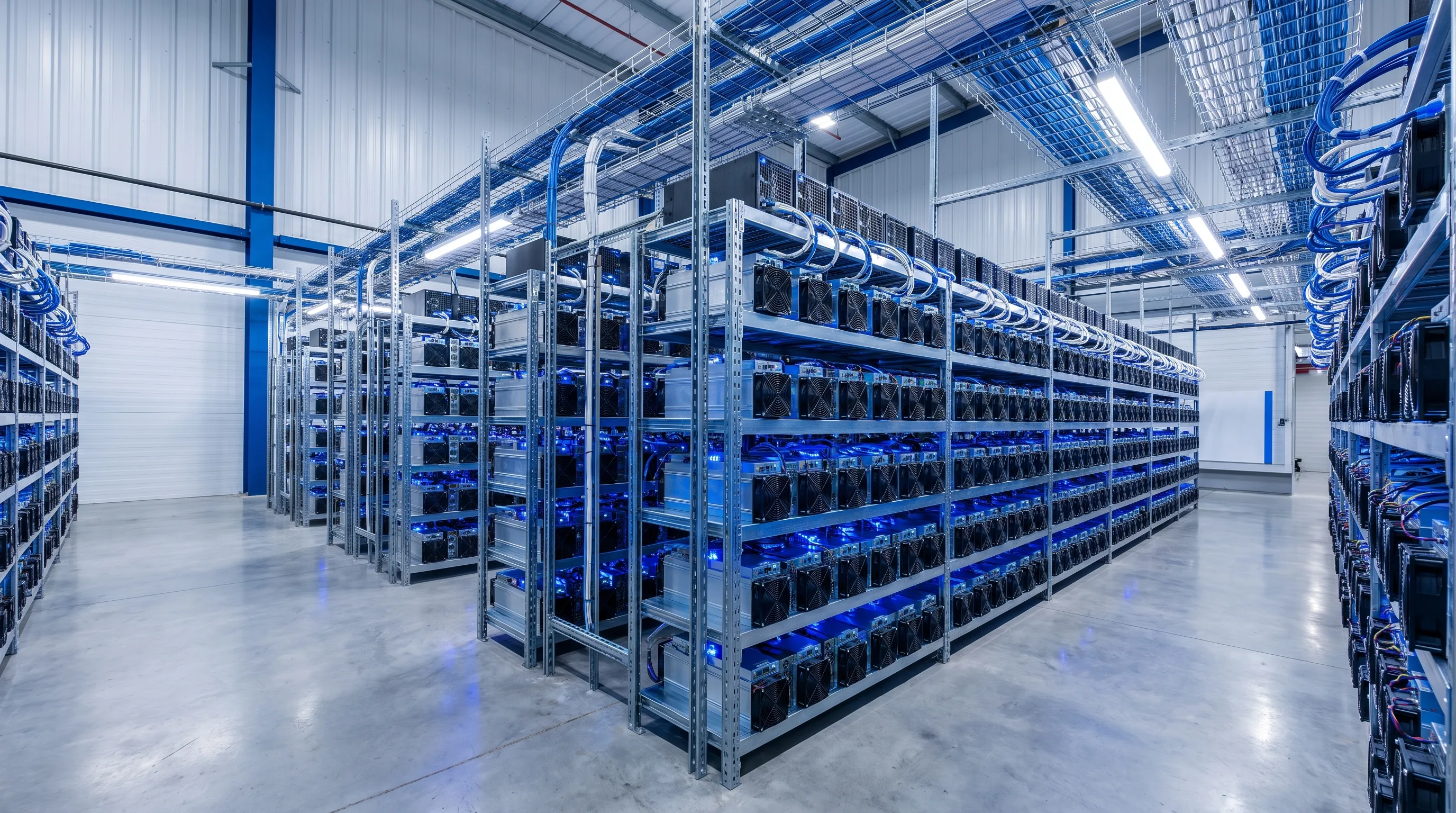
A fleet of 100 Antminer S21 XP miners represents roughly $400,000 in hardware value sitting in a facility you do not own or operate. Fire, flood, theft, power surges, or even a faulty sprinkler system can destroy that investment overnight. Yet a majority of hosted mining operators carry no insurance on their equipment, relying solely on their hosting provider's contract for protection.
This is a mistake. Your hosting provider's insurance almost certainly does not cover your equipment. This guide explains how mining equipment insurance works, what it costs, what it covers, and how to structure a policy that protects your operation.
Why Your Host's Insurance Does Not Cover Your Miners
Colocation and hosting providers carry their own commercial general liability (CGL) and property insurance policies. These policies cover the facility structure, electrical infrastructure, cooling systems, and the provider's own equipment. Customer-owned hardware, including your ASIC miners, is explicitly excluded from the provider's property coverage in virtually all cases.
Most hosting agreements include a clause stating that the customer is responsible for insuring their own equipment. Some contracts go further, including a waiver of subrogation that prevents your insurer from recovering losses from the hosting provider even if their negligence caused the damage.
Critical action: Review the insurance, liability, and indemnification clauses in your hosting agreement before purchasing equipment insurance. Your policy needs to account for any liability limitations or waivers in the hosting contract.
Types of Coverage for Mining Equipment
Inland Marine / Electronic Equipment Insurance
The primary coverage type for ASIC miners in hosted environments is inland marine insurance, sometimes called electronic equipment insurance or electronic data processing (EDP) coverage. This policy type is designed for valuable movable property located at premises you do not own, which is exactly the situation for hosted mining equipment.
Inland marine policies cover your specific, scheduled equipment at the facility address listed in the policy. You provide a detailed equipment schedule listing each miner by model, serial number, and agreed value. The policy covers physical loss or damage from covered perils.
Business Interruption Insurance
Property damage to your miners is only part of the financial impact. If a facility fire destroys your equipment, you lose mining revenue during the weeks or months it takes to source replacement hardware, ship it, and rack it at a new or repaired facility. Business interruption insurance compensates you for this lost revenue.
For mining operations, business interruption coverage typically pays based on your historical mining revenue minus operating costs (primarily electricity and hosting fees) during the restoration period. The restoration period begins when the covered event occurs and ends when you could reasonably resume mining operations.
Transit Insurance
ASIC miners are most vulnerable during shipping. Equipment valued at thousands of dollars per unit travels in freight containers and is handled by multiple carriers. Transit insurance covers damage or loss during transportation to and from your hosting facility. Most inland marine policies include transit coverage as a standard endorsement, but verify the per-shipment limit and whether it covers international shipping if you source hardware from overseas.
Coverage and Exclusions
| Typically Covered | Typically Excluded |
|---|---|
| Fire, lightning, explosion | Normal wear and gradual deterioration |
| Windstorm, hail, smoke | Mechanical or electrical breakdown (unless endorsed) |
| Water damage (burst pipes, sprinklers) | Software errors, firmware bugs |
| Theft, vandalism | Government seizure or confiscation |
| Power surge | War, terrorism (unless endorsed) |
| Accidental physical damage | Cryptocurrency value fluctuations |
| Transit damage | Mining revenue loss (unless BI endorsed) |
| Collapse of building structure | Obsolescence or technology risk |
Flood and Earthquake
Flood and earthquake damage are almost always excluded from standard inland marine policies and require separate endorsements at additional cost. If your hosting facility is in a flood zone or seismically active area, these endorsements are essential. Your hosting provider's site selection criteria and disaster recovery planning should inform whether you need these coverages.
Equipment Breakdown
Standard property policies cover damage from external causes (fire, water, theft) but not internal equipment failure. Equipment breakdown coverage (also called boiler and machinery) covers sudden mechanical or electrical failure, including power supply failures, capacitor blowouts, and controller board malfunctions. For ASIC miners that operate continuously under heavy thermal and electrical stress, this coverage can be valuable but comes with important limitations: it typically excludes gradual degradation of hash board performance and does not cover failures caused by improper cooling or operating outside manufacturer specifications.
Valuation Methods
How your miners are valued determines your payout after a covered loss. ASIC hardware depreciates rapidly as newer, more efficient models are released, making the choice of valuation method critically important.
| Valuation Method | How It Works | Best For |
|---|---|---|
| Replacement Cost | Pays the cost of purchasing equivalent new hardware at time of loss | Operators planning to replace equipment after a loss |
| Actual Cash Value (ACV) | Replacement cost minus depreciation based on age and condition | Budget-conscious operators with older equipment |
| Agreed Value | Fixed payout amount agreed when policy is written, updated periodically | Most mining operations (certainty and simplicity) |
For most mining operations, agreed value policies updated quarterly provide the best balance of certainty and cost. ASIC hardware can depreciate 40 to 60 percent within 18 months of release, so an actual cash value policy on a year-old fleet would pay significantly less than replacement cost. Conversely, replacement cost policies have higher premiums because the insurer's exposure does not decrease as hardware ages.
What Insurance Costs
Insurance premiums for ASIC mining equipment typically range from 1.5 to 4 percent of the total insured value per year. The exact rate depends on several factors:
- Facility quality -- Tier III or higher certified facilities with comprehensive fire suppression, 2N power redundancy, and 24/7 security qualify for lower rates.
- Location -- Facilities in flood zones, wildfire-prone areas, or regions with high theft rates attract higher premiums.
- Deductible -- Higher deductibles reduce premiums. A $25,000 deductible versus a $5,000 deductible can reduce annual premiums by 20 to 30 percent.
- Fleet size -- Larger insured values receive volume discounts. A $2 million fleet typically gets a lower per-unit rate than a $200,000 fleet.
- Claims history -- Prior claims increase premiums. A clean claims history for three or more years qualifies for preferred rates.
| Fleet Size | Estimated Value | Annual Premium Range | Monthly Cost |
|---|---|---|---|
| 25 units (S21 XP) | $100,000 | $1,500 - $4,000 | $125 - $333 |
| 100 units (S21 XP) | $400,000 | $6,000 - $12,000 | $500 - $1,000 |
| 500 units (mixed fleet) | $1,500,000 | $18,000 - $45,000 | $1,500 - $3,750 |
| 1,000+ units (large operation) | $3,000,000+ | $36,000 - $75,000+ | $3,000 - $6,250+ |
Risk Mitigation to Lower Premiums
Beyond choosing the right facility, operational practices reduce both your premium and your actual risk exposure:
- Comprehensive documentation -- Maintain serial numbers, purchase receipts, photos, and hash rate records for every unit. This accelerates claims processing and prevents disputes about equipment value.
- Rack-level monitoring -- Implement temperature, humidity, and power monitoring at the rack level. Early detection of anomalies prevents damage and demonstrates proactive risk management to insurers.
- Preventive maintenance -- Regular firmware updates and cleaning schedules extend equipment life and reduce breakdown claims.
- Staged deployments -- Avoid concentrating your entire fleet at a single facility. Distributing across two or more locations limits maximum loss exposure from any single event.
- Electrical protection -- Ensure your hosting provider uses industrial-grade surge protection and UPS systems. Document the power redundancy architecture in your insurance application.
The Claims Process
When a covered event damages or destroys your mining equipment:
- Immediate notification -- Contact your insurance carrier within 24 to 48 hours of discovering the loss. Most policies require prompt notification as a condition of coverage.
- Document the damage -- Photograph or video all affected equipment before moving or disposing of anything. Obtain the hosting facility's incident report.
- Equipment schedule reconciliation -- Compare damaged equipment against your policy's equipment schedule to verify all affected units are covered.
- Adjuster inspection -- The insurer will send an adjuster or request an independent assessment. Provide your documentation, purchase records, and hash rate logs showing equipment was operational before the loss.
- Proof of loss submission -- Submit a formal proof of loss document listing every damaged unit, its serial number, its agreed/actual value, and the cause of damage.
- Settlement and payment -- For straightforward claims, settlement typically takes 30 to 60 days after proof of loss submission. Complex or large claims may take longer, especially if the cause of loss is disputed.
Hosting Provider Due Diligence
Before colocating equipment at any facility, evaluate the provider's own risk management to protect your investment and improve your insurability:
- Request the provider's certificate of insurance showing their CGL and property coverage limits
- Verify the facility's fire suppression system type and testing schedule
- Confirm physical security measures including access controls, surveillance, and on-site security personnel
- Review the hosting agreement's insurance, liability, and indemnification clauses
- Check whether the facility has a waiver of subrogation clause and understand its implications for your coverage
- Assess the facility's disaster recovery plan and business continuity procedures
Frequently Asked Questions
Does my hosting provider's insurance cover my ASIC miners?
No. A hosting provider's property insurance covers the facility and the provider's own equipment. Your ASIC miners are customer-owned property and are excluded. You need a separate inland marine or electronic equipment policy that covers your hardware at the hosting facility address.
How much does mining equipment insurance cost?
Premiums typically range from 1.5 to 4 percent of insured value annually. A 100-unit fleet valued at $400,000 costs approximately $6,000 to $12,000 per year. Facilities with Tier III certification, modern fire suppression, and 2N power redundancy qualify for lower rates.
What perils are covered?
Standard coverage includes fire, lightning, explosion, windstorm, water damage, theft, vandalism, power surge, transit damage, and accidental physical damage. Flood and earthquake require separate endorsements. Equipment breakdown (mechanical failure) is an optional add-on that excludes normal wear and hash board degradation.
How do insurers value ASIC miners?
Three methods: replacement cost (price of equivalent new hardware), actual cash value (replacement minus depreciation), and agreed value (fixed amount set when the policy is written). Most mining operations use agreed value policies updated quarterly because ASIC hardware depreciates 40 to 60 percent within 18 months of release.