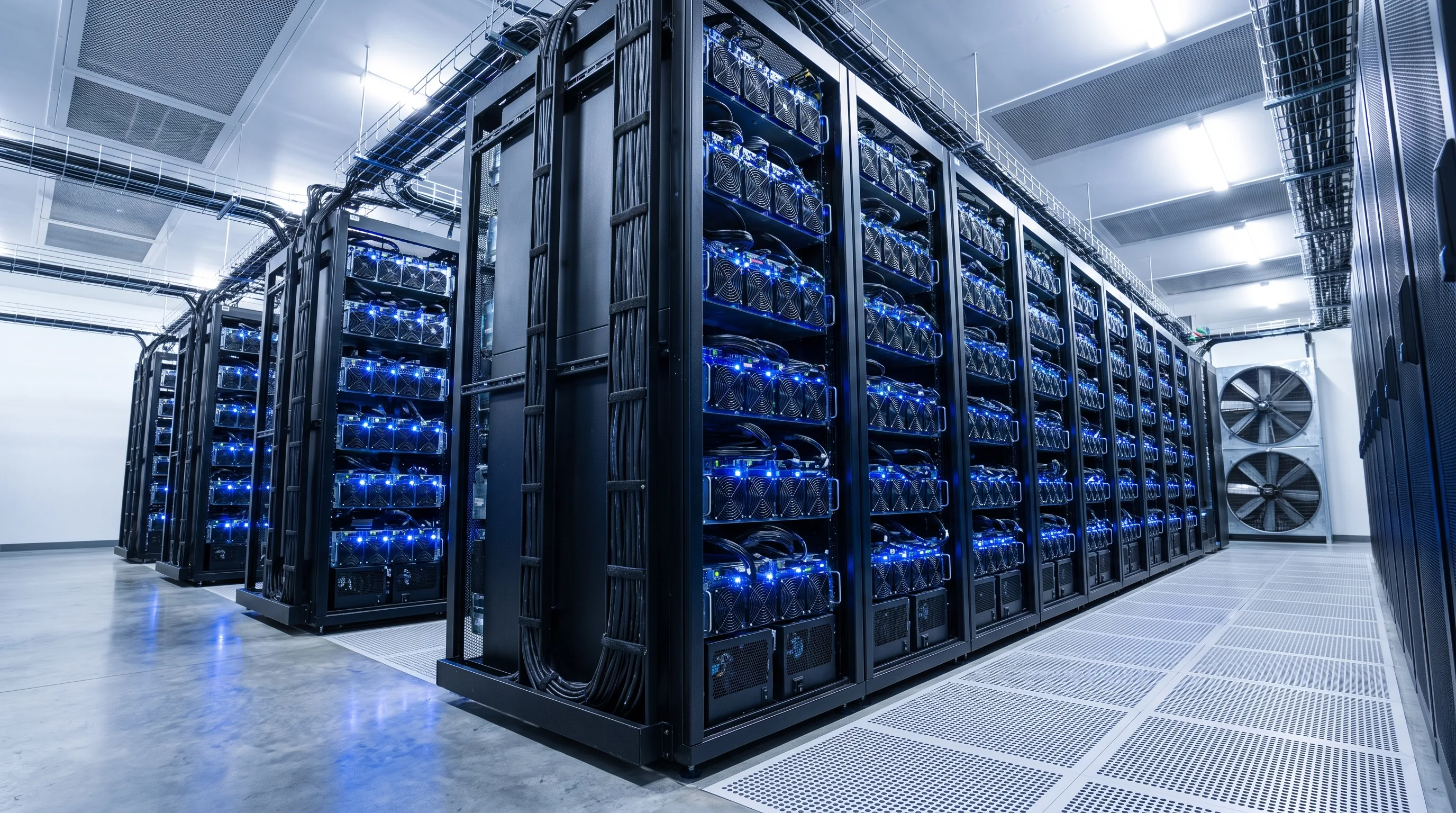
Why Colocation Beats Home Mining and Cloud Mining
If you own ASIC mining hardware — or plan to — you face a fundamental infrastructure decision: where to run it. Home mining works for one or two machines, but the noise (75–85 dB from a single S21), heat output (3,500W per unit), and residential electricity rates ($0.10–$0.20/kWh) make it impractical at any meaningful scale. Cloud mining eliminates infrastructure headaches but sacrifices ownership and transparency, often at unfavorable economics.
Colocation offers the middle path: you own and control your miners, while a purpose-built facility provides the power infrastructure, cooling, connectivity, and physical security they need. The result is lower electricity costs, higher uptime, and full hardware ownership — the combination that maximizes long-term mining profitability.
What ASIC Hosting Colocation Includes
A standard ASIC hosting colocation agreement covers five core services. Understanding exactly what is included (and what costs extra) is essential for comparing facilities accurately.
Core Services
- Power delivery: Utility-grade three-phase power at industrial rates, typically with dedicated circuits for each client
- Cooling: Air-cooled or immersion-cooled environments maintained at optimal operating temperatures (15–35°C for air-cooled miners)
- Physical space: Rack, shelf, or container space with proper airflow design for high-density ASIC deployments
- Network connectivity: Redundant internet connections for pool connectivity, remote monitoring, and firmware updates
- Physical security: 24/7 CCTV, access controls, fire suppression, and optionally on-site security staff
Optional Add-Ons (May Cost Extra)
- Remote hands (technician physically inspects or restarts your hardware)
- Firmware management and overclocking services
- Pool configuration and monitoring dashboards
- Hardware repair and spare parts inventory
- Insurance coverage for hosted equipment
ASIC Hosting Pricing: What to Expect
ASIC hosting pricing has standardized around an all-in cost per kilowatt-hour model, though some facilities still quote per-unit monthly rates. Understanding both formats prevents surprise costs. The all-in rate should include electricity, cooling overhead, rack space, and basic monitoring. Here is how pricing compares across popular hosting regions:
| Region | All-In Rate ($/kWh) | Monthly Cost per S21 (3.5 kW) | Key Advantages |
|---|---|---|---|
| Texas | $0.055–$0.075 | $138–$189 | ERCOT market, demand response revenue |
| Wyoming | $0.050–$0.068 | $126–$171 | Mining-friendly laws, low humidity |
| Georgia | $0.060–$0.080 | $151–$202 | Fiber connectivity, affordable land |
| UAE | $0.065–$0.090 | $164–$227 | Zero income tax, free zone incentives |
| Alberta, Canada | $0.048–$0.065 | $121–$164 | Natural cooling, cheap hydro/gas power |
| New York | $0.070–$0.095 | $176–$239 | Hydropower, proximity to financial markets |
Important: Always ask whether the quoted rate is all-in or power-only. A power-only rate of $0.05/kWh may become $0.075/kWh once cooling surcharges, management fees, and infrastructure costs are added. Rax quotes all-in rates with no hidden fees — view current pricing.
How to Evaluate a Colocation Facility
Not all hosting facilities are created equal. Before signing a contract, evaluate each candidate against these critical criteria:
1. Power Infrastructure
Power reliability determines your mining uptime and revenue. A quality facility should have:
- Dedicated utility feed (ideally dual-feed from separate substations)
- UPS systems to bridge the gap during power transitions
- Diesel or natural gas generators for extended outages
- N+1 or 2N redundancy on critical power distribution
- Power quality monitoring (voltage stability, harmonics, power factor correction)
2. Cooling Capacity
ASIC miners produce enormous heat density. A single rack of S21 miners can generate 35–50 kW of thermal output. The facility must demonstrate sufficient cooling capacity with headroom for hot days and hardware upgrades. Ask about:
- Design cooling capacity vs. current utilization (look for at least 20% headroom)
- Cooling technology — evaporative, direct expansion, immersion, or hybrid
- Ambient temperature data and how cooling performance degrades in summer
- Hot/cold aisle containment or directed airflow design
3. Contract Terms and Flexibility
Mining profitability fluctuates with Bitcoin price, network difficulty, and hardware efficiency. Your contract should accommodate these realities:
| Contract Term | What to Look For | Red Flag |
|---|---|---|
| Minimum commitment | Month-to-month or 3–6 month terms | 12+ month lock-in with early termination penalties |
| Pricing structure | Fixed all-in $/kWh, transparent billing | Variable rates with surcharges and hidden fees |
| Uptime SLA | 99.5%+ with credit for breaches | No SLA or no financial remedy for downtime |
| Scale flexibility | Add or remove units with 30-day notice | Fixed unit count with no adjustment rights |
| Exit terms | 30-day notice, hardware returned within 2 weeks | Hardware held until contract expires |
4. Physical Security and Insurance
Your ASIC miners represent a significant capital investment — a fleet of 100 S21 units is worth $200,000+. Ensure the facility provides:
- 24/7 video surveillance with at least 30 days of recording retention
- Multi-factor access control (keycard + biometric or PIN)
- Individual cabinet or cage locking for your equipment
- Fire suppression (clean agent, not water sprinkler)
- Optional or included equipment insurance against theft, fire, and natural disaster
5. Remote Monitoring and Management
You should never have to physically visit your colocation facility to check on your miners. Evaluate the remote access capabilities:
- Real-time hashrate and temperature monitoring dashboard
- Automated alerts for offline units, temperature spikes, or power issues
- Remote reboot capability (power cycling via smart PDU)
- Pool configuration management through a web interface
- Monthly performance reports with uptime statistics
Home Mining vs. Colocation: Side-by-Side
| Factor | Home Mining | Colocation |
|---|---|---|
| Electricity rate | $0.10–$0.20/kWh (residential) | $0.05–$0.09/kWh (industrial) |
| Monthly cost per S21 | $252–$504 | $126–$227 |
| Noise | 75–85 dB (major issue) | Managed by facility |
| Cooling | DIY, limited capacity | Professional, redundant |
| Power capacity | 15–40A residential circuits | Unlimited with utility feed |
| Uptime | 95–98% (home outages, maintenance) | 99.5%+ with SLA |
| Scalability | 2–5 units max | Hundreds to thousands |
| Security | Home security system | 24/7 surveillance, access control |
Finding Facilities in Your Region
The best colocation facility depends on your priorities — lowest cost, closest proximity, or best infrastructure. Here is how to narrow your search by region:
United States
The US offers the widest selection of ASIC hosting facilities, concentrated in states with low electricity costs and mining-friendly regulation. Texas leads with competitive ERCOT rates and demand response programs that can generate additional revenue. Wyoming provides some of the lowest all-in rates, while Georgia and the Southeast offer growing capacity. Explore all Rax facility locations across the US.
Middle East
The UAE has emerged as a major mining colocation hub, driven by free zone tax incentives, world-class data center infrastructure, and clear regulatory frameworks. Abu Dhabi and Dubai free zones offer 0% corporate tax and streamlined licensing for crypto colocation operations including Bitcoin mining, Ethereum staking, and multi-chain infrastructure.
Canada
Alberta combines cheap natural gas and hydroelectric power with naturally cold temperatures that reduce cooling costs. Canadian facilities often achieve the lowest all-in rates globally, though currency exchange and cross-border logistics add complexity for US-based miners.
What to Ask Before Signing
Before committing to any colocation facility, get clear answers to these questions:
- What is the all-in rate? Confirm it includes electricity, cooling, space, network, and basic monitoring. Ask for a sample invoice.
- What is your uptime track record? Request historical uptime data for the past 12 months, not just the SLA target.
- How do you handle hardware failures? Understand the process for a dead miner — do they notify you, attempt basic troubleshooting, or just let it sit offline?
- Can I visit or get a live tour? Reputable facilities welcome visits. Reluctance to show the facility is a major red flag.
- What insurance do you carry? Verify the facility has adequate property and liability insurance. Ask whether your hardware is covered.
- How is power metered? Understand whether you pay for actual metered consumption or estimated usage based on nameplate power draw.
- What is the minimum deployment? Some facilities require 10+ units; others accept individual miners. Minimums affect your flexibility.
- What happens if Bitcoin price drops significantly? Can you reduce your deployment, pause mining, or exit the contract without penalty?
Getting Started with Rax
Rax provides enterprise-grade ASIC hosting colocation with transparent all-in pricing, redundant power infrastructure, and flexible contract terms. Whether you are deploying 10 miners or 10,000, our facilities across multiple US states and the UAE provide the infrastructure your hardware needs to perform at its best.
Ready to Colocate Your ASIC Miners?
Get a personalized quote based on your fleet size, preferred location, and power requirements. No hidden fees, no long-term lock-in.
Request a Quote View Pricing