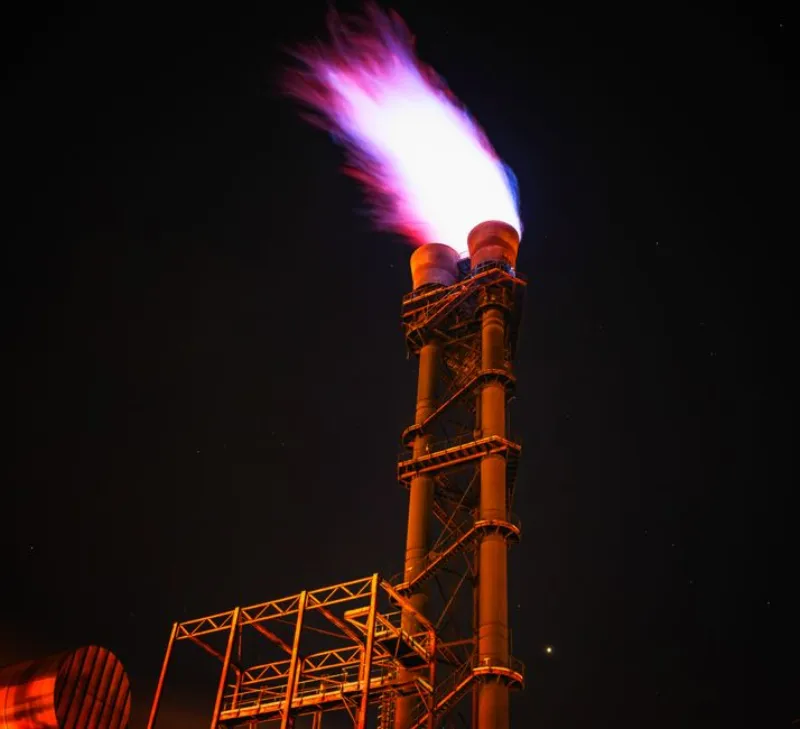
The Stranded Energy Opportunity
Energy is stranded when it is generated or available in a location where it cannot be economically delivered to consumers. An oil well in rural North Dakota produces associated natural gas, but the nearest pipeline is 60 miles away. A wind farm in West Texas generates power at 2 AM when demand is near zero and transmission lines are congested. A hydroelectric dam in northern Canada produces more electricity than its remote grid connection can carry.
In each of these scenarios, energy goes to waste. Gas is flared or vented. Wind turbines are curtailed. Water flows over spillways without generating revenue. Globally, the International Energy Agency estimates that over 140 billion cubic meters of natural gas were flared in 2024, equivalent to the total gas consumption of Central and South America combined.
Bitcoin mining offers a unique solution to this problem because it is one of the few industrial processes that can be deployed directly at the energy source, requires no supply chain or customer proximity, and can be started or stopped instantly in response to price signals. A containerized mining operation can be operational within weeks at a wellhead, wind farm, or hydroelectric site, converting stranded energy into economic value.
How Flare Gas Bitcoin Mining Works
When crude oil is extracted, natural gas often comes with it as a byproduct. At remote well sites without pipeline infrastructure, operators historically had three options: build a pipeline (often uneconomic for small volumes), vent the gas directly into the atmosphere (releasing methane, a greenhouse gas roughly 80 times more potent than CO2 over 20 years), or flare it (burning the gas, converting methane to CO2 and reducing its warming impact).
Flare gas Bitcoin mining introduces a fourth option. A modular data center, typically housed in a modified shipping container, is deployed at the well site. Natural gas generators convert the associated gas into electricity, which powers ASIC mining hardware. The process captures gas that would have been wasted and converts it into Bitcoin revenue while eliminating methane emissions.
The Deployment Model
A typical flare gas mining deployment includes the following components:
- Gas conditioning equipment that removes moisture, hydrogen sulfide, and other contaminants from raw wellhead gas before it enters the generator
- Natural gas generators sized to match the well's gas output, typically ranging from 200 kW to 2 MW per unit
- Containerized mining units housing ASIC miners, power distribution, cooling infrastructure, and remote monitoring systems
- Emissions monitoring equipment to verify gas capture rates and demonstrate compliance with environmental regulations
Companies like Crusoe Energy have demonstrated this model at scale, deploying over 425 modular data centers across seven U.S. states and Argentina. Their operations have captured nearly 22 billion cubic feet of natural gas that would have been flared, mitigating approximately 2.7 million metric tons of greenhouse gas emissions.
Economics of Flare Gas Mining
The economics of flare gas mining are compelling because the fuel has zero commodity cost to the miner. The gas would otherwise be destroyed. Electricity costs at flare gas sites typically range from $0.01 to $0.025 per kWh, compared to $0.04 to $0.08 per kWh for grid-connected mining facilities.
This cost advantage is significant in the post-halving environment. With the April 2024 halving cutting the block subsidy to 3.125 BTC, mining profitability depends heavily on electricity costs. At current network conditions (difficulty near 127 trillion, hashprice around $31 per PH/s), miners paying above $0.06 per kWh face marginal or negative returns. Flare gas operators, paying one-third to one-half that rate, maintain healthy margins even during difficulty increases.
Key metric: At $0.02/kWh, a modern ASIC like the Antminer S21 XP (270 TH/s, 15.5 J/TH) costs approximately $2.45 per day to operate, compared to $7.35 per day at $0.06/kWh grid power. That $4.90 daily savings per unit compounds to over $1,780 annually per machine.
Curtailed Renewables: Mining the Surplus
Renewable energy curtailment occurs when wind turbines or solar arrays produce more electricity than the grid can absorb, forcing operators to reduce output. This happens because electricity must be consumed at the moment it is generated (or stored, which adds cost), and transmission infrastructure often cannot keep pace with renewable capacity additions.
The scale of curtailment is substantial. In 2025, Texas alone curtailed over 10 TWh of wind and solar generation. California curtailed approximately 3.5 TWh of solar output. Globally, the IEA estimates that 7% of potential wind and solar generation is curtailed annually, representing billions of dollars in lost revenue for renewable developers.
Behind-the-Meter Mining
The most common model for mining on curtailed renewables is behind-the-meter deployment, where mining hardware is installed at or near a wind or solar facility and connected directly to the generator output rather than through the grid. When the facility produces more power than its grid interconnection can export, excess electricity flows to the miners.
This arrangement benefits both parties. The renewable developer gains a buyer for energy that would otherwise be curtailed, improving project economics and making financing easier. The miner accesses electricity at $0.02 to $0.035 per kWh through power purchase agreements (PPAs) priced below wholesale grid rates.
The flexibility of Bitcoin mining operations is critical here. Unlike traditional industrial loads that require continuous power, ASIC miners can be powered up and down within seconds. When grid demand rises and electricity becomes more valuable, mining loads can be curtailed to free up capacity for the grid, with the mining operator earning demand response payments on top of mining revenue.
Grid Balancing and Demand Response
Bitcoin mining's role in grid balancing extends beyond absorbing curtailed energy. Mining operations can participate in formal demand response programs, agreeing to reduce consumption when grid operators call for load reduction during peak demand periods or emergency conditions.
In Texas, several large-scale mining operators participate in ERCOT's demand response programs, earning payments of $10 to $50 per MWh for load curtailment during grid stress events. During Winter Storm Uri in 2021 and subsequent grid emergencies, mining operators demonstrated the ability to shed hundreds of megawatts of load within minutes, providing a fast-response resource that coal and gas plants cannot match.
This dual-revenue model (mining revenue during normal operations plus demand response payments during grid events) improves the overall economics of mining and aligns the industry's interests with grid reliability. Mining becomes what grid operators call a "controllable load" that can be used to balance supply and demand in real time.
Remote Hydroelectric and Geothermal Sources
Hydroelectric power at remote sites represents another category of stranded energy suited to Bitcoin mining. Dams in northern Canada, Scandinavia, and parts of South America generate electricity far from major population centers, with limited transmission capacity constraining how much power can reach paying customers.
Mining operations at these sites benefit from extremely low electricity costs (often $0.01 to $0.03 per kWh for surplus hydro), near-zero carbon emissions, and consistent baseload power. Unlike wind and solar, hydroelectric output is relatively stable and predictable, allowing miners to operate at high utilization rates year-round.
Geothermal energy offers similar advantages in volcanic regions. Iceland and El Salvador have both attracted Bitcoin mining operations drawn by cheap, clean, and reliable geothermal power. El Salvador's state mining operation at the base of the Tecapa volcano demonstrates how geothermal energy can provide dedicated, off-grid power for mining at costs competitive with or below grid electricity.
Stranded Energy Mining Economics: A Comparison
| Energy Source | Typical Cost ($/kWh) | Availability | Carbon Intensity | Deployment Complexity |
|---|---|---|---|---|
| Flare gas | $0.01 – $0.025 | Variable (well output dependent) | Low (captures methane) | Medium (gas conditioning needed) |
| Curtailed wind | $0.02 – $0.035 | Intermittent (weather dependent) | Zero | Low (behind-the-meter connection) |
| Curtailed solar | $0.02 – $0.03 | Intermittent (daytime only) | Zero | Low (behind-the-meter connection) |
| Remote hydro | $0.01 – $0.03 | Baseload (seasonal variation) | Near-zero | Low (direct connection) |
| Geothermal | $0.02 – $0.04 | Baseload (consistent) | Near-zero | Medium (site-specific) |
| Grid power (reference) | $0.04 – $0.08 | Continuous | Variable (grid mix) | Low (standard connection) |
The Environmental Case
The environmental argument for stranded energy mining has strengthened considerably. As of 2025, over 52% of global Bitcoin mining electricity comes from zero-emission sources, breaking down into approximately 42.6% from renewables (hydropower 23.4%, wind 15.4%, solar 3.2%) and 9.8% from nuclear power. This represents a significant shift from earlier years when coal-heavy Chinese mining operations dominated the network.
Flare gas mining delivers a particularly strong environmental case. Converting flared methane to CO2 through combustion in a generator (rather than an open flame) achieves more complete combustion, reducing unburned methane slip. The resulting CO2 emissions are roughly 80 times less harmful from a warming perspective than the methane that would have been vented. Mining operations also provide the economic incentive for gas producers to invest in capture infrastructure rather than simply flaring.
Curtailed renewable mining strengthens the business case for building more wind and solar capacity. By providing a guaranteed buyer for surplus output, mining operations reduce the financial risk of renewable projects, which in turn encourages developers to build more generation capacity than the grid alone can justify. This creates a positive feedback loop: more renewables built leads to more curtailment available leads to more mining opportunity leads to more renewables financed.
Challenges and Risks
Stranded energy mining is not without challenges. Flare gas operations face variable gas quality and volume, requiring robust conditioning equipment and flexible mining hardware configurations. Well production declines over time, meaning mining operations may need to relocate periodically. Regulatory environments vary significantly by jurisdiction, with some states and countries welcoming mining at wellheads while others restrict it.
Curtailed renewable operations face the inherent intermittency of their power source. Miners connected to wind farms may operate at 40 to 60% utilization rates depending on wind patterns, compared to 95% or higher for grid-connected facilities. This lower utilization must be offset by sufficiently low electricity costs to maintain profitability. Understanding the relationship between electricity costs and mining ROI is essential for evaluating these projects.
Remote deployments of any type carry higher maintenance costs, longer response times for equipment failures, and connectivity challenges for monitoring and pool communication. Modern satellite internet services have partially addressed the connectivity issue, but physical maintenance still requires personnel willing to travel to isolated locations.
The 2026 Landscape
The Bitcoin network currently operates at a hashrate near 908 to 930 EH/s, with difficulty around 127 trillion. Hashprice sits near $31 per PH/s, roughly 37% below its October 2025 peak. These network conditions are pushing operators toward the lowest-cost energy sources, making stranded energy strategies more relevant than ever.
CoinShares projects the network hashrate could reach 1.8 zetahash (1,800 EH/s) by end of 2026, driven partly by next-generation ASICs from Bitmain, MicroBT, and Canaan that push efficiency below 15 J/TH. As more efficient hardware enters the network, older machines are displaced from grid-connected facilities but can remain profitable at stranded energy sites where electricity costs are low enough to offset their lower efficiency.
The convergence of renewable energy growth, improving mining hardware efficiency, and increasing regulatory attention to methane emissions creates a favorable environment for stranded energy mining. Operators who secure access to low-cost stranded energy sources today are positioning themselves for sustained profitability regardless of Bitcoin price volatility or difficulty adjustments.
How Rax Supports Stranded Energy Mining
Rax Data and Energy provides infrastructure solutions for operators deploying mining hardware at stranded energy sites. Our services include site assessment, profitability modeling, hardware procurement, containerized deployment, and remote monitoring. With data center facilities spanning multiple regions, we help operators evaluate whether stranded energy deployment or traditional colocation hosting better serves their specific economics and risk profile.
FAQ: Stranded Energy and Bitcoin Mining
What is stranded energy in the context of Bitcoin mining?
Stranded energy refers to power that is generated but cannot be economically delivered to consumers through existing grid infrastructure. This includes flare gas at remote oil wells, curtailed wind and solar output, and hydroelectric power at sites far from population centers. Bitcoin mining hardware can be deployed directly at the energy source, converting otherwise wasted power into economic value.
How does flare gas Bitcoin mining work?
Flare gas mining captures natural gas that would otherwise be burned off (flared) or vented at oil production sites. A modular data center equipped with generators converts the gas into electricity on-site, which powers ASIC miners. This approach eliminates methane emissions, generates revenue from previously wasted gas, and provides miners with electricity costs as low as $0.01 to $0.03 per kWh.
What is renewable energy curtailment and why does it matter for mining?
Curtailment occurs when wind turbines or solar arrays produce more electricity than the grid can absorb, forcing operators to reduce output. In 2025, Texas alone curtailed over 10 TWh of wind and solar generation. Bitcoin miners can absorb this surplus at very low cost, providing a flexible load that ramps up when supply exceeds demand and shuts down when grid prices rise.
What are typical electricity costs for stranded energy mining operations?
Stranded energy mining operations typically achieve electricity costs between $0.01 and $0.035 per kWh, compared to $0.04 to $0.08 per kWh for grid-connected mining facilities. Flare gas operations often achieve the lowest rates at $0.01 to $0.025 per kWh because the gas has zero commodity cost.
Is stranded energy mining environmentally beneficial?
When properly implemented, stranded energy mining delivers genuine environmental benefits. Flare gas capture converts methane emissions into CO2 through combustion, reducing warming potential by roughly 80 times. Curtailment absorption prevents clean energy from being wasted and improves the economics of renewable projects. Over 52% of global Bitcoin mining electricity now comes from zero-emission sources.
Frequently Asked Questions
What is stranded energy in the context of Bitcoin mining?
Stranded energy refers to power that is generated but cannot be economically delivered to consumers through existing grid infrastructure. This includes flare gas at remote oil wells, curtailed wind and solar output, and hydroelectric power at sites far from population centers. Bitcoin mining hardware can be deployed directly at the energy source, converting otherwise wasted power into economic value.
How does flare gas Bitcoin mining work?
Flare gas mining captures natural gas that would otherwise be burned off (flared) or vented at oil production sites. A modular data center equipped with generators converts the gas into electricity on-site, which powers ASIC miners. This approach eliminates methane emissions (methane has roughly 80 times the warming potential of CO2 over 20 years), generates revenue from previously wasted gas, and provides miners with electricity costs as low as $0.01 to $0.03 per kWh.
What is renewable energy curtailment and why does it matter for mining?
Curtailment occurs when wind turbines or solar arrays produce more electricity than the grid can absorb, forcing operators to reduce output or shut down generation. In 2025, Texas alone curtailed over 10 TWh of wind and solar generation. Bitcoin miners can absorb this surplus at very low cost, providing a flexible load that ramps up when supply exceeds demand and shuts down when grid prices rise. This makes renewable projects more financially viable and reduces wasted clean energy.
What are typical electricity costs for stranded energy mining operations?
Stranded energy mining operations typically achieve electricity costs between $0.01 and $0.035 per kWh, compared to $0.04 to $0.08 per kWh for grid-connected mining facilities. Flare gas operations often achieve the lowest rates at $0.01 to $0.025 per kWh because the gas has zero commodity cost. Curtailed renewable operations typically pay $0.02 to $0.035 per kWh through power purchase agreements with wind and solar operators.
Is stranded energy mining environmentally beneficial?
When properly implemented, stranded energy mining can deliver genuine environmental benefits. Flare gas capture converts methane emissions into CO2 through combustion (reducing warming potential by roughly 80 times), reduces visible pollution, and generates revenue that incentivizes gas capture over venting. Curtailment absorption prevents clean energy from being wasted and improves the economics of renewable projects. As of 2025, over 52% of global Bitcoin mining electricity comes from zero-emission sources.
Explore Stranded Energy Mining Solutions
Rax Data & Energy helps operators evaluate and deploy mining infrastructure at stranded energy sites worldwide.
Contact Us Rax Energy