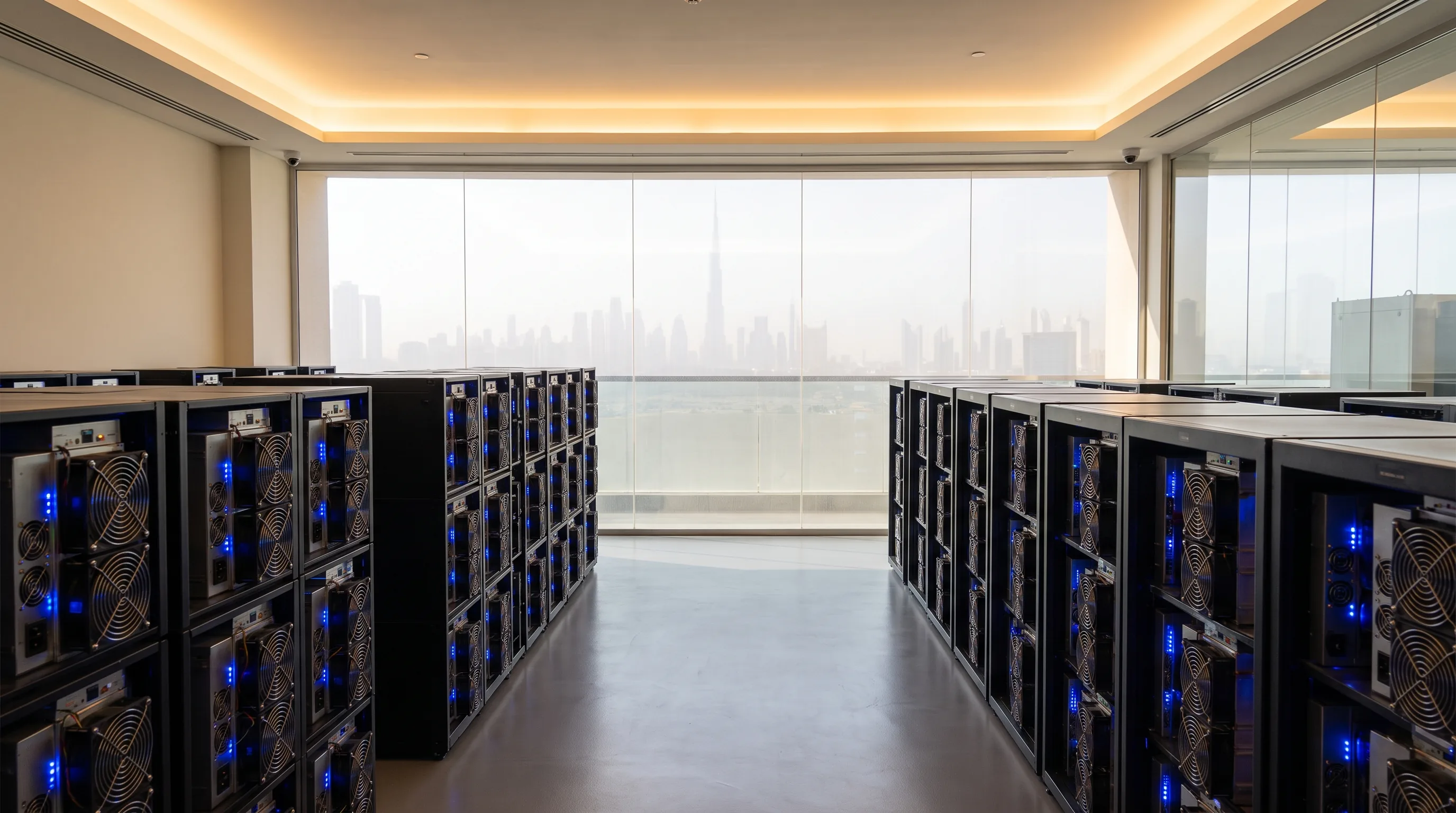
Why UAE Mining Regulations Matter in 2026
The UAE has positioned itself as one of the most crypto-friendly jurisdictions in the world, but "friendly" does not mean unregulated. Since the establishment of the Virtual Assets Regulatory Authority (VARA) in Dubai and parallel frameworks in Abu Dhabi and other emirates, the regulatory landscape for cryptocurrency mining operations has matured significantly. Operating without proper licensing now carries real consequences — from fines to facility shutdowns.
Whether you are planning a new mining operation, relocating from a less favorable jurisdiction, or expanding an existing setup, understanding the current regulatory framework is essential. This guide covers every major compliance requirement for crypto mining businesses in the UAE as of 2026.
Important: This article provides general guidance on UAE crypto mining regulations. Regulatory requirements can change. Always consult with a licensed legal advisor in the UAE before making business decisions based on regulatory assumptions.
The Regulatory Landscape: Who Governs What
The UAE does not have a single federal crypto regulator. Instead, regulatory authority is distributed across multiple bodies depending on the emirate and the specific free zone where you operate. Understanding this structure is the first step to compliance.
VARA — Dubai's Dedicated Crypto Regulator
The Virtual Assets Regulatory Authority (VARA), established under Dubai Law No. 4 of 2022, is the world's first independent regulator dedicated exclusively to virtual assets. VARA oversees all virtual asset activities within the Emirate of Dubai (excluding the DIFC). For mining operations based in Dubai, VARA licensing is mandatory for commercial-scale activities.
VARA categorizes virtual asset activities into seven types, and mining falls under VA Management and Investment or may require a specific operational license depending on scale. The licensing process involves submitting a detailed business plan, demonstrating financial adequacy, identifying beneficial owners, and establishing robust technology infrastructure.
ADGM and FSRA — Abu Dhabi's Financial Free Zone
The Abu Dhabi Global Market (ADGM) operates through its Financial Services Regulatory Authority (FSRA). ADGM was among the first jurisdictions globally to create a comprehensive crypto regulatory framework. Mining operations within ADGM must register and may need a Financial Services Permission depending on whether they also trade, custody, or broker the mined assets.
SCA — Federal Securities Authority
The Securities and Commodities Authority (SCA) provides federal-level oversight for crypto activities outside of free zones. If your mining operation is located in a mainland business area (not a free zone), SCA regulations apply. The SCA has issued its own framework for virtual asset service providers (VASPs), and commercial mining operations are expected to register.
Free Zone Frameworks for Mining Operations
Most large-scale mining operations in the UAE are structured within free zones due to favorable tax treatment, 100% foreign ownership, and streamlined licensing. The following free zones have explicit provisions or active ecosystems for crypto mining businesses.
| Free Zone | Regulator | Mining License | Corporate Tax | Key Advantage |
|---|---|---|---|---|
| DMCC (Dubai) | VARA + DMCC Authority | Crypto Commodity Trading license covers mining | 0% on qualifying income | Established crypto ecosystem, DMCC Crypto Centre |
| ADGM (Abu Dhabi) | FSRA | FSRA registration required | 0% on qualifying income | First comprehensive crypto framework globally |
| RAK DAO | RAK DAO Authority | DAO-specific digital asset license | 0% on qualifying income | Purpose-built for Web3 and decentralized organizations |
| DWTC (Dubai) | VARA | VARA license required | 0% on qualifying income | Located in central Dubai, good for operations + offices |
| IFZA (Dubai) | VARA (for crypto activities) | General trading + VARA overlay | 0% on qualifying income | Lower setup costs, flexible licensing |
Licensing Requirements and Process
The specific licensing pathway depends on your chosen jurisdiction, but all UAE regulators share common requirements for commercial mining operations.
Common Documentation Requirements
- Business Plan: Detailed description of mining operations including hash rate capacity, hardware specifications, energy consumption projections, and revenue models
- KYC/AML Policies: Written anti-money laundering and know-your-customer procedures, including wallet monitoring and transaction screening
- Beneficial Ownership Declaration: Full disclosure of all individuals with 25% or greater ownership interest
- Financial Statements: Audited financials or proof of adequate capitalization (minimums vary by jurisdiction)
- Technical Infrastructure Plan: Data center specifications, security measures, business continuity plans, and disaster recovery procedures
- Compliance Officer: Appointment of a qualified compliance officer (may be outsourced for smaller operations)
Estimated Licensing Costs
| Cost Component | DMCC | ADGM | RAK DAO |
|---|---|---|---|
| Initial License Fee | AED 50,000–100,000 | USD 15,000–40,000 | USD 5,000–15,000 |
| Annual Renewal | AED 20,000–50,000 | USD 10,000–20,000 | USD 5,000–10,000 |
| Minimum Capital | AED 50,000 | USD 50,000+ | No fixed minimum |
| VARA Registration (if Dubai) | AED 40,000–100,000 | N/A | N/A |
| Typical Setup Timeline | 4–8 weeks | 6–12 weeks | 2–4 weeks |
Energy and Infrastructure Compliance
Mining operations consume significant electrical power, and UAE regulators have implemented energy-specific requirements that set this jurisdiction apart from less regulated markets.
DEWA and Energy Authority Requirements
In Dubai, the Dubai Electricity and Water Authority (DEWA) manages power distribution. Large-scale mining operations (typically above 500 kW) must apply for commercial/industrial power connections. Key requirements include:
- Load Declaration: Accurate declaration of total electrical load, including planned expansion
- Facility Standards: Electrical installations must comply with DEWA regulations and pass inspection
- Power Quality: Operations must not cause harmonic distortion or power factor issues that affect the grid
- Metering: Separate metering for mining operations, especially in shared facilities
Sustainability Reporting
The UAE Net Zero 2050 strategy means mining operations face increasing scrutiny on carbon footprint. While not yet mandatory for all miners, larger operations (above 1 MW) are encouraged to report energy consumption and explore renewable energy integration. Rax Energy's sustainable power solutions are designed specifically for mining operations seeking to reduce environmental impact and improve ESG profiles.
Tax Obligations for Mining Businesses
The UAE's tax framework has evolved significantly since the introduction of corporate tax in June 2023. Understanding the current obligations prevents costly compliance failures.
Corporate Tax (9%)
Since June 2023, the UAE levies a 9% corporate tax on business profits exceeding AED 375,000 (~USD 102,000). This applies to mainland mining companies. Qualifying free zone entities may still benefit from 0% corporate tax on qualifying income, but only if they meet substance requirements and do not derive income from mainland UAE sources.
VAT Considerations
The UAE charges 5% VAT on goods and services. Key implications for miners:
- Hardware: VAT applies to ASIC miner purchases, hosting equipment, and infrastructure
- Mined cryptocurrency: The supply of mined crypto is generally not subject to VAT (treated as exempt financial service)
- Hosting services: VAT applies to hosting and colocation fees paid within the UAE
- Electricity: VAT is charged on commercial electricity consumption
No Personal Income Tax
The UAE has no personal income tax, which means mining rewards received by individual miners (outside of a corporate structure) are not taxed at the individual level. However, if mining activity constitutes a business, corporate tax obligations still apply.
AML and Compliance Requirements
Anti-money laundering (AML) compliance is the area where UAE regulators have been most aggressive. The Financial Action Task Force (FATF) removed the UAE from its grey list in early 2024, and regulators are determined to maintain that status.
What Miners Must Implement
- Transaction Monitoring: Track the destination of mined crypto, especially when converting to fiat or transferring to exchanges
- Wallet Screening: Use blockchain analytics tools to screen wallet addresses against sanctions lists
- Suspicious Activity Reports (SARs): File SARs with the Financial Intelligence Unit when detecting suspicious patterns
- Record Keeping: Maintain transaction records for a minimum of 5 years
- Staff Training: Regular AML training for all employees handling virtual assets
Rax Advantage: Our Crypto Forensics division provides blockchain analytics and compliance tools specifically designed for mining operations. From wallet monitoring to regulatory reporting, we help operators stay ahead of AML requirements.
Comparing the UAE to Other Mining Jurisdictions
To put the UAE's regulatory framework in perspective, here is how it compares to other popular mining destinations.
| Factor | UAE | USA (Texas) | Kazakhstan | Paraguay |
|---|---|---|---|---|
| Regulatory Clarity | High (VARA/FSRA) | Medium (state-by-state) | Low-Medium | Low |
| Corporate Tax Rate | 9% (0% in free zones) | 21% federal + state | 20% | 10% |
| Electricity Cost ($/kWh) | $0.04–0.08 | $0.03–0.07 | $0.03–0.05 | $0.02–0.04 |
| Political Stability | Very High | High | Medium | Medium |
| Personal Income Tax | 0% | 0–37% federal | 10% | 8–10% |
| Sustainability Pressure | Growing (Net Zero 2050) | Low | Low | Low |
| AML Requirements | Strict (post-FATF grey list) | Strict (FinCEN) | Moderate | Minimal |
Practical Steps to Start a Mining Operation in the UAE
Based on the regulatory framework above, here is the recommended sequence for establishing a compliant mining operation.
- Choose Your Jurisdiction: Decide between Dubai (VARA), Abu Dhabi (ADGM/FSRA), or another emirate based on your operational needs and budget
- Select a Free Zone: DMCC, ADGM, or RAK DAO are the most popular for crypto mining businesses
- Engage Legal Counsel: Hire a UAE-based law firm with crypto licensing experience to manage the application
- Secure Your Colocation or Facility: Identify a hosting provider with the power capacity, cooling, and connectivity your operation requires
- Apply for Licensing: Submit your application with all required documentation (business plan, AML policies, KYC procedures)
- Set Up Banking: Open a corporate bank account (some UAE banks are crypto-friendly; others require additional documentation)
- Import Equipment: Source ASIC miners or GPU hardware through licensed suppliers, paying applicable import duties and VAT
- Commission and Operate: Deploy hardware, implement AML monitoring, begin mining, and file required reports
Common Compliance Mistakes to Avoid
- Operating Without a License: "Testing" at commercial scale without licensing is still a violation. Get licensed before deploying hardware.
- Ignoring VARA: Many operators assume free zone licensing alone is sufficient in Dubai. VARA registration is a separate, parallel requirement.
- Underreporting Energy Load: Declaring lower power consumption than actual usage can result in disconnection and fines from DEWA.
- Missing Tax Deadlines: Corporate tax returns must be filed within 9 months of the financial year end. Late filing penalties start at AED 500 and escalate.
- Weak AML Controls: Post-FATF grey list removal, UAE regulators actively audit crypto businesses. Inadequate AML controls can result in license revocation.
Frequently Asked Questions
Is cryptocurrency mining legal in the UAE?
Yes. Cryptocurrency mining is legal in the UAE, but it requires proper licensing depending on your jurisdiction. Dubai mandates VARA licensing for commercial crypto activities. Free zones like DMCC, ADGM, and RAK DAO offer specific frameworks for crypto businesses including mining operations.
Do I need a VARA license to mine Bitcoin in the UAE?
If you operate a commercial mining operation in Dubai (outside of DIFC), you need a VARA license. Operations in other emirates may fall under different regulatory frameworks. Free zones like DMCC and ADGM have their own licensing requirements. Personal, small-scale mining using residential electricity does not typically require licensing, but commercial operations always do.
What taxes apply to crypto mining income in the UAE?
The UAE introduced a 9% corporate tax in June 2023 on business profits exceeding AED 375,000 (~USD 102,000). Qualifying free zone entities may still benefit from 0% corporate tax on qualifying income. There is no personal income tax. VAT (5%) may apply to mining equipment purchases but not to the mined cryptocurrency itself.
Mine Legally in the UAE with Rax
Rax provides compliant hosting infrastructure, power solutions, and crypto forensics to support your UAE mining operation from licensing through daily operations.
Contact Us Explore Rax Data