Why Physical Security Cannot Be an Afterthought
A data center can have flawless firewalls, encrypted traffic, and zero-day-patched software, but if an unauthorized person can physically access the server room, none of that matters. Physical security breaches bypass every digital defense simultaneously: an attacker with physical access can extract hard drives, install hardware keyloggers, tap network cables, or simply destroy equipment.
The financial stakes are substantial. A single physical breach at a colocation facility hosting enterprise customers can trigger breach notification obligations across dozens of jurisdictions, SLA penalty payments, customer churn, and regulatory fines. The average cost of a data breach involving physical access exceeds $4.5 million according to industry studies -- higher than many purely digital breaches because physical access implies total compromise.
For GPU colocation and AI infrastructure providers, the stakes are even higher. GPU clusters hosting proprietary AI models and training data represent millions of dollars in intellectual property. A competitor gaining physical access to model weights or training datasets could undermine years of research investment.
The Five Layers of Defense-in-Depth
Enterprise data centers implement physical security as concentric rings. Each layer operates independently, so breaching one layer does not compromise the others. This defense-in-depth model is required by every major compliance framework.
Layer 1: Perimeter Security
The outer boundary is the first deterrent and detection layer. It is designed to prevent unauthorized vehicles and personnel from reaching the building.
- Anti-vehicle barriers: K-rated bollards and crash-rated fencing prevent vehicle ramming attacks. ASTM F2656-rated barriers stop a 15,000-pound vehicle traveling at 50 mph.
- Perimeter fencing: 8-foot minimum height, anti-climb toppings (razor wire or rotating cylinders), with vibration and cut sensors that alert the security operations center within seconds.
- Vehicle access: Guard-controlled gates with tire shredders, license plate recognition cameras, and vehicle inspection points. Delivery trucks are screened at a separate staging area outside the secure perimeter.
- Lighting: Full perimeter illumination to 50+ lux with no blind spots. Motion-activated high-intensity lights in approach corridors. IR illumination for night-vision CCTV coverage.
- Setback distance: Critical facilities maintain a minimum 100-foot setback from public roads and neighboring properties to provide detection and reaction time.
Layer 2: Building Access
The building exterior and lobby form the second checkpoint. This layer separates authorized visitors and employees from general public access.
- Mantraps (airlock vestibules): Two interlocked doors where only one can open at a time. A person enters the first door, it closes and locks, identity is verified, then the second door opens. This prevents tailgating -- the most common physical security bypass. Weight sensors in the mantrap floor detect if more than one person enters.
- Badge readers: Proximity cards (HID) or smart cards at every entry point. Cards are linked to individual profiles with access level permissions, time restrictions, and zone authorizations.
- Visitor management: All visitors require pre-authorization, government-issued photo ID verification, a signed NDA, and escort by an authorized employee at all times. Visitor badges have no access to badge readers -- they rely entirely on escort access.
- Loading docks: Separate from personnel entry points. Supervised unloading with security camera coverage. No unescorted movement of equipment from dock to data hall.
Layer 3: Data Hall Access
The data hall (server room) requires the highest level of authentication. This is where biometric verification becomes mandatory for most compliance frameworks.
- Biometric authentication: Fingerprint, iris scan, or facial recognition combined with badge access (two-factor physical authentication). Modern systems use anti-spoofing measures including liveness detection to prevent fake fingerprint or photo attacks.
- Access logging: Every entry and exit is logged with timestamp, identity, and duration. Logs are immutable (write-once storage) and retained for 90 days minimum (often 1 year for compliance). Unusual patterns (off-hours access, extended duration, high frequency) trigger automatic alerts.
- Dual-person integrity: Some Tier IV facilities and government-classified environments require two authorized individuals to be present simultaneously for data hall access, preventing any single person from acting alone.
Layer 4: Rack-Level Security
Individual cabinet and rack security provides the final physical barrier before hardware access.
- Cabinet locks: Electronic locks with per-rack access permissions. Only authorized technicians for specific customer cages can unlock those racks. Mechanical key overrides are secured in a separate safe with dual-custody procedures.
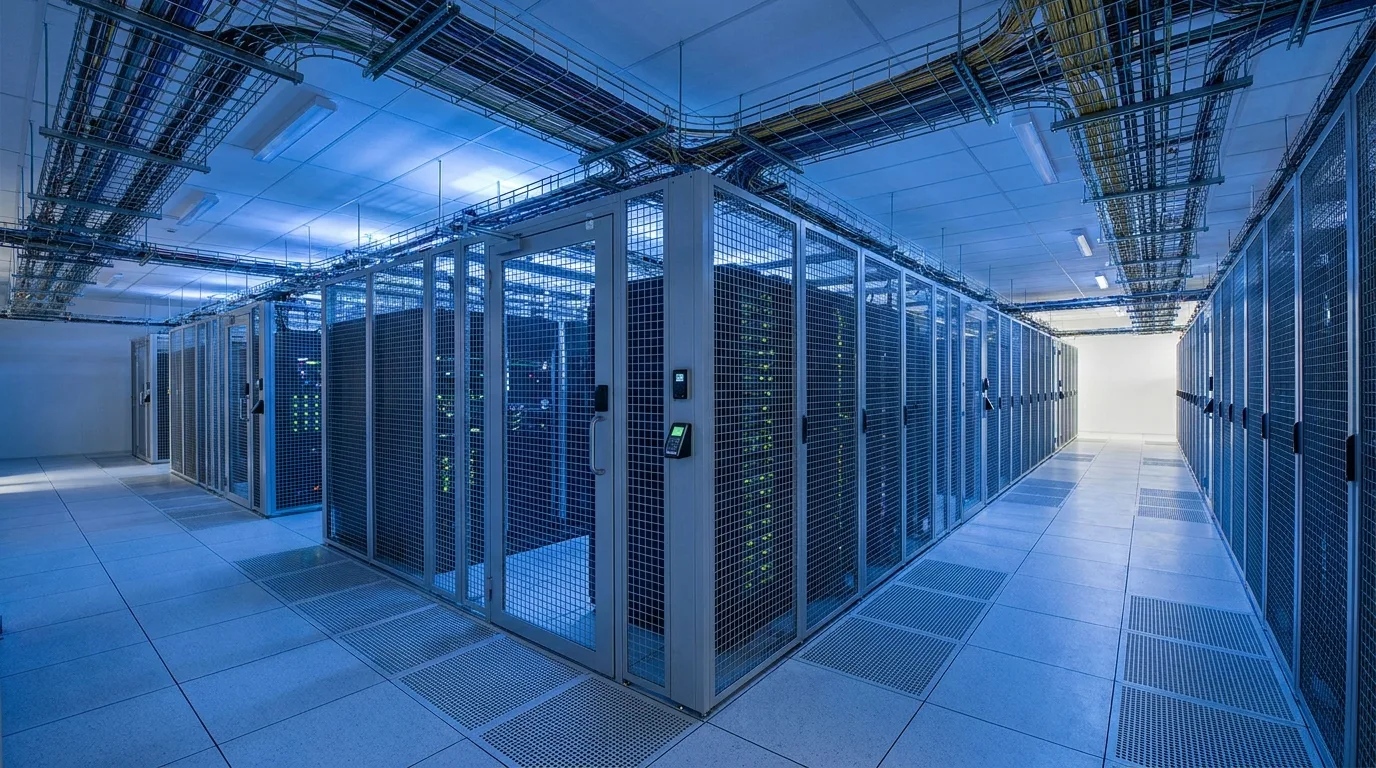
- Cage enclosures: Floor-to-ceiling wire mesh cages around customer rack groups in colocation environments. Each cage has its own access control independent of the data hall entrance.
- Tamper detection: Door-open sensors on every rack generate alerts when cabinets are opened outside scheduled maintenance windows. Some facilities add vibration sensors and infrared break-beam detectors within racks.
Layer 5: Monitoring and Response
Surveillance and response capabilities tie all layers together and provide evidence for incident investigation and compliance audits.
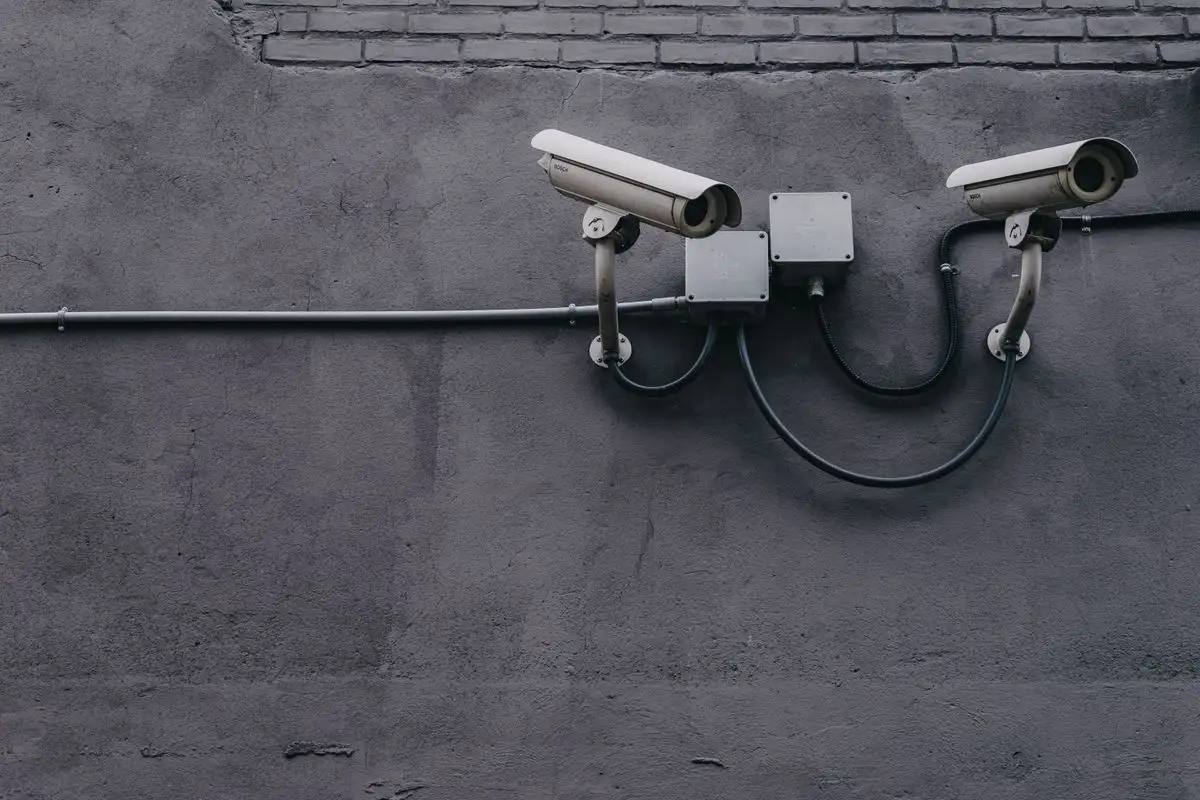
- CCTV: PTZ (pan-tilt-zoom) and fixed cameras at every access point, corridor, data hall, and perimeter. 30+ day retention with 90-day retention in controlled areas. Cameras are IP-based with encrypted feeds to prevent tampering.
- Security Operations Center (SOC): 24/7/365 staffed monitoring station viewing all camera feeds and alarm systems in real time. SOC operators have direct communication with local law enforcement and first responders.
- Intrusion detection: Motion sensors, glass break detectors, door-forced-open alarms, and environmental sensors (temperature, humidity spikes that might indicate fire or sabotage) feed into a centralized Security Information and Event Management (SIEM) system.
- Incident response: Documented procedures for every alert type: unauthorized access attempt, tailgating detected, door propped open, camera failure, environmental anomaly. Response times are tracked and audited quarterly.
Compliance Frameworks and Physical Security Requirements
SOC 2 Type II
SOC 2 is the most widely required compliance certification for data centers serving enterprise customers. The physical security requirements under the Common Criteria (CC6.4, CC6.5, CC6.6) include: restricted physical access to facilities and assets, monitoring of physical access, and protection against environmental threats.
Key requirements: badge access at all entry points, visitor logging, CCTV with 90-day retention, annual penetration testing (including physical), and documented access review procedures. Type II certification requires 6-12 months of continuous control operation before the first audit.
ISO 27001
ISO 27001 Annex A, Section 11 (Physical and Environmental Security) mandates: secure areas with layered access controls, clear desk and clear screen policies, protection against natural and environmental threats, secure disposal of equipment, and utility redundancy for power systems.
ISO 27001 is process-focused rather than prescriptive, meaning it requires organizations to identify physical security risks and implement controls proportional to those risks. This gives operators flexibility but requires documented risk assessments and treatment plans.
UAE-Specific: TDRA and NESA
In the UAE, the Telecommunications and Digital Government Regulatory Authority (TDRA) sets requirements for licensed data center operators. TDRA compliance includes:
- Physical access restricted to authorized personnel only
- 24/7 on-site security personnel
- CCTV with minimum 30-day retention
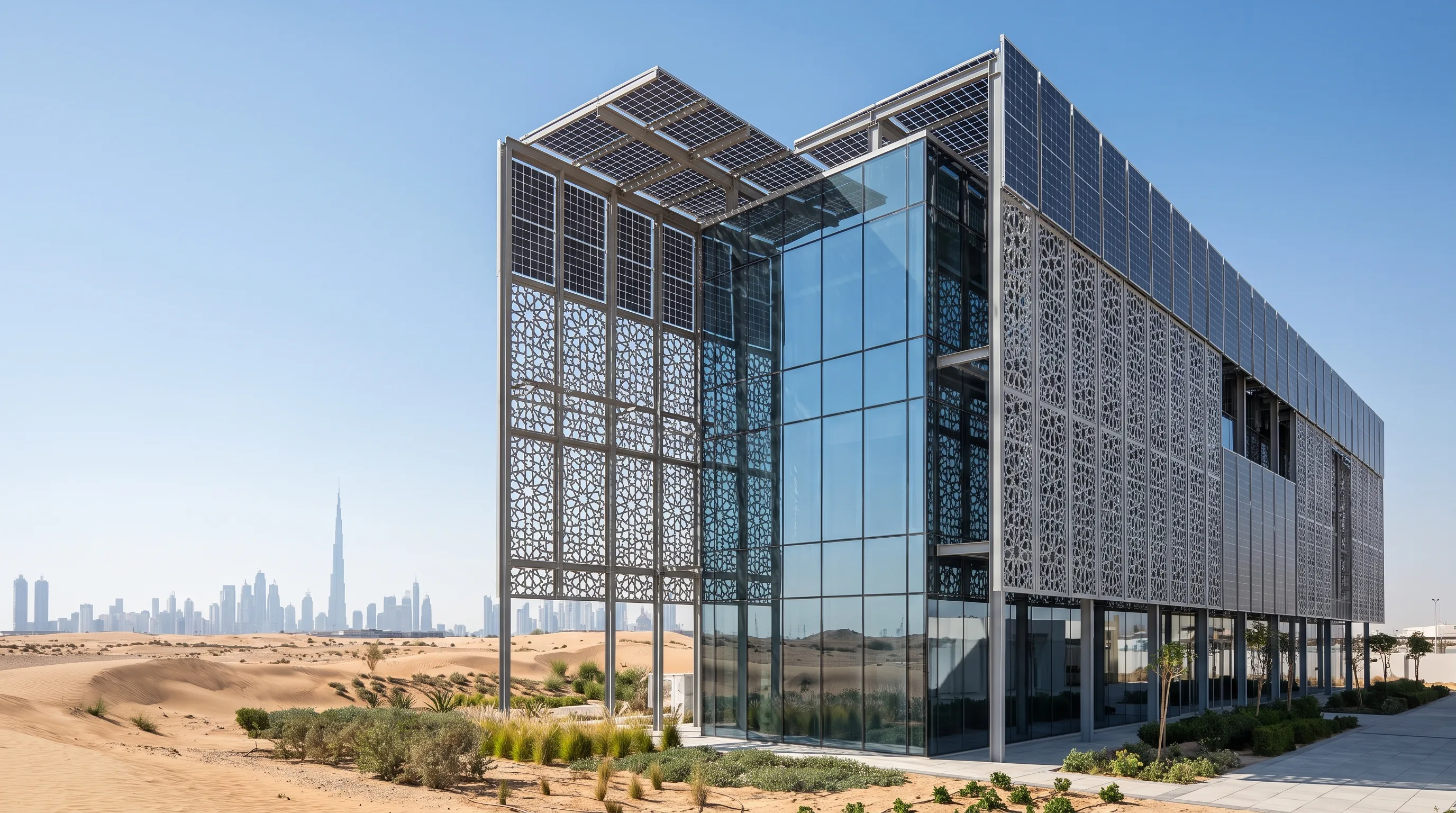
- Data sovereignty: customer data must remain within UAE borders
- Annual compliance audits by TDRA-approved auditors
For critical infrastructure (energy, finance, government), the National Electronic Security Authority (NESA) applies additional requirements including background checks for all data center staff, compartmentalized access zones, and mandatory incident reporting within 24 hours.
PCI DSS
Data centers processing or storing payment card data must meet PCI DSS Requirement 9: Restrict Physical Access to Cardholder Data. This includes video monitoring of all entry points with 3-month retention, access control with individual identification, visitor logs, and physical protection of network jacks and wireless access points.
Physical Security Design Checklist
When evaluating a data center -- whether building your own or selecting a colocation provider -- verify these physical security elements:
| Layer | Element | Minimum Standard |
|---|---|---|
| Perimeter | Fencing | 8-foot anti-climb with sensors |
| Perimeter | Vehicle barriers | K-rated bollards at entry points |
| Building | Entry control | Mantrap with badge + PIN |
| Building | Visitor management | Photo ID + pre-authorization + escort |
| Data Hall | Authentication | Biometric + badge (two-factor) |
| Data Hall | Access logging | Immutable logs, 90-day minimum retention |
| Rack | Cabinet locks | Electronic, per-rack permissions |
| Monitoring | CCTV | All access points, 30+ day retention |
| Monitoring | SOC | 24/7/365 staffed |
| Compliance | Certifications | SOC 2 Type II + ISO 27001 minimum |
Cost of Physical Security Infrastructure
Physical security is a significant but necessary investment. For a new 1 MW data center facility, typical costs break down as:
- Perimeter (fencing, barriers, gates, lighting): $150,000-$400,000
- Access control systems (badges, biometrics, mantraps): $100,000-$300,000
- CCTV and monitoring infrastructure: $75,000-$200,000
- Security Operations Center build-out: $50,000-$150,000
- Rack-level security (electronic locks, cage enclosures): $50,000-$150,000
- Annual operational costs (staffing, monitoring, audits): $200,000-$500,000/year
Total capital expenditure: $425,000-$1,200,000 (8-15% of total facility construction cost). This investment is non-negotiable for facilities serving enterprise customers or hosting sensitive workloads like AI model training, financial systems, or healthcare data.
For organizations using colocation rather than building their own facility, physical security costs are included in the monthly rack or cage rental. When evaluating providers, ask to see their latest SOC 2 Type II report and tour the facility to verify security claims firsthand. A provider who hesitates to schedule a tour or share audit reports should be avoided.
Emerging Trends in Data Center Physical Security
- AI-powered surveillance: Computer vision systems that detect anomalous behavior (loitering, tailgating, unauthorized equipment movement) and alert SOC operators in real time, reducing reliance on human monitoring attention.
- Drone perimeter patrols: Autonomous drone systems for large campus-style facilities that provide aerial surveillance and thermal imaging beyond fixed camera coverage.
- Zero-trust physical access: Continuous authentication throughout a visit rather than single-point-of-entry verification. Wearable tokens that track location within the facility and automatically lock doors if a person deviates from their authorized path.
- Supply chain security: Verification of hardware integrity before rack installation. Tamper-evident packaging, serial number verification against manufacturer databases, and X-ray inspection of servers to detect hardware implants. This is particularly important for high-value GPU hardware where a single H100 board is worth $25,000+.
Frequently Asked Questions
What are the layers of data center physical security?
Data center physical security uses a defense-in-depth model with five layers: (1) Perimeter security including fencing, bollards, vehicle barriers, and guard stations; (2) Building access with badge readers, mantraps, and visitor management; (3) Data hall access with biometric authentication (fingerprint, iris, or facial recognition); (4) Rack-level security with individual cabinet locks and sensors; (5) Monitoring with 24/7 CCTV, motion detection, and a staffed security operations center (SOC). Each layer must be breached independently, making unauthorized physical access extremely difficult.
What compliance certifications should a data center have?
At minimum, data centers handling enterprise workloads should have SOC 2 Type II (controls over security, availability, and confidentiality audited annually by a third party) and ISO 27001 (information security management system). For healthcare data, HIPAA compliance is required. For payment processing, PCI DSS. In the UAE, TDRA certification is mandatory for licensed data center operators, and NESA standards apply to critical infrastructure.
How much does data center physical security cost?
Physical security infrastructure typically represents 8-15% of total data center construction costs. For a 1 MW facility, expect $500,000 to $1.5 million for comprehensive physical security including perimeter fencing, biometric access control, CCTV systems, mantrap airlocks, and 24/7 security staffing. Ongoing operational costs (guards, monitoring, maintenance, compliance audits) add $200,000-$500,000 per year depending on facility size and certification requirements.