ASHRAE Thermal Guidelines for Data Centers in Hot Climates: UAE and Gulf Compliance
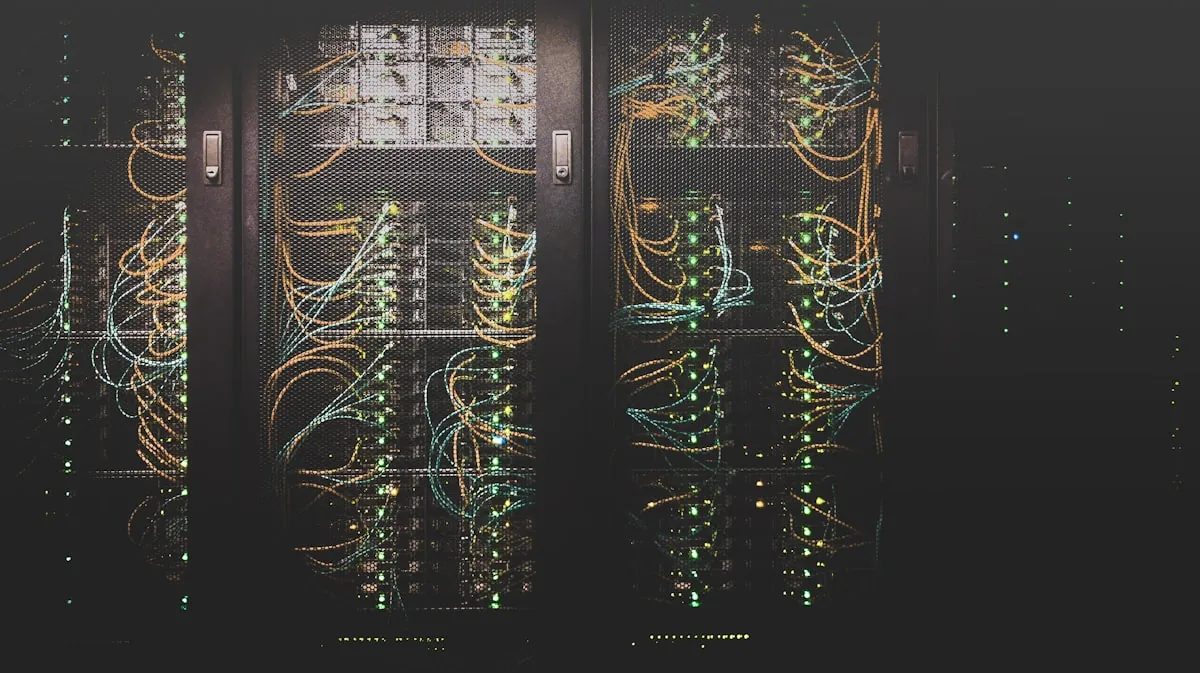
Every piece of IT equipment in a data center operates within a temperature envelope. Exceed it, and hardware throttles, fails prematurely, or shuts down entirely. The American Society of Heating, Refrigerating, and Air-Conditioning Engineers (ASHRAE) Technical Committee 9.9 publishes the industry-standard thermal guidelines that define these envelopes. For data centers in the UAE and Gulf Cooperation Council (GCC) region -- where ambient temperatures routinely exceed 45 degrees Celsius and coastal humidity pushes past 90% -- understanding and designing to these specifications is not optional. It is the difference between a facility that delivers 99.999% uptime and one that experiences chronic thermal events.
This article covers the ASHRAE TC 9.9 thermal guidelines in detail, explains how they apply specifically to hot-climate deployments, and outlines the cooling strategies that Gulf-region data centers use to maintain compliance while keeping energy costs under control.
ASHRAE TC 9.9 Equipment Classes and Temperature Envelopes
ASHRAE classifies IT equipment environments into multiple classes, each with a defined temperature and humidity range. The classification determines what equipment can operate in the space and what cooling infrastructure is required.
Class A1: Enterprise Data Centers (Most Common)
Class A1 is the standard for enterprise data centers, cloud infrastructure, and colocation facilities. It represents the most tightly controlled environment and is what most hardware manufacturers test against for warranty and reliability specifications.
ASHRAE A1 Recommended Envelope
Dry-bulb temperature: 18-27 degrees C (64.4-80.6 degrees F)
Relative humidity: 20-80% RH (non-condensing)
Maximum dew point: 21 degrees C
Maximum rate of change: 5 degrees C per hour
ASHRAE A1 Allowable Envelope
Dry-bulb temperature: 15-32 degrees C (59-89.6 degrees F)
Relative humidity: 20-80% RH
Maximum dew point: 21 degrees C
Maximum altitude: 3,050 m
The distinction between recommended and allowable is critical. Within the recommended envelope, hardware manufacturers guarantee specified reliability rates (typically expressed as annualized failure rates or mean time between failures). Within the allowable envelope, the equipment will function but may experience elevated failure rates. Operating outside the allowable envelope voids most hardware warranties.
Class A2, A3, and A4: Wider Envelopes
ASHRAE defines progressively wider temperature envelopes for environments where tighter control is impractical or unnecessary:
| Class | Recommended Temp (C) | Allowable Temp (C) | Typical Use |
|---|---|---|---|
| A1 | 18-27 | 15-32 | Enterprise, colocation, cloud |
| A2 | 18-27 | 10-35 | Volume servers, some HPC |
| A3 | 18-27 | 5-40 | Storage, networking gear |
| A4 | 18-27 | 5-45 | Purpose-built equipment |
| B | N/A | 5-35 | Office environments, edge |
| C | N/A | 5-40 | Point-of-sale, industrial |
Notice that all A-class recommended envelopes are identical at 18-27 degrees Celsius. The difference is exclusively in the allowable range. This means the target cooling setpoint should be the same regardless of class -- the classification affects how much the facility can deviate from that target during excursions (cooling system failures, maintenance windows, extreme ambient events).
ASHRAE H1: High-Density Compute
The H1 class was introduced for high-performance computing and GPU-intensive workloads that use liquid cooling. H1 specifies water inlet temperatures for liquid-cooled equipment rather than air inlet temperatures. The recommended water inlet temperature is 2-45 degrees Celsius, which gives facilities significantly more flexibility in cooling system design. This is particularly relevant for GPU colocation in the UAE, where liquid cooling eliminates the dependence on maintaining cold air temperatures in environments with extreme ambient heat.
Why Hot Climates Make ASHRAE Compliance Harder
The Ambient Temperature Challenge
ASHRAE guidelines specify server inlet air temperature, not outdoor ambient temperature. In a temperate climate (say, Amsterdam at 15-25 degrees Celsius summer ambient), a facility can sometimes use outside air directly (economizer mode) to maintain 18-27 degrees Celsius inlet temperatures. In Abu Dhabi, where summer ambient temperatures reach 48-50 degrees Celsius, outdoor air is 20+ degrees above the maximum recommended inlet temperature. There is no "free cooling" window for most of the year.
This has direct implications for PUE (Power Usage Effectiveness). Facilities in cool climates achieve PUE values of 1.05-1.10 using extensive economizer hours. Gulf-region air-cooled facilities typically operate at PUE 1.4-1.6 because mechanical cooling must run continuously. The difference is substantial: at 1 MW of IT load, a PUE of 1.5 versus 1.1 means an additional 400 kW of cooling power -- roughly $175,000 per year at $0.05/kWh.
The Humidity Challenge
Gulf climates present a dual humidity problem depending on geography. Coastal cities (Dubai, Abu Dhabi, Doha, Kuwait City, Manama) experience ambient relative humidity of 70-95% during summer, with dew points frequently exceeding 25 degrees Celsius. When this air enters a facility's cooling system, condensation forms on any surface below the dew point temperature. Cold water pipes, chilled water coils, and cold aisle containment barriers become condensation targets, risking water damage to electrical systems.
Inland desert locations (Riyadh interior, parts of Oman, desert zones of the UAE) experience the opposite: ambient humidity below 15% RH, sometimes as low as 5%. At these levels, electrostatic discharge (ESD) becomes a real threat. Static buildup on technicians, cable runs, and equipment surfaces can generate discharges of 10,000+ volts that damage sensitive semiconductor components. ASHRAE recommends a minimum of 20% RH to mitigate ESD risk, which means inland facilities need humidification systems -- adding another energy load and complexity layer.
Sand and Particulate Contamination
ASHRAE also specifies air quality requirements. ISO 14644-1 Class 8 is the standard for data center environments (fewer than 3,520,000 particles larger than 0.5 micrometers per cubic meter). Desert environments have particulate concentrations that far exceed this threshold during sandstorm events. Gulf data centers must use multi-stage air filtration (MERV 13-16 pre-filters plus HEPA final filters) on all outside air intakes. This adds pressure drop to the air handling system, increasing fan energy consumption. It also requires frequent filter replacement -- a recurring operational cost that facilities in cleaner climates avoid.
Cooling Strategies for ASHRAE Compliance in Hot Climates
Chilled Water Systems
The most common cooling approach for large Gulf-region data centers is a chilled water plant with computer room air handlers (CRAHs). Water-cooled chillers produce chilled water at 6-12 degrees Celsius, which is distributed to CRAHs on the data hall floor. The CRAHs blow cold air into a raised floor plenum or directly into cold aisles through overhead distribution.
In the UAE, chilled water systems are often paired with district cooling networks. Dubai, Abu Dhabi, and Doha have extensive district cooling infrastructure operated by companies like Empower and Tabreed. Site selection near district cooling plants can significantly reduce the capital cost of building a dedicated chiller plant, though it introduces a dependency on a third-party cooling provider.
Chilled water system efficiency in hot climates is lower than in temperate climates because the condenser must reject heat into 45-50 degree Celsius ambient air (or 30-35 degree Celsius seawater for coastal facilities). This reduces the coefficient of performance (COP) of the chiller from typical values of 5-6 in temperate climates to 3-4 in Gulf summer conditions. Design mitigations include oversized cooling towers to maintain reasonable condenser water temperatures, variable-speed chiller compressors that optimize performance across load ranges, and thermal energy storage (chilled water tanks) to shift cooling production to nighttime hours when ambient temperatures drop 10-15 degrees Celsius.
Direct Liquid Cooling
Direct-to-chip liquid cooling is increasingly adopted in Gulf data centers, particularly for high-density GPU deployments. Liquid cooling transfers heat from the CPU/GPU heat spreader directly into a liquid coolant loop, bypassing air entirely. This approach has several advantages in hot climates:
- Higher fluid temperatures are acceptable. ASHRAE H1 allows water inlet temperatures up to 45 degrees Celsius for liquid-cooled equipment. This means the cooling system can reject heat at a much smaller delta-T relative to ambient, dramatically improving chiller COP or even enabling dry cooler (sensible-only) heat rejection.
- Reduced air conditioning requirements. With 60-80% of IT heat captured by the liquid loop, the residual air cooling load drops proportionally. CRAHs run at lower capacity, reducing fan energy.
- Better PUE. Liquid-cooled facilities in hot climates achieve PUE of 1.03-1.15, compared to 1.4-1.6 for air-cooled equivalents. This translates directly to lower operating costs.
Immersion Cooling
Immersion cooling submerges IT equipment entirely in a dielectric fluid. Single-phase immersion uses a non-boiling fluid (mineral oil or engineered fluids like 3M Novec/Fluorinert) that absorbs heat through convection. Two-phase immersion uses a fluid that boils at a controlled temperature, transferring heat through phase change at very high efficiency.
For Gulf data centers, immersion cooling offers a near-complete solution to the thermal challenge. The IT equipment operates in a sealed, temperature-controlled fluid bath. Ambient air temperature, humidity, and particulate contamination become irrelevant to the IT environment. The heat is rejected from the fluid to an external dry cooler or cooling tower. Even at 50 degrees Celsius ambient, the fluid-to-air heat exchanger can maintain fluid temperatures well within ASHRAE H1 specifications because the fluid temperature (typically 35-50 degrees Celsius) is close to ambient, requiring minimal mechanical cooling.
Adiabatic and Evaporative Pre-Cooling
For air-cooled facilities, adiabatic cooling can extend the useful range of outside air. Water is sprayed into the incoming air stream (or onto heat exchanger surfaces), lowering the air temperature through evaporative cooling. In dry Gulf climates (inland locations), adiabatic pre-cooling can reduce incoming air temperature by 10-15 degrees Celsius, potentially bringing it within the ASHRAE A2 or A3 allowable range during shoulder seasons.
However, adiabatic cooling has a significant constraint in the Gulf: water consumption. A 10 MW data center using adiabatic cooling in a dry Gulf climate can consume 50,000-100,000 liters of water per day. In a region where freshwater is produced through energy-intensive desalination, the water cost and sustainability implications are significant. This is why WUE (Water Usage Effectiveness) is an increasingly important metric alongside PUE for Gulf data centers.
Designing to ASHRAE: Practical Implementation
Cold Aisle / Hot Aisle Containment
Containment is the most cost-effective single measure for maintaining ASHRAE compliance. By physically separating cold supply air from hot exhaust air, containment prevents mixing that raises server inlet temperatures above the ASHRAE recommended range. Without containment, hot exhaust air from one row of servers recirculates into the cold aisle of the adjacent row, creating hot spots that can exceed the allowable temperature envelope even when the overall room temperature is within specification.
Cold aisle containment (enclosing the cold aisle with doors and a ceiling) is the most common approach. Hot aisle containment (enclosing the hot aisle and ducting exhaust directly to return plenums) is preferred in high-density deployments because it prevents hot air from mixing into the room, keeping all common areas at comfortable working temperatures.
Computational Fluid Dynamics (CFD) Modeling
For hot-climate facilities, CFD modeling during the design phase is not a luxury -- it is a requirement. CFD simulation maps airflow patterns, identifies potential hot spots, and validates that the cooling system design maintains inlet temperatures within ASHRAE specifications under all expected load conditions. This is especially important for mixed-density environments where some racks draw 5 kW and adjacent racks draw 40+ kW. Without CFD validation, the high-density racks may experience bypass airflow (cold air missing the equipment) and recirculation (hot exhaust re-entering the cold aisle).
Environmental Monitoring
ASHRAE compliance requires continuous monitoring at the point that matters: the server inlet. DCIM systems aggregate temperature and humidity data from sensors placed at the top, middle, and bottom of each rack's cold aisle face. Best practice is one sensor per 3-4 rack units (RU) of height, providing granular visibility into thermal conditions throughout the data hall.
Monitoring must include alarming thresholds calibrated to ASHRAE boundaries. A typical configuration sets a warning at 25 degrees Celsius (nearing the upper recommended limit), an alert at 27 degrees Celsius (at the recommended limit), and a critical alarm at 30 degrees Celsius (approaching the A1 allowable limit). Automated responses -- increasing CRAH fan speeds, starting standby chillers, or load-shedding non-critical IT equipment -- should trigger at predefined thresholds to prevent thermal excursions from reaching equipment shutdown temperatures.
Redundancy for Continuous Compliance
ASHRAE compliance must be maintained during cooling system maintenance and partial failures. This requires N+1 or 2N cooling redundancy. For Gulf data centers where ambient-assisted cooling is unavailable, losing a chiller or CRAH without redundancy means inlet temperatures can exceed allowable limits within minutes, depending on IT load density. The thermal mass of the data hall (the mass of equipment, raised floor, and contained air volume) provides a buffer, but it is measured in minutes at high-density loads, not hours.
UPS systems must also power cooling infrastructure during utility power transitions. A common failure mode in hot climates is UPS capacity sufficient for IT equipment but not for the full cooling plant. During a transfer to generator power, the cooling system drops to reduced capacity (or stops entirely if not on UPS), and the thermal mass of the facility may not buffer long enough for generators to start and stabilize. Facilities in the UAE typically require cooling to be on UPS-backed power, adding to UPS sizing requirements.
ASHRAE and Energy Efficiency: Finding the Right Setpoint
The Setpoint Optimization Debate
There is an ongoing tension between energy efficiency and hardware reliability around cooling setpoints. ASHRAE allows inlet temperatures up to 27 degrees Celsius (recommended) and 32 degrees Celsius (A1 allowable). Every degree Celsius of setpoint increase reduces cooling energy consumption by approximately 4-5%. Raising the setpoint from a conservative 20 degrees Celsius to the top of the recommended range at 27 degrees Celsius could reduce cooling energy by 28-35%.
However, studies by Google, Microsoft, and Facebook have shown that hardware failure rates increase at higher inlet temperatures, particularly for hard drives (HDDs), memory modules (DIMMs), and power supplies. The relationship is not linear -- failure rates increase modestly from 20-25 degrees Celsius but accelerate above 25 degrees Celsius. The economically optimal setpoint for most enterprise environments is 22-25 degrees Celsius: warm enough to capture meaningful cooling energy savings, cool enough to avoid elevated failure costs.
For GPU-intensive AI workloads where hardware costs are very high ($200,000+ per 8-GPU server), the cost of a single premature GPU failure often exceeds a year of cooling energy savings from running warmer. This tilts the optimization toward conservative setpoints (20-22 degrees Celsius) for GPU infrastructure, despite the higher cooling energy cost.
Setpoint Economics Example (1 MW IT Load, Gulf Climate)
At 20 degrees C setpoint, PUE 1.50: Cooling cost = $219,000/year
At 25 degrees C setpoint, PUE 1.35: Cooling cost = $153,300/year
Annual cooling savings: $65,700
If failure rate increase causes 2 additional server replacements/year at $30,000 each: $60,000 additional cost
Net benefit of running warmer: $5,700/year -- marginal at best, and that is before accounting for downtime costs.
The Case for Liquid Cooling in the Gulf
The setpoint dilemma largely disappears with liquid cooling. Because liquid cooling transfers heat directly from the chip to the coolant, the ambient air temperature in the data hall is largely irrelevant. The chip operates at a temperature determined by the coolant flow rate and inlet temperature, which are independently controlled. This allows facilities to run higher ambient air temperatures in the data hall (reducing or eliminating CRAH cooling) while keeping chip temperatures well within manufacturer specifications.
For Gulf-region operators evaluating cooling technology investments, the combination of ASHRAE compliance challenges, high ambient temperatures, and increasing rack densities (driven by GPU deployments) makes liquid cooling increasingly compelling. The capital premium over air cooling (typically 20-40%) is offset by PUE improvements of 0.3-0.5, which at multi-MW scale translates to hundreds of thousands of dollars per year in energy savings.
ASHRAE Compliance Checklist for UAE Data Center Operators
Whether you are building a new facility or auditing an existing one, the following checklist covers the key ASHRAE compliance requirements for Gulf-region operations:
- Equipment classification: Confirm the ASHRAE class for all installed IT equipment. Do not assume all equipment is A1 -- verify with manufacturers, especially for older or consumer-grade hardware.
- Inlet temperature monitoring: Install sensors at the server inlet (cold aisle face), not the room or return air. Place sensors at top, middle, and bottom of each rack.
- Humidity control: Verify both dehumidification (for coastal sites) and humidification (for inland or hermetically sealed facilities) systems are installed and calibrated. Monitor dew point continuously.
- Containment: Implement cold aisle or hot aisle containment in all production data halls. Seal cable cutouts, gaps under racks, and floor tile openings that allow bypass airflow.
- Air filtration: Verify MERV 13+ filtration on all outside air intakes. Schedule regular filter inspections (monthly minimum) and replacement based on differential pressure readings, not just calendar intervals.
- Cooling redundancy: Confirm N+1 minimum cooling redundancy. Test failure scenarios (single chiller loss, single CRAH loss) and measure time-to-thermal-excursion under peak load conditions.
- UPS coverage for cooling: Verify that critical cooling components (chiller compressors, CRAH fans, chilled water pumps) are on UPS-backed power. Test transfer scenarios.
- CFD validation: Commission CFD modeling for any deployment exceeding 10 kW per rack or any mixed-density environment. Re-validate after significant rack layout changes.
- Alarm configuration: Set graduated alarm thresholds (warning/alert/critical) calibrated to ASHRAE boundaries. Integrate with DCIM and NOC monitoring.
- Maintenance procedures: Document cooling system maintenance procedures that maintain ASHRAE compliance during partial shutdowns (valve isolations, filter changes, chiller maintenance).
The Future of Thermal Standards in Hot Climates
ASHRAE continues to evolve its thermal guidelines as IT equipment advances. Several trends are particularly relevant to Gulf-region operators:
Wider recommended envelopes. ASHRAE has been gradually widening its recommended temperature ranges as server manufacturers improve thermal design. The current fifth edition of TC 9.9 reflects the reality that modern servers are designed for higher temperatures than their predecessors. Future revisions may extend the recommended upper limit beyond 27 degrees Celsius, which would benefit hot-climate facilities by expanding the window for economizer use.
Liquid cooling standardization. As liquid cooling adoption accelerates (driven by GPU power densities exceeding 40 kW per rack), ASHRAE is expanding the H1 class specifications. Future guidelines will likely include more granular recommendations for different liquid cooling approaches (direct-to-chip vs. immersion, single-phase vs. two-phase), giving Gulf operators clearer design parameters.
Sustainability metrics integration. ASHRAE is increasingly incorporating sustainability considerations into its guidelines. Future editions may include carbon-intensity and water-usage targets alongside temperature and humidity specifications, reflecting the growing importance of environmental performance in data center design.
For operators building or expanding data center capacity in the UAE and broader GCC region, the fundamental message of ASHRAE compliance is clear: design conservatively, monitor continuously, and invest in cooling technology that is matched to the climate challenge. The capital cost of proper cooling infrastructure is small relative to the revenue protected by maintaining ASHRAE-compliant operating conditions 24/7/365.
Design ASHRAE-Compliant Infrastructure for the Gulf
Rax operates liquid-cooled data center facilities in the UAE designed to exceed ASHRAE A1 specifications. Our facilities maintain recommended-envelope conditions year-round, even at peak summer temperatures.
Request Facility Tour