Understanding Colocation
Colocation (often shortened to "colo") is a data center service where a business places its own server hardware in a third-party facility that provides the space, power, cooling, physical security, and network connectivity needed to keep that hardware running reliably around the clock. The business retains full ownership and control of its servers and data, while the colocation provider manages the physical environment that surrounds them.
Think of colocation like renting a garage for your car. You own the car (servers) and decide where to drive it (what software to run), but someone else provides the building (data center), the electricity (power systems), climate control (cooling), security (access controls), and road access (network connectivity). This model allows businesses to leverage professional-grade infrastructure that would cost millions to build independently, converting a massive capital expenditure into a predictable monthly operating expense.
Colocation has been a cornerstone of IT infrastructure strategy for decades, and its importance has only grown as organizations require more computing capacity, higher availability, and better connectivity than on-premises facilities can economically provide. For a detailed breakdown of what hosting costs look like in practice, see our ASIC miner hosting costs guide for 2026. With the rise of AI, high-performance computing, and cryptocurrency mining, colocation has evolved to support power densities and cooling requirements that would have been unimaginable just ten years ago.
How Colocation Works in Practice
The colocation relationship is governed by a master services agreement (MSA) that defines the responsibilities of both parties, the service level commitments, pricing terms, liability allocation, and the procedures for provisioning additional capacity or terminating service. Understanding this division of responsibilities is essential for planning your deployment and setting expectations for ongoing operations.
What the Colocation Provider Supplies
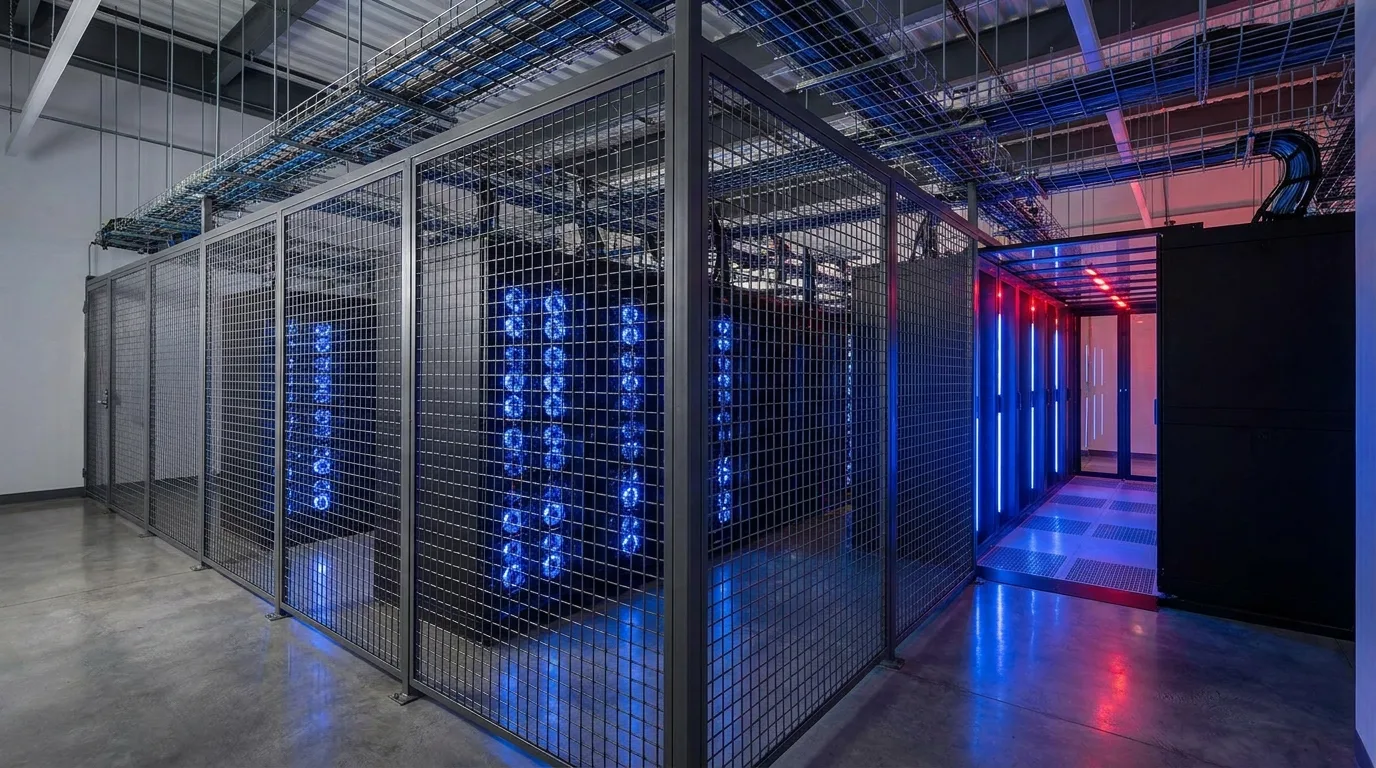
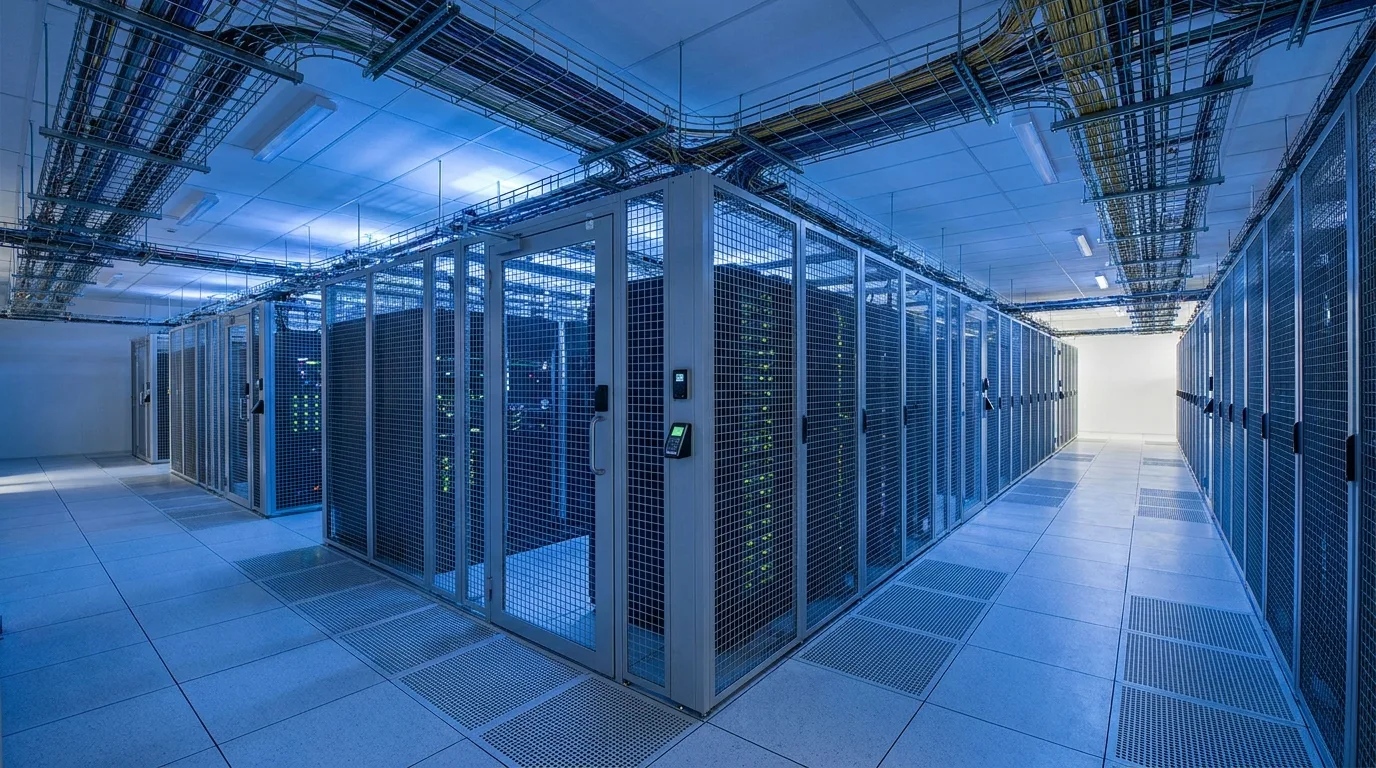
- Physical Space: Rack space in a shared data hall, private cages with locked perimeters within a shared hall, or dedicated private rooms. Standard racks are 42U, 45U, or 48U full-height cabinets, with each "U" (rack unit) providing 1.75 inches of vertical space for equipment mounting.
- Power Delivery: Reliable, redundant electrical power delivered to your rack via power distribution units (PDUs), typically using three-phase power for high-density deployments. Power is typically measured and billed in kilowatts (kW) per rack, with facilities offering anywhere from 5 kW to 100+ kW per rack depending on the deployment type.
- Cooling: Temperature and humidity control to keep servers within operational specifications, typically 64-80 degrees Fahrenheit (18-27 degrees Celsius) and 40-60% relative humidity per ASHRAE guidelines. Cooling technologies range from raised-floor air systems to advanced liquid cooling depending on power density.
- Network Connectivity: High-speed internet connections from multiple carriers (known as carrier neutrality), plus the ability to establish cross-connects for direct private connections to other tenants, cloud providers, or content delivery networks within the same facility or campus.
- Physical Security: Multi-layered security including perimeter fencing, vehicle barriers, mantrap entries (two interlocked doors preventing tailgating), biometric access controls (fingerprint, iris, or facial recognition), 24/7 CCTV monitoring with 90+ day retention, and on-site security personnel.
- Environmental Monitoring: Continuous sensor monitoring for temperature, humidity, water detection (leak detection under raised floors and near cooling equipment), air quality, and smoke detection, with automated alerting to facility staff and customers.
- Fire Suppression: Advanced fire detection systems (VESDA very early smoke detection) combined with clean-agent suppression systems (typically FM-200 or Novec 1230) that extinguish fires without damaging electronic equipment.
What You Provide and Manage
- Server Hardware: Your own servers, storage arrays, networking switches, firewalls, and any other IT infrastructure. You choose the hardware that best fits your needs.
- Software: Operating systems, applications, databases, security software, and all data management. You have root or administrator access to everything.
- Remote Management: Day-to-day monitoring and management of your servers via remote access tools including IPMI/BMC (out-of-band hardware management), SSH, Remote Desktop, or VPN.
- Hardware Maintenance: Repairs, upgrades, and component replacement. Most providers offer "remote hands" services where their on-site staff can perform physical tasks on your behalf at an hourly rate.
Benefits of Colocation
Cost Efficiency
Building and operating your own data center facility requires enormous capital expenditure that is difficult to justify for all but the largest organizations. Even a single-rack server room with proper power redundancy, cooling, fire suppression, and security can cost $100,000 to $500,000 to build. A multi-megawatt data center runs into tens or hundreds of millions of dollars. Colocation eliminates this capital expense entirely, converting it into predictable monthly operating expenses that scale with your actual needs.
Beyond the capital savings, colocation provides operational cost efficiency through economies of scale. A large colocation provider spreads the cost of security staff, cooling infrastructure, maintenance teams, and redundant power systems across hundreds of customers, resulting in per-customer costs that are a fraction of what each customer would pay independently.
Professional Infrastructure and Expertise
Colocation facilities are designed, built, and operated by experts in power engineering, mechanical cooling, physical security, and data center operations. They employ redundant systems designed according to industry best practices and standards (like the Uptime Institute tier classifications) that most organizations cannot replicate in-house. The facility operations team monitors power, cooling, and security 24/7/365, providing a level of vigilance that is impractical for most organizations to maintain for their own server rooms.
Network Connectivity Advantages
Major colocation facilities are carrier-neutral, meaning multiple internet service providers, telecommunications carriers, and cloud providers maintain equipment within the same building or campus. This creates a rich connectivity ecosystem where you can easily establish redundant internet connections from different providers, direct private connections to major cloud platforms (AWS Direct Connect, Azure ExpressRoute, Google Cloud Interconnect), and low-latency peering with other organizations in the same facility.
Scalability Without Construction
Need more server capacity? In a colocation environment, you request additional rack space and power allocation. There is no need to build an extension on your building, upgrade your electrical service from the utility, install additional cooling capacity, or hire more security guards. You can scale from one rack to one hundred racks within the same facility, paying only for the capacity you actually use.
Types of Colocation Services
Retail Colocation
Retail colocation is the most common model for small and medium deployments. Clients rent space by the rack, half-rack, or even individual rack units (U-space). Infrastructure is shared across many tenants in a common data hall, with each customer's equipment secured in locked racks or cages.
- Typical deployment: 1-20 racks in a shared data hall
- Power per rack: 2-15 kW standard, up to 30+ kW for high-density options
- Best for: Small and medium businesses, single-site deployments, initial colocation customers
- Contract terms: 1-3 year terms typical, with some flexibility for shorter commitments at premium pricing
Wholesale Colocation
Wholesale colocation provides dedicated, private space with bulk power allocation. Customers get their own private suites, cages, or entire data halls with more control over the physical environment and often more favorable per-kW pricing.
- Typical deployment: Private suites or data halls, typically 200 kW and above
- Power: Bulk allocation with flexibility in how power is distributed within the space
- Best for: Large enterprises, managed service providers, organizations with 20+ racks
- Contract terms: 3-10 year terms common, reflecting the provider's infrastructure investment
Powered Shell / Build-to-Suit
In the powered shell model, the provider delivers a building with utility power, a core cooling plant, and connectivity infrastructure, while the customer designs and builds out the interior to their exact specifications. This approach is used by hyperscale cloud providers, large AI companies, and organizations with highly specialized requirements.
- Typical deployment: Entire buildings or large wings, multi-megawatt power
- Best for: Hyperscale cloud providers, large-scale AI training operations, Mining Farm Design: From 1MW to 100MW - Complete Planning Guide at scale
- Contract terms: 10-20 year terms, sometimes with options to purchase
Understanding Colocation SLAs and Uptime
Service Level Agreements (SLAs) define the guaranteed performance standards that the colocation provider commits to deliver, along with the financial remedies (credits or refunds) if those standards are not met.
| Uptime SLA | Maximum Annual Downtime | Typical Tier |
|---|---|---|
| 99.9% (three nines) | 8 hours, 46 minutes | Tier I/II |
| 99.99% (four nines) | 52 minutes | Tier III |
| 99.999% (five nines) | 5 minutes, 15 seconds | Tier IV |
| 100% | Zero tolerance | Premium (rare) |
Beyond uptime, SLAs should also specify temperature maintenance ranges, humidity control, security response times, remote hands response times, and the process for reporting and resolving SLA violations. Read the fine print carefully: some SLAs exclude planned maintenance windows or force majeure events from their calculations.
Colocation Costs Explained
Primary Cost Components
- Space and Power: The core monthly fee, structured as per-rack, per-kW, or blended rates. Typical range: $150-300 per kW per month for retail, $100-200 per kW for wholesale. This usually includes cooling in the rate.
- Cross-connects: Physical cable connections to carriers, cloud providers, or other tenants. Typically $200-500 per month per connection. These provide dedicated private bandwidth that does not traverse the public internet.
- Bandwidth/Transit: Internet connectivity charges, either metered (per Mbps or per GB) or as a committed rate with burstable capacity. Varies widely by market and commitment level.
- Remote Hands: On-site technician services for physical tasks like racking servers, swapping failed drives, running cables, or power cycling equipment. Typically $75-150 per hour.
- Setup and Installation: One-time charges for initial cabinet installation, power provisioning, cross-connect installation, and access credential setup. Typically $500-5,000 depending on complexity.
Choosing the Right Colocation Provider
Evaluation Checklist
- Location: Geographic proximity to your team (for physical access), natural disaster risk profile, local electricity costs, regulatory and tax environment, and proximity to major internet exchange points
- Power: Available capacity now and for future growth, redundancy level (N+1, 2N), backup generator capacity and fuel autonomy, Understanding UPS Systems for Data Centers: Types, Sizing, and Best Practices configuration
- Cooling: Technology and capacity to support your power density requirements, ability to support future higher-density deployments (Data Center Cooling Technologies Compared: Air, Liquid, and Immersion)
- Network: Number and diversity of carriers present, availability of cloud on-ramps, proximity to internet exchange points, internal network redundancy
- Security: Physical access control layers, compliance certifications (SOC 2 Type II, ISO 27001, PCI DSS, HIPAA), security staffing model
- Track Record: Actual uptime history (ask for data, not just SLA commitments), customer references, financial stability of the provider, years in operation
Choosing Wisely: The cheapest colocation is rarely the best value. A single hour of unexpected downtime can cost more than a year of premium pricing. Evaluate providers on their infrastructure quality, operational excellence, and ability to grow with your needs, not just on price. Understanding power redundancy architectures helps you ask the right questions. RAX Data & Energy combines competitive pricing with the infrastructure quality and operational expertise that demanding workloads require.
Colocation for Specialized Workloads
While traditional colocation serves general enterprise IT needs, several specialized workload categories have unique requirements that not all providers can meet:
- GPU/AI Workloads: Require high-density power (40-120+ kW/rack), advanced liquid cooling, and potentially InfiniBand networking. See GPU Colocation: Everything You Need to Know in 2026.
- Bitcoin Mining: Requires the lowest possible power cost, high density, and tolerance for noise. SLA requirements are lower since mining hardware can tolerate brief outages. See Mining Farm Design: From 1MW to 100MW - Complete Planning Guide.
- Financial Services: Requires ultra-low latency networking, extreme reliability (2N+1 power), and specific compliance certifications.
- Healthcare and Government: Requires specific compliance certifications (HIPAA for healthcare, FedRAMP for federal government) and may have data sovereignty requirements.
Migration Planning: Moving to Colocation
Migrating existing on-premises infrastructure to a colocation facility requires careful planning to minimize downtime and risk. The process typically involves an infrastructure audit (documenting all hardware, connectivity requirements, and dependencies), colocation provider selection and contract negotiation, network planning (establishing connectivity between your offices and the colocation facility before migration), a phased migration schedule that moves less critical systems first to build confidence before migrating production workloads, parallel operation during the transition period where both the original site and the colocation facility run simultaneously, and a final cutover with thorough testing and rollback procedures. Most organizations complete a colocation migration in 2-6 months depending on the scale and complexity of their infrastructure.
The Future of Colocation
Colocation continues to evolve in response to changing technology demands. The convergence of AI, edge computing, and sustainability requirements is driving facilities toward higher power densities, advanced cooling technologies, renewable energy integration, and more sophisticated connectivity options. Regions like Texas and the UAE are leading this next wave of capacity buildout. Providers who invest in next-generation infrastructure today will be best positioned to serve the demanding workloads of tomorrow.
RAX Data & Energy specializes in colocation for power-intensive workloads including cryptocurrency mining, AI/HPC, and general enterprise computing. Our facilities are engineered for the high power densities and cooling requirements that these demanding workloads need, with competitive electricity rates that make power-intensive operations economically viable.