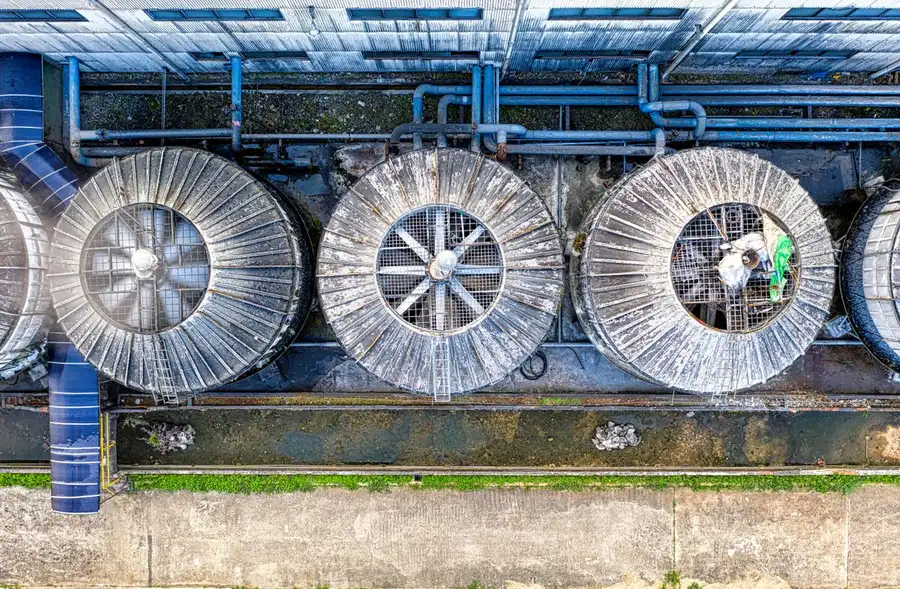
Data centers consume enormous amounts of water. A single hyperscale facility can use 3–5 million gallons per day — roughly the same as a city of 30,000 people. As water scarcity intensifies globally and regulators tighten reporting requirements, Water Usage Effectiveness (WUE) has become a critical metric for data center operators, tenants, and investors alike.
This guide explains how WUE works, what the benchmarks are, and what practical steps data center operators can take to reduce water consumption — especially in hot, arid climates like the UAE and Middle East.
What Is Water Usage Effectiveness (WUE)?
Water Usage Effectiveness is a metric defined by The Green Grid that measures how much water a data center uses relative to the IT energy it delivers. The formula is straightforward:
Result expressed in liters per kilowatt-hour (L/kWh)
A lower WUE is better. A WUE of 0.0 means the facility uses no water at all for its operations. The industry average hovers around 1.8 L/kWh, while leading facilities achieve 0.5 L/kWh or below.
What Water Gets Counted?
WUE includes all water consumed on site for:
- Cooling — Evaporative cooling towers, adiabatic systems, chiller makeup water.
- Humidification — Steam or ultrasonic humidifiers maintaining server room humidity at 40–60% RH.
- On-site power generation — Water used in any on-site generators (steam turbines, fuel cells).
WUE does not count water consumed upstream by the power grid to generate electricity (sometimes called "source WUE" or WUEsource). That metric adds 2–4 L/kWh for thermal power generation but is outside the operator's direct control.
WUE Benchmarks by Cooling Type
Water consumption varies dramatically based on cooling technology. Understanding these benchmarks helps operators set realistic improvement targets.
| Cooling Technology | Typical WUE (L/kWh) | Notes |
|---|---|---|
| Open cooling tower (evaporative) | 2.0–4.0 | Highest water use; common in hot climates |
| Indirect evaporative cooling (IEC) | 0.8–2.0 | 60–80% less water than open towers |
| Chilled water (water-cooled chillers) | 1.0–2.5 | Depends on condenser type |
| Air-cooled chillers | 0.1–0.5 | Water only for humidification |
| Free air cooling (economizer) | 0.0–0.3 | No evaporative water; minimal humidification |
| Rear-door heat exchangers | 0.0–0.2 | Closed-loop; no water loss |
| Direct liquid cooling (DLC) | 0.0–0.1 | Closed-loop to dry coolers |
| Immersion cooling | 0.0 | Zero water; heat rejected via dry coolers |
Why WUE Matters More Than Ever
Regulatory Pressure
The EU's Corporate Sustainability Reporting Directive (CSRD) now requires data center operators to disclose WUE alongside PUE. Similar requirements are emerging in Singapore, India, and the UAE. Operators who cannot demonstrate water efficiency face permitting delays and reputational risk.
Water Scarcity
Roughly 40% of the world's data center capacity is located in water-stressed regions. In the Middle East, North Africa, and parts of the American Southwest, water availability directly constrains data center growth. The UAE's TDRA regulations increasingly factor water consumption into facility approvals.
Cost
Industrial water prices have risen 30–50% in many regions over the past five years. A 10 MW facility using open cooling towers at a WUE of 3.0 L/kWh consumes approximately 26 million liters per year. At $3–$5 per 1,000 liters, that is $78,000–$130,000 annually in direct water costs, not counting treatment, discharge, and infrastructure maintenance.
ESG and Investor Expectations
Major cloud tenants (hyperscalers, enterprises) now include WUE in their colocation procurement criteria. Google, Microsoft, and Meta all publish facility-level WUE data. Operators who cannot match these transparency standards lose deals.
Strategies to Reduce WUE
1. Transition from Evaporative to Closed-Loop Cooling
The single most impactful change is eliminating or reducing evaporative cooling. Replacing open cooling towers with dry coolers or rear-door heat exchangers can reduce WUE by 80–95%. The trade-off is higher PUE in hot climates because dry cooling is less thermally efficient — but many operators accept a 0.05–0.10 PUE increase to achieve near-zero WUE.
2. Deploy Direct Liquid Cooling (DLC)
DLC brings coolant directly to the server's CPU and GPU heat spreaders via cold plates. The warm return fluid (typically 40–45 degrees C) is warm enough to reject heat via dry coolers or even rooftop radiators, completely eliminating the need for evaporative cooling. DLC is especially effective for high-density AI racks drawing 40–100 kW per rack, where air cooling alone cannot keep up.
3. Use Indirect Evaporative Cooling (IEC)
Where some evaporative cooling is necessary, indirect evaporative cooling uses polymer or metal heat exchangers to separate the evaporating water stream from the supply air. This prevents mineral deposits in the air-side equipment and reduces water consumption by 60–80% compared to direct evaporative systems. IEC units from manufacturers like Munters, Nortek, and CoolIT are standard in modern facilities.
4. Reclaim and Recycle Water
Condensate recovery from air handling units can reclaim 10–30% of evaporated water in humid climates. Blowdown water from cooling towers can be treated and recycled instead of discharged. Some facilities use on-site reverse osmosis to treat gray water or desalinated seawater for cooling makeup, avoiding potable water entirely.
5. Optimize Humidity Control
The ASHRAE A1 temperature/humidity envelope allows server rooms to operate at 20–80% relative humidity. Many facilities over-humidify at 45–50% RH when the hardware tolerates much wider ranges. Widening the humidity setpoint to 25–60% RH can reduce humidification water use by 40–60%.
6. Raise Inlet Temperatures
Operating server inlets at 27–32 degrees C (ASHRAE A2/A3) instead of the traditional 18–22 degrees C increases the number of hours that dry cooling or free cooling can handle the heat load without activating evaporative systems. Each degree of raised inlet temperature extends the annual dry-cooling window by 200–400 hours.
WUE in Hot Climates: The UAE Challenge
Hot, arid climates present a paradox: high ambient temperatures make evaporative cooling very effective (large wet-bulb depression), but water is scarce and expensive. UAE data center operators face ambient temperatures exceeding 45 degrees C for three to four months per year, pushing cooling systems to their limits.
Strategies that work in the UAE context:
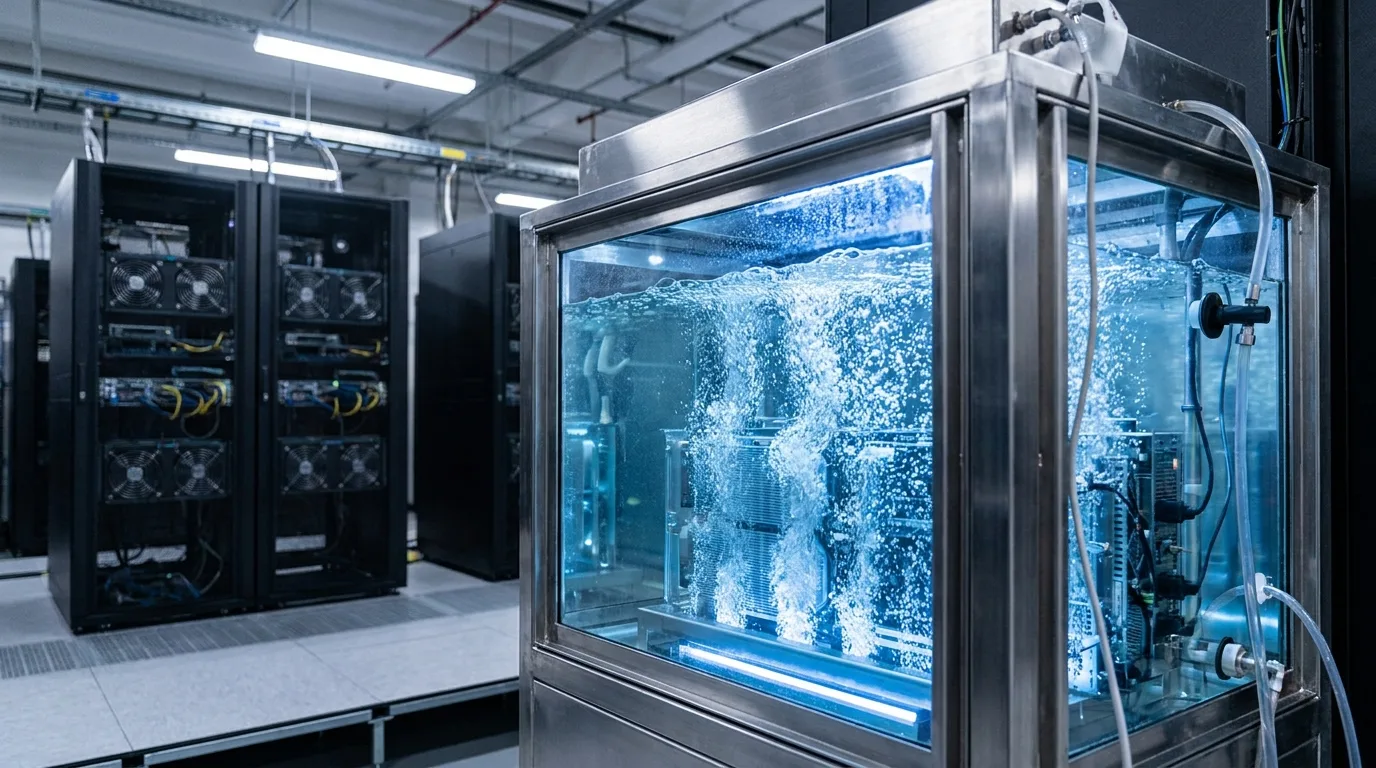
- Immersion cooling for high-density racks — Eliminates water use entirely for the most power-dense equipment (GPU clusters, HPC nodes). Rax Data deploys immersion cooling for racks exceeding 50 kW.
- Hybrid cooling architecture — DLC for servers, IEC for ambient air handling. This limits evaporative water use to the facility envelope rather than the IT equipment.
- Desalinated water sourcing — UAE's extensive desalination infrastructure means data centers can use non-potable water, reducing pressure on freshwater resources.
- Night-time dry cooling with thermal storage — Charging chilled water tanks during cooler nighttime hours (25–30 degrees C) and using stored cooling during peak daytime heat, reducing or eliminating daytime evaporative cooling.
WUE vs PUE: Complementary Metrics
WUE and PUE are complementary, not competing, metrics. A facility can have an excellent PUE (1.10) but a terrible WUE (3.0 L/kWh) if it achieves energy efficiency through aggressive evaporative cooling. Conversely, a facility might sacrifice some PUE (1.25) to achieve near-zero WUE by using less efficient but water-free dry cooling.
The best facilities optimize both simultaneously. DCIM platforms can track PUE and WUE in real time, enabling operators to adjust cooling strategies dynamically based on ambient conditions, water costs, and electricity prices.
Monitoring and Reporting WUE
Accurate WUE measurement requires:
- Water meters on every intake — Municipal supply, well water, reclaimed water, and desalinated water all need separate meters.
- Sub-metering by system — Separate meters for cooling towers, humidifiers, and any other water-consuming systems. This identifies where optimization efforts will have the most impact.
- IT power metering — The denominator requires accurate measurement of power delivered to IT equipment (not total facility power, which includes cooling and lighting).
- Automated reporting — Integrate water and power meters into your DCIM platform for continuous WUE calculation and trend analysis.
Frequently Asked Questions
What is a good WUE for a data center?
A good WUE depends on climate and cooling technology. The industry average is approximately 1.8 L/kWh. Best-in-class air-cooled facilities in cool climates achieve 0.5–1.0 L/kWh. Facilities using evaporative cooling in hot climates typically range from 1.5–3.0 L/kWh. Liquid-cooled and immersion-cooled data centers can achieve WUE below 0.5 L/kWh by eliminating evaporative processes entirely. A WUE of 0.0 is achievable with completely closed-loop liquid cooling.
How is WUE calculated?
WUE is calculated by dividing the total annual water usage (in liters) by the total IT equipment energy consumption (in kilowatt-hours): WUE = Annual Water Usage (L) / Annual IT Energy (kWh). For example, a facility consuming 5 million liters per year with 10 million kWh of IT energy has a WUE of 0.5 L/kWh. The metric counts all water consumed for cooling, humidification, and on-site power generation.
How can data centers reduce water usage in hot climates like the UAE?
Key strategies include: deploying direct liquid or immersion cooling to eliminate evaporative towers, using dry coolers with closed-loop glycol systems, implementing indirect evaporative cooling with polymer heat exchangers (60–80% water reduction), capturing condensate for reuse, and using desalinated or reclaimed water instead of potable supply. Some UAE facilities achieve WUE below 0.3 L/kWh by combining liquid cooling with dry heat rejection.
Related Articles
Need Water-Efficient Data Center Hosting?
Rax Data operates facilities with advanced liquid cooling and immersion cooling technology, achieving industry-leading WUE in the UAE. Get a custom colocation or managed hosting quote.
Request a Quote