Renewable Energy Certificates and Carbon Credits for Data Centers
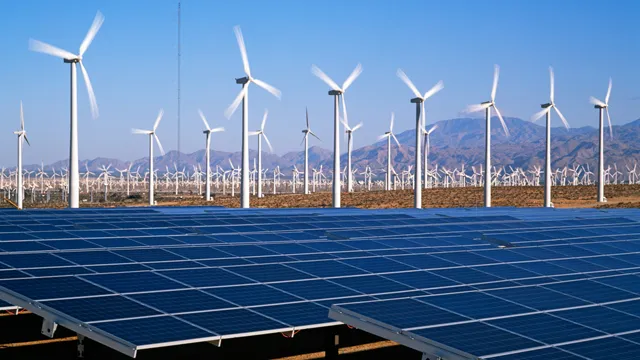
Data centers consumed approximately 460 TWh of electricity globally in 2025, representing roughly 2% of total global electricity demand. As that number accelerates with AI training workloads and expanding cloud infrastructure, the pressure on operators to demonstrate credible renewable energy procurement and carbon reduction has moved from voluntary sustainability reporting to a hard commercial requirement. Enterprises selecting colocation providers now routinely include renewable energy percentage and carbon intensity metrics in their RFP scoring criteria. Institutional investors apply ESG screens that penalize data center operators without verifiable clean energy commitments. And in the Gulf region specifically, governments are tying data center licensing approvals to sustainability commitments as part of national net-zero strategies.
This guide covers the three primary market-based instruments data center operators use to address their energy footprint: renewable energy certificates (RECs), carbon credits, and power purchase agreements (PPAs). It explains how each works, when to use which, how they interact with greenhouse gas accounting standards, and what constitutes credible versus superficial sustainability claims in the data center industry.
Understanding Scope 2 Emissions and Market-Based Accounting
Before examining the instruments, it is important to understand the accounting framework that governs their use. The GHG Protocol Corporate Standard defines three scopes of emissions. For data centers, the relevant categories are:
- Scope 1: Direct emissions from sources owned or controlled by the operator. For data centers, this includes diesel backup generators, natural gas heating systems, and refrigerant leaks from cooling systems. Typically 1-5% of total emissions for a data center.
- Scope 2: Indirect emissions from purchased electricity. This is the dominant category for data centers, typically 85-95% of total emissions. RECs and PPAs address this scope.
- Scope 3: All other indirect emissions in the value chain. For data centers, this includes embodied carbon in servers, construction materials, employee commuting, and end-of-life disposal. Increasingly important but harder to quantify and address.
The GHG Protocol provides two methods for calculating Scope 2 emissions: location-based (using the average grid emission factor for the region where electricity is consumed) and market-based (using emission factors from contractual instruments like RECs, PPAs, or supplier-specific emission factors). Most data center sustainability claims rely on the market-based method because it allows operators to claim renewable energy usage through certificate procurement even when the physical electricity they consume comes from a mixed-source grid.
Renewable Energy Certificates (RECs)
How RECs Work
A Renewable Energy Certificate represents the environmental attributes of one megawatt-hour (MWh) of electricity generated from a qualified renewable source (solar, wind, hydroelectric, biomass, geothermal). When a renewable generator produces electricity, two products are created: the physical electricity (which enters the grid and is indistinguishable from other electrons) and the certificate (which represents the "greenness" of that electricity). These can be sold together (bundled) or separately (unbundled).
When a data center purchases and retires a REC, it claims the environmental attributes of that MWh of renewable generation. The generator that sold the REC can no longer claim those attributes. This system prevents double-counting: only the entity that retires the certificate can claim the renewable energy.
Regional REC Standards
| Region | Instrument | Registry | Typical Price (2026) |
|---|---|---|---|
| North America | REC (Green-e certified) | WREGIS, M-RETS, PJM-GATS, NEPOOL-GIS | $1-$15/MWh |
| Europe | Guarantee of Origin (GO) | AIB Hub, national registries | $0.50-$8/MWh |
| Middle East / GCC | I-REC | I-REC Registry (managed by I-Track Foundation) | $1.50-$4/MWh |
| Asia-Pacific | I-REC, TIGR, J-Credits (Japan) | Various national registries | $1-$6/MWh |
| Global | I-REC (International) | I-REC Registry | $1-$6/MWh |
I-RECs in the UAE and GCC
The International Renewable Energy Certificate (I-REC) is the dominant tracking instrument in the Middle East. The UAE has particularly strong I-REC issuance infrastructure, driven by its large-scale solar investments. Key sources include the Mohammed bin Rashid Al Maktoum Solar Park (5 GW planned capacity), the Al Dhafra Solar Project (2 GW, one of the world's largest single-site solar plants), and the Noor Abu Dhabi plant (1.177 GW).
For data centers operating in the UAE, I-RECs provide a straightforward path to 100% renewable electricity claims. At $1.50-$4.00 per MWh, a data center consuming 10 MW continuously (87,600 MWh annually) would spend $131,400 to $350,400 per year on I-RECs -- a modest cost relative to total electricity expenditure. Our guide to carbon-neutral data centers covers the broader decarbonization strategy that I-RECs fit within.
REC Quality Criteria
Not all RECs carry equal credibility. The RE100 initiative and Science Based Targets initiative (SBTi) specify quality criteria that data center operators should apply when procuring certificates:
- Temporal matching: RECs should be from the same reporting period as the electricity consumption they are matching. Annual matching (purchasing certificates generated in the same calendar year) is the minimum standard. Hourly matching (24/7 carbon-free energy, as pursued by Google and Microsoft) is the emerging best practice.
- Geographic matching: Certificates should be from the same grid or market as the data center. A UAE data center purchasing wind RECs from Norway provides no local grid impact and faces credibility challenges. I-RECs from UAE solar projects are the appropriate instrument for UAE facilities.
- Technology and vintage: Solar and wind RECs from recently built projects (within 15 years of operation) demonstrate higher additionality than certificates from decades-old hydroelectric dams that would have operated regardless of REC demand.
- Additionality: The gold standard for RECs is that the certificate purchase directly contributed to building new renewable capacity that would not have been built otherwise. Power purchase agreements score highest on additionality because they provide the revenue certainty that finances new renewable projects.
Carbon Credits (Carbon Offsets)
How Carbon Credits Work
A carbon credit represents one metric ton of CO2 equivalent (tCO2e) that has been avoided, reduced, or removed from the atmosphere through a verified project. Unlike RECs, which address electricity source, carbon credits address residual greenhouse gas emissions -- the emissions that remain after an organization has reduced its footprint through efficiency improvements and renewable energy procurement.
Carbon credits fall into two broad categories:
- Avoidance credits: Prevent emissions that would have otherwise occurred. Examples include protecting a forest from deforestation (REDD+), distributing clean cookstoves to replace wood-burning stoves, or capturing methane from a landfill. These do not remove existing CO2; they prevent new emissions.
- Removal credits: Physically remove CO2 from the atmosphere. Examples include direct air capture (DAC) with permanent geological storage, biochar, enhanced weathering, and afforestation. These are more expensive ($50-$1,000+ per tCO2e for DAC) but represent genuine atmospheric carbon reduction.
Carbon Credit Standards
Credible carbon credits are verified under recognized standards:
- Verra (VCS): The largest voluntary carbon market standard. Issues Verified Carbon Units (VCUs). Covers avoidance and removal projects across all methodologies.
- Gold Standard: Founded by WWF. Emphasizes sustainable development co-benefits alongside carbon reduction. Generally considered higher quality than VCS for avoidance credits.
- Puro.earth: Focuses exclusively on carbon removal. Covers biochar, enhanced weathering, carbonated building materials, and other removal technologies.
- CDM (Clean Development Mechanism): UN-administered standard under the Kyoto Protocol. Being phased out in favor of Article 6 of the Paris Agreement but legacy credits still trade.
Carbon Credits for Data Centers
Data center operators typically use carbon credits to address three emission categories that cannot be eliminated through renewable energy procurement alone:
- Scope 1 emissions: Diesel generator testing and emergency operation (typically 500-2,000 tCO2e per year for a 10 MW facility), refrigerant leaks from cooling systems (variable, can be significant if using high-GWP refrigerants).
- Residual Scope 2: If the data center cannot achieve 100% renewable electricity matching through RECs or PPAs, credits address the gap.
- Scope 3 emissions: Embodied carbon in servers, construction materials, and other supply chain emissions. This is a growing focus area.
The cost depends on credit quality. Data centers serious about credible net-zero claims should budget $15-$50 per tCO2e for high-quality avoidance credits or $200-$600 per tCO2e for removal-based credits. A 10 MW data center with 1,500 tCO2e of residual annual emissions would spend $22,500 to $900,000 annually on carbon credits, depending on the quality tier selected.
Power Purchase Agreements (PPAs)
Types of PPAs
Power purchase agreements represent the strongest form of renewable energy procurement because they directly finance new renewable capacity. There are several structures relevant to data centers:
- Physical PPA (on-site or direct-wire): The data center receives physical delivery of renewable electricity from a nearby generator via a direct connection or a dedicated line. Provides both the electrons and the certificates. Most common for data centers adjacent to solar farms or wind installations. Rax facilities in the UAE are positioned to leverage physical PPAs from nearby solar capacity.
- Virtual PPA (financial PPA): A contract-for-difference arrangement where the data center agrees to pay a fixed price for the renewable generator's output, regardless of where the electricity is physically delivered. The generator sells its physical electricity into the wholesale market and transfers the RECs to the data center. No physical electricity delivery occurs. Common for data centers that want to support new renewable projects but are not physically near them.
- Sleeved PPA: An intermediary utility or retailer sits between the renewable generator and the data center, handling balancing, transmission, and billing. The data center receives both electricity and certificates through the utility. Simpler contractually than a direct PPA but typically more expensive due to the intermediary margin.
PPA Economics for Data Centers
PPAs provide price certainty (typically 15-25 year fixed-price contracts) that hedge against electricity cost volatility. In the UAE, solar PPA prices have reached record lows:
| Project | PPA Price (USD/MWh) | Capacity | Year Awarded |
|---|---|---|---|
| Al Dhafra Solar (Abu Dhabi) | $13.50 | 2 GW | 2020 |
| MBR Solar Park Phase V (Dubai) | $16.90 | 900 MW | 2020 |
| Saih Al Dahal (Abu Dhabi) | $14.00 | 1.5 GW | 2023 |
| Khazna Solar (Abu Dhabi) | $15.80 | 1 GW | 2024 |
These prices are among the lowest in the world, making the UAE an attractive location for energy-intensive operations that need green credentials. A data center consuming 10 MW continuously at a PPA price of $15/MWh would pay approximately $1.31 million annually for renewable electricity -- comparable to or below conventional grid rates in many markets. Our solar mining profitability analysis demonstrates how these economics apply to cryptocurrency mining operations specifically.
Building a Credible Sustainability Strategy
The Hierarchy of Actions
A credible data center sustainability strategy follows a hierarchy of actions, from most to least impactful:
- Reduce consumption: Improve PUE through advanced cooling, efficient hardware selection, workload optimization, and free cooling where climate permits. Every MWh not consumed is a MWh that does not need to be greened.
- Procure renewable electricity directly: Physical PPAs, on-site solar, or virtual PPAs with additionality. This is the strongest claim because it directly finances new renewable capacity.
- Purchase high-quality RECs: Geographic and temporally matched certificates from recent renewable projects. Fill gaps where PPAs do not cover 100% of consumption.
- Offset residual emissions: High-quality carbon credits for Scope 1 and unavoidable Scope 3 emissions. Prioritize removal-based credits over avoidance credits.
- Disclose transparently: Report using GHG Protocol dual-reporting (both location-based and market-based Scope 2), disclose REC and credit sources, and submit targets for third-party validation (SBTi, RE100).
Common Pitfalls
Data center operators frequently make sustainability claims that do not withstand scrutiny:
- Geographic mismatch: Purchasing Scandinavian wind RECs for a UAE data center. While technically valid under some REC standards, this provides zero local grid impact and is increasingly flagged by auditors and ESG analysts.
- Vintage mismatch: Purchasing 2023 RECs in 2026 to claim renewable energy for 2026 operations. Most credible standards require same-year matching.
- Over-reliance on avoidance credits: Using cheap forestry avoidance credits ($2-$5/tCO2e) as the primary decarbonization instrument signals a lack of genuine commitment. These credits have faced significant scrutiny regarding baseline assumptions and permanence.
- Ignoring Scope 3: Claiming "net-zero" while excluding embodied carbon from servers, construction, and supply chain. SBTi requires Scope 3 inclusion for net-zero claims.
- No underlying reduction: Purchasing certificates and credits without any operational efficiency improvements. Credible sustainability strategies show year-over-year reductions in absolute emissions alongside market-based instrument procurement.
Regulatory Landscape: UAE and Global
UAE Sustainability Framework
The UAE has established several policy frameworks that affect data center energy procurement:
- UAE Net Zero by 2050 Strategic Initiative: Commits the UAE to net-zero emissions by 2050. Data centers, as growing energy consumers, are expected to align with this trajectory. New data center developments may face requirements to demonstrate renewable energy procurement plans as part of permitting.
- Dubai Clean Energy Strategy 2050: Targets 75% clean energy by 2050 for Dubai. DEWA (Dubai Electricity and Water Authority) operates a Green Charger program and issues I-RECs from the Mohammed bin Rashid Solar Park.
- Abu Dhabi Energy Strategy: EWEC (Emirates Water and Electricity Company) manages large-scale renewable procurement. Data centers in Abu Dhabi can access I-RECs from Al Dhafra and other projects.
- Green Economy for Sustainable Development (2012): Overarching framework that encourages green building standards, energy efficiency, and renewable energy adoption across all sectors including ICT and data centers.
EU and International Standards
Data centers serving European clients or operating in jurisdictions with EU exposure must consider the EU Energy Efficiency Directive (EED), which mandates energy reporting for data centers above 500 kW, and the Corporate Sustainability Reporting Directive (CSRD), which requires detailed climate disclosures for large companies operating in the EU. Even UAE-based data centers hosting EU customer workloads may need to provide sustainability data that their clients can include in CSRD reports.
Cost-Benefit Analysis for a 10 MW Data Center
| Instrument | Annual Cost (10 MW facility) | Scope Addressed | Credibility |
|---|---|---|---|
| I-RECs (unbundled, UAE solar) | $131K-$350K | Scope 2 | Medium |
| Virtual PPA (UAE solar, 15yr) | $1.1M-$1.5M (electricity cost) | Scope 2 | High |
| Physical PPA (on-site/direct) | $1.0M-$1.3M (electricity cost) | Scope 2 | Highest |
| Carbon credits (avoidance, Gold Standard) | $22K-$75K (for 1,500 tCO2e) | Scope 1, residual | Medium |
| Carbon credits (removal, DAC) | $300K-$900K (for 1,500 tCO2e) | Scope 1, residual | Highest |
| SBTi validation + reporting | $50K-$100K (one-time + annual) | All scopes (framework) | Essential |
For most data center operators, the practical approach combines a PPA (covering the majority of electricity with high additionality), I-RECs (filling temporal gaps where PPA generation does not match consumption), and a modest portfolio of high-quality carbon credits for residual Scope 1 emissions. Rax Energy can design a renewable energy procurement strategy that aligns with these best practices while leveraging the UAE's advantageous solar economics.
24/7 Carbon-Free Energy: The Next Frontier
The industry is moving beyond annual renewable energy matching toward 24/7 carbon-free energy (CFE) -- matching every hour of electricity consumption with carbon-free generation in the same grid region. Google pioneered this concept and aims for 24/7 CFE across all operations by 2030. Microsoft and other hyperscalers have announced similar targets.
For data centers in the UAE, 24/7 CFE presents a unique challenge: solar generation peaks during the day but data centers run 24 hours. Addressing nighttime consumption requires either battery energy storage systems to shift solar generation to nighttime hours, pairing solar with other carbon-free generation sources (nuclear from the Barakah plant, which operates 24/7), or implementing workload shifting to align compute-intensive tasks with solar generation hours (feasible for training workloads, not for latency-sensitive inference).
The UAE is better positioned than most regions for 24/7 CFE because of its exceptionally high solar capacity factor (approximately 1,800-2,100 kWh/kWp/year), the Barakah nuclear plant (5.6 GW, providing baseload carbon-free power), and an integrated national grid that facilitates clean energy transmission across emirates.
Green Your Data Center Operations
Rax Data & Energy operates in the UAE with access to some of the world's lowest-cost solar energy. We can help design a renewable energy procurement strategy for your colocation, mining, or AI compute operations.
Discuss Energy Solutions