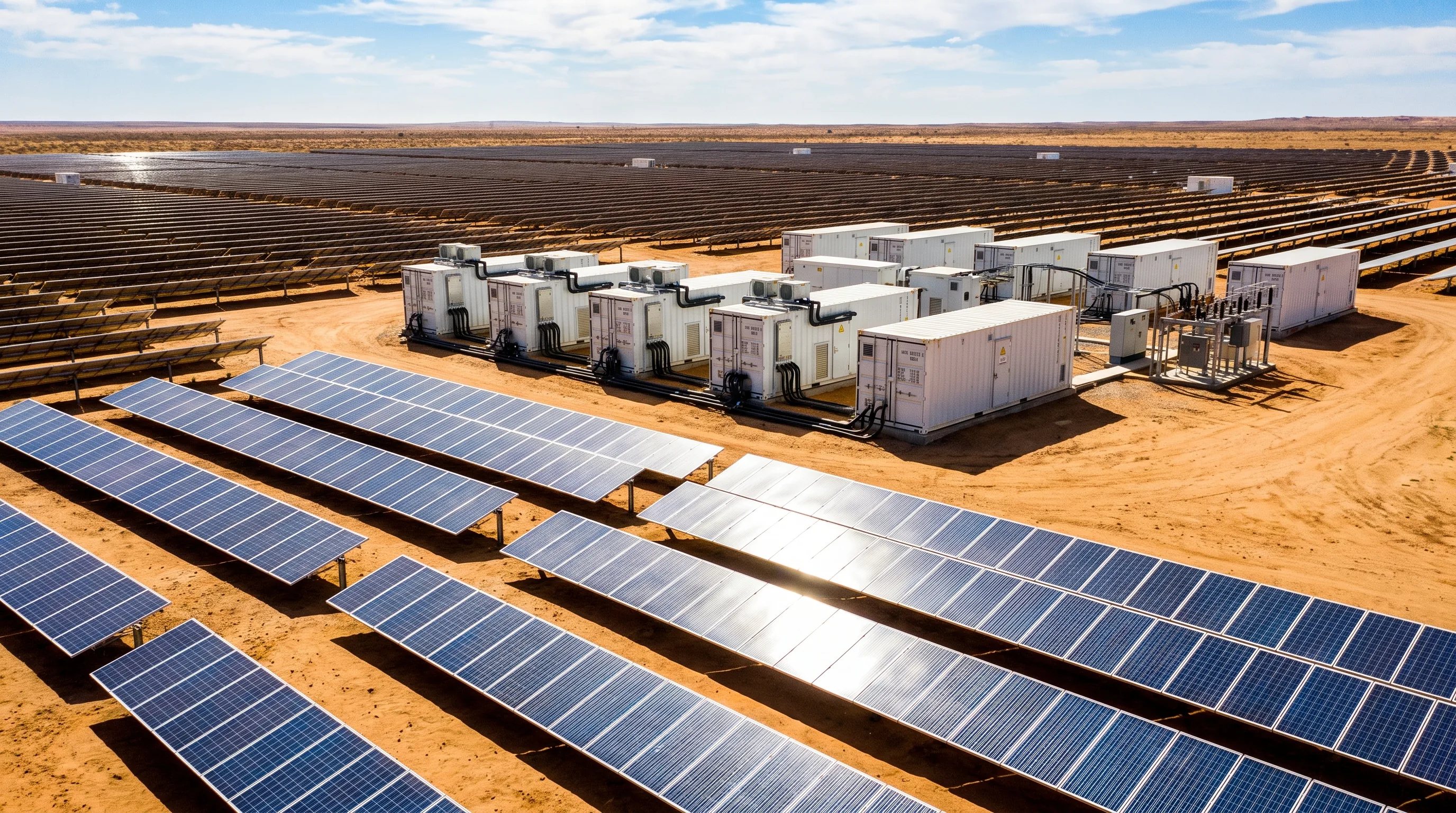
Why Solar Mining Is Gaining Momentum
Electricity is the single largest operating expense in Bitcoin mining, typically accounting for 60–80% of ongoing costs. As the network difficulty climbs and block rewards decrease after each halving event, miners need every advantage to stay profitable. Solar energy offers a compelling solution: generate your own power at a levelized cost far below retail electricity rates, and mine Bitcoin for years at near-zero marginal energy cost.
The economics have shifted dramatically. Solar panel costs have fallen below $0.30 per watt in 2026, commercial battery storage has dropped to roughly $150/kWh, and next-generation ASIC miners deliver over 200 TH/s at under 15 J/TH. Combined, these trends make solar mining more attractive than ever — but only when the operation is designed correctly.
The Economics of Solar-Powered Mining
Levelized Cost of Energy (LCOE)
The key metric for solar mining profitability is the levelized cost of energy — the total cost of the solar system divided by the total energy it produces over its lifetime. A well-sited commercial solar installation in 2026 achieves an LCOE of $0.02–$0.04/kWh, compared to industrial grid rates of $0.06–$0.12/kWh in most US markets. That 50–80% reduction in electricity cost translates directly into higher mining margins.
Key insight: At $0.03/kWh solar LCOE versus $0.08/kWh grid power, a 1 MW mining operation saves approximately $36,500 per month on electricity alone — over $438,000 annually.
Capital Costs vs. Operating Savings
Solar mining requires higher upfront capital but dramatically lower ongoing costs. Here is how the numbers break down for different deployment scales:
| Component | 100 kW System | 1 MW System | 10 MW System |
|---|---|---|---|
| Solar panels | $25,000–$30,000 | $200,000–$280,000 | $1.8M–$2.5M |
| Inverters & BOS | $8,000–$12,000 | $60,000–$90,000 | $500K–$800K |
| Battery storage (4hr) | $50,000–$70,000 | $400K–$600K | $3.5M–$5.5M |
| Installation & permits | $15,000–$20,000 | $100K–$150K | $800K–$1.2M |
| Total solar capex | $98K–$132K | $760K–$1.12M | $6.6M–$10M |
| Monthly electricity savings | $3,600–$4,800 | $36,500–$48,000 | $365K–$480K |
| Solar break-even | 22–30 months | 18–26 months | 16–22 months |
These figures assume a location with strong solar irradiance (5+ peak sun hours per day) and an optimized power delivery chain. Higher-latitude locations with fewer sun hours will push break-even timelines out by 30–50%.
Choosing the Right Location
Solar irradiance varies enormously by geography. The difference between an optimal location and a mediocre one can double your break-even timeline. The best regions for solar mining combine high irradiance with favorable electricity markets and mining-friendly regulatory environments.
Top Regions for Solar Bitcoin Mining
- US Southwest — Texas, Arizona, Nevada, and New Mexico offer 5.5–7+ peak sun hours daily, mining-friendly regulations, and low land costs
- UAE & Middle East — Exceptional irradiance (6–7+ peak hours), free zone incentives, and zero income tax make the UAE a prime solar mining destination
- Australia — Strong irradiance across Queensland and Western Australia, with growing regulatory clarity for crypto operations
- North Africa — Morocco, Egypt, and Tunisia offer high irradiance and increasingly competitive solar installation costs
| Region | Peak Sun Hours/Day | Grid Alternative ($/kWh) | Solar LCOE ($/kWh) | Annual Savings per MW |
|---|---|---|---|---|
| Texas (West) | 5.5–6.5 | $0.06–$0.09 | $0.025–$0.035 | $300K–$480K |
| Arizona | 6.0–7.5 | $0.07–$0.10 | $0.020–$0.030 | $400K–$550K |
| UAE | 6.5–7.0 | $0.08–$0.12 | $0.020–$0.028 | $480K–$700K |
| Wyoming | 5.0–5.8 | $0.05–$0.07 | $0.030–$0.040 | $175K–$260K |
System Architecture for Solar Mining
Grid-Tied vs. Off-Grid vs. Hybrid
The architecture of your solar mining system significantly impacts both profitability and uptime. Each approach has trade-offs:
- Grid-tied (most common): Solar offsets grid consumption during daylight; grid supplements at night and on cloudy days. Lowest capex, highest uptime, no battery needed. Many regions allow net metering for excess production.
- Off-grid: Fully independent — requires substantial battery storage (8–16 hours) or accepts reduced mining hours. Best for remote locations with no grid access. Higher capex, lower long-term opex.
- Hybrid (recommended): Solar primary with battery buffer (4–6 hours) and grid backup. Captures most savings while maintaining near-100% uptime. Enables demand response revenue and peak-shaving.
For most commercial mining operations, a hybrid approach delivers the best risk-adjusted returns. The battery buffer allows you to mine through brief cloud cover and evening hours, while grid backup ensures you never miss profitable mining windows. Rax Energy specializes in designing these hybrid power solutions for mining facilities.
Cooling Considerations
Solar mining operations in high-irradiance regions face a challenge: the same sunshine that powers your panels also heats your facility. Effective cooling infrastructure is essential. Immersion cooling pairs particularly well with solar installations because it eliminates the need for large HVAC systems that consume additional power, and it maintains consistent ASIC performance even at ambient temperatures above 40°C.
Hardware Selection for Solar Operations
Not all miners are equally suited to solar-powered operations. The critical metric is energy efficiency (J/TH) — how many joules of electricity are needed per terahash of compute. More efficient miners extract more Bitcoin from each kilowatt-hour of solar energy.
| ASIC Model | Hashrate (TH/s) | Efficiency (J/TH) | Power Draw (W) | Solar Suitability |
|---|---|---|---|---|
| Bitmain S21 XP Hyd. | 270 | 12.0 | 3,240 | Excellent |
| MicroBT M66S+ | 298 | 14.0 | 4,172 | Excellent |
| Bitmain S21 | 200 | 17.5 | 3,500 | Good |
| MicroBT M56S++ | 230 | 22.0 | 5,060 | Moderate |
| Older gen (>25 J/TH) | Varies | 25–38 | Varies | Not recommended |
For solar operations, prioritize miners with the lowest J/TH rating. The premium paid for a next-gen efficient ASIC is quickly recovered through lower solar infrastructure requirements. A miner at 12 J/TH needs half the solar capacity of one at 24 J/TH for the same hashrate.
Financial Modeling: A 1 MW Case Study
Consider a 1 MW solar mining facility in West Texas with the following parameters:
- Solar system: 1.2 MW DC (oversized for clipping), grid-tied hybrid with 500 kWh battery
- Mining hardware: 285 Bitmain S21 units (200 TH/s each, 3.5 kW each = 998 kW total load)
- Total hashrate: 57 PH/s
- Solar capacity factor: 22% (West Texas average)
- Grid supplement: 40% of total energy (nighttime + cloudy periods)
Monthly revenue estimate: At current network difficulty (~95T) and BTC price (~$105,000), a 57 PH/s operation generates roughly $185,000–$210,000 in monthly Bitcoin revenue. Solar electricity savings of ~$38,000/month reduce operating costs to under $0.03/kWh effective rate, yielding approximately $140,000–$165,000 monthly net operating income before hardware depreciation.
Regulatory and Tax Advantages
Solar mining benefits from multiple regulatory and tax incentives across different jurisdictions:
- US Investment Tax Credit (ITC): 30% federal tax credit on solar installation costs reduces effective capex significantly
- Accelerated depreciation (MACRS): 5-year depreciation schedule for solar equipment improves cash flow
- Renewable energy certificates (RECs): Solar mining operations generate tradeable RECs, adding a secondary revenue stream
- UAE free zone benefits: Zero corporate tax, 100% foreign ownership, and streamlined TDRA compliance for data center operations
- Carbon credits: Verified green mining operations can generate carbon offset credits, increasingly valuable as ESG requirements tighten
Common Mistakes to Avoid
1. Undersizing the Solar Array
Mining hardware runs 24/7, but solar panels only produce during daylight. A common mistake is sizing the solar system to match the mining load at peak — this provides only 20–30% of total energy needs. For grid-tied operations, oversize your array by 20–30% above peak load to maximize daytime solar fraction and export excess energy.
2. Ignoring Three-Phase Power Requirements
Commercial ASIC miners require three-phase power distribution. Your solar inverter and power infrastructure must deliver clean three-phase output compatible with your mining PDUs and switchgear.
3. Neglecting Maintenance and Degradation
Solar panels degrade at approximately 0.4–0.6% per year. Dust, bird droppings, and weather exposure reduce output further. Budget for panel cleaning, inverter replacement (every 10–15 years), and a 0.5% annual production decline in your financial models.
Getting Started with Solar Mining
The most practical path into solar mining depends on your capital and risk appetite:
- Colocation with solar partner: Host your ASIC miners at a facility that already uses solar power. Colocation lets you benefit from solar electricity rates without the capex of building your own array. Check Rax hosting rates for competitive pricing that includes renewable energy options.
- Hybrid facility build: Build or lease a facility with grid-tied solar. Start with a 500 kW–1 MW system and scale based on performance data. Mining farm design guides cover the full planning process.
- Power purchase agreement (PPA): Contract with a solar developer to supply power at a fixed rate below grid pricing, without owning the solar infrastructure yourself.
Ready to Power Your Mining with Solar Energy?
Rax offers hosting facilities with competitive energy rates, including renewable energy options. Talk to our team about solar-optimized hosting for your ASIC fleet.
Get a Custom Quote Explore Rax Energy