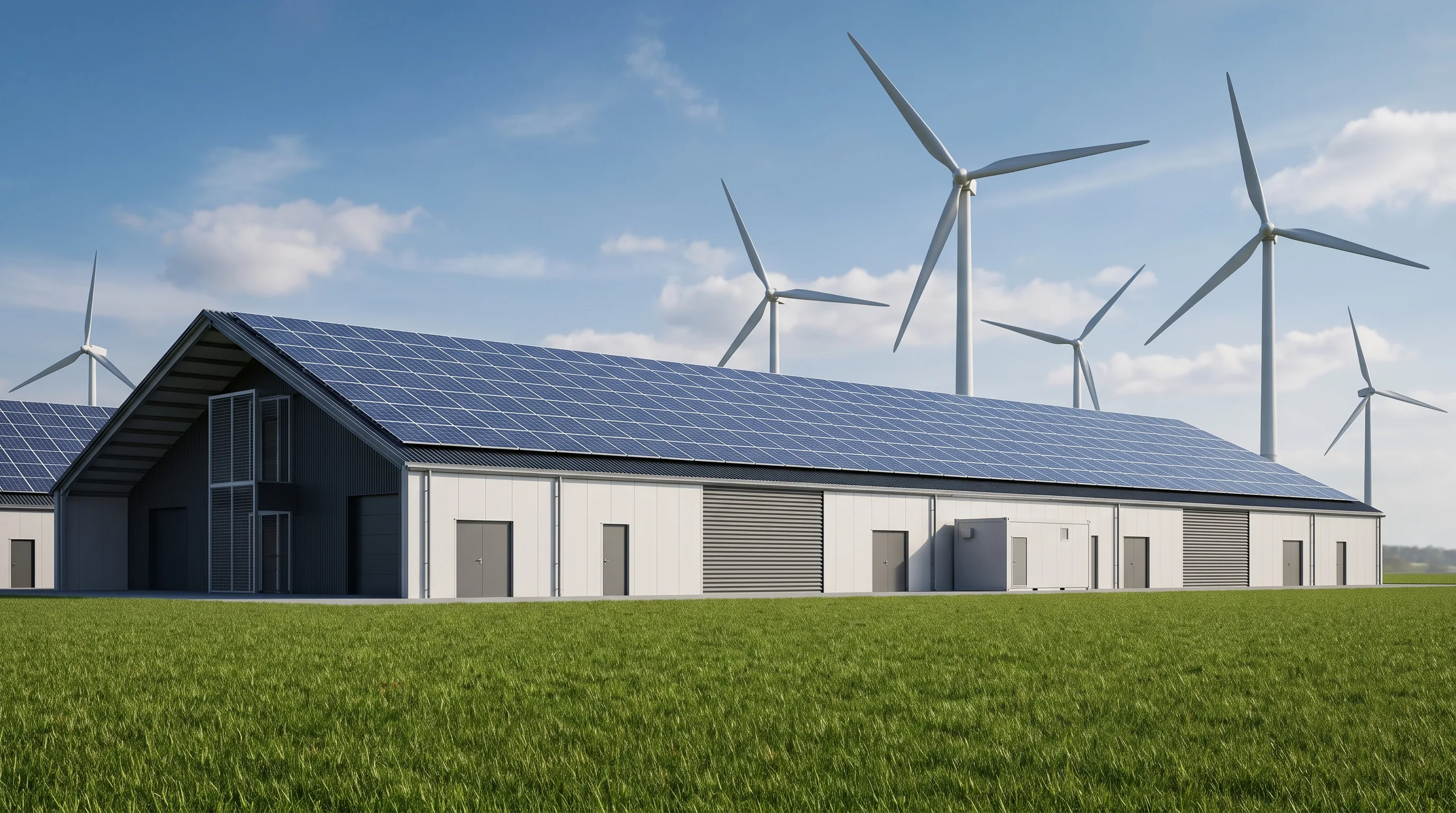
The Shift from Energy Criticism to Energy Innovation
For years, bitcoin mining has faced a single dominant critique: it consumes too much energy. Headlines about mining operations using more electricity than entire countries became a fixture of mainstream media coverage. But those headlines obscured a far more interesting story unfolding beneath the surface — one where miners have become some of the world’s most aggressive adopters of renewable energy.
The economics of mining make this inevitable. Electricity is the single largest operating expense for any mining facility, typically representing 60–80% of total costs. Miners are therefore relentlessly incentivized to find the cheapest power available — and in 2026, the cheapest power is increasingly renewable. Solar and wind projects in favorable geographies now produce electricity at levelized costs below $0.03 per kilowatt-hour, undercutting even the cheapest natural gas plants.
How Each Renewable Source Powers Mining
Solar Energy
Solar-powered mining is expanding rapidly in high-irradiance regions — the Middle East, North Africa, the American Southwest, and parts of Australia. The UAE, where Rax Energy operates its sustainable infrastructure division, receives over 3,500 hours of annual sunshine, making it one of the best solar environments on earth.
The challenge with solar is intermittency: panels produce nothing at night and less on cloudy days. Operators solve this through two approaches. The first is hybrid configurations that combine solar with grid or generator backup, running ASICs on solar during daylight and switching to grid power after sunset. The second is pairing solar with battery energy storage systems (BESS), storing excess daytime production for nighttime use. As electricity cost analyses show, even with storage overhead, the all-in cost of solar plus BESS is dropping below $0.04/kWh in optimal conditions.
Wind Energy
Wind energy complements solar because wind patterns often peak at night and in winter — precisely when solar production drops. This makes wind-solar hybrid installations particularly effective for maintaining high uptime. West Texas, the Midwest corridor, and parts of Scandinavia offer capacity factors above 40% for modern wind turbines, translating to consistent baseload-like power for data center operations.
Several large-scale mining operations now co-locate directly with wind farms, purchasing curtailed energy — electricity that would otherwise be wasted because grid demand is too low to absorb it. This creates a symbiotic relationship: the wind farm gains a buyer for power it would lose revenue on, and the miner gets electricity at near-zero marginal cost.
Hydroelectric Power
Hydroelectric power has been the dominant renewable source for bitcoin mining since the industry’s early years. Regions like Quebec, British Columbia, Iceland, and Sichuan province historically attracted miners with abundant, cheap hydro. Hydropower offers what solar and wind cannot: consistent 24/7 generation with minimal variability. Facilities in our North American network benefit from proximity to hydro-rich regions where power costs remain among the lowest globally.
Stranded Gas and Flare Capture
Perhaps the most environmentally compelling application of bitcoin mining involves capturing stranded natural gas — gas produced as a byproduct of oil drilling that would otherwise be vented or flared into the atmosphere. Methane (the primary component of natural gas) is roughly 80 times more potent than CO2 as a greenhouse gas over a 20-year period. Flaring converts it to CO2 but wastes the energy entirely.
Mining operations that deploy containerized ASIC systems at wellheads convert this stranded gas into electricity on-site, using it to power mining hardware. The result is a net environmental positive: the gas is combusted cleanly in generators rather than flared inefficiently, the energy that would be wasted produces economic value, and the operator gets electricity at costs as low as $0.01–0.02/kWh.
Renewable Energy Sources: Cost and Availability Compared
| Energy Source | Levelized Cost ($/kWh) | Availability | Carbon Intensity | Best Regions |
|---|---|---|---|---|
| Solar PV | $0.02 – $0.05 | Daytime only (6–10 hrs) | Near zero | UAE, Texas, North Africa, Australia |
| Onshore Wind | $0.025 – $0.06 | Variable (30–50% capacity) | Near zero | West Texas, Midwest US, Scandinavia |
| Hydroelectric | $0.01 – $0.04 | 24/7 (seasonal variance) | Near zero | Quebec, BC, Iceland, Norway |
| Stranded Gas | $0.01 – $0.025 | 24/7 (field lifespan) | Low (net reduction) | Permian Basin, North Dakota, Alberta |
| Geothermal | $0.04 – $0.08 | 24/7 (steady) | Near zero | Iceland, El Salvador, Kenya |
| Natural Gas (Grid) | $0.04 – $0.07 | 24/7 | ~450g CO2/kWh | Globally available |
Miners as Grid Stabilizers: The Demand Response Model
One of the most important developments in sustainable mining is the emergence of demand response programs. Bitcoin mining hardware can be powered down in seconds — unlike factories, refineries, or other industrial loads that need hours or days of advance notice to curtail consumption. This makes mining the ideal interruptible load for electrical grids.
In practice, this works as follows: a mining operator signs a demand response contract with a grid operator or utility. During normal conditions, the miner consumes power at a contracted rate. When grid stress occurs — extreme heat driving air conditioning demand, generation failures, or transmission constraints — the miner reduces or halts consumption within minutes, freeing that capacity for residential and commercial consumers. The miner is compensated for this curtailment, often at rates that exceed the mining revenue they would have earned.
Real-world example: During Texas grid emergencies in recent years, mining operators voluntarily curtailed thousands of megawatts within minutes, helping ERCOT avoid rolling blackouts. Several of these operators earned more from curtailment payments than they would have from mining during those periods.
This dynamic reframes the narrative entirely. Rather than being a burden on the grid, mining operations function as a stabilizing resource — a large, flexible load that the grid can shed during emergencies. This capability is increasingly recognized by utilities and regulators as valuable, particularly as grids integrate more intermittent renewable generation.
ESG Frameworks and Institutional Mining
The rise of advanced mining technology and renewable-powered operations has opened the door for institutional capital. Pension funds, sovereign wealth funds, and publicly traded companies increasingly demand ESG (Environmental, Social, and Governance) compliance from any investment they make. Mining operations that can demonstrate verifiable renewable energy usage, carbon accounting, and environmental benefit are attracting capital that was previously closed to the industry.
Several frameworks now exist for ESG-compliant mining:
- Bitcoin Mining Council (BMC) surveys — quarterly reports aggregating energy mix data from participating miners, consistently showing 50%+ renewable usage
- Renewable Energy Certificates (RECs) — tradeable certificates proving that a given quantity of electricity was generated from renewable sources, applicable to mining operations
- Carbon offset protocols — verified emissions reductions from stranded gas capture and methane destruction, sellable as carbon credits
- Proof of Sustainability — emerging blockchain-native protocols that log energy source data immutably on-chain for transparent verification
The Economics of Going Green
Sustainability in mining is not charity — it is competitive advantage. Consider the total cost breakdown for a modern mining operation. An operation paying $0.065/kWh from a coal-heavy grid faces both higher direct costs and increasing regulatory risk (carbon taxes, emissions caps, public opposition). An equivalent operation powered by solar at $0.03/kWh cuts its largest expense nearly in half while eliminating carbon risk entirely. See our complete bitcoin colocation guide for a comprehensive look at facility selection and power cost analysis.
The capital expenditure for renewable installations has dropped dramatically. Solar module prices fell over 90% between 2010 and 2025. Wind turbine costs declined more than 70% in the same period. For mining operations planning 5–10 year horizons, investing in on-site renewable generation often produces a lower total cost of ownership than relying on grid power — especially in jurisdictions where electricity prices are rising.
ROI Comparison: Grid vs. Solar-Powered Mining
| Metric | Grid Power ($0.065/kWh) | Solar + BESS ($0.035/kWh) |
|---|---|---|
| Monthly power cost (1 MW) | $46,800 | $25,200 |
| Annual power savings | — | $259,200 |
| Carbon risk exposure | High | None |
| Institutional capital access | Limited | Strong (ESG-compliant) |
| Demand response revenue | Available | Available + REC revenue |
Immersion Cooling and Energy Efficiency
Renewable energy lowers the cost of power input. Immersion cooling reduces the amount of power needed. Together, these two technologies represent the frontier of sustainable, high-performance mining.
Traditional air-cooled mining facilities spend 30–40% of total energy on cooling — fans, HVAC systems, evaporative coolers. Immersion cooling submerges ASIC miners in dielectric fluid, transferring heat far more efficiently and eliminating most cooling energy overhead. The result: the same hash rate with 20–30% less total power consumption. When that power is already renewable, the compounding efficiency gain is significant.
At Rax facilities, operators can choose cooling configurations matched to their efficiency and sustainability targets, from high-density air cooling to full immersion systems.
The UAE and Middle East: A Renewable Mining Frontier
The UAE has positioned itself as a global leader in the convergence of energy infrastructure and digital assets. With the Dubai Clean Energy Strategy targeting 75% clean energy by 2050, the Mohammed bin Rashid Al Maktoum Solar Park producing multi-gigawatts of solar capacity, and a regulatory framework through TDRA and VARA that welcomes blockchain operations, the UAE offers a unique environment for sustainable mining.
The strategic advantages include proximity to low-cost solar generation, a stable regulatory environment for crypto operations, world-class data center infrastructure, geographic positioning between Asian and European markets, and government-backed sustainability initiatives. Learn more about the UAE’s data center ecosystem.
Frequently Asked Questions
What percentage of bitcoin mining uses renewable energy?
Industry estimates place renewable energy usage in bitcoin mining between 52% and 59% globally as of 2026, making it one of the most renewable-intensive industries in the world. This includes hydroelectric, solar, wind, and geothermal sources.
Can bitcoin mining actually help the environment?
Yes, in several ways. Miners provide flexible demand that makes renewable energy projects financially viable, stabilize electrical grids by absorbing excess production during off-peak hours, and capture stranded methane that would otherwise be vented or flared into the atmosphere.
Is solar-powered bitcoin mining profitable?
Solar-powered mining can be highly profitable in regions with high irradiance, such as the UAE, Texas, and North Africa. The key is pairing solar with battery storage or grid supplementation to maintain uptime during non-producing hours. Levelized solar costs below $0.03/kWh make it competitive with the cheapest grid power.
Ready to Mine Sustainably?
Rax Data & Energy designs mining infrastructure powered by renewable and low-cost energy sources.
Contact Us Rax Energy