Why Facility Design Matters More Than Hardware
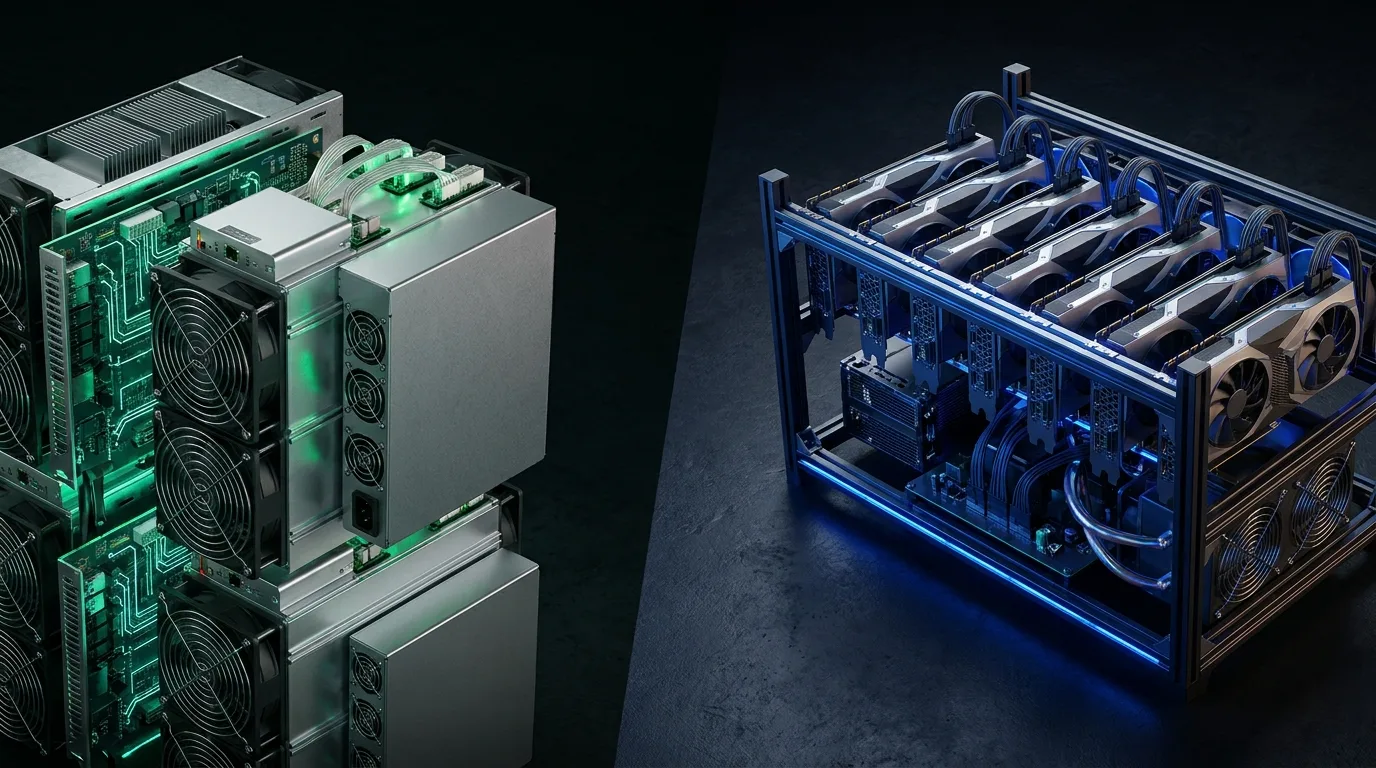
In Bitcoin mining, the hardware gets all the attention but the facility determines profitability. Two identical ASIC miners can produce vastly different returns depending on the facility they operate in. Power delivery efficiency, cooling effectiveness, uptime reliability, and all-in operating costs are all functions of facility design rather than hardware selection.
Consider this example: an Antminer S21 running at a facility with $0.04/kWh all-in power, 99.5% uptime, and efficient cooling will generate roughly 30-40% more annual profit than the same machine at a facility with $0.07/kWh power, 95% uptime, and inadequate cooling that causes thermal throttling. Over the 3-year economic life of the hardware, that difference compounds to tens of thousands of dollars per machine. At scale, facility design is worth millions.
Whether you are planning a small 1MW containerized deployment or a 100MW+ industrial mega-site, the fundamental design principles are the same. This guide walks through each critical component of mining facility design, from site selection to daily operations, at every scale.
Site Selection: The Foundation of Everything
The most important decision in mining farm design is where to build. Site selection determines your electricity cost, regulatory environment, climate conditions, and connectivity options. Get this wrong and no amount of engineering can compensate. A perfect facility at a bad site will always underperform an adequate facility at a great site.
Critical Site Selection Criteria
| Factor | Priority | What to Look For |
|---|---|---|
| Electricity Cost | Critical | All-in cost below $0.05/kWh including demand charges and all fees |
| Power Availability | Critical | Sufficient substation capacity without costly upgrades; lead time for interconnection |
| Grid Reliability | High | Utility uptime above 99.5%, redundant feeds preferred, low frequency of outages |
| Climate | High | Cooler climates reduce cooling costs; low humidity prevents corrosion |
| Regulatory Environment | High | Mining-friendly jurisdiction, clear permitting, no pending restrictive legislation |
| Internet Connectivity | Medium | Fiber availability, multiple ISP options for redundancy |
| Physical Security | Medium | Remote enough for noise, accessible for staff, low crime area |
| Expansion Potential | Medium | Room to grow, additional power capacity available from utility |
| Labor Market | Medium | Availability of electricians, HVAC technicians, and IT staff within commuting distance |
Site Selection Insight: The best mining sites are often in areas with surplus power generation capacity. Locations near hydroelectric dams, wind farms, or natural gas production sites frequently offer the lowest electricity rates because they have excess supply that exceeds local demand. These stranded energy sites can offer power at $0.02-0.04/kWh, compared to $0.06-0.12/kWh at grid-connected urban locations.
Top Mining Jurisdictions in 2026
The most active mining regions globally include:
- Texas, USA: Deregulated energy market, abundant wind and solar, mining-friendly policy, demand response revenue opportunities. However, summer heat increases cooling costs significantly.
- Wyoming/Montana, USA: Low-cost hydroelectric and wind power, cool climate reduces cooling costs, extremely mining-friendly legislation and regulatory environment.
- Quebec/British Columbia, Canada: Abundant hydroelectric power at competitive rates, cold climate provides free cooling for most of the year, stable regulatory environment.
- Paraguay/Argentina: Some of the cheapest hydroelectric power in the world, growing mining industry with improving regulatory clarity.
- Scandinavia (Norway, Sweden): Renewable hydroelectric power, extremely cold climate, stable governments, but higher labor costs.
- UAE/Oman: Low-cost natural gas power, growing interest in mining as economic diversification, excellent connectivity, but extreme heat requires robust cooling.
Power Infrastructure Design
Power delivery is the backbone of any mining facility. A detailed understanding of Understanding Three-Phase Power for Mining and Data Centers is essential for proper system design. The power infrastructure must safely and efficiently deliver electricity from the utility interconnection to each individual mining machine, and every component in the chain affects total efficiency and cost.
Power Architecture by Scale
Small Scale: 1-5 MW
- Utility Service: Medium-voltage service (typically 12.47kV or 25kV) with one or more pad-mount transformers stepping down to facility distribution voltage
- Distribution: 480V three-phase to containerized or rack-level PDUs. Higher voltage distribution reduces copper costs and resistive losses
- Redundancy: N configuration (no redundancy) is typical at this scale to minimize cost, since mining can tolerate brief outages
- Metering: Utility meter plus sub-metering per container or section for operational monitoring and cost allocation
- Typical Setup: 1-5 mining containers, each with its own transformer tap, deployed on a concrete or gravel pad with perimeter fencing
- Timeline: 4-12 weeks from power availability to full hash rate, depending on permitting and equipment lead times
Medium Scale: 5-30 MW
- Utility Service: Dedicated substation with medium-voltage switchgear, often customer-owned for cost optimization
- Distribution: Medium-voltage distribution to step-down transformers at each building or container cluster, then 480V to equipment
- Redundancy: N+1 transformer configuration, dual utility feeds where available. Loss of a single transformer should not bring down the entire facility
- Power Factor Correction: Capacitor banks to maintain power factor above 0.95, avoiding utility penalties that can add $0.005-0.01/kWh to effective costs
- SCADA Integration: Automated monitoring and load management for real-time visibility and control
- Timeline: 3-9 months depending on permitting, construction complexity, and equipment procurement
Large Scale: 30-100+ MW
- Utility Service: High-voltage transmission interconnection (69kV, 115kV, or 138kV) with dedicated customer-owned substation
- Substation: Full protection systems including relaying, grounding grids, and arc flash protection rated for transmission voltages
- Distribution: Medium-voltage internal distribution with multiple step-down points, segmented for maintenance isolation
- Redundancy: N+1 or 2N configurations for critical infrastructure (monitoring, networking, security). Mining loads typically N only
- On-site Generation: Backup generators for critical systems. Some operations co-locate natural gas generators for supplemental or primary power
- Grid Services: Demand response capability, curtailment agreements with utility or grid operator providing additional revenue
- Timeline: 6-18 months phased buildout, often starting with containers while permanent structures are constructed
Cooling System Design
Mining hardware generates substantial heat, and managing that thermal load is the second most important aspect of facility design after power. The cooling system directly impacts equipment lifespan, performance, and operating costs. A mining facility that cannot adequately cool its machines will experience thermal throttling (reduced hash rate), accelerated component degradation, and increased failure rates. See our detailed comparison of Data Center Cooling Technologies Compared: Air, Liquid, and Immersion.
Cooling Options Comparison
| Method | Cost per MW | Cooling Capacity | PUE Impact | Best For |
|---|---|---|---|---|
| Air Cooling (Fans) | $50K-100K | Good in cool climates | 1.05-1.4 | 1-10 MW containerized in cold climates |
| Evaporative Cooling | $75K-150K | Excellent in dry climates | 1.05-1.2 | 5-50 MW warehouse in arid regions |
| Direct-to-Chip Liquid | $150K-300K | Very high | 1.03-1.1 | High-density GPU and next-gen ASIC deployments |
| Immersion Cooling | $200K-400K | Highest | 1.02-1.08 | Maximum density, overclocking, noise-sensitive locations |
For a detailed return-on-investment analysis of immersion versus air cooling, see our Immersion Cooling vs Air Cooling: Complete ROI Analysis for Mining and AI guide.
Climate Impact on Cooling Design
Ambient temperature dramatically affects cooling costs and strategy. A facility in northern Canada or Scandinavia can rely on free air cooling for 8-10 months of the year, while a facility in Texas or the Middle East requires active cooling year-round. The difference in cooling costs can be 20-40% of total operating expenses, which at scale translates to hundreds of thousands of dollars annually.
Climate also affects humidity management. High humidity can cause corrosion on hash board components, while extremely low humidity creates static discharge risks. The ideal operating environment maintains 40-60% relative humidity, and some climates require humidification or dehumidification systems to stay within this range.
Networking and Connectivity
Mining requires reliable but relatively low-bandwidth internet connectivity. Each ASIC miner uses approximately 100-500 Kbps of bandwidth, so even a facility with 10,000 miners needs less than 5 Gbps of total bandwidth. However, latency and reliability are critical because disconnections mean lost hash rate and revenue. Even a 1% reduction in uptime due to connectivity issues reduces annual revenue by the equivalent of 3.65 days of mining.
Network Architecture Best Practices
- Redundant ISPs: Two independent internet service providers with automatic failover. If one provider goes down, the other takes over within seconds. Ideally, these should use different physical paths (different conduits or aerial routes) to avoid common failure modes.
- On-site Routing: Enterprise-grade routers with BGP capability for multi-ISP setups. This enables automatic routing around provider outages.
- Internal Network: Managed switches with VLAN segmentation per mining section. This isolates network problems and simplifies management.
- Monitoring: Real-time per-machine hash rate monitoring with alerts for connectivity issues, hardware failures, and environmental conditions.
- Pool Failover: Configure miners with primary, secondary, and tertiary pool connections to ensure continuous operation even if a pool experiences issues.
- Firewall and Security: Restrict inbound access to management interfaces, allow only necessary outbound traffic to mining pool servers. Mining hardware should not be directly accessible from the internet.
Facility Layouts by Scale
1-5 MW: Containerized Deployment
The most common small-scale approach uses purpose-built mining containers, each housing 200-300 ASIC miners with integrated power distribution and cooling. Containers offer a plug-and-play approach that minimizes design and construction time.
- Typical Container: 40-foot ISO container, 200-300 machines, 500-800 kW per container depending on ASIC model
- Deployment Time: 2-4 weeks from power availability to hash rate online, making this the fastest path to revenue
- Advantages: Portability (can be moved to follow cheaper power), rapid deployment, standardized cooling design, no construction permits in many jurisdictions
- Disadvantages: Higher cost per kW than warehouse facilities, maintenance access can be challenging in densely packed containers, limited cooling effectiveness in hot climates
5-30 MW: Warehouse or Purpose-Built Building
At this scale, purpose-built buildings or retrofitted warehouses offer better economics than containers. Larger facilities achieve economies of scale in power distribution, cooling, and staffing that reduce the per-kW cost of operation.
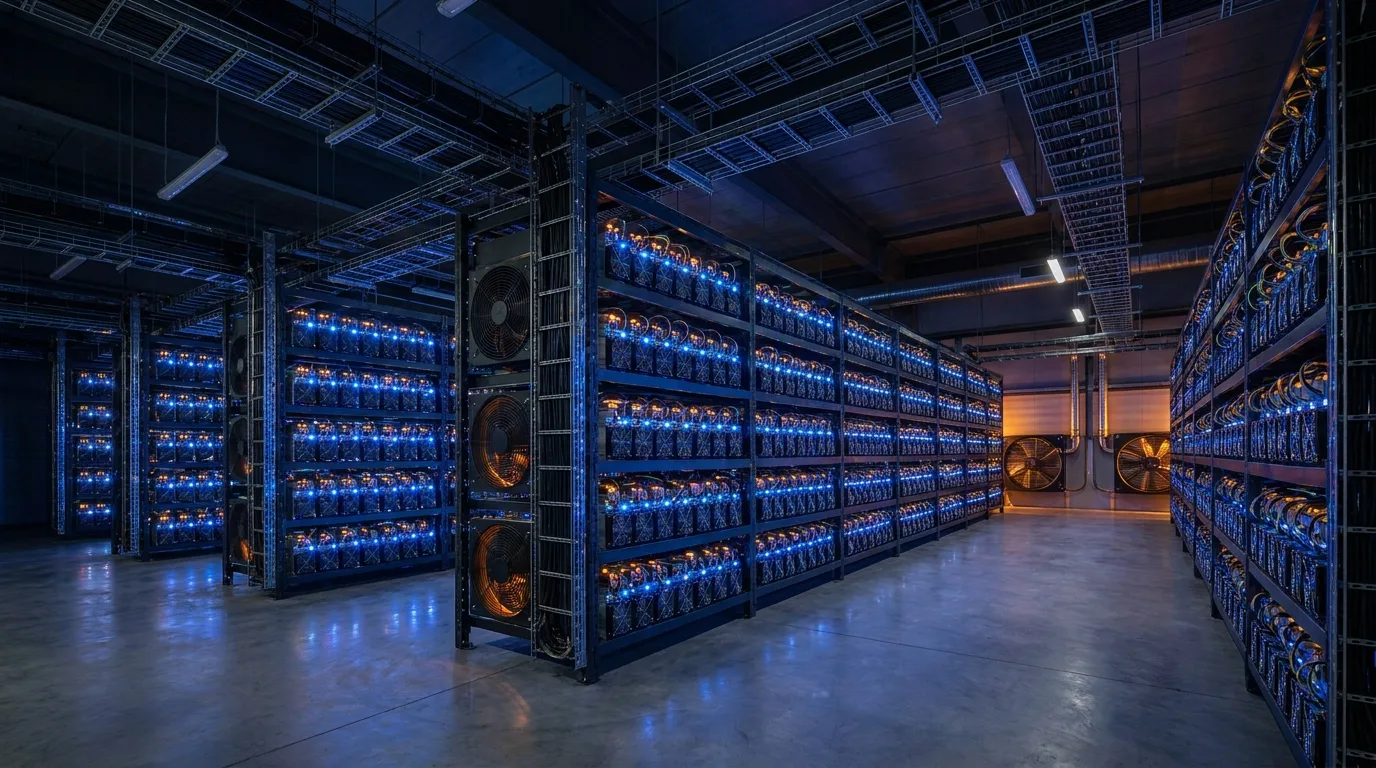
- Typical Building: 10,000-50,000 sq ft steel structure with industrial cooling systems
- Deployment Time: 3-9 months depending on permitting and construction
- Advantages: Lower cost per kW (typically 15-25% cheaper than containers), easier maintenance access with walk-in aisles, better staff efficiency with centralized operations
- Disadvantages: Less portable than containers, longer build time, higher upfront capital requirement
30-100+ MW: Industrial Campus
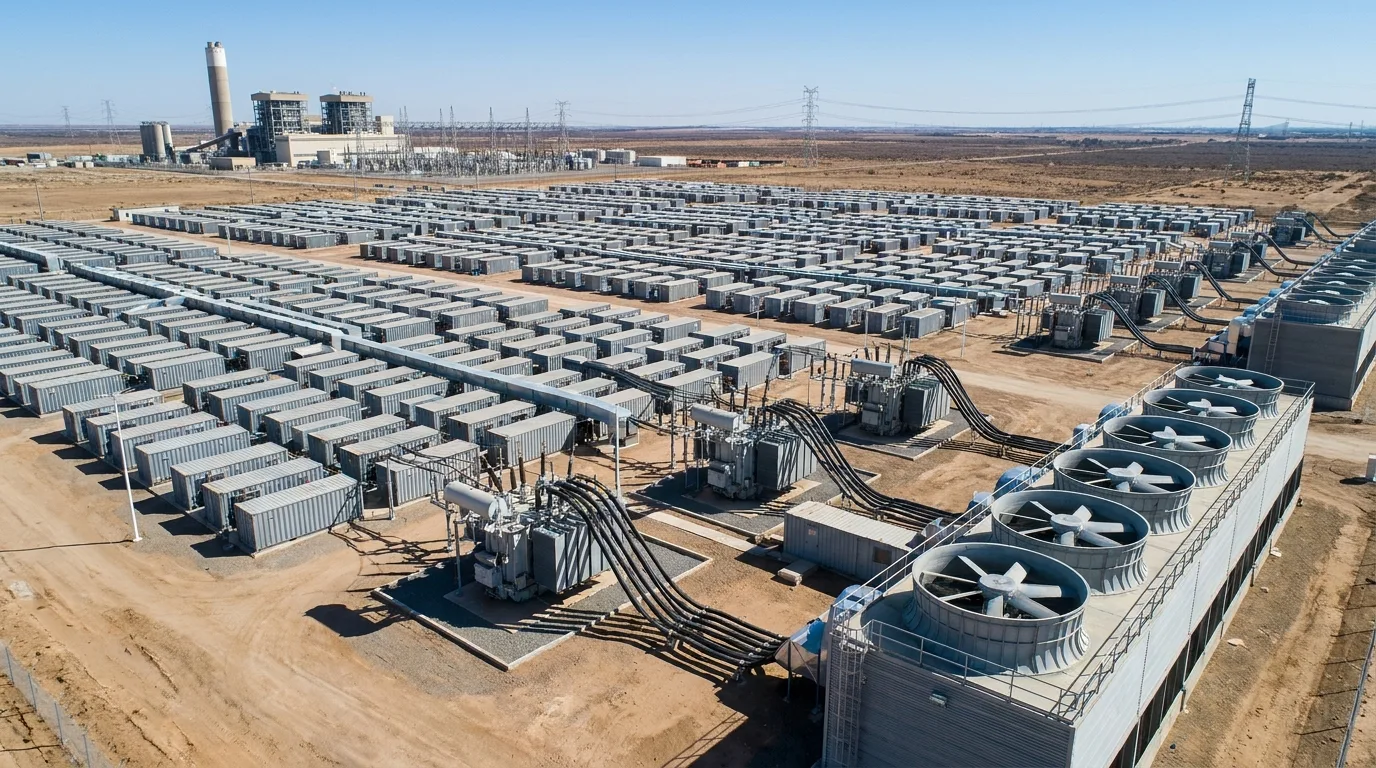
Large-scale operations require campus-style deployments with dedicated substations, multiple buildings or container fields, on-site staff facilities, and comprehensive security infrastructure. These operations are major industrial developments that require significant planning and capital.
- Typical Campus: 5-20+ acres with multiple buildings and container clusters, dedicated substation, operations center, and maintenance shop
- Deployment Time: 6-18 months with phased buildout common. Many operations start mining in containers while permanent structures are built
- Advantages: Best economics per kW at full scale, maximum operational efficiency, full on-site capabilities including repair shop, spare parts inventory, and dedicated staff
- Disadvantages: Highest capital requirements (often $5-15M+ for infrastructure alone), longest lead time, complex permitting process, significant ongoing staffing costs
Operations and Monitoring
A well-designed facility is only as good as its operations team and monitoring systems. Professional mining operations require 24/7 monitoring, regular maintenance, and rapid response to equipment failures. Downtime is directly proportional to lost revenue, making operational excellence a financial imperative.
Monitoring Systems
- Hash Rate Monitoring: Real-time per-machine hash rate tracking with deviation alerts. A machine producing less than 90% of expected hash rate should be flagged for investigation within minutes.
- Environmental Monitoring: Temperature, humidity, and airflow sensors throughout the facility with automated alerts for out-of-range conditions. Hot spots should be detected and addressed before they cause hardware damage.
- Power Monitoring: Per-circuit power consumption tracking for efficiency analysis, load balancing, and anomaly detection. Sudden changes in power consumption can indicate hardware failures.
- Security: CCTV coverage of all entry points and equipment areas, electronic access control with audit logging, perimeter intrusion detection, and 24/7 on-site or remote monitoring.
- Alerting: Multi-channel automated alerts via SMS, email, Telegram, and dashboard for any anomalies. Alert escalation procedures ensure critical issues reach the right people quickly.
Maintenance Planning
- Preventive Maintenance: Scheduled cleaning (air filters, heat sinks), firmware updates, fan replacement, and hardware inspections on a regular cycle. Preventive maintenance reduces unplanned failures by 30-50%.
- Repair Workflow: Dedicated bench repair area with spare parts inventory for common failures (hash boards, fans, PSUs, control boards). Having parts on hand reduces repair time from days to hours.
- Replacement Planning: Track machine age, performance degradation, and failure rates to plan hardware refresh cycles. Machines with increasing failure rates should be retired proactively rather than run to failure.
Operations Excellence: RAX Data & Energy provides full-service bitcoin colocation hosting that includes 24/7 monitoring, preventive maintenance, repair services, and performance optimization. Our clients focus on their mining strategy and financial management while we handle the day-to-day operations that keep hash rates up and costs down.
Financial Modeling for Facility Design
Before committing capital to a mining facility, comprehensive financial modeling is essential. A robust model should test profitability across multiple scenarios, not just the optimistic case.
Key Model Inputs
- Capital Expenditure: Land or lease costs, construction, power infrastructure, cooling systems, networking, security systems, and initial hardware deployment
- Operating Expenditure: Electricity (the dominant cost), staffing, maintenance and repairs, insurance, property taxes, internet, and management overhead
- Revenue Projections: Hash rate deployed, Bitcoin Mining Difficulty Explained: How It Works and Why It Matters projections (model at least 30% annual difficulty growth), Bitcoin price scenarios (model bear, base, and bull cases), transaction fee estimates
- Halving Impact: Model the impact of the Bitcoin Halving Guide 2024-2028: Impact on Mining, Price, and Strategy on revenue, which will cut block subsidy by 50% at a known future date
- Sensitivity Analysis: Test profitability across a matrix of BTC prices, difficulty levels, and power costs. The operation should be profitable in the base case and survive the bear case
A robust financial model should demonstrate positive returns across conservative scenarios, not just optimistic projections. The facilities that survive long-term are those designed with conservative assumptions and built with financial resilience in mind. If your model only works with Bitcoin at $150,000 and difficulty staying flat, you do not have a viable mining business.
Getting Started
Whether you are planning your first 1MW deployment or scaling to 100MW, the design process starts with understanding your goals, resources, and constraints. The most successful mining operations begin with careful planning and partner with experienced infrastructure providers who can help navigate the complexities of facility design, construction, and operations.
RAX Data & Energy offers turnkey infrastructure solutions at every scale, from single-container hosting to multi-megawatt facility development. Our team brings years of experience in mining facility design, power procurement, and operational excellence to help clients build profitable, resilient mining operations that can weather halvings, difficulty increases, and market volatility.