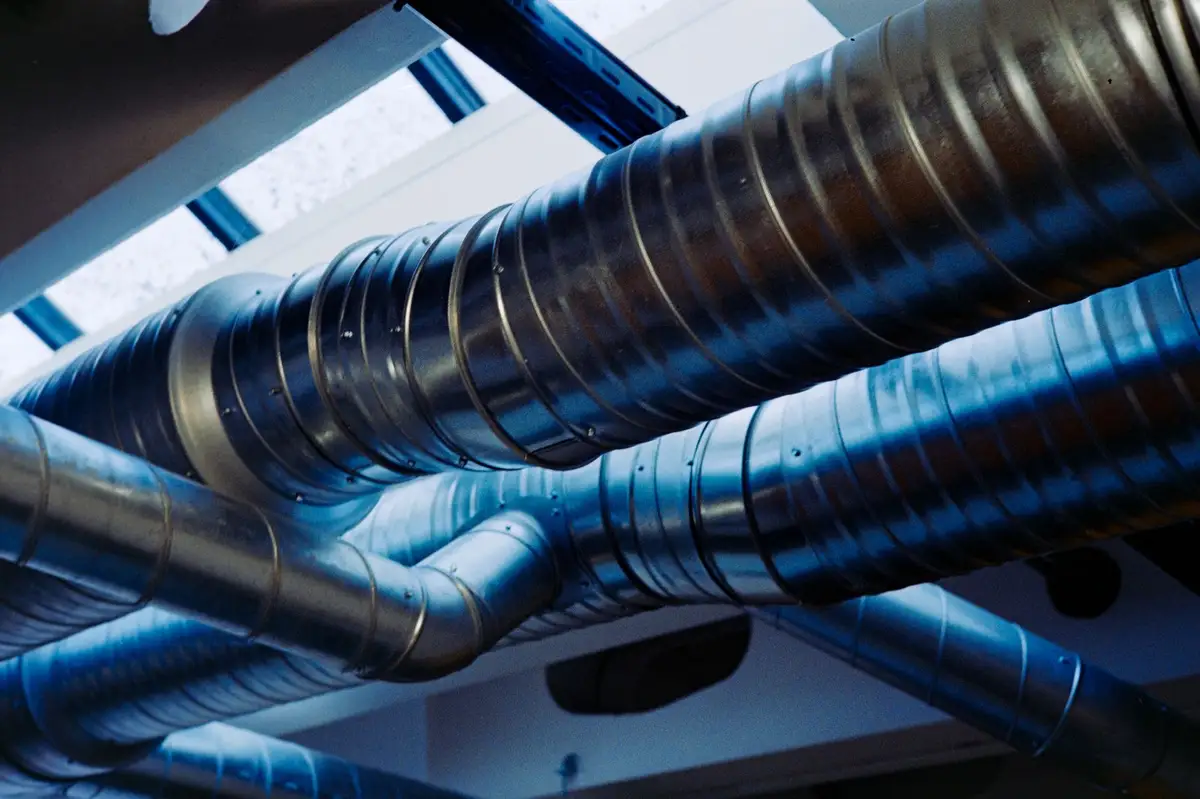
Data centers consume vast quantities of water. A single 10 MW facility using conventional evaporative cooling towers can consume over 50 million liters of water per year — enough to supply more than 300 households. In water-scarce regions like the UAE, Saudi Arabia, and other Gulf Cooperation Council (GCC) states, this level of consumption is increasingly untenable. The rapid expansion of AI and cloud infrastructure across the Middle East is forcing operators to confront a fundamental engineering challenge: how to reject tens of megawatts of heat without relying on water evaporation.
This guide examines the cooling technologies that eliminate or drastically reduce water consumption in hot, arid environments — dry coolers, hybrid adiabatic systems, closed-loop liquid cooling, and immersion cooling — with specific attention to the design constraints imposed by Gulf region ambient conditions where temperatures regularly exceed 45 degrees Celsius.
The Water Problem in Data Center Cooling
How Evaporative Cooling Consumes Water
Traditional data center cooling relies on evaporative cooling towers to reject heat from the chilled water loop. Water is sprayed over tower fill media while ambient air is drawn across it. As water evaporates, it absorbs latent heat, cooling the remaining water. This process is thermodynamically efficient but fundamentally water-destructive: for every 1 MW of heat rejected, an evaporative tower consumes approximately 1,500 to 2,500 liters of water per hour through evaporation, drift, and blowdown.
The Water Usage Effectiveness (WUE) metric quantifies this consumption. Industry-average WUE for facilities using cooling towers is approximately 1.8 L/kWh of IT load. In hot, dry climates the figure climbs higher because evaporation rates increase with temperature and decrease with humidity — the hotter and drier the air, the more water the towers consume per unit of heat rejected.
Water Scarcity in the Gulf Region
The UAE and surrounding Gulf states rank among the most water-stressed nations on earth. The UAE receives less than 100 mm of rainfall annually. Approximately 42 percent of the country's municipal water supply comes from energy-intensive desalination plants, with the remainder drawn from rapidly depleting groundwater aquifers. The cost of producing desalinated water in the region ranges from $0.50 to $1.50 per cubic meter at the plant gate, but the full economic cost — including distribution infrastructure and the energy to produce it — often exceeds $3.00 per cubic meter.
Against this backdrop, the UAE's national water strategy explicitly targets reductions in water consumption intensity across all industrial sectors. Data centers planning to operate in UAE free zones are increasingly expected to demonstrate water-efficient or water-free cooling designs as part of the permitting process.
Rax Data & Energy facilities are engineered for arid environments from the ground up. Our infrastructure minimizes water dependence through closed-loop cooling architectures designed for Gulf climate conditions. Contact our team to discuss cooling requirements for your deployment.
Dry Cooling Technologies
Air-Cooled Condensers and Dry Coolers
Dry coolers (also called fluid coolers or fin-fan heat exchangers) reject heat by passing a warm fluid through finned coil arrays while fans blow ambient air across the coils. No water evaporates — heat transfer occurs entirely through sensible cooling (convection). The WUE of a dry-cooled system is effectively zero.
The primary limitation of dry cooling is that it cannot reduce fluid temperature below ambient dry-bulb temperature. When outdoor air reaches 48 degrees Celsius — as it does for approximately 500 hours per year in Abu Dhabi — the cooling fluid leaving the dry cooler will be at or above 50 degrees Celsius. This constraint has three engineering implications for data center cooling design:
- Higher chilled water supply temperatures: Traditional data center chillers supply water at 7 to 10 degrees Celsius. Dry-cooled systems in hot climates typically operate with supply temperatures of 18 to 25 degrees Celsius at peak ambient, requiring CRAH (Computer Room Air Handler) units designed for higher entering water temperatures.
- Larger heat exchanger surface area: Because the temperature differential between the fluid and ambient air is smaller, more coil surface area is required to transfer the same amount of heat. Dry cooler arrays for hot-climate data centers are typically 30 to 50 percent larger than equivalent-capacity cooling towers.
- Increased fan power: To compensate for the reduced temperature differential, dry cooler fans operate at higher speeds during peak heat events, increasing the parasitic power load. This affects the Power Usage Effectiveness (PUE), typically adding 0.05 to 0.15 to the PUE compared to an equivalent evaporative system.
Air-Cooled Chillers
Air-cooled chillers integrate the compressor, condenser coil, and fans into a single outdoor unit. Unlike dry coolers (which handle the cooling fluid directly), air-cooled chillers use a refrigeration cycle to cool water or glycol to temperatures well below ambient. Modern air-cooled chillers rated for Gulf climates can produce 7 to 12 degrees Celsius chilled water when ambient temperatures are at 50 degrees Celsius, though with a significant energy penalty — COP (Coefficient of Performance) drops from 3.5 or better at moderate temperatures to 2.0 to 2.5 at extreme heat.
For GPU-dense and ASIC mining facilities where rack densities exceed 30 kW, air-cooled chillers provide the supply temperatures needed for precision cooling without any water consumption.
Hybrid Adiabatic Systems
Hybrid adiabatic coolers occupy the middle ground between fully dry systems and conventional evaporative towers. They operate as dry coolers for most of the year but activate a water spray or wetted-pad pre-cooling system when ambient temperatures exceed a configurable setpoint — typically 35 to 40 degrees Celsius.
The water consumption of hybrid systems is dramatically lower than cooling towers because evaporation only occurs during peak heat hours. A well-designed hybrid system in Abu Dhabi might consume water for only 1,200 to 1,800 hours per year (compared to 8,760 hours for a cooling tower), reducing annual water consumption by 75 to 85 percent.
Key design parameters for hybrid adiabatic systems in arid environments include:
- Water quality: Gulf desalinated water has low mineral content, which reduces scaling but still requires treatment to prevent biological growth on wetted media. UV sterilization or periodic chemical dosing is standard.
- Adiabatic activation setpoint: Setting this too low wastes water unnecessarily; setting it too high risks thermal runaway during heat spikes. Dynamic setpoints driven by IT load and ambient temperature optimize consumption.
- Drift eliminators: High-quality drift eliminators limit airborne water droplets to less than 0.001 percent of recirculating flow, minimizing both water loss and mineral deposits on surrounding equipment.
Closed-Loop Liquid Cooling: The Zero-Water Path
Direct-to-Chip (DTC) Cooling
Direct-to-chip liquid cooling circulates a coolant (typically treated water or engineered fluids) through cold plates mounted directly on CPUs, GPUs, or ASIC chips. The heated coolant flows to a Coolant Distribution Unit (CDU) which transfers heat to a facility water loop. That facility loop then rejects heat through dry coolers outside the building — completing a fully sealed, zero-evaporation cycle.
Direct-to-chip cooling captures heat at temperatures of 45 to 65 degrees Celsius at the cold plate — far higher than air-cooled systems deliver to CRAH units. This high-temperature heat rejection makes dry coolers significantly more effective because the temperature differential between the fluid and ambient air is larger, even during Gulf summer peaks. A DTC system rejecting 55 degrees Celsius fluid through dry coolers still has 7 to 10 degrees Celsius of differential even when ambient air reaches 48 degrees Celsius.
Immersion Cooling
Immersion cooling submerges entire servers or mining hardware in a dielectric fluid. Single-phase immersion uses engineered fluids that remain liquid throughout the cooling cycle; two-phase immersion uses fluids that boil at low temperatures (approximately 49 degrees Celsius) and condense on a coil inside the tank.
Both immersion variants achieve zero water consumption because the dielectric fluid is sealed within the tank and the heat is rejected through external dry heat exchangers. Fluid loss rates in well-sealed single-phase immersion tanks are less than 1 percent per year.
For ASIC mining operations, immersion cooling is particularly compelling in arid climates because it simultaneously eliminates water consumption and removes the noise, dust filtration, and airflow management complexities of air-cooled miner deployments.
Comparing Water Consumption Across Cooling Architectures
| Cooling Technology | WUE (L/kWh) | Annual Water (10 MW) | PUE Impact |
|---|---|---|---|
| Evaporative Cooling Tower | 1.8 – 5.0 | 50 – 130 ML | 1.20 – 1.40 |
| Hybrid Adiabatic (35 C setpoint) | 0.3 – 0.8 | 8 – 22 ML | 1.25 – 1.45 |
| Air-Cooled Chiller | 0.0 – 0.1 | 0 – 0.3 ML | 1.35 – 1.55 |
| Dry Cooler + DTC Liquid | 0.0 | 0 ML | 1.10 – 1.25 |
| Immersion + Dry Rejection | 0.0 | 0 ML | 1.02 – 1.10 |
The counterintuitive finding: closed-loop liquid cooling combined with dry heat rejection achieves both the lowest water consumption AND the best PUE. High-temperature heat rejection through dry coolers is thermodynamically more efficient than the double heat-exchange penalty of chilling water to 7 degrees Celsius and then using CRAHs to cool air.
Design Considerations for Gulf Climate Facilities
Ambient Temperature Profiles
Effective cooling system sizing requires understanding the full annual temperature profile, not just the peak. Abu Dhabi design conditions (ASHRAE 0.4% values) specify a dry-bulb temperature of 46.8 degrees Celsius. However, the annual average dry-bulb temperature is only 27.5 degrees Celsius, and temperatures fall below 25 degrees Celsius for approximately 4,500 hours per year. This means dry coolers and hybrid systems operate at high efficiency for the majority of the year, with reduced capacity only during the June-to-September peak.
Compliant facility designs per ASHRAE thermal guidelines should size cooling equipment for the 0.4% or 1% design condition while incorporating thermal storage or load management strategies for the rare occasions when ambient temperature exceeds design values.
Sand and Dust Protection
Arid environments present a coil fouling challenge that does not exist in temperate climates. Fine sand particles (PM10 and PM2.5) accumulate on dry cooler fins and degrade heat transfer performance by 10 to 20 percent within weeks if not managed. Effective countermeasures include:
- Epoxy-coated aluminum fin stock that resists corrosion from sand abrasion and salt-laden air (in coastal Gulf locations)
- Wider fin spacing (8 to 10 fins per inch instead of the standard 12 to 14) to reduce blockage susceptibility
- Automated coil washing systems using recycled grey water on scheduled intervals
- Sand trap louvers on air intake faces to intercept the largest particles before they reach the coils
Thermal Energy Storage
Chilled water or phase-change-material (PCM) thermal energy storage tanks allow facilities to pre-cool a reserve of cold water during nighttime hours when ambient temperatures drop to 25 to 30 degrees Celsius and dry cooler capacity is at its peak. This stored cooling capacity supplements the dry coolers during the hottest afternoon hours, shaving the thermal peak without activating adiabatic water sprays.
A thermal storage tank sized for 4 hours of 20 percent supplemental capacity at a 10 MW facility requires approximately 500 to 800 cubic meters of insulated tank volume — a one-time capital expense that yields annual water savings of 5 to 10 million liters compared to hybrid systems that would otherwise spray during those peak hours.
Regulatory and Sustainability Drivers
UAE National Water Strategy
The UAE's national water strategy targets a 21 percent reduction in total water demand by 2036. Industrial water users, including data centers, face increasing scrutiny on consumption efficiency. The TDRA regulatory framework for data centers is evolving to include water efficiency requirements alongside existing power and connectivity standards.
Operators planning new facilities in Dubai, Abu Dhabi, or Ras Al Khaimah should anticipate water-use reporting requirements and design cooling systems that can demonstrate compliance with tightening conservation mandates.
ESG and Corporate Commitments
Hyperscale cloud providers and enterprise colocation tenants increasingly require transparency on facility water consumption as part of their ESG (Environmental, Social, and Governance) reporting. Microsoft, Google, and Meta have each published water-positive or water-replenishment commitments. Colocation operators whose facilities can demonstrate near-zero WUE have a competitive advantage when competing for these enterprise contracts.
Facilities with renewable energy procurement and zero-water cooling can present a sustainability profile that is genuinely differentiated from competitors still running evaporative towers.
Case Study: Mining Facilities in Arid Environments
Bitcoin ASIC mining operations face a unique combination of high heat density and cost sensitivity that makes water-free cooling particularly relevant. A 100 MW mining facility using evaporative cooling towers would consume approximately 500 million liters of water per year — a volume that would raise regulatory and community opposition in water-scarce regions regardless of economic viability.
Air-cooled mining containers using direct ventilation (drawing outside air through the miner chassis and exhausting heated air) achieve zero water consumption but face performance challenges when ambient temperatures exceed the ASIC operating maximum of approximately 40 to 45 degrees Celsius. Containerized deployments in the Gulf that rely on outside air alone must either curtail operations during peak heat hours or accept elevated hardware failure rates.
Immersion-cooled mining operations eliminate both the water and the ambient temperature constraints. Dielectric fluid maintains the ASIC junction temperature within optimal range regardless of external conditions, enabling year-round full-load operation in environments where air-cooled containers would throttle or shut down for 1,000 or more hours per year.
Economic Analysis: Water Cost vs. Cooling Capital
The economic breakeven between evaporative and dry/liquid cooling depends on three variables: the cost of water, the cost of electricity (which affects the PUE penalty of dry cooling), and the facility power capacity.
In the UAE, where DEWA and EWEC power tariffs range from AED 0.23 to 0.38 per kWh for industrial users and desalinated water costs $2 to $5 per cubic meter, dry cooling systems typically achieve payback within 4 to 7 years compared to evaporative alternatives. When factoring in avoided water treatment costs, cooling tower maintenance, Legionella compliance, and blowdown disposal, the payback period shortens to 3 to 5 years.
For ASIC hosting operations where the electricity cost per kWh directly determines profitability, the 0.05 to 0.15 PUE penalty of dry cooling translates to $0.003 to $0.008 per kWh of effective IT load — a manageable cost when water procurement and treatment would add $0.005 to $0.012 per kWh anyway.
Frequently Asked Questions
How much water does a typical data center consume?
A data center using evaporative cooling towers typically consumes 1.8 to 5 liters of water per kWh of IT load. A 10 MW facility can use over 50 million liters annually. Dry-cooled facilities reduce this to near zero, using only minor amounts for humidification or fire suppression testing.
Can dry cooling work in temperatures above 45 degrees Celsius?
Yes, but with reduced efficiency. Dry coolers and air-cooled chillers operate effectively up to 50 degrees Celsius ambient, though capacity derates by approximately 15 to 25 percent above 45 degrees Celsius. Facilities in the UAE and Gulf region typically oversize dry cooler arrays by 20 to 30 percent to account for peak summer conditions, or use hybrid adiabatic assist during extreme heat events.
What is a good WUE target for an arid climate data center?
A WUE of 0.0 to 0.1 L/kWh is achievable with fully dry-cooled or closed-loop liquid-cooled designs. The industry average WUE is approximately 1.8 L/kWh. Facilities in water-scarce regions should target WUE below 0.5 L/kWh as a baseline, with 0.0 being the gold standard.
Is dry cooling more expensive than evaporative cooling?
Dry cooling systems have higher upfront capital costs, typically 30 to 50 percent more than equivalent-capacity evaporative cooling towers. However, dry cooling eliminates ongoing water procurement costs, water treatment chemical costs, Legionella testing, cooling tower maintenance, and blowdown disposal. Over a 10-year facility lifecycle, dry cooling is often cost-neutral or cheaper in regions where water costs exceed $3 to $5 per cubic meter.
How does direct-to-chip liquid cooling help with water scarcity?
Direct-to-chip liquid cooling uses a sealed, closed-loop system where the same coolant recirculates continuously without evaporation losses. Heat is rejected through dry coolers or radiators outside the building, completely bypassing the need for evaporative cooling towers. This approach achieves a WUE of effectively zero while handling the extreme heat densities of modern GPU and ASIC hardware.
Deploy Zero-Water Cooling Infrastructure
Rax Data & Energy designs data center cooling systems for the Gulf's most demanding conditions — zero water dependence, engineered for 50 degrees Celsius ambient, and optimized for GPU and ASIC workloads.
Contact Us Our Infrastructure