Why Emissions Reporting Matters for Data Centers
Data centers consume approximately 1.5 to 2 percent of global electricity, a figure projected to grow as AI workloads, cryptocurrency mining, and cloud computing expand. With that energy consumption comes carbon accountability. Investors, enterprise tenants, regulators, and the public increasingly demand transparent greenhouse gas (GHG) reporting from the facilities that power the digital economy.
For data center operators and colocation providers, emissions reporting is no longer a voluntary exercise in corporate social responsibility. Mandatory disclosure rules are expanding across major markets. The EU Corporate Sustainability Reporting Directive (CSRD) requires qualifying companies to report detailed emissions data starting in 2025. The US SEC finalized climate disclosure rules that include Scope 1 and Scope 2 reporting for public companies. In the UAE, the Securities and Commodities Authority (SCA) has introduced ESG reporting guidelines aligned with international standards, reflecting the country's net-zero 2050 commitment.
Understanding what to measure, how to measure it, and how different accounting choices affect reported numbers is essential for operators who want to attract institutional tenants, comply with emerging regulations, and differentiate their facilities in an increasingly sustainability-conscious market.
The Three Scopes: A Data Center Perspective
The GHG Protocol Corporate Standard, developed by the World Resources Institute and the World Business Council for Sustainable Development, classifies emissions into three scopes. Each has distinct implications for data center operators.
Scope 1: Direct Emissions
Scope 1 covers emissions from sources that the data center operator directly owns or controls. For a typical facility, this includes:
- Diesel generators: Backup power systems emit CO2 during testing and outage events. A 2 MW diesel generator running at full load for one hour produces approximately 600 kg of CO2. Facilities with frequent generator testing schedules accumulate meaningful Scope 1 emissions over a year.
- Refrigerant leakage: HVAC and cooling systems use refrigerants with high global warming potential (GWP). R-410A, commonly used in CRAC and CRAH units, has a GWP of 2,088 — meaning one kilogram of leaked R-410A equals 2,088 kg of CO2 equivalent.
- Natural gas: Facilities using natural gas generators or gas-fired absorption chillers have Scope 1 emissions from combustion.
- Company vehicles: Fleet vehicles for maintenance and logistics teams.
For most data centers, Scope 1 is a relatively small fraction of total emissions — typically 2 to 8 percent — unless the facility relies heavily on on-site fossil fuel generation.
Scope 2: Purchased Electricity
Scope 2 is the dominant emissions category for data centers. It covers indirect emissions from purchased electricity, steam, heating, and cooling. For a facility drawing 10 MW of IT load with a PUE of 1.3, total power consumption is 13 MW. The carbon intensity of that power depends on the local grid mix.
Scale of Scope 2: A 10 MW data center running at 100 percent utilization in a market with a grid emission factor of 0.5 kg CO2/kWh produces approximately 56,940 tonnes of CO2 per year from electricity alone. The same facility powered by UAE grid electricity (approximately 0.43 kg CO2/kWh based on EWEC data) would produce approximately 48,888 tonnes annually.
The GHG Protocol requires data center operators to report Scope 2 using two methods:
- Location-based: Uses the average grid emission factor for the region where the facility is located. This reflects the actual physical electricity mix delivered to the data center.
- Market-based: Allows operators to use emission factors from contractual instruments such as power purchase agreements (PPAs), renewable energy certificates (RECs), or supplier-specific emission rates. This reflects the operator's purchasing decisions.
Scope 3: The Value Chain
Scope 3 covers all other indirect emissions across the operator's value chain. For data centers, this is complex and often the largest category when fully accounted for. Relevant Scope 3 categories include:
| GHG Protocol Category | Data Center Examples | Typical Materiality |
|---|---|---|
| Cat. 1: Purchased goods & services | Servers, switches, UPS units, cooling equipment, cables, construction materials | High |
| Cat. 2: Capital goods | Building construction, major equipment installations | High (year of purchase) |
| Cat. 3: Fuel and energy (not in Scope 1/2) | Upstream emissions from electricity generation, transmission losses | Medium |
| Cat. 5: Waste generated | IT asset disposal, e-waste, construction waste | Low-Medium |
| Cat. 6: Business travel | Employee travel for site visits, vendor meetings | Low |
| Cat. 7: Employee commuting | Daily commute of on-site staff | Low |
| Cat. 8: Upstream leased assets | Leased office space, equipment | Low |
| Cat. 13: Downstream leased assets | Colocation space leased to tenants (their energy use) | High (for colo providers) |
The embodied carbon in IT hardware is a particularly significant Scope 3 source. Manufacturing a single enterprise GPU server involves mining rare earth minerals, semiconductor fabrication, assembly, and global shipping. Estimates range from 1,000 to 3,000 kg CO2e per server, depending on configuration. A GPU colocation facility deploying 5,000 servers carries 5,000 to 15,000 tonnes of embodied carbon in its IT equipment alone.
Market-Based vs Location-Based: Why Both Matter
The distinction between market-based and location-based Scope 2 accounting is where most data center emissions reporting debates center. Understanding both methods, and why regulators require dual reporting, is critical.
Location-Based Accounting
This method uses grid average emission factors published by government agencies or international organizations. For a data center in Dubai, the relevant factor is the DEWA/EWEC grid emission factor. For a facility in Texas, it would be the ERCOT grid average.
Location-based reporting reflects physical reality: the actual mix of power plants that serve the grid region. Even if an operator purchases RECs, the electrons flowing through the wire come from the grid's real-time generation mix.
Market-Based Accounting
Market-based reporting allows operators to claim emissions reductions through contractual instruments. The hierarchy of credibility, from most to least impactful:
- Direct PPAs with additionality: A long-term power purchase agreement that finances new renewable generation. This is the gold standard because the data center's demand directly causes new clean energy to be built.
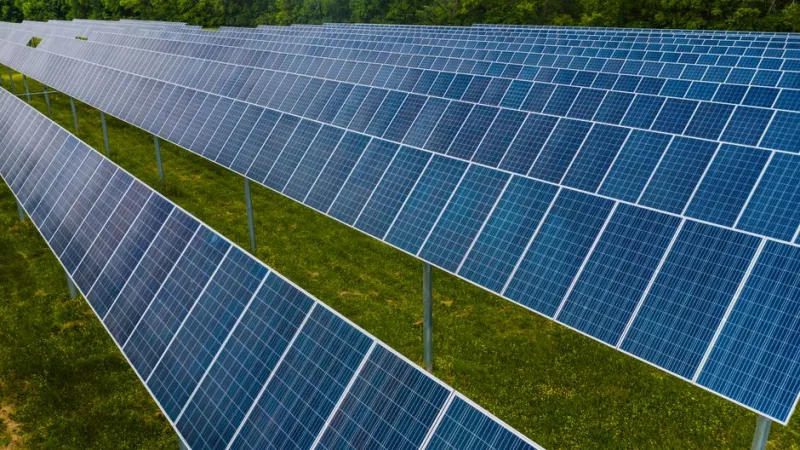
- Bundled RECs from on-site or near-site generation: Solar arrays on data center property or adjacent land, with RECs retained by the operator.
- Unbundled RECs: Certificates purchased separately from the energy market. While valid under GHG Protocol rules, unbundled RECs face increasing scrutiny because they do not necessarily represent additionality.
- Supplier-specific emission factors: If the utility provides a product-specific emission rate (e.g., a green tariff), this can be used for market-based reporting.
Temporal matching is evolving: Historically, annual matching was standard — operators could purchase RECs equivalent to total annual consumption. The trend is toward 24/7 hourly matching (also called 24/7 carbon-free energy, or CFE), where every hour of consumption must be matched by contemporaneous clean generation. Google, Microsoft, and Iron Mountain have committed to 24/7 CFE targets. This significantly increases the cost and complexity of achieving low market-based emissions.
The Colocation Emissions Boundary Problem
Colocation creates a unique accounting challenge. The provider owns the building, power infrastructure, and cooling systems. The tenant owns the IT equipment. Who reports which emissions?
Provider Perspective
The colocation provider typically reports:
- Scope 1: Diesel generators, refrigerant losses, company vehicles
- Scope 2: All electricity consumed by the facility, including both infrastructure (cooling, lighting, security) and tenant IT loads
- Scope 3: Embodied carbon in building and infrastructure equipment, upstream energy, waste
Tenant Perspective
The colocation tenant typically reports:
- Scope 2 (if directly metered and billed for electricity): The energy consumed by their IT equipment
- Scope 3, Category 8 (if the provider pays the electricity bill): The same energy, classified as upstream leased assets
- Scope 3: Embodied carbon in their servers, network equipment, and storage
This creates a risk of double-counting: the provider reports all facility electricity as Scope 2, while the tenant also reports it as their Scope 2 or Scope 3. The solution is clear contractual boundaries and data-sharing agreements. Leading colocation SLAs now include carbon reporting clauses that specify which party reports which emissions and how data (kWh consumed, emission factors, REC allocations) is shared.
UAE-Specific Reporting Landscape
The UAE's sustainability framework creates specific considerations for data center operators in the region.
The UAE Net Zero 2050 Strategic Initiative commits the country to net-zero greenhouse gas emissions by 2050. For data centers, this translates into increasing pressure to demonstrate emissions reductions over time. The DEWA and EWEC utility frameworks are expanding clean energy capacity, with the UAE targeting 44 percent clean energy by 2050 (including nuclear from Barakah and solar from the Mohammed bin Rashid Al Maktoum Solar Park).
Key reporting considerations for UAE-based data centers:
- Grid emission factor: The UAE grid emission factor has been declining as nuclear and solar capacity comes online. Barakah nuclear plant alone (5.6 GW at full capacity) significantly reduces the national average grid intensity.
- IREC market: The UAE has established an International Renewable Energy Certificate (I-REC) market, allowing operators to purchase certificates from registered renewable projects within the country.
- Free zone reporting: Data centers in UAE free zones like ADGM and DIFC may face additional ESG disclosure requirements tied to their financial licensing frameworks.
- CSRD extraterritorial reach: UAE-based facilities serving European enterprise tenants may need to provide emissions data compatible with CSRD Scope 3 reporting requirements, even if the UAE facility is not directly subject to EU regulation.
Practical Reporting Framework for Operators
Implementing emissions reporting requires systematic data collection, calculation, and disclosure. Here is a practical framework for data center operators.
Step 1: Establish Organizational Boundaries
Choose between the equity share approach (report emissions proportional to ownership stake) or the operational control approach (report 100 percent of emissions from facilities you operate). Most data center operators use operational control, which is simpler and aligns with how facilities are actually managed.
Step 2: Inventory Data Sources
- Electricity meters: Utility-grade meters at the facility level, plus sub-meters for IT load vs. infrastructure load (essential for PUE calculation and tenant allocation)
- Fuel purchase records: Diesel and natural gas volumes for generators
- Refrigerant logs: HVAC maintenance records showing refrigerant type, charge, and leak rates
- DCIM systems: Real-time power monitoring data feeds
- Procurement records: For Scope 3 embodied carbon (IT equipment, construction materials)
Step 3: Calculate Emissions
| Scope | Calculation Method | Data Required |
|---|---|---|
| Scope 1 (generators) | Fuel volume x emission factor | Liters of diesel, IPCC emission factor for diesel (2.68 kg CO2/liter) |
| Scope 1 (refrigerants) | Leakage mass x GWP | kg of refrigerant lost, GWP value (e.g., R-410A = 2,088) |
| Scope 2 (location) | kWh consumed x grid emission factor | Annual kWh from utility bills, regional grid factor (kg CO2/kWh) |
| Scope 2 (market) | kWh consumed x contractual emission factor | PPA/REC volumes, residual mix factor for unmatched consumption |
| Scope 3 (embodied) | Equipment lifecycle analysis | Manufacturer product carbon footprint data, LCA databases |
Step 4: Verify and Disclose
Third-party verification by accredited auditors (ISO 14064 or equivalent) adds credibility to reported numbers. Disclosure channels include:
- Annual sustainability or ESG report
- CDP Climate Change questionnaire (scored and publicly benchmarked)
- Science Based Targets initiative (SBTi) commitment and progress tracking
- Direct reporting to enterprise tenants for their Scope 3 supply chain disclosures
Reducing Reported Emissions: Credible Strategies
The most credible path to lower emissions combines operational efficiency improvements with clean energy procurement.
- Improve PUE: Every 0.1 reduction in PUE eliminates approximately 7 to 10 percent of facility energy overhead. Moving from PUE 1.5 to 1.2 through direct liquid cooling, free cooling, and hot/cold aisle containment directly reduces Scope 2 proportionally.
- Procure additionality-backed clean energy: Long-term PPAs with new renewable projects provide both market-based Scope 2 reductions and genuine environmental impact. In the UAE, solar PPAs are increasingly cost-competitive with grid rates.
- Transition backup power: Replace diesel generators with battery energy storage systems (BESS) or hydrogen fuel cells to reduce Scope 1 emissions from backup power.
- Extend hardware lifecycles: Longer server refresh cycles reduce Scope 3 embodied carbon. Each year a server runs beyond its typical 3 to 5 year lifecycle avoids 1,000 to 3,000 kg CO2e of manufacturing emissions.
- Improve WUE: While water use is not a direct carbon source, water-intensive cooling that relies on energy-intensive water treatment has indirect emissions implications.
Common Pitfalls in Data Center Emissions Reporting
- Reporting only market-based Scope 2: Some operators cherry-pick the lower number. GHG Protocol requires both methods for complete disclosure.
- Ignoring Scope 3: Omitting embodied carbon from IT hardware and construction significantly understates total lifecycle emissions.
- Low-quality RECs: Purchasing cheap, unbundled RECs from distant markets without additionality is increasingly seen as greenwashing by institutional investors and ESG raters.
- Static emission factors: Using outdated grid emission factors. Grid mixes change year over year as renewable capacity is added. Use the most recent published factors.
- Unclear tenant boundaries: Not defining who reports which emissions in colocation contracts leads to double-counting or unreported gaps.
Rax's Approach to Sustainability Reporting
Rax Data & Energy operates facilities designed for energy efficiency from the ground up. With Rax Energy focused on sustainable power sourcing and infrastructure, the company's data centers leverage advanced cooling, efficient power distribution, and renewable energy integration to minimize operational carbon intensity. The dual-division model — Rax Data for hosting and colocation, Rax Energy for power infrastructure — enables integrated energy management that reduces both Scope 2 emissions and the upstream Scope 3 emissions associated with energy procurement.
For enterprises evaluating colocation providers, Rax provides transparent energy consumption data and supports tenant Scope 3 reporting with facility-level emission metrics. Contact us to discuss sustainability reporting requirements for your hosted infrastructure.
Frequently Asked Questions
What is the difference between Scope 2 and Scope 3 emissions for data centers?
Scope 2 emissions cover indirect emissions from purchased electricity, heating, and cooling consumed by the data center. For most facilities, electricity is the dominant Scope 2 source, typically accounting for 80 to 95 percent of operational carbon. Scope 3 emissions cover all other indirect emissions in the value chain, including embodied carbon in IT hardware, construction materials, employee commuting, upstream fuel production, and downstream customer use of hosted services.
What is the difference between market-based and location-based Scope 2 accounting?
Location-based accounting uses the average grid emission factor for the region where the data center is physically located. Market-based accounting allows operators to claim lower emissions by purchasing renewable energy certificates (RECs), entering power purchase agreements (PPAs), or sourcing from specific clean energy suppliers. The GHG Protocol requires dual reporting of both methods for transparency.
Do colocation tenants report Scope 2 or Scope 3 for their hosted IT equipment?
For colocation tenants, the electricity consumed by their hosted servers typically falls under their Scope 3 (Category 8: Upstream Leased Assets) if the colocation provider owns and pays for the power infrastructure. If the tenant contracts directly for electricity, it may classify as Scope 2. Clear contractual language and data sharing between provider and tenant are essential to avoid double-counting or gaps.
Which emissions reporting frameworks apply to data centers?
The primary frameworks are the GHG Protocol Corporate Standard, the EU Corporate Sustainability Reporting Directive (CSRD) with European Sustainability Reporting Standards (ESRS), the SEC Climate Disclosure Rule in the US, and voluntary frameworks like CDP and the Science Based Targets initiative (SBTi). In the UAE, the Securities and Commodities Authority (SCA) is developing ESG disclosure standards aligned with international frameworks.
How do renewable energy certificates reduce reported data center emissions?
RECs allow operators to claim that their electricity consumption is matched by equivalent renewable generation. Under market-based Scope 2 accounting, each retired REC reduces the reported emission factor. However, RECs must meet quality criteria: temporal matching (increasingly hourly or monthly), geographic matching (same grid region), and additionality (the project would not have been built without the REC revenue).
Sustainable Hosting with Rax
Rax Data & Energy builds energy-efficient data centers with integrated renewable energy sourcing. Get transparent emissions data for your sustainability reporting.
Contact Us Rax Energy