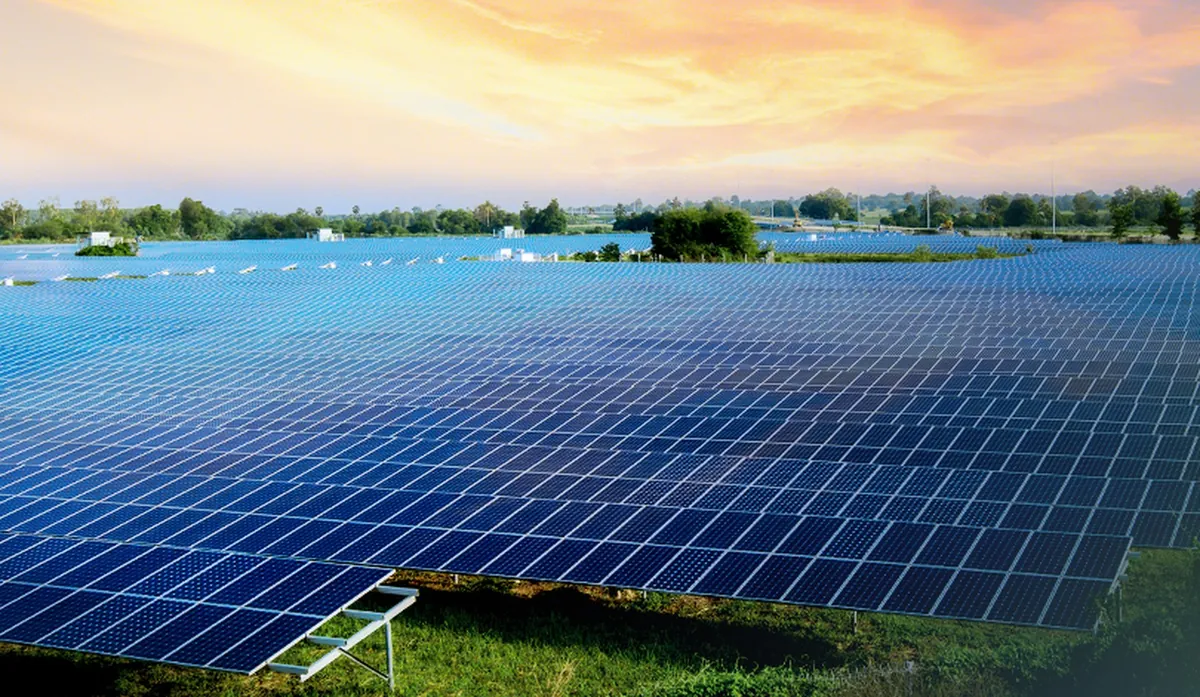
The UAE receives among the highest solar irradiance on Earth, averaging 5.5 to 6.5 kWh per square meter per day across Abu Dhabi and Dubai. At the same time, DEWA commercial electricity rates for data centers range from AED 0.38 to 0.44 per kWh, making energy the single largest operating expense for facility operators. These two facts create an obvious opportunity: solar photovoltaic systems paired with battery energy storage can significantly reduce data center power costs while supporting the UAE's clean energy targets.
This guide covers the technical architecture, economics, regulatory integration, and hot-climate engineering considerations for deploying solar + battery hybrid power at data center scale in the UAE and wider Gulf region.
Why Solar + Battery Makes Sense for UAE Data Centers
Solar-only systems have a fundamental limitation for data centers: they produce power during daylight hours, but data centers consume power 24/7. Without storage, solar offsets only daytime consumption and provides no value at night or during cloud cover. Adding battery energy storage systems (BESS) transforms the economics:
- Energy shifting -- Store excess daytime solar generation and discharge at night, increasing the effective solar offset from 30 to 40 percent (daytime only) to 50 to 70 percent of total consumption.
- Peak shaving -- Reduce peak demand charges by discharging batteries during high-rate periods. DEWA's demand charge structure makes this particularly valuable for facilities with variable loads.
- Backup power -- Battery systems can provide UPS-grade backup during grid outages, potentially replacing or supplementing traditional diesel generator backup.
- Carbon reduction -- Support net-zero commitments and attract tenants with ESG mandates. The UAE's Net Zero by 2050 strategic initiative creates regulatory tailwinds for renewable adoption.
System Architecture
Grid-Tied with Battery (Most Common)
The standard configuration for UAE data centers connects solar PV and BESS to the facility's electrical infrastructure while maintaining grid connectivity through DEWA. During daylight hours, solar panels feed the data center directly, with excess generation charging the batteries. At night or during high-demand periods, batteries discharge to supplement grid power. The grid remains the primary backup, ensuring power redundancy.
Key components in a grid-tied hybrid system:
- Solar PV array -- Monocrystalline or bifacial panels rated for high-temperature operation. Ground-mount or rooftop depending on available area.
- String or central inverters -- Convert DC solar output to AC for the data center distribution. String inverters offer modularity; central inverters suit larger arrays.
- Battery energy storage system (BESS) -- LFP (lithium iron phosphate) chemistry containers with integrated thermal management. Sized for 2 to 4 hours of discharge at target offset rate.
- Energy management system (EMS) -- Controls charge/discharge cycles, peak shaving, and grid interaction. Integrates with the facility's DCIM platform.
- Grid interconnection -- Bidirectional metering per DEWA Shams Dubai regulations (for net metering) or behind-the-meter consumption (for self-consumption models).
Off-Grid / Microgrid (Remote Sites)
For data center deployments in remote locations, industrial zones, or UAE free zones without reliable grid access, fully off-grid or microgrid configurations combine solar, battery storage, and diesel or gas generators. These systems require larger battery capacity (8 to 12 hours) and generator backup for extended cloudy periods, which are rare in the UAE but must be accounted for in redundancy planning.
Sizing the System
| Data Center Load | Solar PV (30% Offset) | Solar PV (50% Offset) | BESS (4hr) | Land Area (Ground Mount) |
|---|---|---|---|---|
| 500 kW | 750 kWp | 1.25 MWp | 1 MWh | 3,750 - 6,250 sqm |
| 1 MW | 1.5 MWp | 2.5 MWp | 2 MWh | 7,500 - 12,500 sqm |
| 5 MW | 7.5 MWp | 12.5 MWp | 10 MWh | 37,500 - 62,500 sqm |
| 10 MW | 15 MWp | 25 MWp | 20 MWh | 75,000 - 125,000 sqm |
These figures assume UAE-average solar yields of approximately 1,700 kWh/kWp/year and 5 square meters per kWp for ground-mounted systems. Rooftop installations require less ground area but are limited by building structural capacity and available roof space after accounting for HVAC equipment, fire suppression systems, and maintenance access.
Design note: In the UAE, solar panels operate at 75 to 85 percent of nameplate efficiency during peak summer due to extreme heat. Size systems 15 to 20 percent larger than theoretical calculations to account for thermal derating, soiling losses, and inverter clipping.
Hot-Climate Engineering Challenges
Solar Panel Thermal Derating
Solar panel efficiency drops approximately 0.3 to 0.5 percent per degree Celsius above the 25-degree standard test condition. In UAE summers, panel surface temperatures routinely reach 70 to 80 degrees Celsius, reducing output by 15 to 25 percent compared to nameplate ratings. Mitigation strategies include:
- Bifacial panels -- Capture reflected light from the ground surface (albedo), partially compensating for thermal losses. UAE desert surfaces with light-colored sand provide 15 to 25 percent albedo gain.
- Elevated mounting -- Raising panels 1 to 2 meters above ground or roof surfaces improves airflow underneath, reducing panel temperatures by 5 to 10 degrees.
- Panel technology selection -- N-type heterojunction (HJT) panels have lower temperature coefficients (-0.26%/degree C) compared to standard PERC panels (-0.35%/degree C), delivering better performance in extreme heat.
Battery Thermal Management
Lithium-ion batteries require controlled environments between 15 and 35 degrees Celsius. In the UAE, outdoor ambient temperatures exceed 45 degrees Celsius for extended periods. Containerized BESS units with dedicated HVAC systems are the standard deployment method. The cooling load for battery containers adds 5 to 8 percent to total system energy consumption. LFP chemistry is strongly preferred over NMC in Gulf climates due to its wider thermal safety margin and lower risk of thermal runaway at elevated temperatures.
Dust and Soiling
Desert dust accumulation reduces solar panel output by 15 to 30 percent per month without cleaning in UAE conditions. Automated robotic cleaning systems or regular manual cleaning schedules (weekly to biweekly) are essential operating expenses. Anti-soiling coatings on panels can extend cleaning intervals by 40 to 60 percent. Budget 2 to 4 percent of annual system revenue for panel cleaning operations.
Economics and ROI
| Component | Cost (USD/kW or kWh) | UAE Context |
|---|---|---|
| Solar PV (utility scale) | $600 - $900 per kWp installed | Among lowest globally due to scale and irradiance |
| Solar PV (rooftop commercial) | $800 - $1,200 per kWp installed | Higher per-unit cost, lower land requirement |
| BESS (LFP, containerized) | $250 - $400 per kWh | Declining 15-20% per year; LFP preferred for heat tolerance |
| EMS + Integration | 5-10% of total system cost | Critical for data center grade reliability |
| O&M (annual) | 1-2% of system cost | Includes panel cleaning, inverter maintenance, battery monitoring |
Payback Scenarios
For a 1 MW data center paying AED 0.40/kWh with a 1.5 MWp solar + 2 MWh BESS system:
- Solar only -- Annual savings of approximately AED 1.0 to 1.3 million. System cost approximately AED 4 to 5 million. Payback: 4 to 5 years.
- Solar + battery -- Annual savings of approximately AED 1.5 to 1.9 million (including peak shaving value). System cost approximately AED 6 to 8 million. Payback: 4 to 6 years.
- Solar + battery + UPS displacement -- If the BESS replaces traditional UPS battery systems, the avoided capital cost of separate UPS infrastructure reduces effective payback to 3 to 5 years.
DEWA Integration and Regulations
Dubai's Shams Dubai program allows commercial solar installations up to the facility's connected load capacity. Key regulatory considerations:
- Net metering -- Excess solar generation credits are applied against future DEWA bills at the same tariff rate. Credits roll over monthly but expire at year-end.
- System registration -- All solar installations must be registered with DEWA and installed by DEWA-approved contractors. Inverters must be type-tested and listed on DEWA's approved equipment list.
- Grid code compliance -- Systems must meet DEWA's Low Voltage and Medium Voltage grid connection codes, including anti-islanding protection, voltage regulation, and power quality requirements.
- Battery storage -- BESS installations require additional permitting from civil defense (fire safety) and DEWA (grid interaction). Containerized LFP systems are generally approved; NMC systems face stricter requirements due to fire risk.
In Abu Dhabi, EWEC and ADDC have similar but distinct solar connection programs. Understanding the specific tariff structures in each emirate is essential for accurate ROI modeling.
Integration with Data Center Infrastructure
Solar + BESS integration touches multiple data center systems:
- Electrical distribution -- The hybrid system connects at the main switchgear level, requiring coordination with the existing PDU infrastructure and switchgear protection schemes.
- Cooling systems -- Solar generation peaks align with cooling demand peaks (both highest midday), creating a natural match. The PUE benefit of solar-powered cooling is significant in hot climates.
- Monitoring -- DCIM integration provides real-time visibility into solar generation, battery state of charge, grid consumption, and renewable energy certificate tracking.
- Backup power -- Coordinate BESS discharge with generator start sequences to ensure seamless transition during grid outages. The BESS provides bridge power during the 10 to 30 second generator start-up period.
Sustainability and Compliance Benefits
Beyond direct cost savings, solar + BESS delivers strategic value for data center operators in the UAE:
- UAE Net Zero 2050 -- Alignment with national climate strategy positions facilities favorably for government contracts and incentives.
- Tenant attraction -- Hyperscale cloud and AI colocation tenants increasingly require renewable energy sourcing as part of their corporate sustainability commitments.
- Green building certification -- Solar + BESS installations contribute to Estidama Pearl or LEED certification points.
- Carbon credit generation -- Verified renewable energy certificates (RECs) can be sold or used to offset Scope 2 emissions reporting.
Frequently Asked Questions
How much solar capacity does a UAE data center need?
For a 30 percent energy offset on a 1 MW data center, approximately 1.5 to 2 MWp of solar PV occupying 7,500 to 10,000 square meters. UAE solar yields of 1,600 to 1,800 kWh/kWp/year are among the highest globally. Size 15 to 20 percent above theoretical calculations to account for heat derating and soiling.
What is the ROI of solar + battery for UAE data centers?
Solar-only systems achieve 4 to 5 year payback against DEWA commercial rates. Adding battery storage extends payback to 4 to 6 years but provides additional peak shaving and backup value. If BESS displaces separate UPS infrastructure, effective payback drops to 3 to 5 years.
Can batteries provide UPS-grade backup?
Yes. Modern LFP battery systems with grid-forming inverters achieve sub-20-millisecond transfer times. Design reserves 20 to 30 percent of battery capacity as always-available backup while cycling the remainder for daily energy shifting and peak shaving.
How does UAE heat affect solar and battery performance?
Solar panels lose 15 to 25 percent output in peak UAE summer due to thermal derating. Bifacial panels and elevated mounting mitigate this. Batteries require containerized deployment with dedicated cooling (HVAC) adding 5 to 8 percent to system energy consumption. LFP chemistry is preferred over NMC for thermal safety in Gulf climates.