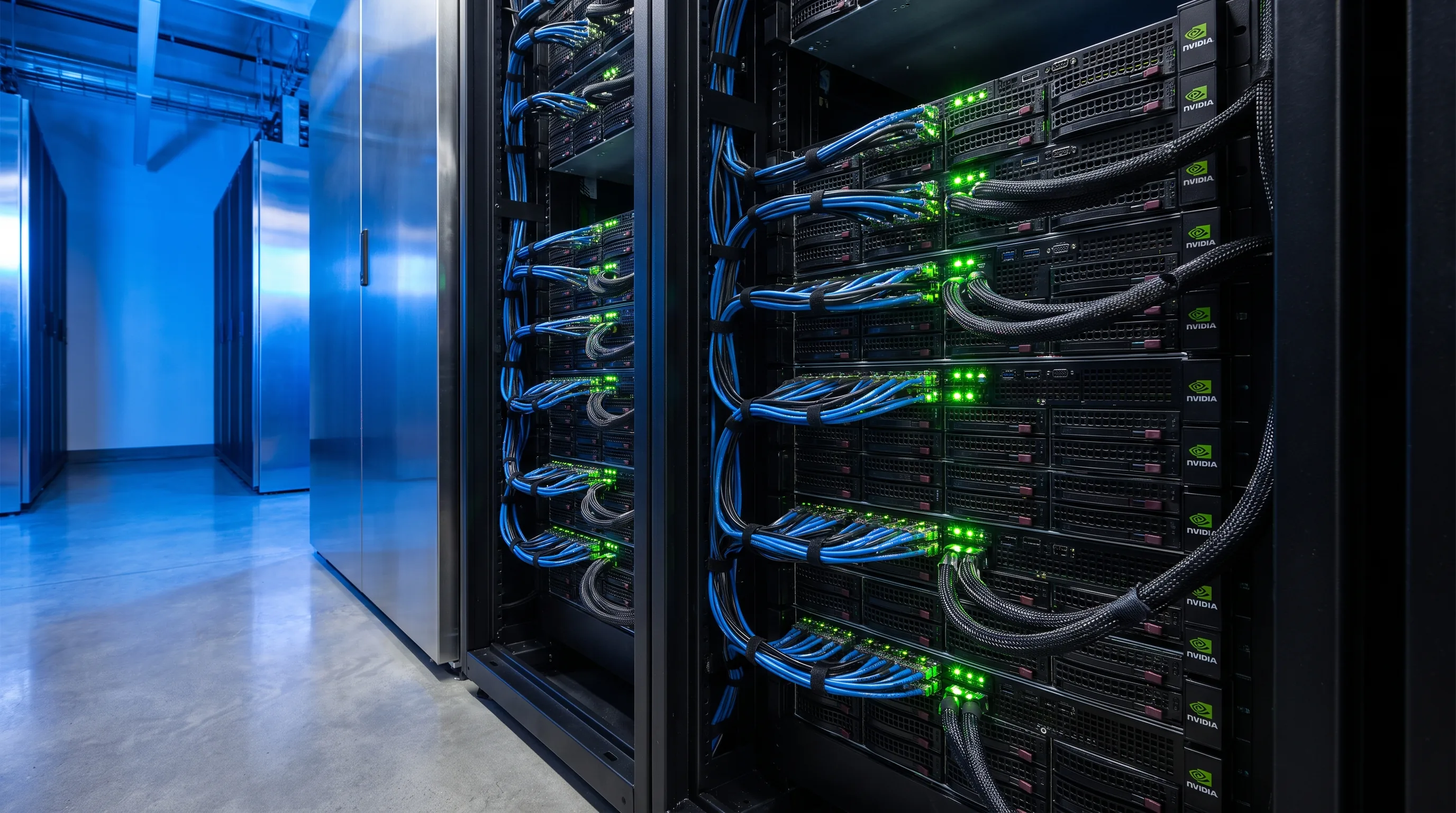
The GPU Hosting Market in 2026
Demand for GPU compute capacity has fundamentally reshaped the hosting industry. From AI model training and inference to scientific simulation and rendering, enterprise GPU servers require specialized infrastructure that traditional hosting was never designed to support. The result is a pricing landscape that varies enormously depending on the hosting model, GPU hardware, and contract terms.
This guide breaks down the three main GPU hosting models — cloud, bare metal, and colocation — with real-world pricing benchmarks for the most popular GPU platforms. Whether you are budgeting for a single inference server or planning a multi-rack training cluster, these numbers provide the context you need to make informed decisions.
Three Hosting Models Compared
Before comparing specific prices, it is important to understand what you are paying for with each hosting model. The differences go beyond just cost per GPU-hour.
Cloud GPU Hosting
Cloud providers (AWS, Azure, GCP, CoreWeave, Lambda, and others) offer GPU instances on-demand or with reserved pricing. You pay per GPU-hour and the provider manages everything: hardware, networking, cooling, power, and maintenance.
- Best for: Experimental workloads, variable demand, short training runs, teams without hardware expertise
- Drawbacks: Highest cost per GPU-hour at sustained utilization; limited availability for top-tier GPUs; vendor lock-in risk
Bare Metal Dedicated Servers
Bare metal providers (Hetzner, OVH, Vultr, Latitude, and specialized GPU hosts) rent you physical servers with dedicated GPU hardware on monthly or annual contracts. You get root access to the full machine but the provider still owns and maintains the hardware.
- Best for: Steady-state workloads, teams that need full hardware control without owning equipment, mid-term commitments (6–24 months)
- Drawbacks: Less flexible than cloud; hardware is still provider-managed (limited customization); availability can be constrained
GPU Colocation
GPU colocation means you own the servers and rent space, power, cooling, and connectivity from a data center provider. This is the model that delivers the lowest long-term cost but requires the highest upfront capital investment.
- Best for: Large-scale operations, long-term AI infrastructure, organizations with hardware procurement capability, cost optimization over 2+ years
- Drawbacks: High upfront capital expenditure; you are responsible for hardware procurement, deployment, and replacement; requires technical staff or managed services
GPU Hosting Pricing by Model
The following table shows representative pricing across the three hosting models for the most commonly deployed data center GPUs in 2026. Prices reflect mid-market rates and may vary by region, contract length, and provider.
| GPU Model | Cloud ($/GPU-hr) | Bare Metal ($/mo per 8-GPU node) | Colocation ($/mo per kW) |
|---|---|---|---|
| NVIDIA H100 SXM | $2.50–$4.00 | $10,000–$18,000 | $150–$350 + electricity |
| NVIDIA H200 | $3.50–$5.00 | $14,000–$22,000 | $150–$350 + electricity |
| NVIDIA A100 80GB | $1.50–$2.50 | $6,000–$10,000 | $150–$300 + electricity |
| NVIDIA L40S | $1.00–$1.80 | $4,000–$7,000 | $120–$250 + electricity |
| NVIDIA RTX 4090 | $0.50–$1.00 | $2,500–$4,500 | $100–$200 + electricity |
| AMD MI300X | $2.00–$3.50 | $8,000–$14,000 | $150–$350 + electricity |
Note on Colocation Pricing: Colocation costs are measured per kW of power, not per GPU. An 8-GPU H100 SXM node draws approximately 10–12 kW including networking and cooling overhead. At $200/kW/month plus $0.06/kWh electricity, total colocation cost for one H100 node runs approximately $3,500–$5,500/month — significantly less than cloud or bare metal.
Total Cost of Ownership: Cloud vs Colocation
The headline hourly rate for cloud GPU hosting is misleading if you run workloads continuously. Let us compare the 2-year total cost of ownership for a single 8-GPU H100 node across models.
| Cost Component | Cloud GPU | Bare Metal | Colocation |
|---|---|---|---|
| Hardware (one-time) | $0 (included) | $0 (included) | $250,000–$350,000 |
| Monthly Hosting | $21,600–$23,040 | $10,000–$18,000 | $2,000–$3,500 (power+space) |
| Electricity | Included | Included | $2,000–$4,500/mo |
| 24-Month Total | $518,400–$552,960 | $240,000–$432,000 | $346,000–$542,000 |
| Cost per GPU-hour | $3.00–$3.20 | $1.39–$2.50 | $0.60–$0.95* |
*Colocation cost per GPU-hour includes amortized hardware over 3 years plus monthly hosting and electricity costs. After hardware amortization (year 3+), effective GPU-hour cost drops to $0.30–$0.55.
What Drives GPU Hosting Prices
Understanding the cost components helps you negotiate better contracts and optimize your infrastructure spend.
Power Consumption
GPU servers are among the most power-hungry equipment in any data center. A single NVIDIA H100 SXM GPU draws up to 700W at peak, and an 8-GPU node with CPU, networking, and cooling overhead can consume 10–12 kW. Electricity cost is often the single largest variable in GPU hosting pricing.
At $0.06/kWh, a 10 kW GPU node costs approximately $432/month in electricity alone. At $0.12/kWh, that doubles to $864/month. This is why energy-optimized facilities and regions with low power costs attract GPU deployments.
Cooling Requirements
High-density GPU racks generate heat far exceeding what traditional air cooling can handle. A rack of H100 servers can reach 40–60 kW, while conventional air-cooled data centers support 5–15 kW per rack. This forces providers to invest in liquid cooling or immersion cooling systems, which cost more to build but deliver better PUE (Power Usage Effectiveness) and enable higher density.
Cooling infrastructure is amortized into per-kW pricing. Facilities with immersion cooling may charge a premium per kW but deliver lower total cost through better energy efficiency and higher rack density.
Network Bandwidth
AI training workloads, especially distributed training across multiple nodes, require high-bandwidth, low-latency networking. InfiniBand (400 Gbps or higher) is the standard for multi-node H100/H200 training clusters. Providers that include InfiniBand fabric in their pricing charge more per node but eliminate the performance bottleneck that makes cheaper alternatives unusable for serious training work.
Contract Length
GPU hosting pricing drops significantly with longer commitments. Typical discount structures:
- On-demand (hourly): Full price — no discount
- 1-month commit: 0–5% discount
- 6-month commit: 10–20% discount
- 12-month commit: 20–35% discount
- 24-36 month commit: 30–50% discount
For GPU colocation, contract length affects the power rate more than the space fee. A 3-year power purchase agreement can reduce your per-kWh rate by 15–30% compared to month-to-month.
Geographic Location
Data center location affects both electricity cost and cooling efficiency. Common GPU hosting locations and their cost characteristics:
| Region | Power Cost ($/kWh) | Cooling Advantage | GPU Hosting Ecosystem |
|---|---|---|---|
| US — Texas | $0.04–$0.07 | Moderate (hot summers) | Large, mature |
| US — Virginia | $0.06–$0.09 | Good (mild climate) | Largest globally |
| Nordics | $0.03–$0.06 | Excellent (cold climate) | Growing |
| UAE | $0.04–$0.08 | Requires investment (hot climate) | Fast-growing |
| Singapore | $0.10–$0.15 | Challenging (tropical) | Mature but constrained |
How to Choose the Right Hosting Model
The optimal hosting model depends on your utilization pattern, budget structure, and time horizon. Use these decision criteria:
Choose Cloud GPU When:
- Your GPU utilization is below 40% (bursty workloads, experimentation)
- You need to scale up or down rapidly (prototype to production transitions)
- You lack hardware procurement and operations capability
- Your budget is OPEX-only (no capital expenditure approval)
- You need immediate access to the latest GPU hardware
Choose Bare Metal When:
- Your utilization is 50–80% with predictable patterns
- You need full root access but do not want hardware ownership
- Your commitment horizon is 6–24 months
- You want dedicated hardware without managing physical infrastructure
Choose Colocation When:
- Your GPU utilization exceeds 60% consistently
- Your time horizon is 2+ years
- You have or can build hardware procurement capability
- You want the lowest long-term cost per GPU-hour
- You need maximum control over hardware configuration and security
Hybrid Strategy: Many organizations use cloud GPU for development and experimentation, then move production workloads to colocation. This combines cloud flexibility for R&D with colocation economics for steady-state production — reducing total infrastructure cost by 30–50% compared to cloud-only.
Hidden Costs to Watch For
When comparing GPU hosting quotes, look beyond the headline price. These hidden costs can significantly affect your total spend:
- Egress Fees (Cloud): Transferring data out of cloud platforms costs $0.05–$0.12/GB. Training data ingestion and model export can add thousands per month.
- Cross-Connect Fees (Colocation): Physical network connections between your cage and other providers typically cost $200–$500/month per connection.
- Power Overages: Some providers charge penalty rates (1.5x–2x) for exceeding committed power. Size your power commitment carefully based on actual GPU workload profiles.
- Remote Hands: Physical hardware support in colocation facilities is often billed at $75–$150/hour. Factor this in if you do not have on-site staff.
- IP Addresses: Additional IPv4 addresses cost $2–$5/month each. GPU clusters with many nodes need careful IP planning.
- Cooling Surcharges: Some providers add density surcharges for racks exceeding their standard kW-per-rack threshold.
Negotiating Better GPU Hosting Rates
GPU hosting is a competitive market, and pricing is often negotiable. Strategies that work:
- Commit to Longer Terms: Moving from month-to-month to a 12-month contract typically saves 20–35%
- Prepay Annually: Some providers offer an additional 5–10% discount for annual prepayment
- Bundle Services: Combining hosting, networking, and managed services often yields better total pricing than a la carte
- Grow-With-Me Agreements: Negotiate staged deployments with pricing locked for future expansion
- Time Your Purchase: GPU supply fluctuations create periodic price drops — sign contracts when availability is high
- Compare Regions: The same provider may offer significantly different rates in different data center locations
The UAE GPU Hosting Advantage
The UAE's emerging data center ecosystem offers competitive GPU hosting pricing driven by low energy costs, strategic geographic positioning between Europe and Asia, and government incentives for digital infrastructure investment. For organizations serving Middle Eastern, African, and South Asian markets, hosting GPU infrastructure in the UAE reduces latency while benefiting from favorable regulatory frameworks and modern facility standards.
Frequently Asked Questions
How much does GPU server hosting cost per month?
GPU server hosting costs vary widely depending on the GPU model and hosting type. Cloud GPU hosting ranges from $1.50–$4.00/hr per H100 GPU. Bare metal dedicated servers with H100 GPUs typically cost $8,000–$15,000/month per 8-GPU node. Colocation (bring your own hardware) runs $150–$500/month per kW of power, plus electricity. For most organizations, colocation becomes the cheapest option when running GPU servers continuously for more than 6–12 months.
Is GPU colocation cheaper than cloud GPU hosting?
For sustained workloads running more than 50–60% of the time, GPU colocation is typically 40–70% cheaper than cloud GPU hosting over a 2–3 year period. The break-even point depends on GPU model, power costs, and utilization rate. Cloud is more cost-effective for bursty or experimental workloads under 40% utilization.
What factors affect GPU server hosting pricing?
The main pricing factors are: GPU model and quantity (H100 costs significantly more than A100 or L40S), power consumption (measured in kW), cooling requirements (high-density GPU servers need liquid or immersion cooling), network bandwidth, storage type and capacity, contract length (longer commitments get better rates), and geographic location of the data center.
Get a Custom GPU Hosting Quote
Rax operates high-density GPU colocation facilities with competitive power pricing, liquid cooling infrastructure, and flexible contract terms designed for AI workloads.
Request a Quote View Pricing