Data centers consume approximately 2-3% of global electricity and that share is growing rapidly as AI, cloud computing, and cryptocurrency mining scale. Enterprise customers, regulators, and investors are demanding carbon-neutral operations. For data center operators, the path to net-zero is not just an environmental obligation but a competitive advantage that reduces operating costs, attracts ESG-conscious clients, and secures long-term energy contracts at favorable rates.
This guide covers every strategy available to data center operators pursuing carbon neutrality in 2026, with specific attention to the renewable energy infrastructure and sustainability practices relevant to operations in the UAE and Middle East.
What Carbon Neutrality Means for Data Centers
Carbon neutrality means that a facility's net greenhouse gas emissions equal zero over a defined period, typically one year. This is achieved by minimizing emissions through efficiency and clean energy, then offsetting any residual emissions through verified carbon removal programs.
The three scopes of emissions that data center operators must address:
- Scope 1 (Direct Emissions): On-site diesel generators (part of power redundancy systems), refrigerant leaks from cooling systems, and company vehicles. For most data centers, Scope 1 represents 5-15% of total emissions.
- Scope 2 (Indirect Energy Emissions): Purchased electricity from the grid. This is the dominant emissions source for data centers, typically 70-85% of the total footprint.
- Scope 3 (Supply Chain): Embodied carbon in servers, networking equipment, construction materials, and employee commuting. Increasingly required by ESG frameworks and EU regulations.
Strategy 1: Renewable Energy Procurement
The most impactful step toward carbon neutrality is powering operations with clean electricity. Data center operators have several procurement mechanisms:
Power Purchase Agreements (PPAs)
Long-term contracts (10-25 years) to buy electricity directly from a specific renewable energy project. PPAs provide price certainty and directly fund new renewable capacity. In the Middle East, solar PPAs for data centers now deliver electricity at $0.02-$0.04 per kWh, among the lowest rates globally.
On-Site Generation
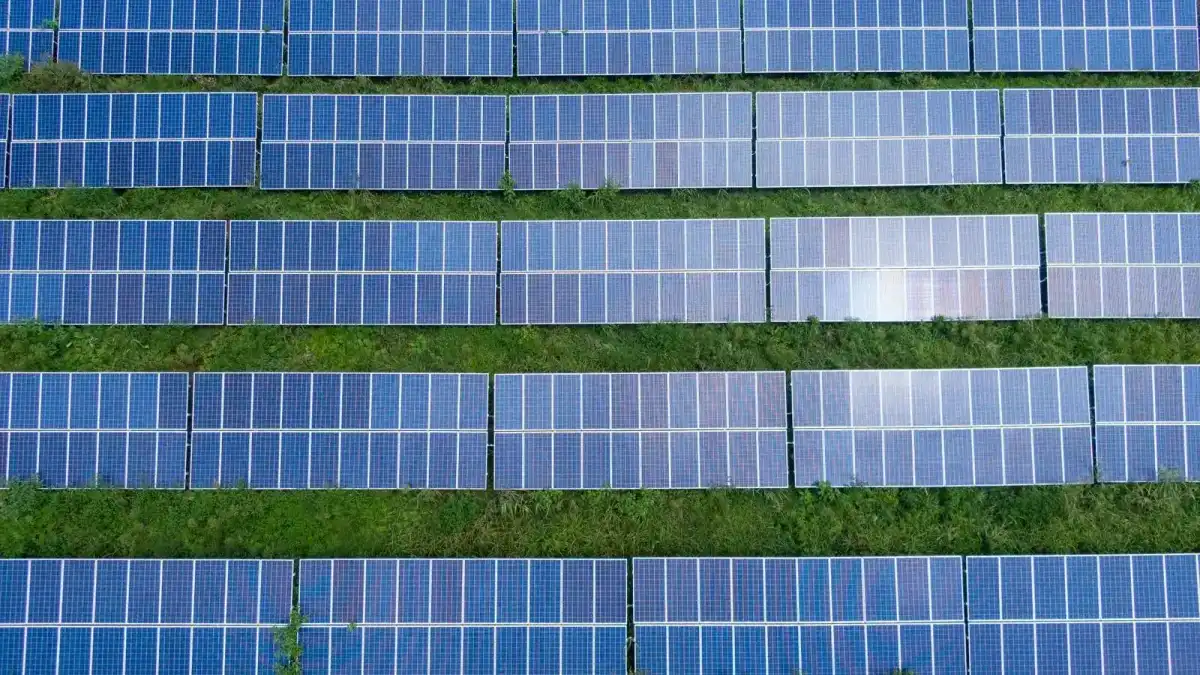
Installing solar panels, solar shingles, or small wind turbines directly at the data center site. On-site generation eliminates transmission losses and provides grid-independent power. A 10 MW data center in the UAE can typically install 2-4 MW of rooftop and ground-mount solar, covering 20-40% of daytime load.
Renewable Energy Certificates (RECs)
Purchasing RECs allows operators to claim the environmental attributes of renewable energy generated elsewhere. While RECs are the simplest path to Scope 2 neutrality, they are considered less impactful than PPAs or on-site generation because they do not necessarily fund new renewable capacity.
Virtual PPAs (VPPAs)
Financial instruments where the data center contracts with a renewable energy project but does not take physical delivery. The operator pays a fixed price, receives RECs, and settles the difference with market prices. VPPAs work well for multi-site operators or facilities in regions with limited local renewable options.
Strategy 2: Energy Efficiency at Scale
Every kilowatt-hour saved is a kilowatt-hour that does not need to be generated, transmitted, or offset. Efficiency improvements compound directly into the carbon equation.
PUE Optimization
Power Usage Effectiveness (PUE) is the ratio of total facility power to IT equipment power. The global average PUE is 1.58; best-in-class facilities achieve 1.1-1.2. Reducing PUE from 1.5 to 1.2 eliminates 20% of facility energy consumption without touching the IT load. For a detailed breakdown, see our PUE optimization guide.
Advanced Cooling Systems
Cooling accounts for 30-50% of non-IT energy consumption. The progression from traditional CRAH/CRAC units to direct liquid cooling (DLC), rear-door heat exchangers, and immersion cooling dramatically reduces cooling energy. In hot climates like the UAE, district cooling and, liquid cooling systems are particularly valuable because they decouple data center operations from ambient temperature.
Waste Heat Recovery
Data centers produce enormous quantities of low-grade heat (30-60 degrees Celsius) that is typically exhausted to the atmosphere. In Nordic countries, waste heat from data centers already heats thousands of homes. In warmer climates, waste heat can power absorption chillers or desalination systems, creating circular energy loops that improve overall efficiency.
Hot/Cold Aisle Containment
Physical separation of hot exhaust air from cold supply air prevents mixing that forces cooling systems to work harder. Containment alone can reduce cooling energy by 15-25% and is one of the lowest-cost efficiency improvements available.
Strategy 3: Water Conservation
While carbon gets most of the attention, water consumption is the second major environmental metric for data centers, measured by Water Usage Effectiveness (WUE).
Evaporative cooling systems consume significant water. A 10 MW data center using traditional cooling towers can consume 25-50 million liters of water annually. In water-scarce regions like the UAE and broader Middle East, minimizing WUE is both an environmental and operational priority.
Strategies to reduce water consumption:
- Closed-loop liquid cooling: Eliminates evaporative water loss entirely by recirculating coolant through sealed heat exchangers.
- Adiabatic cooling: Uses water evaporation only when ambient temperatures exceed the cooling threshold, reducing consumption by 50-70% compared to always-on evaporative systems.
- Air-cooled condensers: Replace water-cooled condensers in the chiller plant, eliminating cooling tower water consumption at a modest efficiency penalty.
- Recycled water: Using treated greywater or industrial water for cooling tower makeup, preserving potable water supplies.
Strategy 4: Carbon Offsetting and Removal
Even with aggressive efficiency and renewable energy, most data centers have residual emissions from backup generators, refrigerants, and Scope 3 sources. Carbon offsets and removal credits address the gap.
Types of Carbon Credits
- Avoidance credits: Fund projects that prevent emissions (e.g., protecting forests from deforestation). Lower cost ($5-$15 per ton CO2) but increasingly questioned for permanence.
- Removal credits: Fund projects that actively remove CO2 from the atmosphere (e.g., direct air capture, biochar, enhanced weathering). Higher cost ($50-$500+ per ton) but considered more credible by the Science Based Targets initiative (SBTi).
Verification and Standards
Credible carbon offsets are verified by third-party standards: Gold Standard, Verified Carbon Standard (Verra), American Carbon Registry, or Climate Action Reserve. Without third-party verification, offset claims lack credibility for ESG reporting and regulatory compliance.
Strategy 5: Sustainable Construction and Hardware
Embodied carbon in building materials and IT hardware represents a growing share of total lifecycle emissions, especially as operational emissions decrease through clean energy.
Green Building Standards
LEED, BREEAM, and Estidama (the UAE's sustainable building framework) provide structured pathways for reducing embodied carbon. Key decisions include:
- Low-carbon concrete and recycled steel for structural elements
- Modular construction to reduce material waste
- Building orientation and shading optimized for solar gain management
- Green roofs and high-albedo surfaces to reduce urban heat island effects
Hardware Lifecycle Management
Extending server refresh cycles from 3 years to 5 years reduces embodied carbon by 40%. When hardware is decommissioned, responsible recycling and certified e-waste processing recover valuable materials and prevent hazardous waste. Some operators now require hardware vendors to provide product carbon footprint (PCF) data as a procurement criterion.
The UAE's Position in Sustainable Data Centers
The UAE has committed to net-zero emissions by 2050 and has some of the strongest sustainability mandates in the region. For data center operators, this regulatory environment creates both obligations and opportunities.
Regulatory Drivers
- UAE Net Zero 2050 Strategic Initiative: National commitment requiring all sectors, including data centers, to decarbonize.
- Abu Dhabi's Estidama Pearl Rating System: Mandatory sustainability standards for new buildings, including data center facilities.
- TDRA Compliance: The Telecommunications and Digital Government Regulatory Authority sets standards for data center operations, increasingly incorporating sustainability requirements.
- Dubai Clean Energy Strategy 2050: Targets 75% clean energy by 2050, with data centers expected to be early adopters.
Natural Advantages
The UAE offers 300+ days of sunshine annually with solar irradiance of 5.5-6.5 kWh per square meter per day, making it one of the best locations globally for solar energy generation. The world's lowest solar electricity costs (under $0.02/kWh at utility scale) were achieved in the UAE. Combined with growing wind capacity and nuclear power (Barakah plant), the UAE's grid is rapidly decarbonizing.
Measuring Progress: Key Sustainability Metrics
Operators pursuing carbon neutrality must track and report quantifiable metrics:
| Metric | What It Measures | Best-in-Class Target |
|---|---|---|
| PUE | Energy efficiency (total power / IT power) | < 1.2 |
| WUE | Water consumption (liters / kWh IT) | < 0.5 L/kWh |
| CUE | Carbon intensity (kg CO2 / kWh IT) | < 0.1 kg/kWh |
| REF | Renewable Energy Factor (% renewable) | 100% |
| ERE | Energy Reuse Effectiveness | < 0.9 |
The Business Case for Carbon Neutrality
Beyond environmental responsibility, carbon neutrality delivers measurable business advantages:
- Client acquisition: Enterprise customers increasingly require carbon-neutral hosting as a procurement criterion. Hyperscalers (Microsoft, Google, Meta) already mandate it for colocation providers.
- Energy cost stability: Long-term renewable PPAs lock in electricity prices for 10-25 years, eliminating exposure to fossil fuel price volatility.
- Regulatory compliance: Proactive decarbonization avoids future carbon taxes and mandatory emissions reporting penalties.
- Capital access: Green bonds and sustainability-linked financing offer lower borrowing costs for certified green data centers.
- Talent attraction: ESG commitments help recruit engineering talent in a competitive labor market.
Rax's Approach to Sustainable Infrastructure
At Rax Data, sustainability is integrated into every layer of our infrastructure. Our technology stack prioritizes energy efficiency through advanced cooling, high-density power distribution, and intelligent workload management. Rax Energy develops renewable power solutions including solar installations and microgrids that directly support our data center operations and client facilities.
We recognize that Bitcoin mining and AI compute are energy-intensive workloads, and we believe the solution is not to avoid these workloads but to power them responsibly. By co-locating compute with stranded and curtailed renewable energy, we turn what would be wasted power into productive infrastructure.
Frequently Asked Questions
What does it mean for a data center to be carbon neutral?
A carbon-neutral data center achieves a net-zero carbon footprint by balancing its total greenhouse gas emissions with an equivalent amount of carbon removal or offsetting. This is accomplished through a combination of renewable energy procurement (solar, wind, hydropower), energy efficiency improvements (low PUE), waste heat recovery, and verified carbon offsets for any remaining emissions. True carbon neutrality covers Scope 1 (direct emissions from on-site generators), Scope 2 (indirect emissions from purchased electricity), and increasingly Scope 3 (supply chain emissions from hardware manufacturing and logistics).
How much does it cost to make a data center carbon neutral?
The cost varies based on approach and location. Renewable energy PPAs (power purchase agreements) can reduce or eliminate the carbon premium, often matching or beating fossil fuel electricity prices at $0.03-$0.06 per kWh. On-site solar installations cost $1.00-$1.50 per watt but pay for themselves within 5-8 years. Carbon offsets for remaining emissions run $5-$50 per metric ton of CO2. For a 10 MW facility, total annual carbon-neutrality costs range from near-zero (if fully powered by contracted renewables) to $200,000-$500,000 (if relying heavily on offsets and efficiency retrofits). Most operators find that efficiency improvements pay for themselves within 2-3 years through reduced energy bills.
Can Bitcoin mining data centers be carbon neutral?
Yes. Bitcoin mining is uniquely suited to carbon-neutral operations because miners are location-flexible, load-flexible, and can operate as demand-response participants. Many mining operations already achieve carbon neutrality by co-locating with stranded renewable energy sources like curtailed wind and solar, flare gas capture sites, or excess hydropower. Mining can also act as a buyer of last resort for new renewable energy projects, making those projects financially viable and accelerating the grid's transition away from fossil fuels. Several publicly traded mining companies now report carbon-neutral or carbon-negative operations.
Sustainable Data Center Hosting
Rax operates energy-efficient data center infrastructure with renewable energy integration for AI, GPU, and Bitcoin mining workloads. Learn how we combine performance with sustainability.
Request a Quote