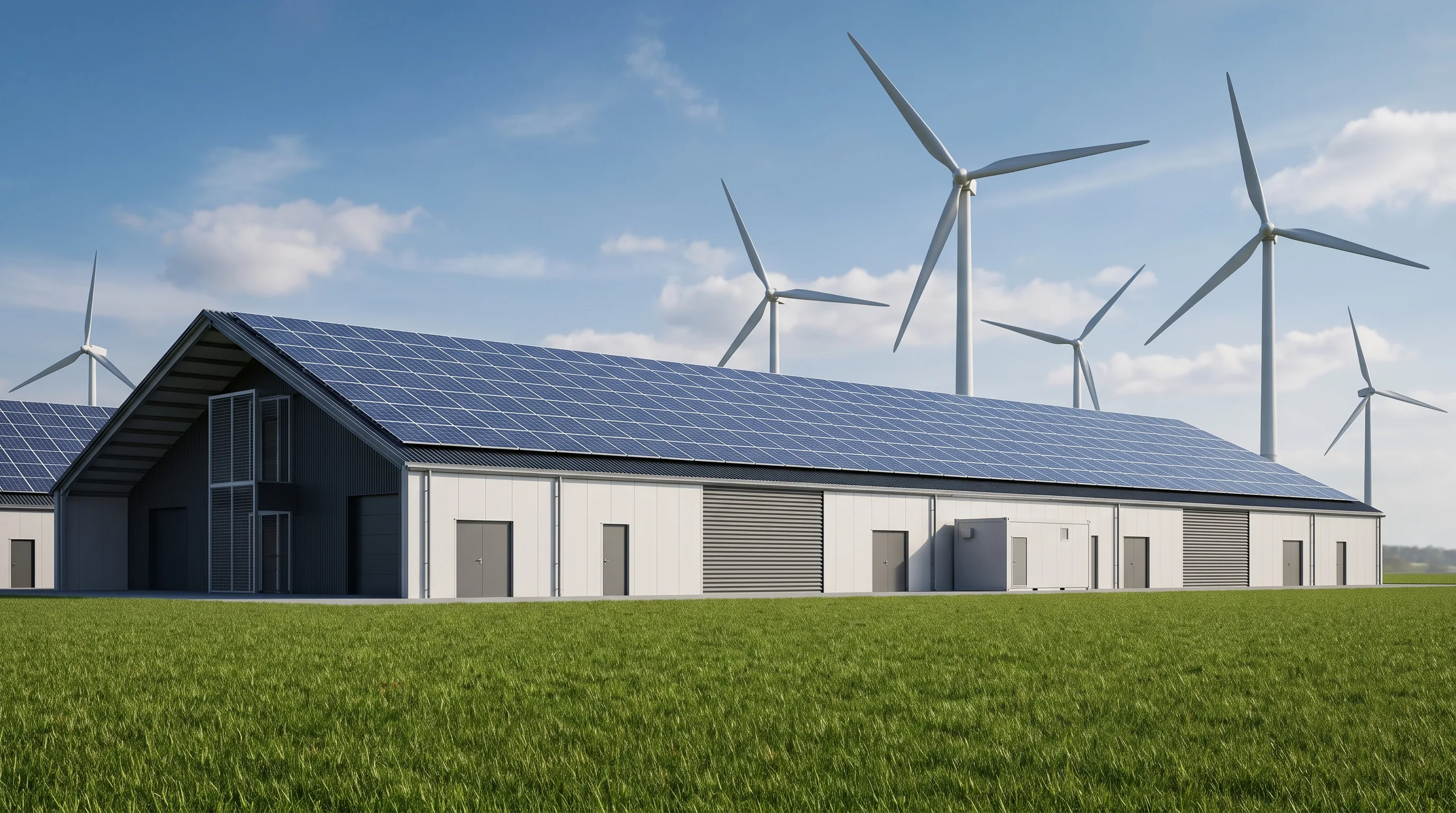
Key Takeaway: Bitcoin mining converts nearly 100% of its electrical input into heat. Rather than exhausting this thermal energy into the atmosphere, innovative mining operations are capturing it for productive use -- reducing their effective energy cost, generating secondary revenue, and transforming the industry's environmental narrative.
Every watt consumed by a Bitcoin mining ASIC becomes a watt of heat. A typical 1 MW mining facility produces roughly 3.4 million BTU per hour of thermal energy -- enough to heat dozens of homes or thousands of square feet of commercial greenhouse space. For most operations, this heat is simply expelled through ventilation systems or cooling towers, representing wasted potential.
Heat reuse changes this equation. By capturing exhaust heat through ducting, heat exchangers, or immersion cooling systems and directing it to productive applications, mining operations can offset heating costs for co-located businesses, generate lease or service revenue, and strengthen their case for operating permits and community support.
Understanding the Heat Profile of Bitcoin Mining
Before evaluating reuse applications, it is important to understand what kind of heat Bitcoin mining produces and at what temperatures.
Heat Output by Cooling Method
| Cooling Method | Exhaust Temperature | Heat Capture Efficiency | Best Reuse Applications |
|---|---|---|---|
| Air-cooled (ducted exhaust) | 50-70 C (122-158 F) | 40-60% | Space heating, greenhouses, drying |
| Immersion (single-phase) | 45-55 C (113-131 F) | 80-95% | District heating, aquaculture, pre-heating |
| Immersion (two-phase) | 45-50 C (113-122 F) | 85-95% | All low-grade heat applications |
| Rear-door heat exchanger | 35-45 C (95-113 F) | 60-75% | Radiant floor heating, pre-heating |
The critical constraint is temperature grade. Bitcoin mining produces low-grade heat (below 100 C), which rules out applications that require high-temperature process heat (such as metal smelting or steam-driven power generation) but is well-suited to a wide range of agricultural, aquacultural, and comfort-heating applications.
Heat Recovery Infrastructure
The method of heat capture depends on your cooling system architecture:
- Air-cooled recovery: Ducted exhaust systems channel hot air from ASIC exhaust fans to adjacent spaces. Simple and low-cost but limited by air's low thermal conductivity -- significant ductwork is needed, and heat losses increase with distance.
- Liquid-cooled recovery: Direct-to-chip or immersion cooling systems transfer heat to a liquid medium (water or dielectric fluid), which can then be piped to heat exchangers at the point of use. Higher capture efficiency and longer transport distances make this the preferred approach for most reuse applications.
- Heat pump augmentation: For applications requiring higher temperatures than mining exhaust provides (such as some industrial drying processes), heat pumps can upgrade low-grade mining heat to usable temperatures with a coefficient of performance (COP) of 3-5, meaning each kW of electricity used by the heat pump delivers 3-5 kW of upgraded heat.
Application 1: Greenhouse and Controlled-Environment Agriculture
Greenhouse heating is the most commercially proven Bitcoin mining heat reuse application. The temperature match is excellent: greenhouses need sustained heat at 20-35 C (68-95 F), and mining exhaust at 45-70 C provides this with simple heat exchangers or direct hot-air ducting.
How It Works
In a typical co-location setup, the mining facility and greenhouse share a building or are connected by insulated ductwork. Hot exhaust air from the miners flows through the greenhouse growing space (with CO2 filtration if needed), or liquid-cooled mining systems pipe heated water to radiant floor heating or fan-coil units inside the greenhouse.
Capacity and Sizing
A rough sizing guideline: 1 MW of mining capacity can heat approximately 20,000-30,000 sq ft of greenhouse space in temperate climates, or 10,000-15,000 sq ft in cold climates where outdoor temperatures regularly drop below -20 C. These numbers vary significantly with greenhouse insulation, glazing type, target growing temperature, and climate zone.
Economic Benefits
- Greenhouse heating fuel (natural gas, propane, or electric resistance) is often the single largest operating cost for controlled-environment agriculture. Displacing this with mining waste heat can reduce greenhouse operating costs by 30-50% in cold climates.
- The mining operation benefits from a heat offtake agreement that generates predictable monthly revenue or a reduced lease rate for the combined facility.
- Year-round local food production creates community goodwill and supports permitting for mining facilities in agricultural areas.
Application 2: District and Building Heating
District heating networks distribute hot water from a central source to multiple buildings for space heating and domestic hot water. Bitcoin mining facilities can serve as the heat source for new networks or supplement existing ones.
Technical Requirements
Modern low-temperature district heating (4th and 5th generation networks) operate at supply temperatures of 50-70 C -- a range that aligns directly with immersion-cooled mining exhaust. Key infrastructure requirements include:
- Liquid-to-liquid heat exchangers sized for the thermal output of the mining operation.
- Insulated underground piping to connect the mining facility to the district heating network.
- Backup heating capacity (typically a gas boiler or electric boiler) for periods when the mining facility is offline for maintenance.
- Thermal storage (insulated hot water tanks) to buffer supply-demand mismatches between the mining operation's 24/7 heat output and the heating network's variable demand.
Revenue Model
Mining operators typically sell heat to the district heating network operator at a rate per MWh of thermal energy delivered. Pricing depends on the displaced alternative (natural gas, electric resistance, biomass) and local energy market conditions. In Nordic countries where this model is most mature, mining heat is sold at rates that provide the mining operation with a meaningful secondary revenue stream while still undercutting the district heating operator's alternative fuel costs.
Application 3: Aquaculture and Fish Farming
Indoor aquaculture (recirculating aquaculture systems, or RAS) requires precise temperature control, typically 25-30 C for warm-water species like tilapia, barramundi, and shrimp. Maintaining these temperatures in cold climates consumes significant energy. Mining waste heat can directly offset this heating demand.
Implementation Approach
Liquid-cooled mining systems pipe heated water through titanium or food-grade stainless steel heat exchangers that warm the recirculating aquaculture water without cross-contamination. Temperature stability is critical for fish health, so the system includes thermal buffering (insulated tanks) and backup electric heating.
Advantages Over Other Heat Sources
- 24/7 consistency: Mining operates continuously, providing constant heat output that matches aquaculture's continuous heating requirement -- unlike solar thermal or heat pump systems that vary with conditions.
- Temperature match: The 45-55 C output of immersion-cooled miners provides a comfortable margin above the 25-30 C tank temperature requirement, allowing effective heat transfer through a heat exchanger.
- Co-location synergies: Both mining and aquaculture benefit from locating near affordable electricity and water sources, creating natural opportunities for co-location.
Application 4: Industrial Drying
Many agricultural and industrial processes require drying at relatively low temperatures: lumber kiln drying (40-80 C), grain drying (40-60 C), seaweed processing (30-50 C), and sludge dewatering (40-70 C). Bitcoin mining exhaust heat falls squarely within these ranges.
Common Drying Applications
| Product | Drying Temperature | Mining Heat Suitability |
|---|---|---|
| Lumber / timber | 40-80 C | Excellent (air-cooled exhaust or liquid loop) |
| Grain / seeds | 40-60 C | Excellent |
| Herbs / botanicals | 30-50 C | Excellent |
| Wastewater sludge | 40-70 C | Good (volume requirements may exceed single-facility output) |
| Textiles | 50-90 C | Good (may need heat pump for upper range) |
Implementation
The simplest implementation directs ducted hot air from air-cooled miners through a drying chamber. More sophisticated setups use liquid-cooled mining systems with heat exchangers feeding hot air into industrial dryers. The key design consideration is matching the mining facility's continuous heat output with the drying operation's batch or seasonal demand -- thermal storage or multiple drying products can help balance this.
Application 5: Desalination and Water Treatment
In arid regions -- including the UAE and broader Middle East -- freshwater production through desalination is an energy-intensive necessity. While most large-scale desalination uses reverse osmosis (which requires pressure, not heat), several thermal desalination methods can utilize mining waste heat:
- Multi-effect distillation (MED): Can operate with input temperatures as low as 70 C, making it compatible with mining exhaust, particularly when augmented with a heat pump.
- Membrane distillation: An emerging technology that uses temperature differentials across hydrophobic membranes to desalinate water. Operates at 40-80 C, aligning well with mining exhaust temperatures.
- Pre-heating for RO systems: Warming feedwater before it enters reverse osmosis membranes reduces the viscosity of the water, decreasing the pressure (and energy) required for desalination.
This application is particularly relevant for mining operations in the Gulf region, where DEWA and EWEC power infrastructure already supports large-scale desalination and could benefit from co-located mining heat.
Application 6: Snow Melting and De-Icing
In cold-climate mining jurisdictions (Scandinavia, Canada, northern United States), mining waste heat can be used for snow melting on roads, parking areas, and walkways adjacent to the mining facility. While lower-value than other applications, it eliminates snow removal costs and liabilities with minimal infrastructure -- just running heated glycol loops under paved surfaces.
Designing a Heat Reuse System
Key Engineering Considerations
- Heat transport distance: Heat losses increase with pipe length. For liquid systems, insulated underground pipes can transport heat up to 2-5 km economically. Air-ducted systems are limited to tens of meters.
- Supply-demand matching: Mining heat output is constant (24/7), but many applications have variable demand (seasonal heating, daytime greenhouse needs). Design for thermal buffering or multiple off-take applications to avoid wasting heat during low-demand periods.
- Redundancy and backup: Heat-dependent operations (greenhouses with live crops, aquaculture with live fish) need backup heating for mining downtime. Factor backup heating capacity into the system design and economics.
- Cooling system impact: The heat reuse system must not restrict airflow or coolant flow to the miners. A poorly designed heat capture system that increases miner temperatures will reduce hashrate and could damage hardware.
- Regulatory compliance: Some jurisdictions offer incentives for waste heat recovery (carbon credits, green building certifications, tax incentives). Others may have permitting requirements for heat distribution systems.
Financial Analysis Framework
Evaluate heat reuse projects with a straightforward ROI model:
Heat Reuse ROI: Capital investment (heat exchangers, piping, controls, backup heating) vs. annual value (displaced heating fuel costs + heat sales revenue + regulatory incentives - maintenance costs). Typical payback periods range from 18 months (co-located greenhouse with existing immersion cooling) to 4 years (district heating with new piping infrastructure).
Challenges and Limitations
Heat reuse is not a universal solution. Key limitations include:
- Temperature grade: Mining heat is low-grade (below 100 C). Applications requiring higher temperatures need heat pumps, which add capital and operating cost.
- Seasonal demand mismatch: In temperate climates, heating demand peaks in winter while mining heat output is constant. Summer surplus heat may have no off-taker unless cooling-season applications (absorption chillers, desalination) are available.
- Location constraints: Mining facilities located in remote areas for cheap power may not have nearby heat consumers. The economics of heat reuse improve dramatically with co-location or proximity to urban/agricultural demand.
- Mining economics volatility: If Bitcoin price drops make mining unprofitable, the heat source disappears. Heat-dependent operations need contractual protections and backup heating to mitigate this risk.
- Upfront capital: Heat capture and distribution infrastructure requires meaningful investment, which may be difficult to justify for smaller mining operations or those with uncertain operational timelines.
The Sustainability Narrative
Beyond direct economics, heat reuse fundamentally changes the environmental conversation around Bitcoin mining. When a mining facility heats a community, grows food, or produces fresh water, it transforms from a perceived energy consumer into an energy infrastructure provider.
This narrative shift matters for:
- Permitting: Local governments are more receptive to mining facilities that provide tangible community benefits.
- ESG compliance: Institutional miners and publicly traded mining companies can include heat reuse in their Scope 2 and Scope 3 emissions reporting as an offset against their energy footprint.
- Power purchase agreements: Utilities and PPA providers may offer more favorable rates to mining operations that demonstrate productive heat use, as it improves the overall energy efficiency narrative.
- Public perception: Sustainable mining practices including heat reuse strengthen the industry's position against environmental criticism.
Frequently Asked Questions
How much heat does Bitcoin mining produce?
Nearly 100% of electrical input becomes heat. A single 3,500W ASIC produces approximately 11,942 BTU per hour. A 1 MW facility produces roughly 3.4 million BTU per hour -- equivalent to approximately 40 residential furnaces running continuously.
What temperature does Bitcoin mining exhaust heat reach?
Air-cooled miners exhaust at 50-70 C (122-158 F). Immersion-cooled systems heat fluid to 45-55 C (113-131 F). This is classified as low-grade heat, suitable for space heating, greenhouses, aquaculture, and various industrial drying processes.
Can Bitcoin mining heat really power a greenhouse?
Yes, and several commercial operations already do this. A 1 MW facility can heat approximately 20,000-30,000 sq ft of greenhouse space in moderate climates. The economics are favorable because the heat is a byproduct of mining -- the marginal cost is primarily the heat capture infrastructure.
Is Bitcoin mining heat reuse economically viable?
In the right circumstances, yes. The most favorable scenarios involve co-located applications, high local heating fuel costs, and operations already using immersion cooling. ROI on heat capture infrastructure typically ranges from 18 months to 4 years.
Does heat reuse affect Bitcoin mining performance?
When implemented correctly, no. Properly designed heat recovery systems capture heat downstream of the miners without restricting coolant flow or increasing miner temperatures. Immersion cooling with heat recovery can actually improve mining performance by providing more stable, lower operating temperatures.
Explore Sustainable Mining Infrastructure
Rax Data & Energy designs and operates mining facilities with integrated heat recovery, renewable energy, and sustainable infrastructure from the ground up.
Contact Our Team Rax Energy Solutions