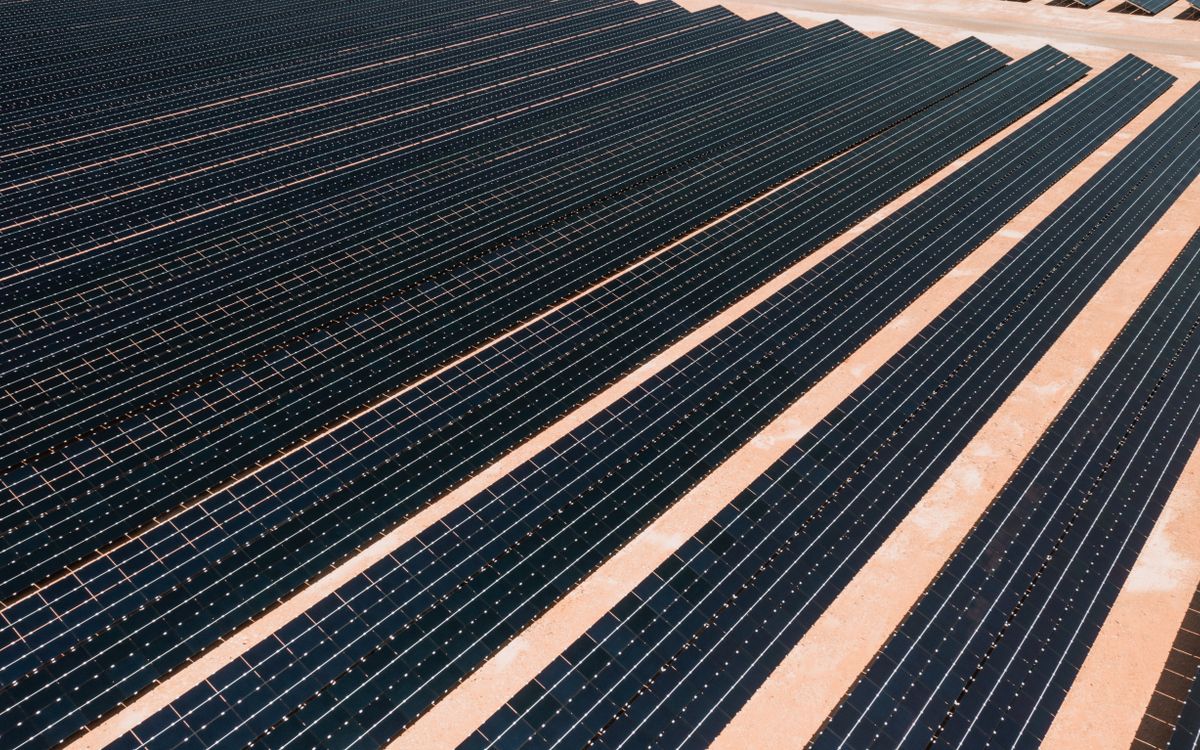
Data centers are among the largest and fastest-growing consumers of electricity in the UAE, and an increasing number of operators, hyperscalers, and enterprise tenants face pressure from investors, regulators, and their own sustainability commitments to demonstrate that some or all of that consumption is matched by renewable energy. Virtual power purchase agreements (VPPAs), corporate PPAs, and related renewable energy procurement structures are the primary mechanisms through which large electricity consumers globally make and substantiate those claims. In the UAE, the specifics of how these mechanisms work differ from fully deregulated Western markets, but procurement options are expanding and the underlying logic is the same.
This guide explains the main renewable energy procurement structures relevant to data center operators in the UAE, what the current regulatory landscape supports, what is still developing, and how operators should think about building a credible clean energy procurement strategy for megawatt-scale facilities.
Why Renewable Energy Procurement Matters for Data Centers
Three forces are converging to make renewable energy procurement a core operational concern rather than a nice-to-have for UAE data center operators.
Scope 2 Emissions and ESG Reporting
Under the GHG Protocol, electricity consumption is a Scope 2 emission. For data centers running tens or hundreds of megawatts of continuous load, Scope 2 typically dominates their carbon footprint. The market-based accounting method, which is what most corporates use for reporting, allows operators to claim lower Scope 2 emissions if they hold renewable energy certificates (RECs) or equivalent instruments matching their consumption. Without a procurement strategy that produces bundled RECs, the default is grid-average emission factors, which in the UAE remain hydrocarbon-dominated despite the growing renewable share.
Hyperscaler and Enterprise Tenant Requirements
Major cloud and AI companies operating in the region, including Microsoft, Google, and AWS, have made public commitments to match their electricity consumption with renewable energy, many targeting 24/7 carbon-free energy (CFE) by 2030. When these companies lease colocation capacity, they increasingly require the facility operator to provide evidence of renewable energy sourcing. A colocation operator that cannot offer a credible green power story risks losing large-contract tenants to competitors who can.
UAE National Energy Strategy
The UAE Energy Strategy 2050 targets a 44% clean energy share in the national power mix, with significant investment in solar, nuclear (Barakah), and eventually hydrogen. Abu Dhabi's EWEC and Dubai's DEWA have both introduced mechanisms to expand renewable energy access for commercial and industrial consumers. Operators who align with this national direction position themselves favorably for permitting, utility relationships, and government-backed incentive programs.
Types of Renewable Energy Procurement Structures
Several distinct structures exist for procuring renewable energy. Their availability and applicability in the UAE vary depending on emirate, utility framework, and facility size.
Physical Power Purchase Agreement (Physical PPA)
In a physical PPA, a buyer contracts directly with a renewable energy project to receive electricity delivered through the grid or a private wire. The buyer takes title to the energy and receives the bundled renewable attributes. This is common in deregulated markets like parts of the United States and Europe.
In the UAE, the electricity market is structured around single-buyer utility models (DEWA in Dubai, EWEC/TAQA in Abu Dhabi), which means direct bilateral physical PPAs between a data center and an independent solar developer are not standard practice today. Electricity flows through the utility, and the utility procures generation capacity through its own competitive tender processes.
Virtual Power Purchase Agreement (VPPA)
A VPPA is a financial contract for difference. The data center operator agrees to a fixed strike price with a renewable energy developer for a set term, typically 10 to 20 years. The developer sells its output into the wholesale market at the prevailing spot price. If the spot price exceeds the strike price, the developer pays the difference to the buyer; if the spot price is below the strike, the buyer pays the difference. In both cases, the buyer receives the RECs, establishing their renewable energy claim.
VPPAs are the dominant corporate renewable procurement tool globally because they work regardless of whether the buyer and the renewable project are physically connected. They require a functioning wholesale electricity market with transparent pricing, which is more developed in some Gulf jurisdictions than others. In the UAE, this structure is more likely to emerge as the electricity market evolves toward greater wholesale transparency and as the Abu Dhabi and Dubai authorities continue reforms.
Utility Green Tariff Programs
Rather than negotiating a bilateral PPA, some utilities offer a green tariff or clean energy certificate program where large consumers can pay a premium to receive certified renewable attributes on top of their standard electricity supply. This is administratively simpler than a PPA and does not expose the buyer to wholesale price risk.
In Abu Dhabi, EWEC launched the Clean Energy Certificate (CEC) program, which allows eligible consumers to purchase certificates corresponding to renewable energy generated by EWEC-contracted solar and nuclear facilities. Each CEC represents one megawatt-hour of clean energy injected into the Abu Dhabi grid. This is the most immediately accessible mechanism for large data center operators in the Abu Dhabi emirate to substantiate Scope 2 claims today.
On-Site and Behind-the-Meter Solar
DEWA's Shams Dubai program allows commercial and industrial customers to install rooftop or ground-mounted solar panels and export surplus electricity to the grid under a net metering arrangement. For data centers with available roof or adjacent land area, this provides a direct, physical source of renewable energy that reduces both grid consumption and the volume of RECs or certificates needed to cover the remainder.
The practical constraint is that data center rooftop area is small relative to the facility's total electrical load. A 10 MW data center might have rooftop capacity for 200-500 kW of solar, covering a small fraction of consumption. On-site solar is a useful component of a broader procurement strategy but rarely sufficient on its own for megawatt-scale operations.
Comparing Procurement Structures for UAE Data Centers
| Structure | Availability in UAE | Price Risk | REC Transfer | Best For |
|---|---|---|---|---|
| Physical PPA | Limited (single-buyer model) | Fixed price, low | Bundled | Free zone operators with regulatory flexibility |
| VPPA (financial) | Emerging | Contract for difference | Bundled | Large operators seeking long-term hedge + RECs |
| EWEC Clean Energy Certificates | Active (Abu Dhabi) | Certificate premium only | Unbundled CEC | Abu Dhabi facilities needing Scope 2 claims |
| Shams Dubai (net metering) | Active (Dubai) | Avoided cost + export credit | Self-generated | Supplementary on-site generation |
| Unbundled RECs | Global market (I-REC) | Spot REC price | Purchased separately | Gap-fill for unmatched consumption |
The Role of UAE Free Zones
Several UAE free zones are developing dedicated data center clusters with tailored infrastructure and regulatory frameworks. Free zones have historically offered more flexible utility and regulatory arrangements than mainland jurisdictions, and some are exploring whether they can facilitate direct power purchase or wheeling arrangements between tenants and renewable generators that would not be available under the standard mainland utility model.
Operators evaluating free zone locations should specifically ask about renewable energy procurement options, whether the free zone has its own distribution license or operates through the local utility, and whether green tariff or certificate programs are available to tenants.
Practical Considerations for Megawatt-Scale Procurement
Contract Duration and Bankability
Renewable energy projects require long-term offtake commitments, typically 10 to 20 years, to secure project financing. Data center operators comfortable with long-term site commitments are well positioned for PPAs. Operators on shorter lease terms or with uncertain demand growth may find certificate programs or unbundled RECs more practical, accepting the trade-off of less cost certainty and potentially higher per-MWh costs.
Additionality
The concept of additionality, whether a procurement decision causes new renewable capacity to be built that would not have existed otherwise, is increasingly scrutinized by ESG auditors and reporting frameworks. A long-term PPA or VPPA that underpins the financing of a new solar project has stronger additionality than purchasing unbundled RECs from an already-operating facility. Operators building sustainability narratives should understand this distinction and its implications for Scope 2 and Scope 3 reporting credibility.
Matching Granularity: Annual vs. 24/7
Traditionally, corporate renewable procurement has been matched on an annual basis: buy enough RECs to match total annual consumption, regardless of when the renewable energy was generated versus when the data center consumed it. The industry is moving toward hourly or 24/7 carbon-free energy matching, which requires renewable generation that temporally matches consumption hour by hour.
For data centers running continuous loads, 24/7 matching is significantly harder than annual matching because solar generation peaks during the day while data center load runs around the clock. Achieving true 24/7 CFE in the UAE requires combining solar with nuclear (Barakah provides baseload clean energy), battery storage, and potentially other dispatchable clean sources. This is an evolving area, and most UAE operators are still on annual matching, but the trajectory is clear.
Cost Implications
UAE industrial electricity tariffs are already competitive relative to many global data center markets, partly due to government subsidies and the low cost of domestic natural gas. Renewable procurement adds a layer of cost, whether through certificate premiums, PPA strike prices, or capital expenditure for on-site solar. The business case depends on the specific tariff structure, tenant requirements, and how much the operator values the sustainability positioning.
In many cases, the incremental cost of renewable procurement is modest relative to total facility operating costs, particularly for operators serving hyperscaler tenants who will pay a premium for green-certified capacity.
Practical takeaway: Start with what is available today. EWEC Clean Energy Certificates in Abu Dhabi and Shams Dubai net metering in Dubai are operational now. Layer on PPA or VPPA structures as the regulatory environment matures. Do not wait for the perfect procurement mechanism before beginning to build a renewable energy portfolio.
How Regional Grid Developments Support Renewable Procurement
The expanding GCC grid interconnection and growing cross-border electricity trading infrastructure support renewable energy procurement by increasing the pool of clean generation that can be dispatched into UAE-connected grids. As interconnection capacity grows, it becomes technically feasible to source renewable attributes from a wider geographic area, which improves availability and can moderate certificate or PPA pricing through greater competition among generators.
The UAE's own generation mix is shifting as well. The four Barakah nuclear units, now all operational, provide approximately 5.6 GW of zero-carbon baseload capacity to the Abu Dhabi grid. Combined with the growing solar fleet, including the 2 GW Al Dhafra project, the share of clean energy in the UAE grid is increasing each year, which gradually improves the grid-average emission factor even for operators who have not yet implemented active procurement strategies.
Building a Renewable Procurement Roadmap
A practical roadmap for a UAE data center operator moving from no renewable procurement to a credible clean energy position typically follows this progression:
- Baseline and audit: Quantify current electricity consumption, grid emission factors, and Scope 2 footprint under both location-based and market-based accounting methods.
- Immediate certificates: Purchase EWEC Clean Energy Certificates or I-REC instruments to cover a target percentage of annual consumption, establishing a market-based Scope 2 claim.
- On-site solar: Where roof or land area allows, install behind-the-meter solar under Shams Dubai or equivalent programs, reducing grid dependence and generating self-sourced renewable attributes.
- Utility engagement: Engage DEWA, EWEC, or the relevant free zone authority about emerging green tariff options, potential bilateral PPA structures, or participation in pilot programs for large industrial consumers.
- Long-term PPA or VPPA: As the regulatory framework matures and the operator has visibility on long-term load and site commitment, negotiate a PPA or VPPA with a renewable developer to lock in pricing and secure additionality.
- 24/7 matching (advanced): Layer battery storage, nuclear certificate procurement, and time-matched renewable contracts to move toward hourly carbon-free energy matching.
How Rax Approaches Renewable Energy for UAE Hosting
Rax designs its UAE data center operations with energy flexibility as a core infrastructure principle. That means working within the current utility frameworks to provide tenants with access to renewable energy certificates where available, evaluating solar and renewable integration for new capacity, and tracking the evolving regulatory landscape for PPA and VPPA structures that can deliver both cost certainty and credible sustainability claims. As the UAE's clean energy share continues to grow and procurement mechanisms mature, operators who build the organizational capability and utility relationships to execute these structures now will be better positioned than those who start later.
For operators evaluating the broader UAE power and tariff landscape, renewable procurement is one component of a comprehensive power strategy that also includes grid reliability, facility-level redundancy, and long-term tariff management.
Renewable-Ready Data Center Hosting in the UAE
Rax operates data center capacity in the UAE with competitive industrial electricity rates and a renewable energy procurement framework that supports tenant sustainability requirements. Talk to us about your clean energy hosting needs.
Discuss Your Requirements