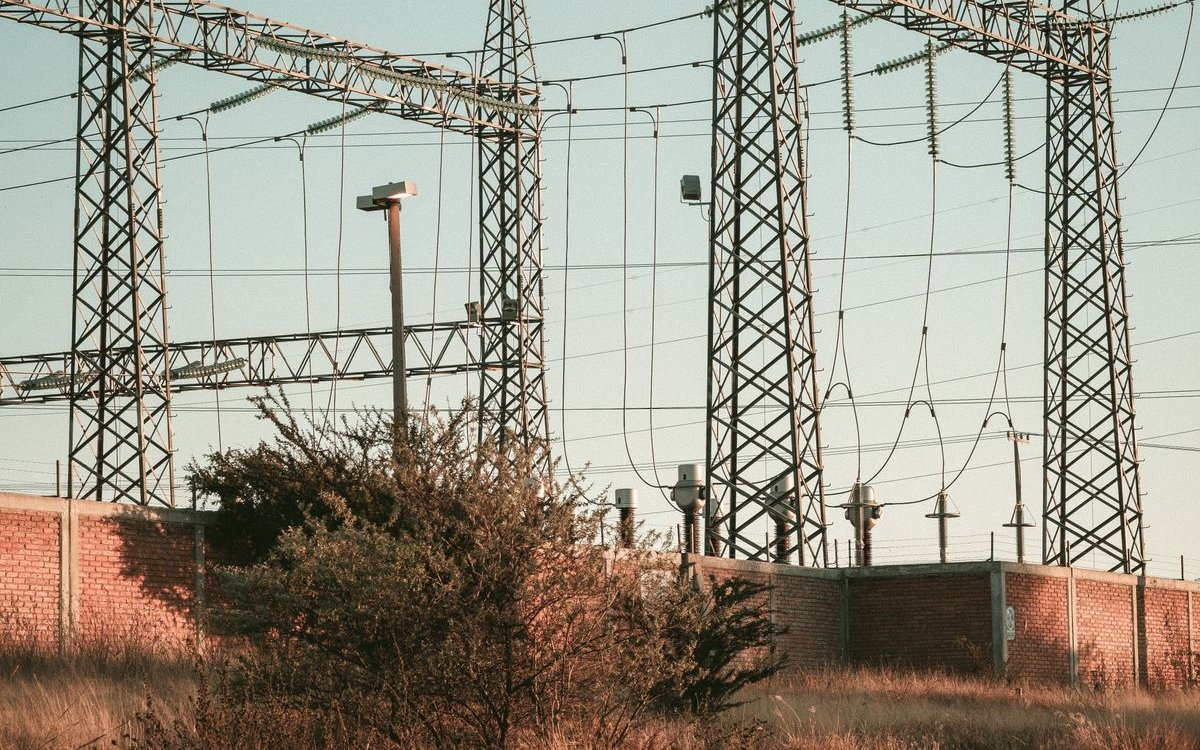
Every megawatt-scale data center, GPU cluster, or ASIC hosting facility in the UAE ultimately depends on one thing: a grid that can deliver power reliably, at scale, around the clock. For years, that reliability rested on each Gulf state's own generation fleet operating largely in isolation. That is changing. The GCC Interconnection Authority (GCCIA) has spent the past two decades building a regional high-voltage transmission backbone, often called the GCC SuperGrid, that now links the power systems of Saudi Arabia, Kuwait, Bahrain, Qatar, and the UAE, with Oman's direct connection under construction and expected to be energized in the fourth quarter of 2026.
For operators evaluating where to site AI training clusters, GPU colocation, or Bitcoin mining capacity, regional grid interconnection is no longer a background utility detail. It directly affects power reliability, long-term cost trends, and how much headroom exists for new large-load connections. This guide explains how the GCCIA SuperGrid works, what cross-border power trading actually means in practice today, and what it should change about how data center operators think about power sourcing and site selection in the UAE.
What Is the GCC Interconnection Authority (GCCIA)?
The GCCIA is a joint-stock company established by the six Gulf Cooperation Council governments to build, own, and operate a shared high-voltage electricity transmission network connecting their national grids. Its core asset is a high-voltage alternating current (AC) and direct current (HVDC) backbone running from Kuwait in the north through Saudi Arabia, Bahrain, and Qatar, down to the UAE in the south, interconnected at multiple 400kV grid stations.
Rather than each country maintaining a fully isolated grid sized for its own worst-case peak demand, interconnected utilities can call on neighboring capacity during emergencies, scheduled maintenance, or demand spikes. This is the same logic behind interconnected grids in North America and Europe: shared infrastructure reduces the total reserve margin each individual system needs to carry.
Current Member Connections
Saudi Arabia, Kuwait, Bahrain, Qatar, and the UAE are connected today through the GCCIA's existing AC and HVDC links. A new direct interconnection between Oman and the GCCIA grid is currently under construction, with overhead transmission lines running approximately 528 kilometers from a 400kV grid station at Ibri, Oman, to a GCCIA-owned 400kV station at Silaa in Abu Dhabi. That link is expected to be completed and ready by the fourth quarter of 2026, which will bring all six GCC member states into the interconnected network.
How the GCCIA SuperGrid Delivers Power Across Borders
The physical infrastructure consists of long-distance 400kV transmission lines and HVDC converter stations that allow power to flow between grids operating at different frequencies or that need tightly controlled power flow direction. HVDC links are particularly valuable for interconnecting grids because they allow precise control over how much power moves between two systems and in which direction, rather than power flowing uncontrolled based on grid impedance the way it does on AC interconnections.
In practice, this lets a utility in one member state request emergency support from a neighboring grid during a generation shortfall, or export surplus capacity when its own demand is low and a neighbor needs it. The UAE's own grid, operated by DEWA in Dubai and EWEC/TAQA in Abu Dhabi, is tied into this backbone and can draw on or contribute to it depending on real-time conditions.
Recent Expansion: The ADFD-GCCIA Investment
The Abu Dhabi Fund for Development (ADFD) and GCCIA have signed an agreement valued at roughly AED 752 million (approximately $205 million) to expand grid connectivity between the UAE and the broader GCC network. Investments of this scale are specifically aimed at increasing transfer capacity and reliability on the UAE's interconnection points, which matters directly for any large electricity consumer, including data centers, planning multi-year capacity needs in the emirates.
Why Cross-Border Power Trading Matters for Data Center Operators
For an operator running continuous, high-utilization AI training or ASIC mining loads, grid interconnection changes the reliability and cost calculus in several concrete ways.
Reduced Curtailment and Load-Shedding Risk
Isolated grids facing a sudden generation shortfall, whether from a plant trip, fuel supply issue, or unexpected demand spike, have fewer options besides curtailing large industrial and commercial loads. Interconnection gives grid operators an additional lever: import power from a neighboring system instead of shedding load. For facilities running behind-the-meter or grid-tied power contracts in the UAE, this reduces the probability of being asked to curtail operations during regional demand peaks, such as summer cooling season.
Downward Pressure on Long-Term Power Costs
Cross-border trading allows utilities to import cheaper power from a neighbor rather than dispatching their own most expensive peaking generation. GCCIA and regional economic studies have estimated that a more fully realized unified Gulf electricity market, with expanded trading and reduced reliance on each country's standalone peaking capacity, could generate economic value exceeding $20 billion over a 15-year horizon across the region. Lower average system costs tend to filter through to industrial tariffs over time, though the pace and scale of pass-through varies by utility and contract structure.
Expanded Interconnection Headroom for New Large Loads
Multi-megawatt data centers and mining facilities require utilities to confirm there is enough transmission and generation headroom to serve a new large load without destabilizing the grid. A more interconnected regional grid, with the ability to draw on neighboring capacity during the commissioning and ramp-up phase of a new large facility, can in some cases ease the utility-side planning constraints that otherwise slow down interconnection approvals for very large new loads.
Practical takeaway: Grid interconnection is a system-level reliability improvement, not a substitute for facility-level redundancy. Operators should treat GCCIA connectivity as one layer of a broader resilience strategy that still includes on-site generators, UPS, and where appropriate, microgrid and on-site storage capability.
Market Structure: Bilateral Agreements, Not Yet a Unified Market
It is important to be precise about what exists today versus what is still aspirational. Current GCC cross-border electricity flows are coordinated primarily through bilateral agreements between national utilities, facilitated by the GCCIA's physical infrastructure, rather than through a single unified hourly electricity market with transparent price discovery.
Academic and consulting studies of the region, including comparative analysis of hourly market coupling models used in interconnected European grids, have examined whether the GCC should move toward a similar coupled market structure versus continuing with bilateral trading arrangements. A fully coupled, transparent Gulf electricity market remains a medium-term policy objective rather than current operating reality. Operators should not assume GCC-wide wholesale price arbitrage is available to them today; what exists is utility-to-utility emergency and economic support, which indirectly benefits end users through improved reliability and gradually moderating system costs.
What This Means for Data Center Siting and Power Strategy in the UAE
Three practical implications follow for anyone planning multi-megawatt capacity in the UAE over the next several years.
1. Treat Grid Reliability as Improving, Not Static
The UAE's grid reliability profile is on an improving trajectory as GCCIA interconnection capacity expands, particularly once the Oman link completes the full six-state loop. Facilities signing 5-10 year hosting or colocation agreements should factor this trajectory into long-term reliability assumptions, while still designing for today's contingencies.
2. Interconnection Timing Affects New Large-Load Approvals
Utilities granting interconnection approval for new tens-of-megawatts loads weigh available headroom across the whole system, not just local substation capacity. Facilities should engage early with UAE utilities and factor multi-year lead times into site planning, similar to the interconnection queue dynamics seen in other high-growth data center markets globally.
3. Diversify Power Sourcing Where Economics Allow
Growing regional interconnection does not eliminate the value of diversified power sourcing. Operators pursuing solar and renewable power purchase agreements, on-site microgrids, or demand response participation gain additional resilience and potential cost benefits that complement, rather than compete with, a more interconnected regional grid.
Open Questions and Risk Factors
Several factors remain genuinely uncertain and worth tracking for anyone making multi-year infrastructure decisions based on regional grid trends.
- Regulatory harmonization: Each GCC state retains its own utility regulator and tariff structure; deeper market integration requires harmonizing rules that currently differ by country.
- Pace of market coupling: Whether and when the region moves from bilateral agreements to a coupled hourly market remains unresolved, and will determine how much of the projected economic value is actually realized on the timeline studies suggest.
- Demand growth outpacing capacity: Data center, desalination, and population-driven demand growth across the Gulf could outpace interconnection capacity additions, partially offsetting reliability gains if generation and transmission investment does not keep pace.
- Geopolitical and operational coordination: Cross-border infrastructure of this scale requires sustained multi-government coordination; operators should view interconnection benefits as a strong long-term trend rather than a guaranteed, fixed state of affairs.
How Rax Approaches Power Reliability in the UAE
Rax designs its UAE facilities around layered power reliability rather than dependence on any single source. That means grid connectivity backed by on-site generation and UPS redundancy, active monitoring of regulatory and utility developments that affect large-load customers, and power contracts structured to take advantage of favorable UAE industrial tariffs as regional grid conditions evolve. As the UAE data center market continues its rapid growth, grid-level improvements like GCCIA interconnection are a tailwind for the whole sector, but they work best alongside, not instead of, facility-level engineering discipline.
For mining and AI hosting operators evaluating the broader MENA data center market, regional grid interconnection is one more reason the UAE's power fundamentals continue to strengthen relative to less-connected markets.
Power-Reliable AI and Mining Hosting in the UAE
Rax operates data center capacity in the UAE with layered power reliability, competitive industrial electricity rates, and direct engagement with utility interconnection processes. Talk to us about your megawatt-scale requirements.
Discuss Your Requirements