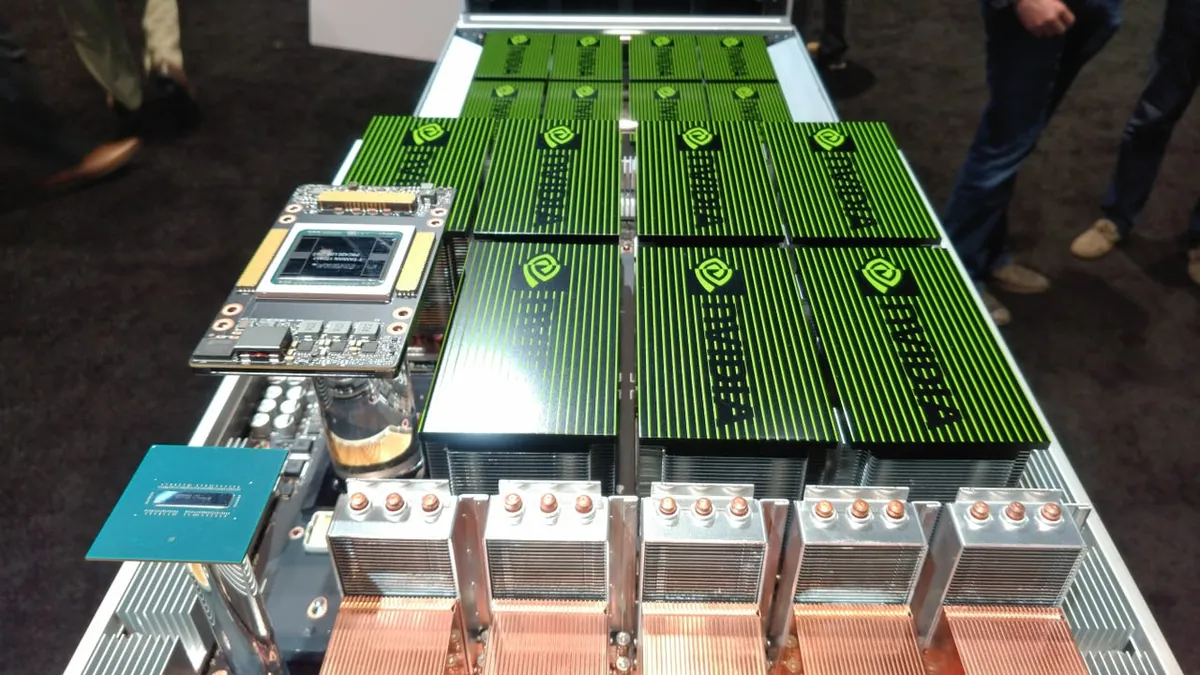
AI inference -- the process of running trained models to generate predictions on new data -- now accounts for the majority of GPU compute cycles in production environments. While training a large language model is a one-time (or periodic) cost, serving that model to millions of users requires sustained GPU infrastructure operating 24/7 with strict latency and availability requirements. For organizations in the Middle East, deploying inference locally rather than routing requests to distant data centers can reduce response latency by 80-90% while satisfying data residency requirements.
This guide examines the architecture, economics, and deployment considerations for AI inference as a service (INFaaS) in the UAE, covering everything from GPU hardware selection to pricing models and provider evaluation criteria.
What Is AI Inference as a Service?
AI inference as a service is a deployment model where GPU infrastructure is operated by a provider and model predictions are delivered via API endpoints. Rather than purchasing, racking, and maintaining GPU servers, organizations consume inference capacity on demand -- paying per token, per request, or per GPU-hour depending on the service tier.
The model differs fundamentally from AI training infrastructure in its operational characteristics:
- Latency sensitivity: Training tolerates minutes of queuing; inference often requires sub-100ms response times for user-facing applications.
- Burst patterns: Training runs continuously at maximum GPU utilization; inference traffic follows user activity patterns with peaks and valleys.
- Availability requirements: A training job can restart from a checkpoint after a failure; inference downtime directly impacts end users and revenue.
- Memory bandwidth dominance: Large language model inference is typically memory-bandwidth-bound (reading model weights for each token), while training is compute-bound (running forward and backward passes).
Inference Architecture Patterns
Production inference deployments follow one of several architectural patterns, each with distinct cost and performance characteristics.
Dedicated Single-Tenant Infrastructure
In this model, specific GPU instances are reserved exclusively for one customer's workloads. The customer controls the model serving framework (vLLM, TensorRT-LLM, Triton Inference Server), batching strategy, and scaling policy. This approach provides maximum control and predictable performance but requires the customer to manage utilization efficiency.
Dedicated infrastructure is appropriate when:
- Models contain proprietary weights that cannot share hardware with other tenants
- Workloads require consistent latency guarantees (p99 SLAs)
- GPU utilization exceeds 60-70% consistently, making reserved capacity economically rational
- Custom model serving configurations are required (quantization schemes, speculative decoding, custom kernels)
Shared Multi-Tenant Endpoints
Multi-tenant inference pools serve multiple customers' requests through a shared GPU cluster running popular open-source models (Llama, Mistral, Falcon). The provider handles model optimization, batching across tenants, and scaling. Customers pay per token or per request rather than per GPU-hour.
This model delivers the lowest entry cost but with less control over latency consistency. It works well for organizations that:
- Use standard open-source models without fine-tuning
- Have variable or unpredictable traffic patterns
- Prioritize cost over latency consistency
- Are prototyping or in early production stages
Serverless Inference (Scale-to-Zero)
Serverless inference scales GPU allocation down to zero when idle and cold-starts model serving when requests arrive. This eliminates idle-time costs entirely but introduces cold-start latency (typically 10-60 seconds for loading large models into GPU memory). It suits batch processing, internal tools, and workloads with sparse, unpredictable usage.
Hybrid: Colocation with Managed Serving
Organizations that own GPU hardware can colocate their servers in a data center facility while outsourcing model serving management to the provider. This combines the capital efficiency of owned hardware with the operational simplicity of managed inference. The provider handles power, cooling, network, and optionally the serving software stack, while the customer retains hardware ownership and control over model deployment.
GPU Hardware for Inference Workloads
Inference workload characteristics determine optimal hardware selection. The critical factor for large language model inference is memory bandwidth -- the rate at which model weights can be read from GPU memory -- because each generated token requires reading the entire model's weights (or the relevant KV-cache partition).
| GPU | VRAM | Memory BW | Best For |
|---|---|---|---|
| NVIDIA H200 | 141 GB HBM3e | 4.8 TB/s | Large LLMs (70B-405B params) |
| NVIDIA H100 SXM | 80 GB HBM3 | 3.35 TB/s | LLMs (13B-70B), multi-model |
| NVIDIA L40S | 48 GB GDDR6X | 864 GB/s | Smaller LLMs, vision, multi-modal |
| NVIDIA L4 | 24 GB GDDR6 | 300 GB/s | Batch inference, smaller models |
| NVIDIA B200 | 192 GB HBM3e | 8 TB/s | Next-gen LLM serving (Blackwell) |
For a detailed comparison of GPU architectures, see our NVIDIA GPU guide for data center operators.
Key insight: For LLM inference, tokens-per-second-per-dollar is the metric that matters. The H200's 43% higher memory bandwidth over H100, combined with 76% more VRAM (enabling larger batch sizes and longer context windows), typically delivers 40-60% more inference throughput per dollar despite its higher per-GPU cost.
Latency Optimization for UAE Deployments
Latency in AI inference consists of several components, each addressable through infrastructure and architectural choices:
Network Latency (Client to GPU)
The physical distance between user and GPU determines the irreducible network round-trip time. For users in the UAE:
- UAE-local data center: 2-8ms round-trip (Dubai/Abu Dhabi metro)
- Regional (Bahrain, Mumbai): 20-50ms round-trip
- US East (Virginia): 180-220ms round-trip
- US West (Oregon): 250-300ms round-trip
For conversational AI applications where each response token is streamed, the first-token latency (time to first byte) directly impacts perceived responsiveness. A 200ms network penalty applied to every API call makes the difference between fluid conversation and noticeable lag.
Compute Latency (GPU Processing)
The time for the GPU to generate output depends on model size, input length, batch size, and serving optimization. Techniques that reduce compute latency include:
- Quantization: Running models at INT8 or FP8 precision reduces memory bandwidth requirements, increasing tokens/second by 30-80% with minimal quality loss for most applications.
- Speculative decoding: Using a small draft model to propose multiple tokens verified in parallel by the large model, reducing time-per-token by 2-3x for suitable workloads.
- Continuous batching: Dynamically grouping requests to maximize GPU utilization without holding individual requests for batch formation.
- KV-cache optimization: PagedAttention (used in vLLM) eliminates memory fragmentation, allowing larger effective batch sizes and higher throughput.
Queue Latency (Waiting for GPU Availability)
When all GPUs are processing requests, new requests queue. Managed infrastructure with auto-scaling reduces queue latency but introduces cold-start delays when new instances spin up. The provider's scaling policy and reserved capacity buffer determine worst-case queue latency.
Pricing Models and Economics
INFaaS pricing in the UAE market follows several models, each suited to different workload profiles:
Per-Token Pricing (Shared Endpoints)
The simplest model charges per input and output token. This is the standard for multi-tenant LLM endpoints. Typical ranges for popular open-source models served in the UAE:
- 7B-13B parameter models: $0.005-0.02 per 1,000 tokens
- 30B-70B parameter models: $0.02-0.08 per 1,000 tokens
- 100B+ parameter models: $0.05-0.15 per 1,000 tokens
Per-token pricing is economical at low volumes but becomes expensive at scale. The crossover point where dedicated GPUs become cheaper varies by model and utilization, typically occurring around 50-100 million tokens per month for a 70B model.
Per-GPU-Hour (Dedicated Instances)
Reserved GPU instances charge per hour of allocation regardless of utilization. UAE market rates as of mid-2026:
- NVIDIA H100 80GB: $2.50-4.50/GPU-hour (on-demand), $1.80-3.00/GPU-hour (1-year reserved)
- NVIDIA L40S 48GB: $1.20-2.00/GPU-hour (on-demand)
- NVIDIA A100 80GB: $1.80-3.00/GPU-hour (on-demand)
These rates reflect the UAE infrastructure premium over US pricing (approximately 10-25% higher) driven by power costs, import logistics, and smaller market scale. However, the latency benefit for regional users often justifies the premium. See our pricing page for current Rax rates.
Colocation-Based (Own Hardware)
For organizations willing to invest in GPU hardware, colocation offers the lowest per-GPU-hour cost over multi-year horizons. Power and cooling charges in the UAE typically range from $0.08-0.14 per kWh. An H100 SXM drawing 700W costs approximately $0.05-0.10/hour in pure power, plus facility charges of $150-300/kW/month for the rack space, cooling, and connectivity.
Amortizing hardware cost ($25,000-35,000 per H100 GPU) over 3 years with colocation fees yields an effective rate of $0.80-1.50/GPU-hour -- substantially below cloud/managed pricing but requiring upfront capital and hardware lifecycle management.
Data Residency and Compliance
The UAE's regulatory framework creates specific requirements for AI inference deployments:
- TDRA (Telecommunications and Digital Government Regulatory Authority): Requires certain data categories to be stored and processed within UAE borders. AI models processing personal data of UAE residents may fall under these requirements.
- DIFC Data Protection Law: Financial services entities in the Dubai International Financial Centre must comply with data handling requirements that may mandate local inference for customer-facing AI.
- ADGM Data Protection Regulations: Similar requirements for Abu Dhabi Global Market entities.
Local inference deployment satisfies residency requirements by ensuring that input data (prompts, documents, images) and output data (model responses) never leave UAE jurisdiction. For detailed compliance guidance, see our sovereign AI and data residency guide.
Provider Selection Criteria
When evaluating INFaaS providers in the UAE, assess these dimensions:
Infrastructure Quality
- GPU generation: H100/H200 vs older A100/V100 -- directly impacts inference throughput
- Network fabric: Low-latency interconnect between GPUs (relevant for tensor-parallel serving of large models across multiple GPUs)
- Power redundancy: N+1 or 2N power configuration determines failure domain. See our power redundancy guide
- Cooling capacity: Ability to sustain high-density GPU operation in UAE ambient temperatures
Serving Stack and Performance
- Serving framework: vLLM, TensorRT-LLM, and Triton Inference Server are the leading options -- each with different strengths
- Quantization support: FP8, INT8, AWQ, GPTQ support for cost-efficient serving
- Auto-scaling: Speed and granularity of scaling response to traffic changes
- SLA commitments: Guaranteed p50, p95, p99 latency and availability targets
Operational Considerations
- Model deployment flexibility: Support for custom models, fine-tuned weights, and custom serving configurations
- Monitoring and observability: Token throughput, latency percentiles, error rates, GPU utilization dashboards
- Security: VPC isolation, encryption at rest and in transit, SOC 2 compliance, penetration testing cadence
- Support: 24/7 operations team with GPU infrastructure expertise
Deployment Architecture: Reference Design
A production-grade inference deployment in the UAE typically includes these components:
- Load balancer: Distributes requests across model replicas, handles health checks, and routes to appropriate model versions during canary deployments.
- Model serving cluster: Multiple GPU instances running the inference framework, with continuous batching enabled and autoscaling configured based on queue depth and latency targets.
- Model registry: Versioned storage for model weights, enabling rapid rollback and A/B testing between model versions.
- Caching layer: Semantic or exact-match caching for repeated queries, reducing GPU load for common requests by 20-40% in typical enterprise deployments.
- Monitoring stack: Prometheus/Grafana or equivalent for real-time latency, throughput, error rate, and GPU utilization visibility.
- Gateway/authentication: API key management, rate limiting, usage metering, and access control for multi-team deployments.
Cost Optimization Strategies
Reduce inference costs without sacrificing quality or latency:
- Right-size GPU selection: Use L40S instead of H100 for models that fit in 48GB VRAM -- the price-performance ratio is often better for inference-only workloads.
- Quantize aggressively: FP8 inference on H100/H200 delivers nearly identical output quality for most LLM tasks while doubling effective throughput.
- Implement prompt caching: For applications with repeated system prompts or context, KV-cache sharing across requests eliminates redundant computation.
- Batch where tolerable: Internal/async workloads (summarization pipelines, classification jobs) can tolerate 100-500ms additional latency in exchange for 2-3x cost reduction via larger batch sizes.
- Use tiered architecture: Route simple queries to smaller/faster models and complex queries to larger models, reducing average cost per request.
Frequently Asked Questions
What is AI inference as a service?
AI inference as a service (INFaaS) is a deployment model where a provider operates GPU infrastructure and serves AI model predictions via API endpoints. The customer sends input data (text, images, audio) and receives model outputs without managing GPU hardware, model serving frameworks, or scaling infrastructure. Pricing is typically per-token, per-request, or per-GPU-hour depending on whether the service is shared (multi-tenant) or dedicated (single-tenant).
Why deploy AI inference in the UAE rather than in US or European data centers?
Deploying inference in the UAE reduces round-trip latency for users in the Middle East, South Asia, and East Africa from 150-300ms (US/EU endpoints) to 5-30ms (local endpoints). This latency reduction is critical for real-time applications like conversational AI, autonomous systems, and financial trading models. Additionally, UAE data residency regulations (TDRA, DIFC, ADGM) may require that certain data categories never leave the country, making local inference infrastructure a compliance requirement rather than just a performance optimization.
What GPU hardware is best suited for AI inference workloads?
The optimal GPU depends on model size and latency requirements. For large language models (70B+ parameters), NVIDIA H200 or H100 GPUs provide the memory bandwidth needed for fast token generation. For smaller models (7B-30B parameters), NVIDIA L40S or A100 40GB offer strong price-performance. The NVIDIA Blackwell B200 architecture is expected to deliver approximately 2-4x the tokens-per-second-per-dollar compared to H100 for large language model serving.
How much does AI inference hosting cost in the UAE?
Pricing varies by deployment model. Dedicated GPU instances for an NVIDIA H100 80GB typically range from $2.50-4.50 per GPU-hour. Shared inference endpoints vary from $0.01-0.10 per 1,000 tokens for popular open-source LLMs. Colocation-based inference can reduce effective costs to $0.80-1.50/GPU-hour over 2-3 year commitments.
Conclusion: Building an Inference Strategy for the UAE Market
AI inference as a service in the UAE is maturing rapidly, driven by regional AI adoption mandates, data residency requirements, and the latency advantages of local deployment. Organizations planning their inference strategy should consider:
- Start with shared multi-tenant endpoints to validate model performance and estimate production traffic volumes
- Migrate to dedicated instances once utilization justifies reserved capacity (typically >60% sustained GPU utilization)
- Consider colocation for long-term (3+ year) deployments where capital expenditure on GPU hardware delivers lower total cost of ownership
- Ensure the chosen provider supports the full lifecycle: from experimentation through production scaling, with clear upgrade paths as newer GPU generations become available
The infrastructure decisions made today will determine inference cost and performance for the next 2-3 years. Choosing the right combination of hardware, serving architecture, and deployment model is the foundation of competitive AI product delivery in the Middle East market.
Deploy AI Inference Infrastructure with Rax
Rax operates GPU infrastructure purpose-built for AI inference workloads in the UAE. From single-GPU dedicated instances to multi-rack inference clusters, our facilities deliver the low-latency, high-availability infrastructure that production AI demands.
Discuss Your Inference Requirements