Data Center Interconnection and Cross-Connect Services: A Colocation Guide
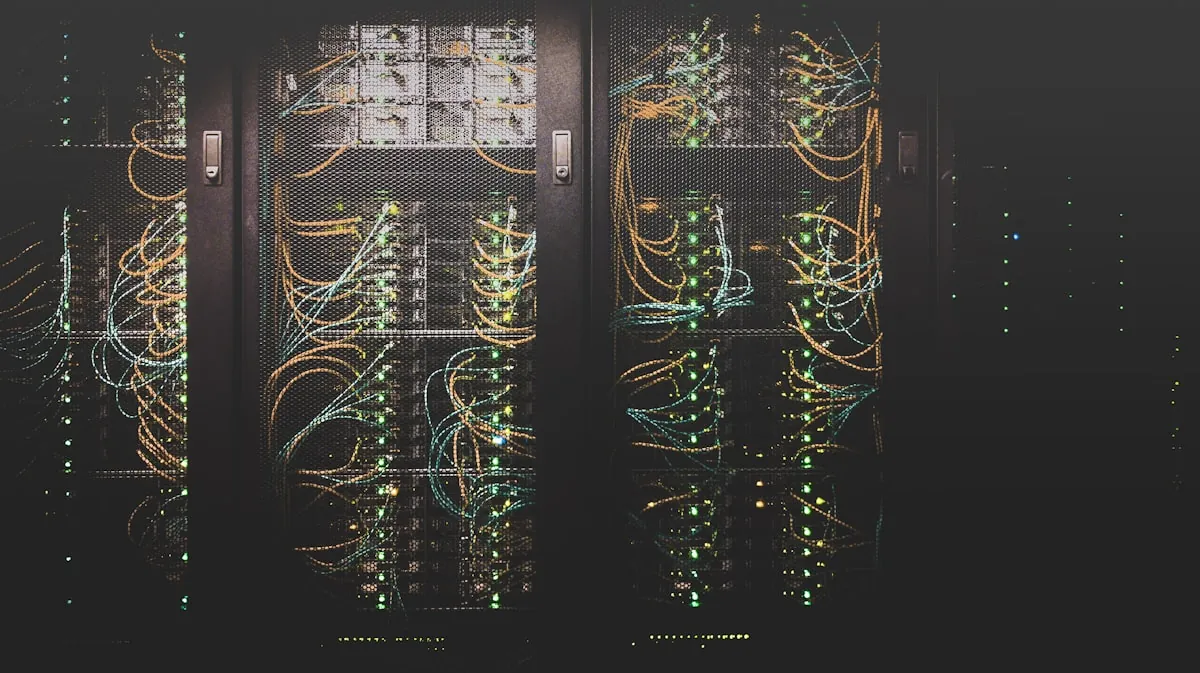
Interconnection is the single most undervalued differentiator in colocation. Two facilities can have identical power density, cooling capacity, and physical security, but the one with a richer interconnection ecosystem -- more carriers, more cloud on-ramps, more direct peering partners -- will consistently deliver better application performance, lower transit costs, and more architectural flexibility for its tenants.
For enterprises running AI workloads, distributed databases, or hybrid cloud architectures, the quality and diversity of a data center's interconnection fabric directly impacts latency, throughput, and total cost of connectivity. This guide covers the interconnection services that matter for colocation decision-making: cross-connects, meet-me rooms, internet exchanges, cloud on-ramps, and how to evaluate them.
What Is Data Center Interconnection?
Data center interconnection refers to the physical and logical connections that link tenants, carriers, cloud providers, and network service providers within and between data center facilities. The term encompasses several distinct services:
- Cross-connects: Direct physical cables between two parties within the same facility
- Meet-me rooms (MMRs): Carrier-neutral spaces where networks physically terminate and interconnect
- Internet exchange points (IXPs): Shared switching fabrics where networks exchange traffic via peering
- Cloud on-ramps: Direct private connections to public cloud providers (AWS Direct Connect, Azure ExpressRoute, Google Cloud Interconnect)
- Dark fiber: Unlit fiber optic strands leased between facilities for private, high-capacity WAN links
- Wavelength services: Dedicated optical channels over shared fiber infrastructure, providing deterministic bandwidth between sites
Together, these services form the connectivity ecosystem that determines what a tenant can do -- and how well -- from a given colocation facility.
Cross-Connects: The Foundation of Data Center Networking
A cross-connect is the simplest and most fundamental interconnection service: a direct cable run between two points within the same data center. Despite this simplicity, cross-connects are the mechanism that enables everything else -- carrier access, cloud connectivity, tenant-to-tenant data exchange, and private peering.
Types of Cross-Connects
- Fiber cross-connects (single-mode): The standard for modern data center interconnection. Single-mode fiber supports 1G to 400G Ethernet, Fibre Channel (8G/16G/32G/64G for storage), and wavelength-division multiplexing (WDM) for multi-terabit capacity over a single fiber pair. Typical monthly cost: $200-350 per cross-connect.
- Fiber cross-connects (multi-mode): Used for shorter-reach, lower-speed connections (typically 1G-25G within the same hall). Less common in new deployments due to the negligible cost difference versus single-mode. Monthly cost: $150-300.
- Copper cross-connects: Cat6/Cat6a cabling for 1GbE or 10GBase-T connections. Primarily used for management networks, out-of-band access, or legacy equipment. Monthly cost: $100-200.
- Coaxial cross-connects: Rare in modern facilities; occasionally used for legacy cable TV or RF distribution. Monthly cost: $100-150.
Cross-Connect Provisioning and SLAs
When evaluating a colocation provider, the cross-connect provisioning process reveals operational maturity. Key metrics to assess:
- Installation lead time: Top-tier facilities deliver standard cross-connects within 3-5 business days. Some offer expedited service (24-48 hours) for an additional fee. Lead times exceeding 10 business days signal either capacity constraints or process inefficiency.
- Letter of Authorization (LOA): Both parties (the connecting tenant and the destination provider/tenant) must submit LOAs before the facility will provision the cross-connect. Confirm that your provider supports electronic LOA submission and has a standardized template.
- Testing and certification: The facility should test every cross-connect for optical loss budget (fiber) or impedance (copper) before handoff. Request the test results as part of the delivery package.
- Cable labeling and documentation: Every cross-connect should be labeled at both ends with a unique circuit ID, traceable through the facility's cable management system. This prevents misidentification during maintenance or expansion.
Meet-Me Rooms: The Interconnection Hub
The meet-me room is the nerve center of a colocation facility's interconnection ecosystem. It is the physical space where carriers terminate their last-mile infrastructure, cloud providers install their edge equipment, and tenants connect to the broader network universe.
What Makes a Good Meet-Me Room
The quality of a meet-me room directly correlates with the connectivity options available to tenants. When touring a facility, evaluate these characteristics:
- Carrier neutrality: The facility should allow any licensed carrier to install equipment in the MMR without exclusivity agreements. Facilities that restrict carrier access (or charge prohibitive fees to carriers for entering the building) limit tenant options and inflate bandwidth pricing.
- Number of carriers: Tier 1 interconnection hubs typically have 30-100+ carriers present. Regional facilities may have 5-15. The number matters less than the diversity -- having both Tier 1 transit providers and regional/local carriers gives tenants pricing leverage and path diversity.
- Physical security: The MMR should have independent access control (badge + biometric), CCTV monitoring, and visitor escort requirements. Unauthorized access to the MMR could enable traffic interception or service disruption.
- Redundancy: Larger facilities operate dual MMRs in physically separated locations within the campus, connected by diverse fiber paths. This eliminates the MMR as a single point of failure.
- Power and cooling: Carrier and cloud provider equipment in the MMR needs reliable power (often N+1 or 2N UPS-backed) and adequate cooling. An overheated MMR can take down every tenant's upstream connectivity simultaneously.
MMR Ecosystem and Carrier Presence in the UAE
The UAE's data center market benefits from its geographic position at the crossroads of subsea cable systems connecting Europe, Africa, the Middle East, and Asia. Key carriers present in UAE data center MMRs include Etisalat (e&), du, Gulf Bridge International (GBI), Ooredoo, and international transit providers like Telia Carrier, Lumen, and Zayo.
The presence of Middle East-focused subsea cable landing stations (FLAG, EIG, IMEWE, AAE-1, and the 2Africa cable system) near UAE data center hubs provides diverse international connectivity paths that make the region attractive for low-latency AI inference serving to markets spanning three continents.
Internet Exchange Points (IXPs) and Peering
An internet exchange point is a shared Layer 2 switching fabric where multiple networks connect to exchange traffic directly, rather than routing through upstream transit providers. For colocation tenants with significant traffic volumes, access to an IXP can reduce transit costs by 30-70% while simultaneously improving latency and reliability.
How IXP Peering Works
Peering at an IXP follows a straightforward model:
- Physical connection: The tenant provisions a cross-connect from their cabinet to the IXP switch port in the data center's MMR. Common port speeds are 1G, 10G, and 100G.
- Route server peering: The tenant's router establishes BGP sessions with the IXP's route servers, which reflect routes from all participants. This provides instant connectivity to every other member without requiring bilateral peering agreements.
- Bilateral peering: For high-volume traffic flows, tenants can establish direct BGP sessions with specific peers for more granular control over routing policy and traffic engineering.
- Cost structure: IXP fees are typically a monthly port charge ($200-2,000 depending on port speed) with no per-megabit traffic charges. Peered traffic is settlement-free -- neither party pays the other for data exchanged.
IXPs in the UAE and Gulf Region
The UAE's primary exchange is the UAE-IX (operated by DE-CIX), with points of presence in multiple Dubai and Abu Dhabi data centers. Connected networks include regional ISPs, content delivery networks, cloud providers, and enterprise networks. Peak traffic throughput exceeds 500 Gbps. For content-heavy or latency-sensitive workloads, UAE-IX peering reduces round-trip times to regional endpoints by 5-15 ms compared to transit-routed paths.
Cloud On-Ramps: Direct Private Cloud Connectivity
Cloud on-ramps have become the most strategically important interconnection service for enterprise colocation tenants. As hybrid cloud architectures become the norm -- with data processing, GPU compute, and storage split between colocated infrastructure and public cloud -- the quality and cost of the cloud connection determines whether the architecture delivers on its promise.
Major Cloud On-Ramp Services
- AWS Direct Connect: Available in dedicated (1G/10G/100G) and hosted (50M-10G) connection models. Dedicated connections require a cross-connect to an AWS Direct Connect location (often co-located in the same data center). Hosted connections are provisioned through a partner (carrier or interconnection platform). Data transfer pricing is significantly lower than internet-based transfer ($0.02/GB vs $0.09/GB for outbound traffic in most regions).
- Azure ExpressRoute: Supports 50M to 100G circuits through ExpressRoute partners or ExpressRoute Direct. Key differentiator: ExpressRoute Global Reach enables private connectivity between any two ExpressRoute circuits, useful for multi-region hybrid architectures.
- Google Cloud Interconnect: Dedicated Interconnect (10G/100G) and Partner Interconnect (50M-50G). Google's network extends into more colocation facilities than any other hyperscaler, making it accessible from a wide range of data center locations.
- Oracle Cloud Infrastructure FastConnect: 1G/10G/100G options. Particularly relevant for tenants running Oracle database workloads in colocation that need low-latency access to Oracle Cloud services.
Evaluating Cloud On-Ramp Quality
Not all cloud on-ramps are equal. The key differentiator is whether the cloud provider's equipment is physically located in the same data center (zero-hop access) or whether traffic must traverse a metro network to reach the nearest cloud point of presence. Zero-hop cloud on-ramps deliver 0.5-2 ms round-trip latency to the cloud provider's network, versus 3-10 ms for metro-connected on-ramps.
When assessing a colocation facility for cloud connectivity, ask specifically: "Is the cloud provider's router in this building, or is it accessed via a partner network?" The answer fundamentally changes the latency and reliability characteristics of the connection.
Interconnection for AI and High-Performance Computing
AI training and inference workloads introduce specific interconnection requirements that go beyond traditional enterprise networking. The GPU cluster networking requirements within a facility are well-understood, but the inter-facility and cloud connectivity requirements are equally critical:
- Model distribution: Distributing trained models from a training cluster to inference endpoints (which may be in other data centers or cloud regions) requires high-throughput, reliable connectivity. A 70B parameter model checkpoint is approximately 140 GB; transferring this between facilities over a 10G cross-connect takes about 2 minutes, versus 20+ minutes over a saturated internet link.
- Dataset ingestion: Training datasets sourced from cloud storage (S3, GCS, Azure Blob) benefit from direct cloud connections that provide consistent throughput. A 100G AWS Direct Connect can sustain 10-12 GB/s of data transfer, enabling multi-terabyte dataset loads in minutes rather than hours.
- Federated learning: Distributed training across multiple facilities requires low-latency, high-bandwidth interconnection between GPU clusters. Cross-connects between tenants in the same facility, or dark fiber links between campus buildings, provide the deterministic performance that federated training protocols require.
- Inference serving: Real-time inference endpoints need proximity to end users. Cloud on-ramps enable hybrid architectures where training runs on bare-metal GPU infrastructure in colocation while inference serves from cloud edge locations globally.
Cost Optimization Strategies
Interconnection costs can represent 5-15% of a colocation tenant's monthly spend, making optimization worthwhile. Effective strategies include:
- Bundle cross-connects: Negotiate volume discounts when provisioning multiple cross-connects simultaneously. Tenants ordering 10+ cross-connects can typically negotiate 15-25% discounts on monthly recurring charges.
- Use IXP peering to reduce transit: For networks with significant traffic exchange with content providers and eyeball networks, IXP peering can replace 30-70% of paid transit bandwidth. The break-even point is typically 500 Mbps-1 Gbps of peered traffic against a 10G IXP port.
- Right-size cloud on-ramps: Cloud direct connect pricing is port-based, not traffic-based (after a minimum commitment). Analyze traffic patterns to select the correct port speed -- overprovisioning wastes money, but underprovisioning forces traffic onto the more expensive internet path.
- Consolidate transit providers: Rather than maintaining multiple small transit circuits, consolidate to 1-2 transit providers with larger port sizes. Transit pricing drops from $0.50-1.00/Mbps at 1G commit to $0.15-0.30/Mbps at 10G commit in competitive markets.
Evaluating a Colocation Facility's Interconnection Ecosystem
When comparing colocation providers, use this interconnection evaluation framework:
- Carrier count and diversity: How many unique carriers are present? Do they include both Tier 1 transit and regional/local providers?
- Cloud on-ramp availability: Which hyperscalers have equipment in the building (not just accessible via a partner)? What are the available port speeds?
- IXP presence: Is the facility connected to a local or regional internet exchange? What is the exchange's peak throughput and member count?
- Cross-connect pricing and provisioning SLA: What is the monthly recurring cost per cross-connect? What is the guaranteed installation lead time?
- Meet-me room quality: Is the MMR carrier-neutral? Does it have redundant power, cooling, and physical access control?
- Subsea cable proximity: For facilities serving international traffic, proximity to subsea cable landing stations reduces latency and improves path diversity.
- SLA commitments: Does the provider offer interconnection-specific SLAs covering cross-connect availability, MMR uptime, and fault restoration time?
Interconnection quality compounds over time. A facility with a rich ecosystem today will attract more carriers, cloud providers, and content networks tomorrow -- creating a network effect that continuously improves the connectivity options available to tenants. Choosing a well-connected facility from the start avoids the costly and disruptive process of migrating to a better-connected site later.
Connect Your Infrastructure with Rax
Rax Data operates carrier-neutral colocation facilities with diverse interconnection options, cloud on-ramps, and the network ecosystem that AI, crypto, and enterprise workloads demand. Contact us to discuss your connectivity requirements.
Discuss Interconnection Options