Warranty, RMA and Spare Parts Strategy for Hosted ASIC and GPU Fleets
Downtime Is Not the Repair. It Is the Wait.
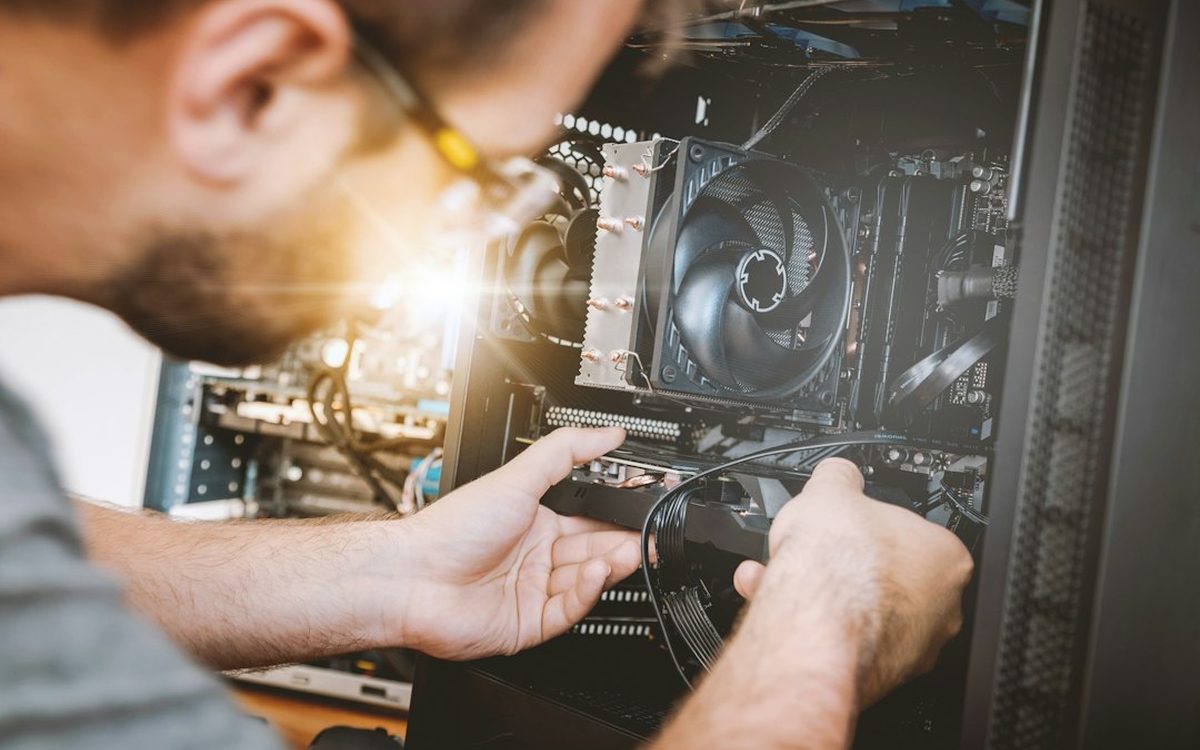
When a hashboard fails or a GPU drops off the bus, the actual repair is often trivial: swap a part, reseat a module, reflash firmware. What costs money is everything around it. The unit sits dark while a ticket is raised, a diagnosis is agreed, an RMA number is issued, the part ships across a border, clears customs, arrives at a facility where nobody is expecting it, and finally reaches a technician who has time to install it.
For an owner-operator with hardware in the next room, that cycle is an annoyance. For a hosted fleet, where the hardware is in a facility you do not control and possibly in another country, it is the single largest driver of realised uptime. This is how to structure around it.
Who Actually Holds the Warranty
The first question is the one most often left vague: in a hosting arrangement, who is the manufacturer's counterparty?
If you bought the hardware and shipped it to a facility, the warranty is almost certainly yours. The hosting provider is not a party to it. They can perform the physical work, but they cannot open a claim on your behalf unless you have explicitly authorised it, and the manufacturer may not deal with them at all.
If the provider supplied the hardware as part of the package, the position is different and depends entirely on the contract. The provider may hold the warranty and pass through a service level, or may have sold you the equipment outright with the warranty assigned.
Establish this in writing before anything fails. The worst moment to discover that nobody is clearly responsible for raising a claim is the moment a claim needs raising.
What Warranties Actually Cover
Manufacturer warranties cover defects. They are considerably narrower than operators assume, and the exclusions matter more than the inclusions.
- Operating environment. Manufacturers specify temperature and humidity ranges. Hardware run outside them, or in air with contamination the specification does not contemplate, can have claims refused. This is a live issue for ASIC fleets in hot or dusty conditions.
- Overclocking and firmware. Underclocking and autotuning are standard practice in mining, and third-party firmware is common. Both can void warranty depending on the manufacturer. If you are running custom firmware for efficiency, you have likely made a deliberate trade and should know you have made it.
- Power quality. Damage from surge, sag or poor waveform is frequently excluded. This makes the facility's electrical quality a warranty question, not only an uptime one.
- Physical handling. Damage in transit or during installation is typically outside the warranty and inside your insurance.
- Consumables and wear. Fans, thermal interface material and filters are maintenance items, not defects.
Read the exclusions against how you actually intend to run the fleet. A warranty that is void under your planned operating profile is not a risk mitigation, and you should price accordingly.
Why Cross-Border RMA Is the Real Problem
An RMA on domestic hardware is a shipping exercise. An RMA that crosses a border is a customs exercise twice over, and it is where hosted fleets lose weeks.
The failed unit has to be exported, which means a declaration, a valuation and a reason for export. The replacement has to be imported, which means another declaration and a question about whether duty applies to a warranty replacement. Getting that treatment wrong can mean paying duty on a part you already own.
Several mechanisms exist to handle this properly, and which is available depends on the jurisdiction and the facility. Temporary export procedures, repair-and-return treatment, and free zone handling all exist precisely for this case. The common failure is not that these mechanisms are unavailable. It is that nobody identified which one applied until the part was already stuck.
If your fleet is hosted outside your own country, establish the return pathway before you need it. That means knowing who files the export declaration, under which procedure, and what the facility needs from you to release a failed unit.
The Case for Holding Spares
Here is the conclusion most operators reach eventually, usually after an expensive quarter: for hosted fleets, a spare parts buffer on site beats a faster RMA process.
The logic is straightforward. The RMA recovers the value of the part. The spare recovers the revenue of the machine. Those are different things, and for production hardware the second is usually larger.
Consider the shape of the cost. A failed unit under warranty will eventually be replaced at no part cost. But the machine is not earning while it waits, and the wait on a cross-border RMA is measured in weeks. A spare held at the facility converts that outage from weeks to the time it takes a technician to walk to the rack. The failed unit then goes through the RMA process on its own schedule, with no revenue attached to its progress, and the replacement restocks the buffer.
What to hold depends on failure distribution rather than on component cost:
- Power supplies fail often and are cheap. Hold several.
- Fans are consumables in dusty or hot environments. Hold many.
- Hashboards and control boards are the expensive, high-impact items. Hold a small number, sized against observed failure rates rather than a guess.
- Whole units are worth holding at scale. On a large fleet, a handful of complete spare machines means a failure is a swap, not a repair.
- Cables, optics and PDU components are cheap, fail quietly and are irritating to source quickly.
Size the buffer from your own data once you have it. Before you have it, a common starting point is a small percentage of fleet count for high-failure components, reviewed after the first quarter of real operating history.
Remote Hands: What You Are Actually Buying
None of this works without someone physically present who can act. In a hosted arrangement that is the provider's remote hands service, and its terms deserve more attention than they usually get.
The questions worth asking are specific. What is the response time, and is it contractual or aspirational? Is it measured from ticket creation or from your phone call? What is included in the base agreement and what is billed hourly? Is there coverage outside business hours, and at what rate? Who holds your spares, where, and how are they tracked? Can a technician take a part from your buffer without a separate authorisation every time, or will a 3am failure wait until someone replies to an email?
A provider with a well-run remote hands operation will answer these immediately, because they are the questions every serious client asks.
Keeping Records That Survive Scrutiny
Warranty claims are evidential. The operator who can produce a clean record gets the claim paid; the one who cannot has an argument.
Worth keeping, per unit: serial number, purchase date and invoice, deployment date, firmware version history, environmental conditions over the operating period, and the full fault history including what was tried. Serial-level tracking matters because warranties attach to serials, not to fleets, and a replacement unit starts its own clock, which may be shorter than the original.
Most providers expose enough environmental and operational telemetry to support this. Confirm you can actually export it, rather than only view it in a dashboard, before you need it as evidence.
Planning for the End of Warranty
Every fleet eventually ages out of coverage, and that transition should be deliberate rather than noticed in arrears.
Past warranty, failures become straight repair-or-replace decisions. The spares buffer stops being a speed optimisation and becomes the entire maintenance strategy, which usually means increasing it. Third-party repair becomes economically relevant where it was not before. And the harvest value of failed units rises, because a dead machine is now a source of working parts for its cohort rather than something to be returned.
Operators running mixed-age fleets often find the cleanest approach is to let the oldest cohort become the parts donor for the rest, rather than maintaining it as production capacity.
What Good Looks Like
A hosted fleet with this handled properly has: a documented warranty position with a named owner for claims, a known cross-border return pathway established in advance, a spares buffer on site sized from observed failures, a remote hands agreement with response times in writing, and serial-level records that would survive a manufacturer's questions.
None of that is expensive relative to the revenue it protects. All of it is far cheaper to arrange before the first failure than after the tenth.
Operators hosting with Rax Data & Energy have on-site technical staff, spares storage and documented handling procedures as part of the standard arrangement, for both GPU infrastructure and ASIC fleets.
Frequently Asked Questions
Does hosting my hardware void the manufacturer warranty?
Hosting in itself does not. What can void a warranty is how the hardware is operated: running outside specified temperature or humidity ranges, third-party firmware, overclocking, or damage from poor power quality. The facility's operating environment therefore becomes part of your warranty position.
Who raises the RMA when hardware fails in a hosted facility?
Usually the hardware owner, because the warranty is between the owner and the manufacturer. The provider performs the physical work and can often handle logistics, but may have no standing to open the claim. Agree who does what, in writing, before a failure occurs.
How many spare parts should I hold for a hosted fleet?
Size it against observed failure rates rather than a fixed rule. High-failure, low-cost items such as power supplies and fans justify generous stock. Expensive boards justify a smaller number chosen deliberately. Review the buffer after your first quarter of real operating data.
Why is cross-border RMA so slow?
Because it is two customs events, not one shipping event. The failed unit is exported and the replacement imported, each requiring declarations and correct procedural treatment. Without the right procedure identified in advance, a warranty replacement can even attract duty.
Is it worth repairing hardware that is out of warranty?
Often yes, particularly where a failed unit can supply working parts to others in the same cohort. At end of life many operators retire the oldest group as a parts donor rather than maintaining it as production capacity.
Hosting That Includes the Unglamorous Parts
Rax Data & Energy provides on-site technical staff, spares storage and documented handling for hosted ASIC and GPU fleets, so a failed component is a swap rather than a three-week wait.
Talk to Our Team