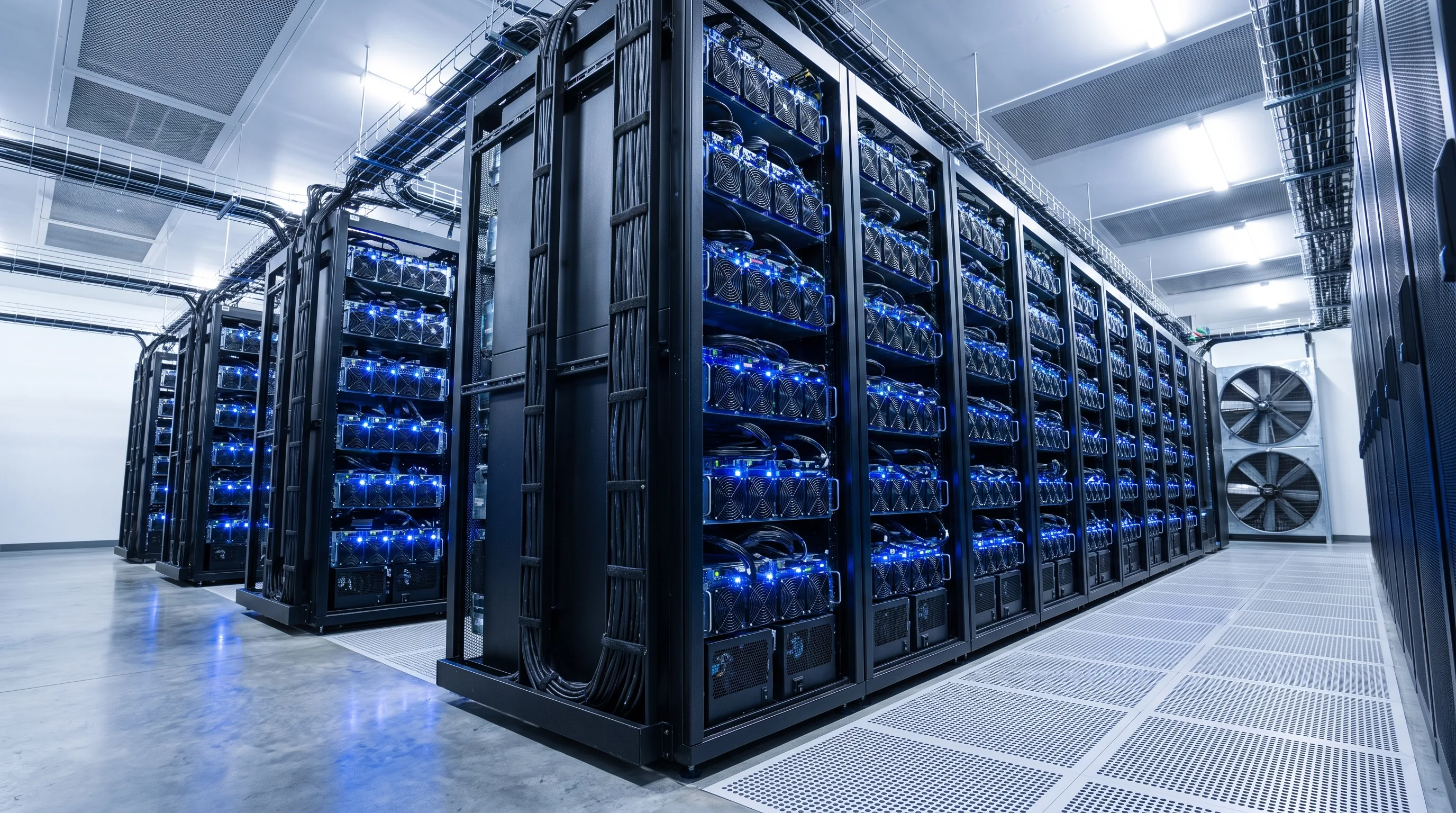
An ASIC hosting service level agreement is the single document that defines what your hosting provider actually owes you. It specifies the uptime they guarantee, the power they commit to delivering, how quickly they respond when something breaks, and what compensation you receive when they fall short. Yet many miners sign hosting contracts without scrutinizing the SLA terms, only to discover during a prolonged outage that their contract offers little meaningful protection.
This guide breaks down every section of an ASIC hosting SLA, explains what constitutes strong versus weak language in each area, and identifies the specific terms you should negotiate before committing your mining hardware to any facility. Whether you are hosting a handful of current-generation miners or deploying hundreds of units across multiple facilities, understanding your SLA is fundamental to protecting your investment and maximizing operational uptime.
Why ASIC Hosting SLAs Differ from Standard Colocation
Traditional colocation SLAs were designed for enterprise IT workloads where a few hours of downtime per year might be tolerable. ASIC mining is a fundamentally different business model. Every hour your miners are offline is revenue permanently lost — unlike an enterprise application where users can retry later, the Bitcoin blocks mined during your downtime are gone forever. This creates an asymmetry that standard colocation SLAs do not adequately address.
ASIC hosting also introduces operational requirements that enterprise IT does not. Miners generate extreme heat density, often exceeding 20 kW per rack for air-cooled deployments and significantly more for immersion-cooled setups. They require consistent, stable power with clean voltage profiles to avoid hashboard damage. And they demand hands-on maintenance — firmware updates, fan replacements, hashboard repairs — that enterprise servers rarely need.
A strong ASIC hosting SLA must account for all of these differences. The sections below cover each critical area.
Uptime Guarantees: What the Numbers Mean
Understanding Uptime Tiers
Uptime is typically expressed as a percentage of total hours in a billing period. The differences between common tiers may look small but translate into significant annual downtime:
| Uptime SLA | Max Annual Downtime | Max Monthly Downtime | Typical Use Case |
|---|---|---|---|
| 99.0% | 87.6 hours | 7.3 hours | Budget hosting, non-critical |
| 99.5% | 43.8 hours | 3.6 hours | Standard ASIC hosting |
| 99.9% | 8.7 hours | 43 minutes | Premium ASIC hosting |
| 99.95% | 4.4 hours | 22 minutes | Institutional-grade facilities |
For context, a miner producing 0.0005 BTC per day loses approximately 0.00002 BTC for every hour of downtime. At scale — say, 100 miners — the difference between 99.0 percent and 99.9 percent uptime represents roughly 79 additional hours of production per year. The dollar value depends on Bitcoin price, but the lost hashrate is permanent regardless.
How Uptime Is Measured
The definition of "uptime" varies between providers, and the measurement methodology matters as much as the percentage. Watch for these distinctions:
- Facility uptime vs. miner uptime: Some SLAs only guarantee that the facility has power and cooling available, not that your specific miners are hashing. If a miner fails due to a power surge or cooling insufficiency that the provider caused, a facility-only SLA may not cover it.
- Planned maintenance exclusions: Most SLAs exclude scheduled maintenance windows from uptime calculations. Verify how much planned maintenance the provider claims per month and whether they guarantee advance notice (typically 48 to 72 hours).
- Force majeure carve-outs: Nearly all SLAs exclude natural disasters, grid failures, and government actions. The key question is how broadly "force majeure" is defined. A narrow definition protects you better than a broad one.
- Measurement granularity: Uptime measured in 1-minute intervals captures short outages that 1-hour measurement intervals would miss entirely. Finer granularity favors the customer.
Power Commitments and Electrical Guarantees
Committed Power Capacity
Your SLA should specify the exact power allocation per miner or per rack in kilowatts. This is not just about having enough capacity — it is about the provider contractually committing to deliver that capacity without throttling or load-shedding during peak demand periods.
Key power terms to verify:
- Power per unit: The contracted kilowatt allocation per ASIC miner. A current-generation miner like the Antminer S21 draws approximately 3.5 kW. The SLA should guarantee at least the rated power draw of your equipment plus a reasonable margin.
- Voltage and frequency stability: ASIC miners are sensitive to voltage fluctuations. The SLA should specify the voltage tolerance band (typically plus or minus 5 percent of nominal) and frequency stability. Voltage sags or spikes outside this range can damage hashboards, and the provider should be liable for equipment damage caused by out-of-spec power.
- Power redundancy level: Whether the facility provides N, N+1, or 2N power redundancy. For mining operations where every watt is revenue-generating, N+1 is the practical minimum. The SLA should specify which components are redundant — utility feeds, transformers, switchgear, UPS systems, and distribution panels.
Backup Power and Generator Commitments
When utility power fails, backup generators must start and assume the load. The SLA should define:
- Transfer time: The maximum time between utility failure and generator power reaching your equipment. With UPS systems, this is typically under 10 seconds. Without UPS, miners will reboot during the transfer, adding several minutes of downtime for POST and pool reconnection.
- Fuel reserve duration: How long the facility can run on generator power. A minimum of 24 to 48 hours of on-site fuel is standard. Extended outages require fuel delivery contracts, and the SLA should confirm these are in place.
- Generator load capacity: Whether the generators can support 100 percent of the facility load or only a subset. Some facilities size generators to cover only critical IT loads, which may or may not include your ASIC miners depending on how "critical" is defined in the contract.
Power Cost Structure
While not strictly an SLA term, the power pricing model directly affects your hosting economics. Common structures include:
- All-inclusive per-kWh rate: A single rate covering electricity, facility overhead, and margin. Simple to budget. Verify whether the rate is fixed for the contract term or subject to pass-through increases if utility rates change.
- Base rate plus pass-through: A lower base rate with utility cost fluctuations passed directly to the customer. More transparent but introduces budget variability.
- Flat monthly fee per miner: Fixed cost regardless of actual consumption. Simplest to budget but typically priced with a margin that exceeds actual consumption costs.
For a detailed breakdown of hosting cost structures, see our ASIC colocation pricing guide.
Cooling and Environmental Guarantees
Cooling failures destroy ASIC miners. When intake air temperatures exceed safe operating thresholds, miners thermal-throttle (reducing hashrate and revenue) or shut down entirely to prevent hardware damage. In extreme cases, sustained overheating causes permanent hashboard failure.
The SLA should specify:
- Ambient temperature range: The guaranteed inlet air temperature range at the rack face, typically 18 to 27 degrees Celsius per ASHRAE guidelines. Facilities in hot climates, such as the UAE and the broader Gulf region, must demonstrate cooling capacity that maintains these temperatures even during peak summer ambient conditions exceeding 50 degrees Celsius outside.
- Humidity control: The guaranteed relative humidity range, typically 20 to 80 percent non-condensing. Excessive humidity causes corrosion; excessively low humidity increases electrostatic discharge risk.
- Cooling redundancy: Whether the cooling plant has N+1 redundancy, meaning one additional cooling unit beyond what the load requires. Without cooling redundancy, a single chiller or CRAC failure can overheat the entire hall.
Support Response and Resolution Times
Tiered Response Framework
Effective ASIC hosting SLAs define escalation tiers based on issue severity. A typical framework looks like this:
| Severity | Definition | Response Time | Resolution Target |
|---|---|---|---|
| Critical (P1) | Total power loss, facility-wide outage, cooling failure | 15 minutes | 4 hours |
| High (P2) | Individual rack power loss, partial cooling degradation | 30 minutes | 8 hours |
| Medium (P3) | Single miner failure, network issue, monitoring alert | 1 to 4 hours | 24 hours |
| Low (P4) | Firmware update, pool change, reporting request | 4 to 24 hours | 72 hours |
Remote Hands and On-Site Support
ASIC miners require physical intervention more frequently than enterprise servers. Fans fail, control boards need replacement, and hashboards develop faults that require hands-on diagnosis. The SLA should define:
- Included remote hands hours: How many hours per month of physical support are included in the hosting fee. Common allocations range from 1 to 4 hours per month, with additional hours billed at an hourly rate.
- On-site technician availability: Whether qualified technicians are available 24/7, business hours only, or only during a limited support window. For mining operations where downtime directly costs revenue, 24/7 on-site staff is strongly preferable.
- Spare parts inventory: Whether the facility stocks common replacement parts (fans, PSUs, control boards) on-site. A facility with parts in stock can resolve hardware failures in hours rather than the days required to ship parts.
Monitoring and Reporting
Visibility into your miners' status is essential for validating SLA compliance. The SLA should specify what monitoring the provider offers:
- Real-time dashboards: Access to live power consumption, temperature, and miner status data per unit or per rack.
- Automated alerts: Immediate notification when a miner goes offline, power consumption drops unexpectedly, or temperatures exceed thresholds.
- Monthly reports: Documented uptime statistics, power consumption records, and any SLA events with root cause analysis.
SLA Credits and Remedies
Credit Structures
SLA credits are the financial remedy when the provider fails to meet their commitments. The strength of credit provisions varies enormously:
- Percentage-of-fee credits: The most common structure. For each hour (or fraction) of downtime below the SLA threshold, the customer receives a credit equal to a percentage of the monthly hosting fee. Typical ranges are 5 to 10 percent per hour of downtime, capped at 25 to 50 percent of the monthly invoice.
- Revenue-based credits: Some providers offer credits calculated against estimated lost mining revenue rather than just the hosting fee. This is more favorable for the customer, as lost mining revenue typically exceeds the hosting fee proportionally.
- Automatic vs. claim-based: The best SLAs apply credits automatically when monitoring data confirms an SLA breach. Weaker SLAs require the customer to file a formal claim within a short window (often 7 to 30 days), creating a procedural barrier to receiving compensation.
Credit Caps and Exclusions
Nearly all SLAs cap total credits, limiting the provider's financial exposure. Understanding the cap structure is critical:
- Monthly cap: Total credits in any billing period typically cannot exceed 30 to 100 percent of that month's fee. A 30 percent cap severely limits your compensation during extended outages.
- Exclusions: Events excluded from credit eligibility typically include scheduled maintenance (if properly notified), force majeure, customer-caused issues, and problems with the customer's own equipment.
- Termination rights: If the provider consistently fails SLA targets — for example, missing the uptime guarantee in 3 of any 6 consecutive months — the SLA should grant the customer the right to terminate without early termination penalties.
Contract Duration and Termination Terms
Minimum Commitment Periods
ASIC hosting contracts typically require minimum commitments of 6 to 24 months. Longer commitments usually secure lower per-kWh rates. The trade-off is flexibility: the mining economics that make hosting profitable today may change with Bitcoin halving events, difficulty adjustments, or electricity price shifts.
Negotiation points for contract duration:
- Rate lock provisions: Whether the hosting rate is fixed for the full contract term or subject to periodic adjustment. Fixed-rate contracts protect against electricity cost increases but may prevent you from benefiting if rates drop.
- Scaling flexibility: Whether you can add or remove miners during the contract term, and under what terms. Growth clauses that guarantee additional capacity at the same rate are valuable for expanding operations.
- Hardware upgrade provisions: When next-generation miners become available, can you swap out older units for more efficient ones? Some contracts restrict changes to the initially deployed hardware.
Early Termination
Early termination clauses protect both parties but are often written to heavily favor the provider. Look for:
- Termination fee structure: A reasonable early termination fee might be 1 to 3 months of hosting charges. Penalties equal to the remainder of the contract term are excessively punitive and should be negotiated down.
- Provider breach termination: If the provider repeatedly fails SLA targets, the customer should be able to terminate without penalty. Define "repeatedly" explicitly — for example, 3 SLA breaches in 6 months.
- Equipment retrieval: The SLA should specify the process and timeline for retrieving your hardware after contract termination, including who bears shipping costs and how long the provider will store equipment.
Insurance and Liability
ASIC mining hardware represents a significant capital investment. A rack of current-generation miners can be worth well over $100,000. The SLA and associated insurance provisions should clearly address liability for equipment damage or loss:
- Provider insurance coverage: What the hosting provider's insurance policy covers, including theft, fire, flood, and equipment damage caused by power events or cooling failures. Verify coverage limits are adequate for the replacement value of your equipment.
- Liability caps: Most hosting contracts limit the provider's total liability to a multiple of monthly fees (often 6 to 12 months). For high-value deployments, negotiate higher caps or require the provider to carry insurance sufficient to cover full replacement cost.
- Customer-required insurance: Whether the hosting provider requires you to carry your own equipment insurance. Some providers require proof of insurance as a condition of the hosting agreement.
SLA Negotiation Checklist
Before signing any ASIC hosting contract, verify that the SLA addresses every item below. Missing terms represent gaps that will surface during the first serious incident:
- Uptime percentage guarantee with clear measurement methodology
- Planned maintenance notification period and maximum monthly maintenance hours
- Power capacity commitment per miner or per rack in kilowatts
- Voltage and frequency stability tolerances
- Power redundancy level (N, N+1, or 2N) with component-level detail
- Backup generator capacity, fuel reserve duration, and transfer time
- Ambient temperature and humidity guarantees
- Cooling system redundancy level
- Tiered support response and resolution times
- Included remote hands hours per month
- SLA credit calculation method and monthly cap
- Automatic credit application vs. claim-based process
- Termination rights triggered by repeated SLA breaches
- Equipment liability coverage and insurance requirements
- Contract duration, rate lock, and early termination fee
Negotiation tip: The most productive SLA negotiations happen before you ship your hardware. Once your miners are installed and hashing, your leverage drops significantly. Treat the SLA review as a prerequisite to deployment, not an afterthought. For broader guidance on evaluating providers, see our colocation buyer's checklist.
Frequently Asked Questions
What uptime should an ASIC hosting SLA guarantee?
A competitive ASIC hosting SLA should guarantee at least 99.5 percent uptime, which allows for roughly 43 hours of downtime per year. Premium facilities targeting institutional miners typically offer 99.9 percent or higher, allowing only about 8.7 hours of unplanned downtime annually. The SLA should clearly define how uptime is measured, whether credits apply automatically or must be claimed, and whether scheduled maintenance windows count against the uptime calculation.
How are SLA credits calculated for ASIC hosting downtime?
SLA credits are typically calculated as a percentage of the monthly hosting fee proportional to the downtime experienced. Some providers also offer hashrate-based credits that account for lost mining revenue, which is more favorable for the customer. Always verify whether credits are automatic or require a formal claim within a specified period.
What power guarantees should an ASIC hosting contract include?
The contract should specify committed power capacity per miner or per rack in kilowatts, voltage and phase configuration, power redundancy level (N, N+1, or 2N), and how power consumption is metered and billed. It should also address backup generator capacity, fuel reserve duration, and whether generator runtime counts toward the uptime guarantee.
What support response times are standard in ASIC hosting SLAs?
Critical issues such as total power loss typically require a 15 to 30 minute response. Hardware failures affecting individual miners usually carry a 1 to 4 hour response time. General support requests often have a 4 to 24 hour response window. Response time means initial acknowledgment, not full resolution — resolution targets should be defined separately.
Can I terminate an ASIC hosting contract early?
Most contracts include early termination provisions. Common structures require 30 to 90 days written notice plus payment of an early termination fee equal to 1 to 3 months of hosting charges. Some contracts allow termination without penalty if the provider consistently fails to meet SLA commitments. Always negotiate termination clauses before signing and review the full contract terms guide for additional context.
ASIC Hosting with Transparent SLAs
Rax Data & Energy provides ASIC hosting with clear uptime commitments, published power guarantees, 24/7 on-site support, and SLA terms designed for professional mining operations.
Contact Us Rax Data Solutions