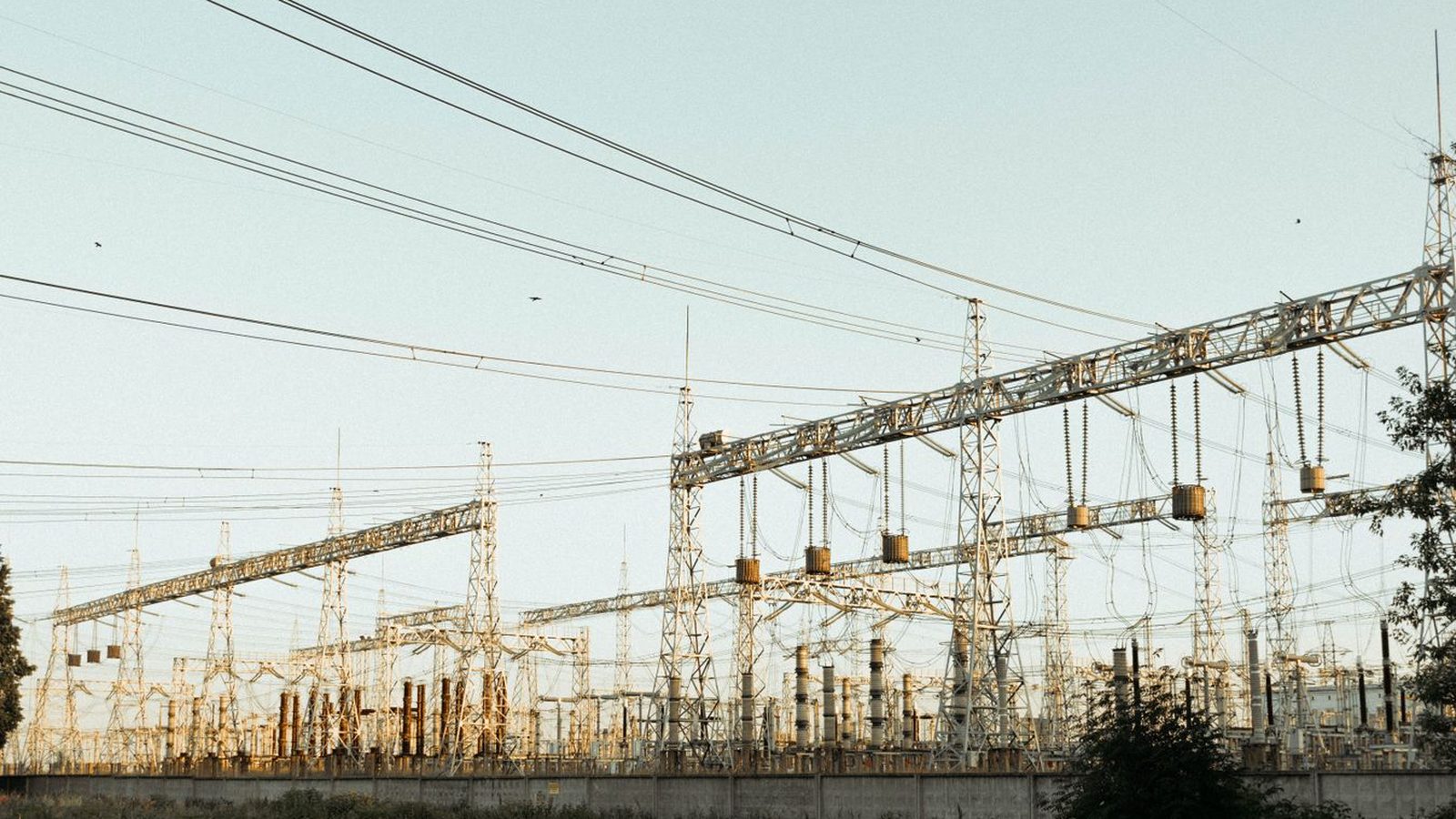
In short: Dubai's power sector runs through DEWA, a single vertically integrated authority; Abu Dhabi's runs across separate generation, procurement and distribution entities, including EWEC. The underlying engineering stages of a new connection — load submission, feasibility assessment, agreement, construction, energization — are the same in both emirates, but the institutional path through them is not. What actually moves a timeline, in either emirate, is how clearly the load profile is defined at the point of application and whether the nearest substation already has headroom for it.
A Workstream Inside a Workstream
This site's overview of the UAE approvals process frames a new data center project as four parallel workstreams — building, power, telecom and environmental — each running under its own authority. That framing is correct as far as it goes, but it treats the power workstream as a single line item, when in practice it is the one most likely to set the critical path for an entire project. A building permit process has its own delays, but a power connection that turns out to require new transformer capacity or a new feeder run is not primarily an administrative problem; it is a hardware lead-time and civil works problem wearing an administrative process as its interface.
This article is about that one workstream specifically: what the stages actually are, why Dubai and Abu Dhabi are not interchangeable for planning purposes, and what determines whether a given site moves through it in a matter of weeks or becomes the long pole in the whole project schedule.
Two Utility Structures, Not One
It is worth being precise about what differs between the emirates, because the difference is structural rather than cosmetic. Dubai is served by DEWA, a single authority responsible for generation, transmission, distribution and the customer-facing connection process all under one roof. An applicant in Dubai is, for practical purposes, dealing with one organization across the full life of a connection request.
Abu Dhabi's power sector is organized differently, with separate entities responsible for generation and bulk power and water procurement — including EWEC — and distribution to end customers. This site's own breakdown of DEWA and EWEC power tariffs covers how this split affects pricing structure; the same institutional split also means that a connection applicant in Abu Dhabi is coordinating across more than one organizational boundary, even when the end result — a live power connection at an agreed capacity — looks identical to the Dubai outcome on paper.
The practical consequence is not that one emirate is faster than the other in the abstract. It is that a developer evaluating sites in both emirates should not assume the same internal review steps, the same document set, or the same point of contact will carry over from one to the other. Each needs its own process map, built from how that specific utility structure actually works, not adapted from the other.
The Four Stages, Underneath Either Structure
Strip away which organization is doing the reviewing, and the underlying engineering process is the same shape everywhere a large electrical load connects to a grid, UAE included. This site's general-purpose grid interconnection queue article describes this shape for a liberalized wholesale market; the UAE's vertically regulated model runs the same four stages through a different institutional arrangement rather than through an open competitive queue.
- Load application and site data submission. The applicant states the requested capacity, the site location, and a load profile — ideally a ramp schedule rather than a single peak number, for the same reason described in this site's coverage of staggered energization: a utility plans infrastructure around the load pattern it is told to expect, not around nameplate capacity alone.
- Feasibility and network capacity assessment. The utility checks whether the nearest substation and feeder already have headroom for the requested load, or whether new transformer capacity, a new feeder, or substation expansion is required. This is the step where transformer and switchgear lead times, not paperwork, start to dominate the schedule if the answer is "insufficient headroom."
- Connection agreement and cost allocation. Once feasibility is confirmed, the utility and applicant agree the connection capacity, the technical requirements on the customer side of the meter, and how the cost of any required infrastructure is shared or recovered. This is also the point at which free zone versus mainland administrative routing has its main effect, discussed below.
- Construction, testing and energization. Any new utility-side infrastructure is built and commissioned, protection and metering are tested, and the connection is energized against the agreed capacity. For a large load, this stage can run in parallel with on-site construction, provided the earlier stages locked in a stable capacity figure early enough for both schedules to be coordinated.
What Free Zone vs Mainland Actually Changes
Free zones consolidate several approval functions under one authority, which is a genuine advantage for coordinating the non-technical layer of a project — permits, licensing, and inter-agency sign-off can move through fewer separate relationships. What a free zone structure does not do is change the physics of the feasibility assessment or the lead time on transformer and feeder construction if the nearest substation lacks headroom. An applicant who expects the free zone's administrative efficiency to also compress the utility's own engineering review is conflating two different layers of the same process. The free zone investment framework on this site covers the ownership and licensing advantages in full; the power connection timeline sits outside that framework's scope, governed by the utility's own technical review regardless of which jurisdiction the site sits in.
What Actually Moves the Date
Across both emirates, two factors do more to determine a connection timeline than anything else, and neither of them is which utility is involved.
Load profile clarity, submitted early and held stable. A revised load submitted after feasibility work has already started is one of the events most likely to push an energization date out by months rather than weeks, because it can force the capacity assessment and cost allocation to be redone against a different number. A project that defines its ramp schedule clearly at application time, and treats that schedule as a commitment rather than a placeholder, removes the single most common source of rework in the whole process.
Substation headroom at the specific candidate site. Two sites a few kilometers apart can have entirely different timelines because one sits near a substation with spare capacity and the other does not. This is a property of the existing grid at that location, not of the applicant's paperwork, and it is usually the first thing worth confirming informally before committing to a site, rather than discovering it formally inside the feasibility stage.
A third, smaller lever is staging. A project that commits to a smaller initial load with a documented, contracted expansion path gives the utility a concrete, bounded first-stage number to plan around, which can move the first energization date forward. The trade-off, covered in this site's guide to capacity forecasting and signing the next megawatt, is that the expansion stage still needs its own review when the time comes — staging trades a later, second delay for an earlier first connection, rather than eliminating the delay altogether.
Where This Fits
This article covers the power-specific stages inside the broader UAE approvals chain, which also covers the building, telecom and environmental workstreams running in parallel. It is a companion to, not a replacement for, this site's coverage of DEWA and EWEC tariff structures — tariffs determine what a connection costs to operate once live; this article is about what determines when it goes live in the first place. For load-side planning once a connection date is in view, large-load utility tariff commitments and site selection across the wider GCC cover the adjacent decisions that typically get made alongside it.
Frequently Asked Questions
How long does a new UAE data center grid connection actually take?
There is no single reliable figure, because the two variables that matter most — whether the nearest substation already has headroom for the requested load, and how clearly the load profile is defined at application time — are different for every site. A connection into an already-provisioned substation with spare capacity moves through feasibility review and agreement far faster than one that triggers new transformer or feeder construction, which is a hardware lead-time problem layered on top of an administrative one. Treat any quoted timeline as specific to one site and one load profile, not as a portfolio-wide constant.
Is the power connection process the same in Dubai and Abu Dhabi?
No. Dubai's power sector is served by DEWA, a single vertically integrated authority covering generation, transmission, distribution and customer connection. Abu Dhabi's structure is split across separate entities for generation and water/power procurement, including EWEC, and distribution. Two sites with identical load profiles, one in each emirate, can reasonably expect different internal review structures and different document sets, even where the underlying electrical engineering questions are the same.
Does choosing a free zone instead of mainland change the power connection timeline?
It can change the administrative layer without changing the underlying utility engineering layer. A free zone typically consolidates several approval functions under one authority, which can compress the non-technical paperwork and coordination overhead. The feasibility study, the substation capacity assessment and any physical construction the utility itself must carry out follow the same technical timeline regardless of which jurisdiction the site sits in.
What is the single biggest factor that delays a UAE power connection?
An unclear or overstated load profile submitted late in the process. Utilities plan infrastructure around the load they are told to expect, and a revised load submitted after feasibility work has already started is one of the few events that can move an energization date by months rather than weeks, because it can force the feasibility and cost-sharing steps to be repeated against a different number.
Can committing to a phased, staged load instead of full day-one capacity speed up approval?
In general, yes, provided the staging is presented clearly and early rather than discovered mid-review. A smaller initial committed load with a documented, contracted expansion path gives the utility a concrete, bounded figure to plan the first stage of infrastructure around, instead of needing to provision for an eventual maximum that may be years away. The trade-off is that the expansion stage still has to be re-submitted and re-assessed in its own right when the time comes, so staging moves the first energization date forward at the cost of a second review cycle later.
Planning a Connection in the UAE
Rax Data & Energy coordinates power connection planning across our UAE facilities as part of site selection and capacity commitments. Tell us about your load profile and timeline and we'll walk through what the connection path actually looks like for your site.
Contact Us Our Facilities