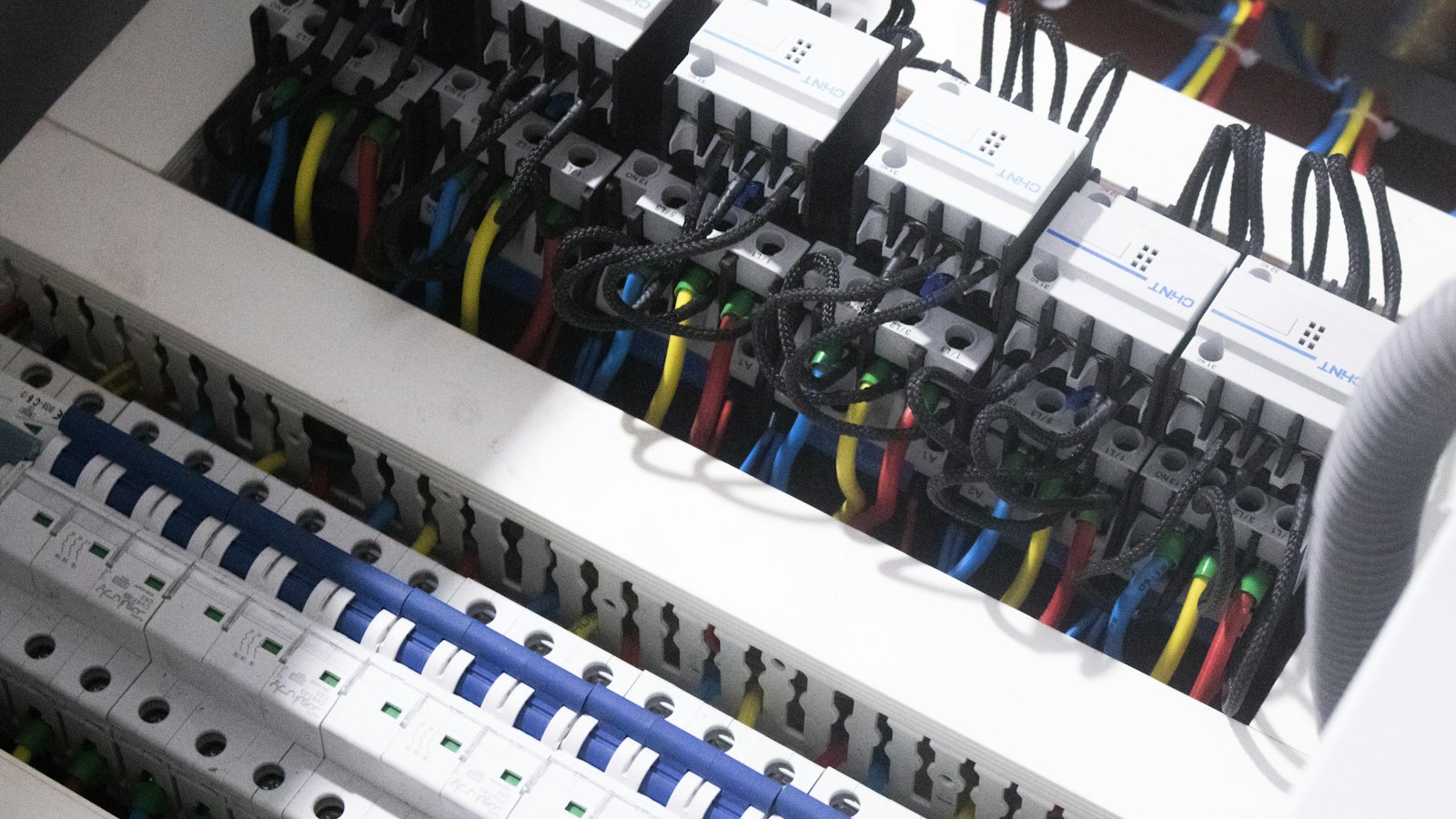
In short: The tour route, the timing and the escort are all chosen by the provider, and reasonably so. That makes a site visit a poor way to confirm what a facility claims and an excellent way to observe things nobody thought to stage: how the electrical room is actually populated, whether housekeeping holds up in the occupied rows, what the monitoring really shows, and how quickly staff can produce a record when you ask for one.
Why the Tour Is Not the Evidence
A good data centre tour is impressive and it is supposed to be. The route runs through the newest hall, the lighting is excellent, the floor is clean and the person guiding you is articulate. None of this is deceptive. It is simply a presentation, and a presentation is not a measurement.
The useful posture is not suspicion. It is to spend the visit looking at the things that are expensive to stage and that reveal operating habit rather than capability: the condition of spaces where customers rarely go, the completeness of records when you ask for one on the spot, and the parts of the plant that are physically present versus the parts that are drawn on a diagram.
This complements documentary diligence rather than replacing it. The paperwork tells you what should be true, and much of what to request before you travel is covered in our provider diligence guide for high-density deployments. The visit tells you what is.
The Electrical Room
If you see one thing properly, make it this. Capacity is discussed in meeting rooms and settled here.
Look at how much of the installed plant is energised and how much is empty frame or reserved footprint awaiting a later phase. Both are entirely legitimate, and the ratio between them is the honest version of the capacity conversation. Walk the path from the utility intake through transformers, switchgear, UPS and distribution to the row you would occupy, and ask which elements are shared with other tenants and which are dedicated.
Specific things worth noticing:
- Labelling. Panels labelled clearly, consistently and recently are a sign of a facility where changes get documented. Handwritten labels taped over older handwritten labels are a sign of a facility where they sometimes do not.
- Redundancy, physically. Ask to be shown the A and B paths as separate physical routes rather than as a line on a drawing, and ask where they converge. Almost every design converges somewhere; the question is where, and whether you were told.
- Spare capacity on the board. Spare ways on the distribution serving your row determine whether adding circuits later is routine or disruptive.
- Thermographic survey records. Ask when the last one was done and ask to see it. Infrared surveys of connections are routine preventive practice and the report is a good proxy for whether maintenance is performed or merely scheduled.
- Arc flash labelling. Present, current and legible labelling indicates a facility that has done the study and maintains it. Its absence is a question worth asking.
The Data Hall
Ask to see an occupied hall rather than only an empty one. An empty hall shows you the design; an occupied one shows you how the design survives contact with customers.
Look down the hot aisle rather than the cold one. Containment that is complete at the ends and the top, blanking panels fitted in unused U positions, and brush grommets where cables pass through the floor are all cheap, unglamorous things that are consistently maintained only in well-run facilities. Gaps in them are not catastrophic individually, and collectively they tell you how much attention the floor receives.
Look at cable management in the occupied racks, particularly in the older rows rather than the newest. Tidy cabling in a row that has been through three years of customer changes is harder to achieve than tidy cabling in a row commissioned last month, and it is more informative.
Check where the inlet temperature is actually measured and ask to see a trend rather than a current reading. The place a marginal cooling design shows first is the top of a cabinet at the end of a hot aisle, furthest from the supply. Ask what that position recorded during the hottest week of last summer. A facility with real instrumentation produces that in minutes.
Ask about floor loading if you are deploying dense racks, and ask whether the figure quoted is a uniform distributed load or a point load, because a fully populated high-density cabinet is a concentrated weight. Ask how equipment arrives at the row: the route from the loading dock, the lift capacity, and the door widths. This sounds trivial until a rack does not fit through something, which is a problem best discovered on a visit rather than on a delivery day. Our guide to rack and stack deployment covers the install sequence in more detail.
Note the noise as well. High-density air-cooled rows are loud, and if your team will spend working hours on the floor, acoustic conditions are a real workplace consideration rather than a footnote.
The Yard
Outdoor plant is where deferred maintenance becomes visible, because weather is unforgiving and the yard is not on the usual tour.
At the generators, the question is not whether they start but whether they run under load. Ask for load bank test records and the run log, and ask how often the facility performs a full transfer test with live load rather than a no-load start. Look at the fuel: stored volume, the condition of the tanks, the refuelling contract, and whether there is more than one supplier. Fuel polishing and testing records matter for stored diesel, which degrades.
Look at whether there is physical space and electrical provision for the generators a future phase would require. A yard with no room to grow means the next phase is a construction project rather than an extension, and that changes every timeline the provider has quoted you.
At the heat rejection plant, look at the condition of coils and fans and ask about the cleaning regime. In a dusty environment coils foul, and fouled coils lose capacity precisely when ambient conditions are worst. Ask when they were last cleaned and who verified it.
Monitoring, Security and People
Ask to see the monitoring system as the operators actually use it, not a dashboard built for presentations. Useful questions: what is alarmed, where do alarms go out of hours, what is the escalation path by name and role, and what was the last alarm that resulted in someone attending site. That final question is a good one because it is specific, recent and difficult to answer vaguely.
On security, observe the process you were actually subjected to on arrival. Were you identified, logged and escorted, or waved through because you were expected? The procedure applied to a prospective customer is a fair sample of the procedure applied generally. Ask how access is granted and revoked for tenant staff, and how quickly a departing employee's access is removed.
On staffing, ask who is physically on site right now, and who is on site at three in the morning on a Saturday. Ask what remote hands actually covers, what is charged separately, and what the response target is. There is a meaningful difference between a facility with staff present at all times and one that relies on an on-call engineer travelling in, and both models can be run well, but you should know which you are buying.
Documents to Ask For While You Are Standing There
The value of asking on site is that you observe how long it takes and who has to be called. A well-run facility produces most of these from a system in minutes.
- The last thermographic survey of the switchgear.
- Generator load bank test records for the last twelve months.
- The incident log for the last twenty-four months.
- Planned maintenance records for UPS, generators and cooling plant.
- Commissioning documentation for the most recently energised phase.
- Inlet temperature trends for the hall during the hottest week of last summer.
Much of this overlaps with what should be handed over at the end of a build, and handover documentation is worth understanding as a category because a facility that cannot produce its own handover pack is unlikely to produce yours.
Go Back at a Worse Time
If the commitment is material, visit twice, and make the second visit inconvenient. Late afternoon, a weekend, or during a hot week in summer. You will see different staffing, different ambient conditions and a facility that has not spent the morning preparing.
The gap between those two visits is the most honest thing you will learn. A facility that looks much the same on an unannounced Saturday afternoon as it did on a Tuesday morning is a facility run to a standard rather than to a schedule of tours, and that is the quality you are actually paying for across a three-year term.
Frequently Asked Questions
What is the single most useful thing to look at on a data centre tour?
The electrical room, and specifically how much of the installed plant is actually energised versus how much is empty frame waiting for a future phase. Capacity claims are made in commercial conversations and settled in that room. A second close contender is the condition of cable management and blanking on an occupied row, because housekeeping that is maintained where customers rarely look is a reliable indicator of operational discipline.
Should I expect to be allowed into the electrical room?
Usually yes, for a serious prospective tenant, though it may require advance notice and an escort, and some areas may be restricted on safety grounds rather than secrecy. A flat refusal to show any part of the electrical infrastructure, with no safety or policy reason offered, is worth noting. So is a willingness to show it that turns out to require a scheduled second visit, which is reasonable in itself but should not be allowed to quietly disappear.
What should I look for in the generator yard?
Whether the units show evidence of being run under load rather than merely started. Ask for the load bank test records and the run log, and look at the fuel arrangement: the stored volume, the refuelling contract and whether there is a second supplier. Look also at whether there is physical space and electrical provision for the generators a future phase would need, because that tells you whether growth means an extension or a rebuild.
How do I tell whether the cooling is actually coping?
Look at inlet temperatures at the top of cabinets at the end of a hot aisle, which is where a marginal design shows first, and ask to see the trend rather than the instantaneous reading. Ask what the hall's inlet temperatures did during the hottest week of the last summer. A facility with good monitoring can answer that in minutes, and one that cannot produce the trend is telling you something about its instrumentation.
Is it worth visiting more than once?
If the commitment is material, yes, and ideally at an awkward time. A tour at ten in the morning on a weekday shows you the facility at its best staffed and most presentable. A visit late in the day, at a weekend, or during a hot week shows you how it runs the rest of the time. The difference between those two impressions is the thing you are actually buying.
Come and Look
Rax Data & Energy expects customers to inspect before they commit. Arrange a visit and bring this list — including the parts of it we would rather you did not ask about.
Contact Us Rax Data