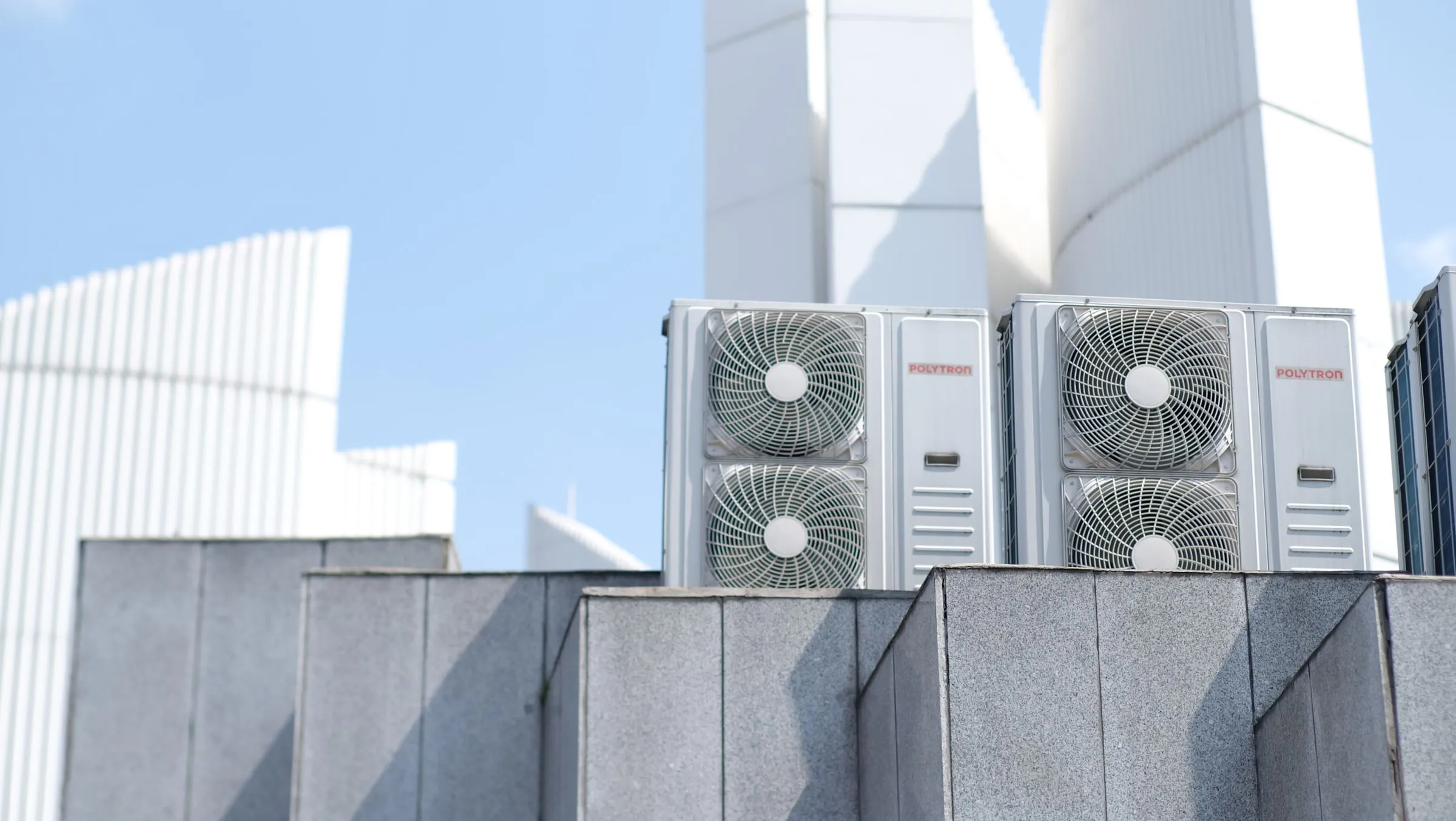
Why Acoustic Noise Is a Growing Challenge for Data Centers
Data center noise has become one of the most contentious issues in facility permitting and community relations. As hyperscale campuses expand into suburban areas and edge deployments push infrastructure closer to residential neighborhoods, the acoustic footprint of cooling systems, generators, and mechanical equipment draws increasing scrutiny from regulators, neighbors, and planning authorities. Several high-profile data center projects in the United States and Europe have faced delays, permit denials, or costly redesigns because of noise complaints.
The problem is intensifying for technical reasons as well. The shift toward high-density colocation and GPU-intensive AI workloads means more heat to reject per square meter of facility, which requires larger and more powerful cooling plants. A traditional 5 kW-per-rack data center might deploy modest cooling towers that produce acceptable noise at the property boundary. A modern facility with 30 to 50 kW per rack, or AI halls running at 80 to 120 kW per rack, needs substantially more cooling infrastructure, and that infrastructure is substantially louder.
Understanding where noise comes from, how it propagates, and what engineering controls are available is essential for any operator planning new construction or expanding existing capacity. Acoustic design is far cheaper to incorporate during the planning phase than to retrofit after construction, where mitigation costs can exceed $500,000 for a single mechanical yard.
Data Center Noise Sources and dBA Levels
Data center noise originates from mechanical, electrical, and airflow sources distributed across the facility. The loudest sources are almost always external, which is why they dominate regulatory and community impact discussions.
| Source | Typical dBA at 1 Meter | Location | Operating Pattern |
|---|---|---|---|
| Server fans (per rack) | 65 to 85 | Internal | Continuous, variable speed |
| CRAC/CRAH units | 70 to 80 | Internal | Continuous |
| Cooling towers (per cell) | 85 to 100 | External | Continuous, variable speed |
| Dry coolers / fluid coolers | 80 to 95 | External | Continuous, variable speed |
| Rooftop condenser units | 75 to 90 | External | Continuous |
| Chillers (air-cooled) | 80 to 95 | External | Continuous |
| Diesel generators | 95 to 105 | External | Testing: monthly; emergency: rare |
| UPS systems | 65 to 75 | Internal | Continuous |
| Transformers | 55 to 70 | External or internal | Continuous, load-dependent hum |
Sound levels combine logarithmically rather than linearly, so ten identical 85 dBA cooling towers produce 95 dBA, not 850 dBA. However, this also means that eliminating half the sources only reduces total noise by 3 dBA, which is barely perceptible to the human ear. Meaningful noise reduction requires addressing the dominant sources aggressively rather than making small improvements across many sources.
How Sound Propagates from Data Center Sites
Understanding sound propagation is critical for predicting noise levels at the property boundary and nearby sensitive receptors. Several factors affect how much sound attenuation occurs between the source and the receiver.
Distance Attenuation
Sound from a point source attenuates by approximately 6 dBA per doubling of distance in free field (no reflections). This means a cooling tower producing 95 dBA at 1 meter generates roughly 71 dBA at 50 meters and 65 dBA at 100 meters, assuming no barriers or reflections. However, data center sites rarely present free-field conditions. Reflections from adjacent buildings, hard pavement, and the facility's own walls can increase levels at certain locations by 3 to 6 dBA compared to free-field predictions.
Frequency Characteristics
Low-frequency noise, below 250 Hz, propagates farther and is harder to attenuate with barriers than high-frequency noise. Cooling tower fans, large generator exhausts, and transformer hum are predominantly low-frequency sources. This matters because many municipal noise ordinances specify limits by octave band rather than just overall dBA, and low-frequency limits are often more stringent because of the greater annoyance and sleep disruption that low-frequency sound causes in residential settings.
Atmospheric and Terrain Effects
Wind direction, temperature gradients, and terrain features significantly affect noise propagation over distances greater than 100 meters. Downwind receivers experience higher noise levels because wind refracts sound waves toward the ground. Temperature inversions, which are common during nighttime hours in arid climates like the UAE, create a sound-trapping layer that can increase noise levels at distant receivers by 5 to 10 dBA compared to daytime conditions. These effects must be modeled during the site selection and design phase, especially for facilities subject to nighttime noise limits.
Acoustic Mitigation Strategies
Effective noise control follows the hierarchy of controls: reduce noise at the source first, then treat the propagation path, and finally protect the receiver. Each level of the hierarchy offers different cost-effectiveness depending on the facility design stage.
Source Reduction
The single most effective source-level intervention is selecting quieter equipment during procurement. Modern cooling towers, dry coolers, and air handling units are available in low-noise variants that produce 5 to 15 dBA less than standard models, typically through larger, slower-turning fans, aerodynamic blade profiles, and vibration-isolated motor mounts. The premium for low-noise equipment ranges from 10 to 25 percent, which is a fraction of the cost of retrofitting sound barriers after installation.
Variable-speed drives on fan motors reduce noise during partial-load conditions, which represent the majority of operating hours. A fan operating at 50 percent speed produces roughly 15 dBA less noise than the same fan at 100 percent speed because sound power scales with the fifth power of fan speed. This relationship, known as the fan affinity laws, makes PUE optimization and noise reduction complementary goals: the same strategies that reduce energy consumption also reduce acoustic output.
Path Treatment: Sound Barriers and Enclosures
When source reduction alone cannot achieve compliance, barriers and enclosures attenuate sound along the propagation path.
- Sound barrier walls: Solid masonry, concrete, or composite acoustic panel walls around mechanical yards provide 10 to 20 dBA of insertion loss depending on height, material mass, and the angle between the source and receiver relative to the barrier top. The barrier must be significantly taller than the equipment it shields and must not have gaps or openings that would allow sound to flank around the structure. A common design uses 3 to 5 meter walls constructed from 200mm concrete blocks or proprietary acoustic fence panels with a surface density of at least 20 kg per square meter.
- Acoustic louvers: Air intake and exhaust openings are necessary for cooling equipment ventilation but represent direct acoustic paths from the mechanical space to the exterior. Acoustic louvers, which incorporate sound-absorbing baffles within the airflow path, can attenuate noise by 15 to 25 dBA while maintaining acceptable airflow resistance. The trade-off is pressure drop: deeper louvers provide more attenuation but increase fan energy consumption. Typical installations use 300 to 600mm deep louvers with mineral wool or fiberglass absorptive fills.
- Generator enclosures: Diesel and natural gas generators are typically housed in acoustic enclosures that reduce noise by 25 to 40 dBA. Standard enclosures achieve 75 to 85 dBA at 1 meter from the enclosure exterior, while super-silent enclosures achieve 65 to 75 dBA. Exhaust silencers, which are reactive or absorptive mufflers installed in the generator exhaust stack, provide an additional 15 to 30 dBA of attenuation for exhaust noise specifically.
Building Envelope and Structural Treatments
The data center building itself acts as a noise barrier for internal sources. Standard metal-clad industrial construction provides approximately 25 to 30 dBA of transmission loss. Upgrading wall construction with acoustic insulation, mass-loaded vinyl barriers, or double-wall assemblies can increase this to 40 to 50 dBA. Roof construction is equally important because sound radiates upward from internal equipment and can reflect off nearby buildings back toward ground-level receivers.
Vibration isolation complements acoustic treatment by preventing structure-borne sound transmission. Equipment mounted directly on building slabs or steel frames transmits vibration through the structure, which re-radiates as airborne noise from walls and floors at locations distant from the source. Spring or elastomer isolation mounts, inertia bases, and flexible pipe connections break the vibration path and can reduce structure-borne noise by 10 to 20 dBA.
Liquid Cooling and Noise Reduction
The industry's transition from air cooling to direct liquid cooling and immersion cooling has significant acoustic implications. Inside the data hall, liquid-cooled racks are dramatically quieter because they eliminate or minimize server fans. A liquid-cooled rack typically operates at 55 to 65 dBA compared to 75 to 90 dBA for an equivalent air-cooled rack, a reduction that meaningfully improves working conditions for operations staff.
However, the heat still needs to reach the atmosphere. CDU systems transfer heat from the liquid loop to the building's heat rejection plant, which may use rear-door heat exchangers, district cooling connections, or external dry coolers and cooling towers. The net acoustic benefit at the property boundary depends on whether the external heat rejection equipment operates at lower fan speeds thanks to the higher fluid temperatures and better heat transfer efficiency of liquid-to-air versus air-to-air systems. In practice, facilities that convert to liquid cooling typically achieve a 5 to 15 dBA reduction in total site noise compared to equivalent air-cooled designs.
Regulatory Frameworks and Compliance
Acoustic compliance requirements vary by jurisdiction but share common structural elements.
Municipal Noise Ordinances
Most municipalities regulate noise through zoning-based limits. Industrial zones typically allow 65 to 75 dBA at the property boundary during daytime and 60 to 70 dBA at night. Commercial zones are stricter at 55 to 65 dBA daytime and 45 to 55 dBA nighttime. Mixed-use zones, where data centers increasingly locate due to proximity to fiber routes and customers, may apply residential-adjacent limits of 50 to 55 dBA nighttime. These limits usually apply at the nearest property line, not at the nearest residence, which is a critical distinction that affects setback requirements.
UAE Acoustic Regulations
In the UAE, noise regulation falls under municipal authority. Dubai Municipality enforces noise limits through its Environmental Protection and Safety Section, with standards derived from the TDRA technical guidelines and international best practices. Abu Dhabi's Environment Agency applies similar zone-based limits. Data center operators in UAE free zones such as Dubai Silicon Oasis, KIZAD, or Masdar City must comply with both the free zone authority's building standards and the overarching municipal noise ordinance. In hot climates where cooling plants run at high capacity year-round, achieving nighttime compliance without acoustic barriers is extremely difficult for facilities above 5 MW of IT load.
Acoustic Impact Assessments
New data center construction projects increasingly require a formal acoustic impact assessment as part of the building permit application. This assessment, conducted by a qualified acoustic consultant, involves baseline ambient noise measurements at the site boundary, computational modeling of projected noise levels from all planned equipment, identification of sensitive receptors within the noise influence zone, design of mitigation measures to achieve compliance, and commitment to post-construction verification measurements. The assessment becomes a binding condition of the building permit, and operators may face enforcement action if post-construction measurements exceed the modeled predictions.
Worker Health and Hearing Protection
Acoustic management is not solely an external concern. Inside the data hall, noise levels routinely exceed 85 dBA, the threshold at which occupational health regulations require hearing protection. The US Occupational Safety and Health Administration (OSHA) mandates a hearing conservation program for workers exposed to 85 dBA time-weighted average over an 8-hour shift. This includes baseline and annual audiometric testing, provision of hearing protection devices rated for the exposure level, training on noise hazards and proper use of protection, engineering controls to reduce exposure where feasible, and warning signage at entry points to high-noise areas.
Data center operators should map noise zones within the facility and establish access protocols accordingly. Areas above 85 dBA require hearing protection. Areas above 100 dBA, such as generator testing bays or mechanical rooms during full-load operation, require double hearing protection (earplugs plus earmuffs) and time-limited access. Some operators implement electronic monitoring badges that track cumulative noise exposure and alert the wearer when they approach daily limits.
Community Engagement and Noise Management Programs
Technical compliance with noise ordinances does not guarantee community acceptance. Perception of noise annoyance depends on factors beyond decibel levels, including the character of the sound (tonal, impulsive, or broadband), time of occurrence (nighttime noise is more annoying than daytime), predictability, and the affected community's prior relationship with the operator.
Proactive community engagement includes hosting informational sessions during the permitting process, establishing a dedicated noise complaint hotline with guaranteed response times, conducting periodic noise monitoring and sharing results publicly, scheduling generator testing during daytime hours and providing advance notice, and investing in landscaping, berms, and architectural screening that demonstrates visual as well as acoustic consideration for neighbors. Operators who engage transparently with their communities experience fewer permit challenges and enforcement actions than those who treat noise as a purely technical compliance exercise.
Design-Phase Acoustic Planning Checklist
Incorporating acoustic design from the earliest site selection and commissioning phases avoids costly retrofits. The following checklist captures the key acoustic design decisions.
- Identify applicable noise regulations and obtain compliance limits for the specific zone and receptor locations during site selection.
- Conduct baseline ambient noise measurements at the site boundary before construction to establish the existing acoustic environment.
- Specify low-noise equipment variants for all external cooling, ventilation, and generator systems during procurement.
- Require variable-speed drives on all fan motors in the cooling plant.
- Orient mechanical yards away from the nearest noise-sensitive receptors, using the building mass as a shield where possible.
- Design sound barrier walls and acoustic louvers into the mechanical yard layout from the outset.
- Select generator enclosures and exhaust silencers rated for the required noise reduction.
- Commission a computational acoustic model of the completed design and verify compliance at all receptor locations.
- Include post-construction acoustic verification measurements in the commissioning and compliance program.
- Establish an ongoing noise monitoring program with periodic measurements and a community complaint response process.
Planning a data center with acoustic compliance requirements? Contact Rax Data & Energy to discuss purpose-built colocation facilities in the UAE designed with integrated acoustic management, liquid cooling infrastructure, and community-ready site planning.
Frequently Asked Questions
How loud is a typical data center?
Inside a data center white space, noise levels range from 75 to 95 dBA depending on density and cooling approach. External sources such as cooling towers (85 to 100 dBA) and diesel generators (95 to 105 dBA) are louder and represent the primary regulatory and community concern.
What noise regulations apply to data centers?
Regulations vary by jurisdiction. US municipal codes typically specify 55 to 65 dBA daytime and 45 to 55 dBA nighttime at the property boundary. UAE municipalities enforce zone-based limits. New construction increasingly requires a formal acoustic impact assessment during permitting.
What is the most effective way to reduce cooling noise?
Combine source reduction (low-noise equipment, variable-speed fan drives producing 10 to 15 dBA less at partial load) with path treatment (acoustic louvers attenuating 15 to 25 dBA, sound barrier walls providing 10 to 20 dBA insertion loss). Fully enclosed mechanical rooms can achieve 30 to 40 dBA of total attenuation.
How does liquid cooling affect noise levels?
Liquid-cooled racks operate at 55 to 65 dBA versus 75 to 90 dBA for air-cooled equivalents. External heat rejection equipment still produces noise, but the net site-level reduction is typically 5 to 15 dBA because liquid systems transfer heat more efficiently, allowing lower fan speeds.
Can data center noise affect worker health?
Yes. Exposure above 85 dBA requires hearing protection per OSHA regulations. Data center operators must provide rated hearing protection, conduct audiometric testing, post warning signage, and may limit unprotected access to high-noise areas to 30-minute intervals.