In short: Overhead and underground utility feeders do not simply fail more or less often than each other — they fail differently. Overhead lines go down more frequently, from wind, ice and vegetation, but are usually fast to locate and repair. Underground lines go down less often but take longer to find and fix when they do, and an underground vault in the wrong location can flood. A data center site-selection process that stops at the power rate and never asks which topology serves the actual substation is leaving a real reliability variable unexamined.
A Site-Selection Question That Usually Gets Skipped
Most data center power due diligence focuses on rate, capacity and timeline: what will the electricity cost, how much can the utility deliver, and how quickly can it be delivered. Those are the right questions to ask first, but they stop short of a variable that materially affects how often the facility sees a utility-caused outage and how long each one lasts: whether the specific feeder serving the site runs overhead on poles or underground in conduit. A quoted rate and an interconnection timeline do not reveal this. A conversation with the utility's distribution planning group, or a review of the actual one-line diagram for the circuit in question, does.
This is not an argument that one topology is categorically better than the other for every site. It is an argument that the two fail in different ways, for different reasons, with different consequences for repair time, and that a facility whose power resilience plan assumes a single generic outage profile is building on an assumption that should have been checked.
Why Overhead Lines Fail More Often
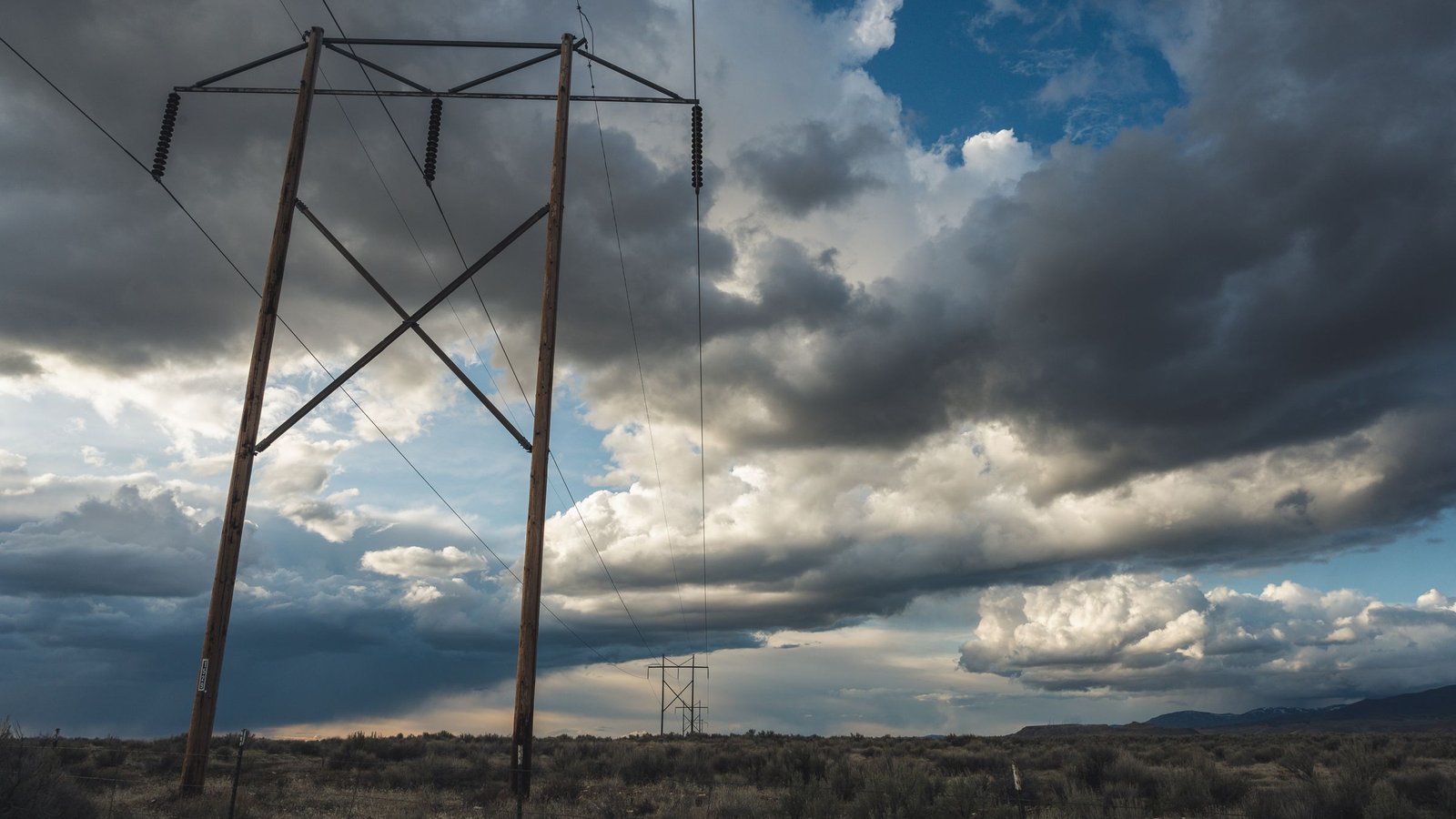
An overhead conductor is exposed to everything the local climate can do to it. Wind loading on the conductor and on the pole structure itself, ice accumulation that adds weight and surface area for wind to act on, trees and branches falling or growing into the right-of-way, and vehicle strikes on poles are all well-documented, recurring causes of overhead outages in utility reliability data generally. None of these mechanisms exist for a conductor buried in the ground. This is the central reason overhead distribution systems, averaged across a utility's full territory, typically register a higher outage frequency than underground systems serving comparable load.
What overhead lines generally do well is repair speed once a fault occurs. A downed conductor or a broken pole is visible from the ground or from the air, the fault location is rarely in doubt, and a line crew with a bucket truck can usually restore service in hours once they can safely access the site. The frequency is higher; the mean time to repair, for a routine single-point fault, is often lower.
Why Underground Lines Fail Less Often but Take Longer to Fix
A buried conductor is insulated from wind, ice and vegetation, which is the entire reliability case for undergrounding in storm-prone regions. What it is not insulated from is its own failure modes: insulation degradation over the decades-long service life of the cable, water intrusion at splices and terminations, and mechanical damage from third-party excavation — the classic "dig-in" that remains one of the more common causes of underground outages even in well-mapped, well-marked systems.
When an underground fault does occur, locating it is a specialized and genuinely slower process than spotting a downed overhead line. Finding a fault in a buried cable run typically requires time-domain reflectometry or thump testing to identify the fault location along the cable's length, followed by excavation to physically access and repair or replace the damaged section. A repair that might take a few hours on an overhead line can take considerably longer on an underground one once specialized crews, equipment and excavation permits are factored in. The trade a site accepts by being served underground is fewer outages in exchange for longer average repair time on the outages that still happen.
Underground Does Not Mean Immune — It Means a Different Risk
A common and understandable assumption is that moving service underground removes storm risk entirely. It reduces wind- and ice-related risk specifically, but it introduces or leaves in place a different storm-related exposure that is easy to overlook during site selection: underground vaults, manholes and pad-mounted equipment can flood. A coastal or low-lying site with underground utility infrastructure sited in a flood-prone location can trade a wind-related overhead outage for a storm-surge-related underground one, and the second failure mode is frequently slower and more expensive to recover from than the first, since submerged electrical equipment typically needs to be dried out, tested or replaced rather than simply reconnected.
This is the specific nuance a generic "underground is more reliable" assumption misses, and it is exactly the kind of detail a site visit and a conversation with the utility's engineering group, not a marketing description of the service, is meant to surface. The right question for a coastal or flood-zone site is not just overhead-versus-underground, but where the underground vaults sit relative to the flood elevation.
Asking the Right Question in Site Selection
A due-diligence process that wants an honest answer on feeder topology needs to ask a more specific question than "is your power underground." Several distinctions matter in practice:
- The feeder serving this specific site, not the utility's system in general. A utility can have a largely overhead distribution system with a specific underground loop serving an industrial park, or the reverse. System-wide statistics do not describe the one circuit a project actually depends on.
- Feeder-specific reliability history, not system-average figures. A utility's territory-wide outage statistics can look reasonable while the specific feeder in question has a worse-than-average history from a known local cause — a vegetation-heavy right-of-way, an aging cable section due for replacement, a known flood-prone vault. Ask for the circuit-level history, not the system average.
- Whether the feed is single-source radial or part of a loop that can be switched to a second source. A looped or networked distribution configuration that lets the utility restore service from an alternate direction after a fault is isolated matters at least as much as the overhead-versus-underground question, and is a separate design choice from either topology.
- Planned undergrounding or vegetation management work on the specific corridor. Utilities in storm-exposed regions frequently run multi-year undergrounding or tree-trimming programs targeted at their worst-performing circuits; knowing whether the site's feeder is on or off that list is forward-looking information a rate sheet will never show.
This Does Not Replace On-Site Backup Power
None of this is a reason to size on-site generation or UPS capacity differently based on feeder topology. An underground feed with a strong reliability history still experiences outages, from dig-ins, from equipment failure, from upstream events further back on the transmission system that no amount of local undergrounding addresses. On-site backup power and UPS ride-through exist to cover the outage that happens regardless of which topology serves the site, not to be sized down because the feeder looks more resilient on paper. What feeder topology does change is the expected frequency and duration of the outages that on-site backup has to ride through, which is itself useful input for sizing fuel reserves and planning maintenance windows, just not a substitute for having backup power in the first place.
A Checklist for Evaluating Feeder Topology
- Ask the utility directly which topology, overhead or underground, serves the specific feeder and substation for this site, not the utility's system-wide average.
- Request the feeder's own outage history (frequency and average restoration time), not just territory-wide reliability statistics.
- For underground service, confirm the elevation of vaults and pad-mounted equipment relative to the site's flood risk, especially in coastal or low-lying locations.
- Confirm whether the feed is radial or part of a switchable loop with a second source, independent of the overhead-versus-underground question.
- Ask whether the specific corridor is on a utility's planned undergrounding or vegetation-management program, and on what timeline.
- Size on-site backup power for the outages that will still occur under either topology; treat feeder reliability data as a planning input, not a substitute.
Frequently Asked Questions
Is underground power always more reliable than overhead power?
Underground feeders typically experience fewer outages because they are not exposed to wind, ice and vegetation, but "more reliable" depends on what is being measured. Underground faults generally take longer to locate and repair than overhead faults, and underground infrastructure sited in a flood-prone location carries its own storm-related risk. The honest comparison is frequency versus repair time versus site-specific flood exposure, not a single reliability ranking.
Why do underground faults take longer to repair than overhead faults?
An overhead fault, such as a downed conductor or broken pole, is usually visible and its location is rarely in doubt, so a crew can move directly to repair. An underground fault has to be located first, typically using time-domain reflectometry or thump testing to find the damaged section along a buried cable run, and then the site has to be excavated to physically access it. The location and excavation steps add time that an overhead repair generally does not require.
Can an underground feeder still flood during a storm?
Yes. Underground infrastructure removes exposure to wind and ice but not to water. Vaults, manholes and pad-mounted transformers sited at or below flood elevation in a coastal or low-lying area can be submerged during a storm surge or heavy flooding event, and submerged electrical equipment typically needs to be dried out, tested or replaced rather than simply reconnected once water recedes.
Should feeder topology change how much on-site backup power a data center installs?
No. On-site backup power and UPS systems exist to cover whatever outage occurs, regardless of what caused it or how the feeder is built, and should be sized to the facility's availability requirements independent of feeder topology. What feeder-specific outage history is useful for is understanding the expected frequency and typical duration of the outages that backup power will actually have to cover, which can inform fuel reserve planning and maintenance scheduling.
How can a project find out which topology serves a specific site before committing to it?
The utility's distribution planning or engineering group is the authoritative source, not a general service description. Requesting the one-line diagram or circuit description for the specific feeder and substation serving the site, along with that feeder's own outage history, during the interconnection or site-selection process is the direct way to get a site-specific answer rather than a system-wide generalization.
Power Reliability, Not Just a Power Rate
Rax Data & Energy evaluates feeder topology, substation redundancy and backup power alongside the rate itself when siting power and energy infrastructure. Tell us your site requirements and we'll walk through what actually serves it.
Contact Us Rax Energy