Understanding the Two Approaches to Mining
Cryptocurrency mining hardware falls into two broad categories: Application-Specific Integrated Circuits (ASICs) and Graphics Processing Units (GPUs). Each approach has distinct advantages and trade-offs that make it suitable for different mining strategies, budgets, and goals. The choice between them is one of the most important decisions any miner will make, and getting it right can mean the difference between a profitable operation and a money-losing one.
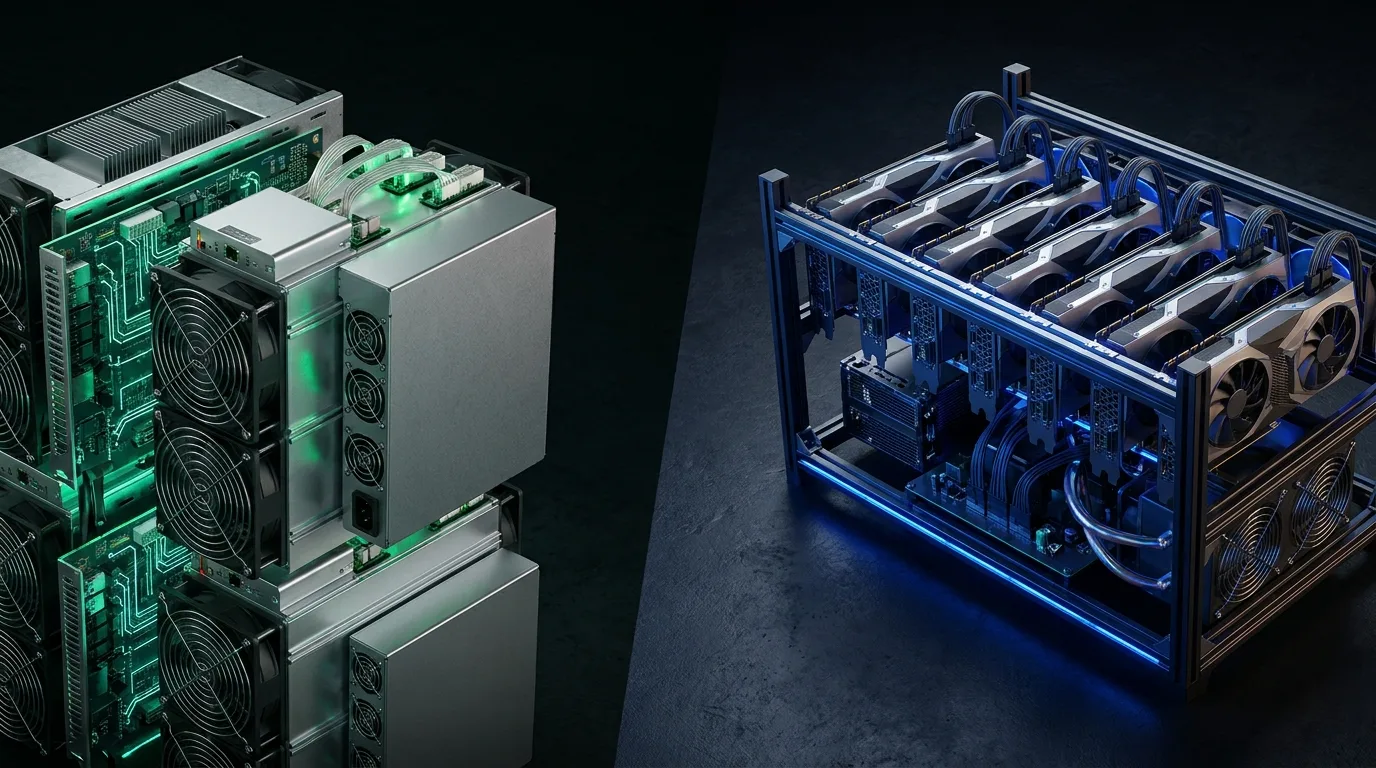
ASICs are custom-designed chips built to perform a single algorithm with maximum efficiency. They cannot do anything else. If you have a SHA-256 ASIC, it mines Bitcoin and nothing else. GPU miners use off-the-shelf graphics cards, originally designed for rendering images in video games and professional applications, repurposed for the parallel computation required by mining algorithms. This fundamental difference in design philosophy drives every other comparison between the two approaches.
Understanding the strengths and limitations of each approach is essential for anyone entering the mining industry or expanding existing operations. This guide provides the data and analysis you need to make an informed decision based on your specific circumstances.
Performance Comparison: Raw Numbers
The performance gap between ASICs and GPUs for SHA-256 mining (Bitcoin's algorithm) is staggering. A single modern ASIC delivers hash rates that would require hundreds or even thousands of GPUs to match. The comparison is not even close for Bitcoin specifically, but becomes more nuanced when we consider the broader cryptocurrency ecosystem.
| Metric | ASIC (Antminer S21 Pro) | GPU (NVIDIA RTX 4090) |
|---|---|---|
| SHA-256 Hash Rate | 234 TH/s | ~0.00015 TH/s (150 MH/s) |
| Power Consumption | 3,531 W | ~350 W |
| Efficiency (J/TH for SHA-256) | 15.0 J/TH | ~2,333,333 J/TH |
| Purchase Price (2026) | $5,000 - $8,000 | $1,500 - $2,000 |
| Resale Value (after 2 years) | 20-40% of purchase | 40-60% of purchase |
| Noise Level | 75-82 dB | 35-50 dB |
| Algorithms Supported | 1 (SHA-256 only) | Dozens (Ethash, KawPow, Autolykos, etc.) |
| Alternative Uses | None (mining only) | AI inference, rendering, gaming, video editing |
For Bitcoin mining specifically, ASICs are approximately 1.5 million times more efficient than the best GPUs. This efficiency gap means that GPU mining of Bitcoin has been economically impossible since approximately 2014. The comparison is only meaningful for algorithms where both hardware types can compete, or when evaluating the broader strategic value of each approach.
Algorithm Support and Flexibility
This is where GPUs have their most significant advantage: versatility. While an ASIC is locked to a single algorithm forever, a GPU can mine virtually any algorithm that benefits from parallel processing. This flexibility provides a form of insurance against market shifts and algorithmic changes.
ASIC Algorithm Support
- SHA-256: Bitcoin, Bitcoin Cash (Antminer S-series). This is the largest and most liquid mining market by a wide margin.
- Scrypt: Litecoin, Dogecoin (Antminer L-series). Scrypt ASICs dominate this algorithm completely.
- X11: Dash (Antminer D-series). A smaller but established ASIC market.
- Blake3/Blake2b: Various chains including Kadena. Specialized units from manufacturers like Goldshell and iBeLink.
- Eaglesong: Nervos Network (CKB). Niche ASIC market with limited hardware options.
Each ASIC model is permanently locked to its target algorithm. If that algorithm becomes unprofitable or the associated cryptocurrency loses value, the ASIC becomes effectively worthless with virtually no alternative use. This is the fundamental risk of ASIC mining: your entire investment is a bet on a single algorithm and its associated cryptocurrency remaining valuable and mineable.
GPU Algorithm Flexibility
- Ethash/Etchash: Ethereum Classic and derivatives. One of the largest GPU-minable markets.
- KawPow: Ravencoin. Designed specifically to be ASIC-resistant.
- Autolykos: Ergo. Another ASIC-resistant algorithm with growing adoption.
- RandomX: Monero (CPU-favored but GPUs can contribute in some configurations).
- ZK-proving: Various zero-knowledge protocols are beginning to use GPUs for proof generation.
- AI/ML Workloads: Perhaps the most significant alternative use. GPUs can be completely repurposed for AI inference, model training, rendering, and other compute-intensive tasks.
The ability to switch between algorithms is a powerful risk management tool. When one coin becomes unprofitable, GPU miners can immediately redirect their hardware to a more profitable algorithm, often within minutes using automated profit-switching software like NiceHash or minerstat. This flexibility has become even more valuable since Ethereum's transition to proof-of-stake in September 2022, which eliminated the single largest GPU mining market overnight and forced GPU miners to become adept at identifying profitable opportunities across many chains.
Return on Investment (ROI) Analysis
ROI calculations depend heavily on electricity cost, hardware price, and cryptocurrency market conditions. Here we compare typical scenarios for both hardware types using conservative assumptions.
ASIC Mining ROI (SHA-256 / Bitcoin)
| Scenario | Power Cost | Hardware Cost | Monthly Revenue | Monthly Profit | Payback Period |
|---|---|---|---|---|---|
| Optimal | $0.04/kWh | $6,000 | ~$600 | ~$500 | 12-14 months |
| Average | $0.06/kWh | $6,000 | ~$600 | ~$440 | 14-16 months |
| Marginal | $0.08/kWh | $6,000 | ~$600 | ~$370 | 16-20 months |
Note: Revenue figures are illustrative and vary significantly with network difficulty and BTC price. Always run current calculations with real-time data before making investment decisions. Revenue can change by 20-30% within a single difficulty epoch.
GPU Mining ROI
GPU mining profitability is highly variable depending on which algorithm and coin is being mined. The market shifts rapidly, and what is profitable today may not be profitable next week. In the current market, most GPU mining operations target the following revenue ranges per card:
- High-end GPU (RTX 4090): $1-3/day gross revenue, depending on algorithm and market conditions. With electricity at $0.10/kWh, this card costs about $0.84/day to run, leaving $0.16-2.16/day profit.
- Mid-range GPU (RTX 4070): $0.50-1.50/day gross revenue. Lower power consumption (200W) means lower electricity costs, but also lower revenue.
- Older GPUs (RTX 3080): Often at or below breakeven depending on power cost. These cards are being phased out of mining and sold into the secondary market.
GPU mining payback periods are generally longer than ASIC mining in bull markets, often 18-36 months. However, GPUs retain significantly better resale value because they serve multiple markets (gamers, content creators, AI developers), and they offer the option to be completely repurposed for non-mining workloads if mining becomes unprofitable.
Infrastructure Requirements
The infrastructure needed to operate ASICs versus GPUs differs significantly, affecting both capital expenditure and operational complexity. Understanding Understanding Three-Phase Power for Mining and Data Centers is essential for both approaches at any meaningful scale.
ASIC Facility Requirements
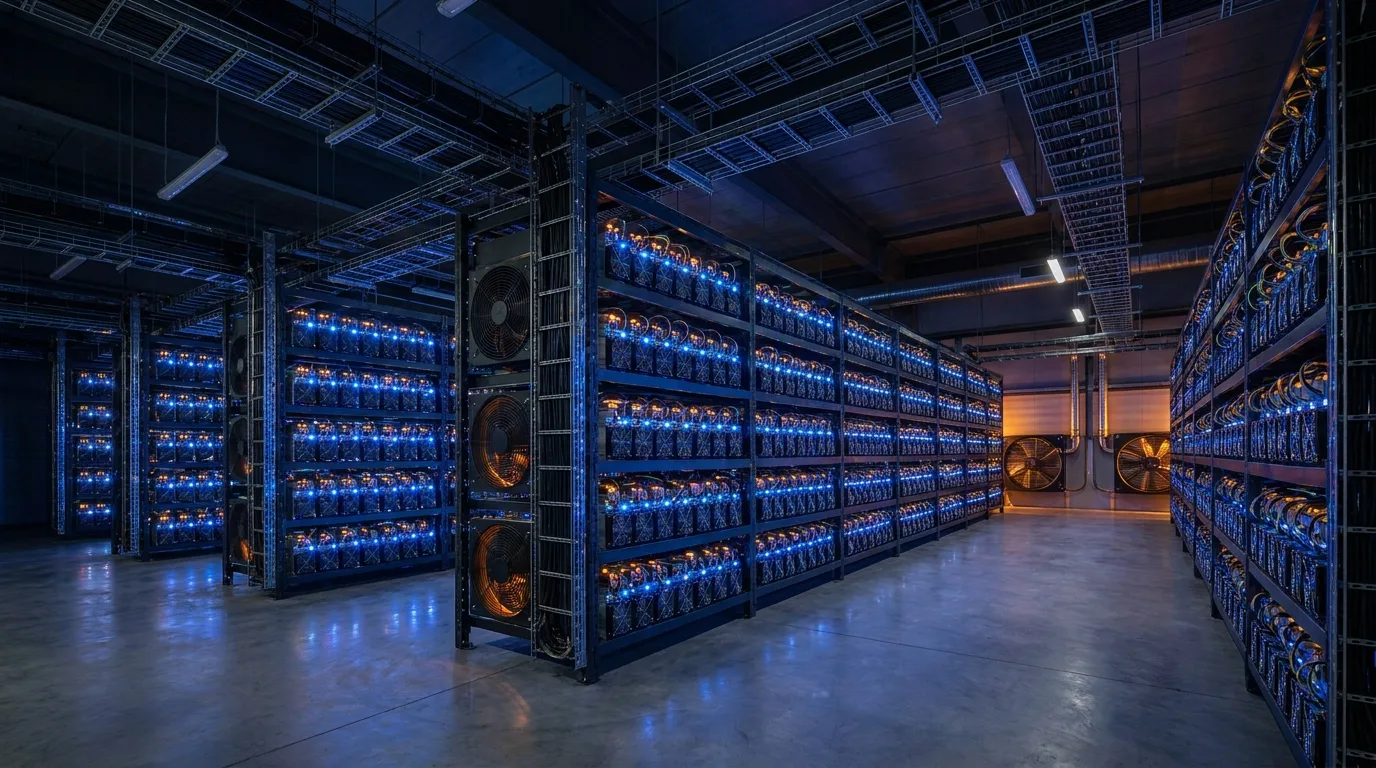
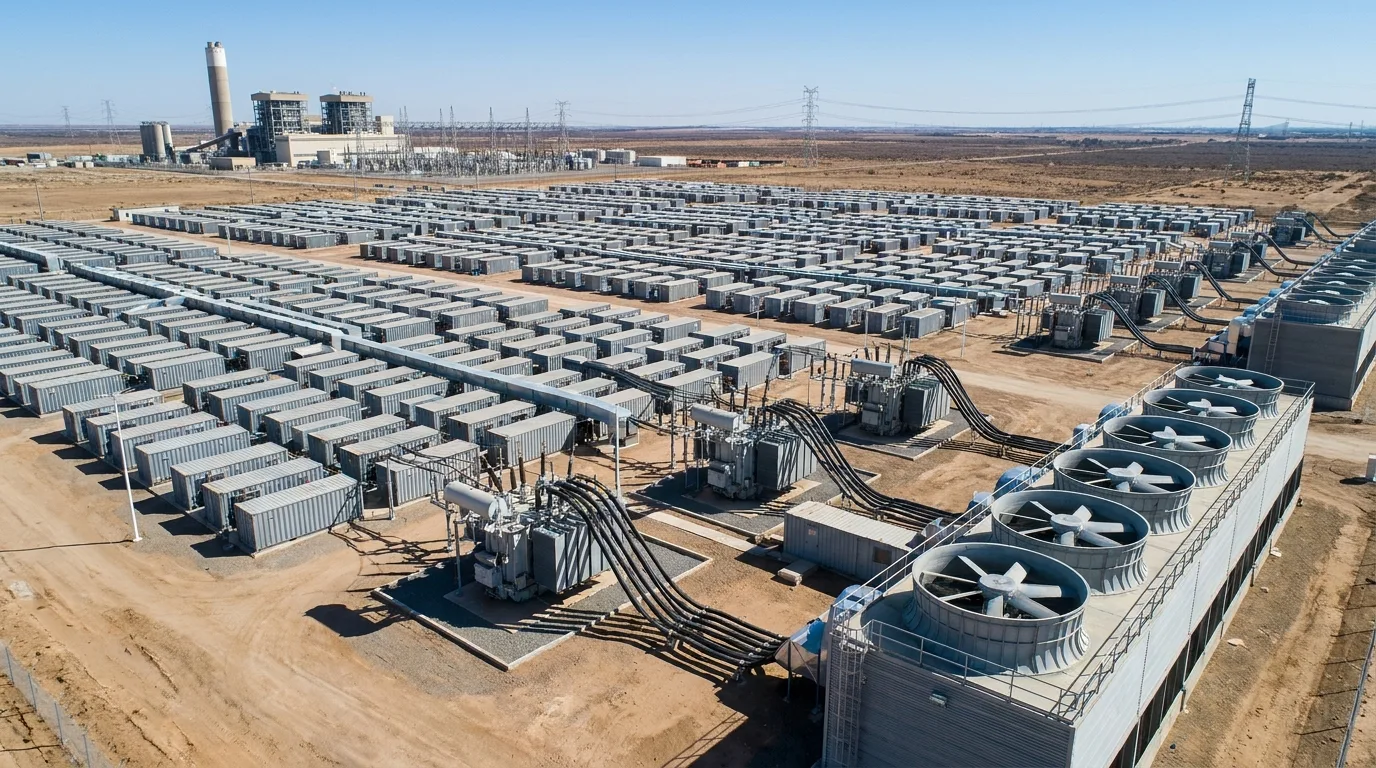
- Power Density: 3-5 kW per unit, requiring industrial-grade power distribution. A single rack of ASIC miners can draw 15-30 kW, demanding heavy-gauge wiring and commercial-grade circuit breakers.
- Cooling: Massive heat output (3,000+ watts per machine) requires industrial Data Center Cooling Technologies Compared: Air, Liquid, and Immersion. In warm climates, the cooling infrastructure can cost nearly as much as the mining hardware itself.
- Noise: 75-82 dB per unit makes residential deployment completely impractical. Even in commercial settings, noise mitigation (sound barriers, remote locations) is often necessary. A room full of ASIC miners sounds like standing next to a jet engine.
- Space: Rack-mounted or shelf-mounted, approximately 1 unit per 2-3 sq ft. ASIC facilities have relatively high space efficiency compared to GPU rigs.
- Environment: Industrial or purpose-built facility required. ASIC miners cannot realistically be operated in office spaces, apartments, or most residential garages.
GPU Rig Requirements
- Power Density: 1-2 kW per rig (4-8 GPUs), more manageable per unit. A single 20A household circuit can support 1-2 GPU rigs.
- Cooling: Lower per-unit heat, but GPU farms can create significant hot spots, especially in warmer months. Adequate airflow and ventilation are essential.
- Noise: 35-50 dB allows for small-scale residential operation, though a room full of GPU rigs is still quite noisy. Residential GPU mining is feasible but not pleasant to live next to.
- Space: Open-frame rigs require more space per unit of hash rate. GPU rigs are physically larger and less space-efficient than ASIC miners.
- Environment: Can operate in residential, commercial, or industrial settings with proper ventilation. This flexibility is a significant advantage for small-scale operations.
Facility Design Insight: At scale, ASIC facilities are simpler to design because all units are identical with uniform power and cooling requirements. GPU facilities require more diverse power and cooling configurations as rig builds can vary significantly. Professional hosting with RAX eliminates these complexity concerns for operators of either hardware type, providing optimized environments for maximum uptime and performance.
Lifespan and Depreciation
Hardware lifespan is a critical factor in mining economics that is often overlooked by newcomers. Both ASICs and GPUs depreciate, but the depreciation curves differ significantly in ways that affect long-term financial planning.
ASIC Lifespan
- Competitive lifespan: 2-4 years before next-generation hardware makes them significantly less profitable. Each new ASIC generation typically offers 30-50% better efficiency, which directly translates to lower profitability for older models.
- Physical lifespan: 3-5 years with proper maintenance and cooling. Hash board failures become more common after year 3, especially in air-cooled environments with dust and humidity exposure.
- Depreciation curve: Steep and accelerating, with new model announcements causing immediate drops in the value of current-generation hardware. ASIC prices can drop 50% or more in a single year during bear markets.
- Residual value: Limited to mining use on the same algorithm. A secondary market exists for older ASICs, but values are low, typically 10-30% of original purchase price after 2-3 years. Some units end up being sold for scrap metal value.
GPU Lifespan
- Competitive lifespan: 3-5 years for mining, potentially longer with algorithm switching to less demanding algorithms as hardware ages.
- Physical lifespan: 5-7 years with adequate cooling and maintenance. GPUs are generally more durable than ASICs because they operate at lower temperatures and have more robust cooling solutions.
- Depreciation curve: Gentler than ASICs because demand extends beyond mining into gaming, content creation, and AI. New GPU releases cause existing models to lose value, but the decline is more gradual.
- Residual value: Significant resale market among gamers, AI practitioners, and content creators. Used mining GPUs typically retain 30-50% of their original value even after 3-4 years of operation, providing meaningful asset recovery.
When to Choose ASICs
ASIC mining is the right choice when:
- You are committed to mining a specific SHA-256 or Scrypt cryptocurrency, primarily Bitcoin or Litecoin, and believe in their long-term value
- You have access to competitive electricity rates under $0.06/kWh, because ASICs are power-hungry and electricity cost is the dominant variable
- You have access to a professional hosting facility with adequate power and cooling, or are willing to invest in building one
- You are looking for the highest possible hash rate per dollar invested in a single algorithm
- You are comfortable with the hardware becoming obsolete within 3-4 years and have factored depreciation into your financial model
- You plan to operate at scale (10+ machines) where the management simplicity of identical units becomes a significant advantage
When to Choose GPUs
GPU mining makes more sense when:
- You want flexibility to mine multiple algorithms and switch based on profitability, hedging against the decline of any single cryptocurrency
- You are interested in emerging proof-of-work cryptocurrencies that may not yet have ASIC miners available
- You want hardware with meaningful resale value outside of mining, providing a financial safety net
- You are starting small and want to scale gradually, adding GPUs as you learn and as profitability justifies expansion
- You are interested in dual-purpose hardware that can also serve What Is AI Hosting? Complete Guide to AI Infrastructure Services workloads, providing revenue diversification
- You operate in a location where ASIC noise levels are not permitted, such as a residential area or shared commercial space
- You have existing technical expertise in building and managing computer systems, which translates directly to GPU rig management
The Convergence Trend: Mining Meets AI
One of the most significant trends in 2026 is the convergence of mining and AI infrastructure. GPU miners who invested in high-end NVIDIA hardware are finding that their rigs can be repurposed or time-shared for AI inference workloads during periods when mining is less profitable. This optionality is unique to GPU mining and represents a powerful risk management strategy.
The convergence is also happening at the facility level. Data centers originally built for mining are being retrofitted to accommodate GPU Colocation: Everything You Need to Know in 2026 workloads. The power infrastructure, cooling systems, and physical security required for mining overlap substantially with what AI and HPC customers need. The main differences are in networking requirements (AI needs much higher bandwidth between nodes) and power density (modern GPU servers can be even more power-dense than ASIC miners).
RAX Data & Energy designs facilities with this convergence in mind, building infrastructure that can serve both mining and AI workloads efficiently. This dual-purpose approach provides operators with revenue diversification and asset flexibility that single-purpose facilities cannot match, making the investment in infrastructure more resilient across market cycles.
Making Your Decision
The choice between ASIC and GPU mining ultimately depends on your goals, resources, risk tolerance, and time horizon. ASICs offer superior performance for their target algorithm but carry higher obsolescence risk and zero flexibility. GPUs offer flexibility and broader utility but cannot compete with ASICs on algorithm-specific performance and have longer payback periods in strong mining markets.
For most operators focused exclusively on Bitcoin mining, ASICs are the only viable option. The efficiency gap is simply too large for GPUs to compete. For those interested in the broader cryptocurrency ecosystem, seeking hardware flexibility, or wanting a hedge through AI compute capabilities, GPUs remain compelling. And increasingly, the smartest operators are building infrastructure that can accommodate both, along with AI workloads, creating resilient operations that can adapt to whatever market conditions emerge.
Regardless of which path you choose, the fundamentals remain the same: low electricity costs, efficient hardware, professional infrastructure, and continuous optimization are the keys to long-term mining profitability.