Data Center Energy Storage: Battery Systems and Grid Independence
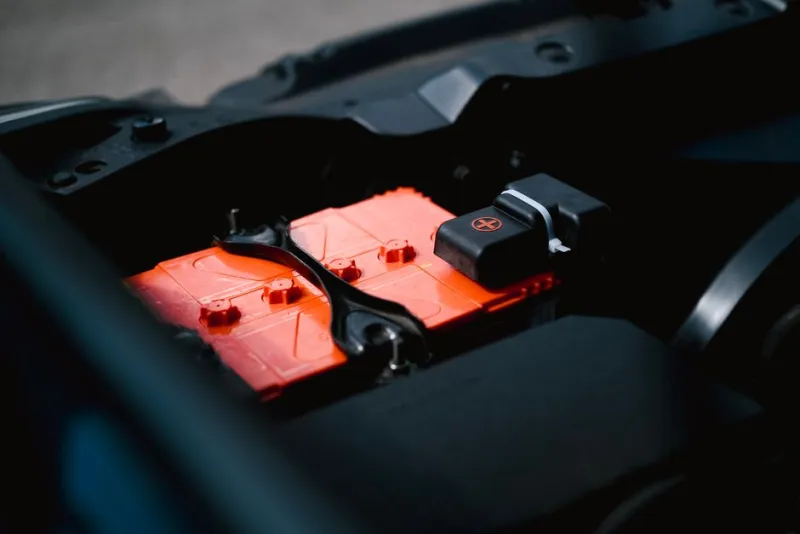
The traditional data center power architecture -- utility feed, transformer, UPS, generator -- has not changed fundamentally in decades. But the economics of battery energy storage have shifted so dramatically that this architecture is now obsolete for new builds and increasingly uncompetitive for existing facilities.
Modern battery energy storage systems (BESS) are replacing lead-acid UPS batteries, eliminating the need for oversized generator capacity, and generating revenue through grid services. For operators building or expanding data center facilities, energy storage is no longer optional infrastructure -- it is a competitive advantage.
This article examines how BESS technology applies to data centers, from the chemistry to the economics, and why forward-thinking operators are integrating storage into every new build.
The Economics That Changed Everything
Lithium iron phosphate (LFP) battery costs have dropped 90% since 2015. A containerized 1 MWh BESS unit that cost $1.2 million in 2018 now costs $180,000-220,000 in 2026. This single price change has made battery storage economically viable for three use cases that were previously impractical:
- UPS replacement: A 1 MW LFP system provides 15-30 minutes of ride-through at a lower total cost of ownership than a comparable lead-acid UPS, with 3x the lifespan and zero maintenance.
- Peak shaving: Charging batteries during off-peak hours and discharging during demand peaks can reduce electricity bills by 15-30% in markets with time-of-use or demand-charge pricing.
- Demand response revenue: Grid operators pay data centers to reduce load during supply constraints. BESS enables participation without affecting compute operations.
The combination of these three use cases means a well-designed BESS installation can pay for itself in 3-5 years while providing better reliability than the infrastructure it replaces.
Battery Chemistry for Data Centers
Not all battery chemistries are equal for data center applications. The three most relevant options in 2026:
Lithium Iron Phosphate (LFP)
LFP is the dominant chemistry for data center BESS. Key advantages include zero thermal runaway risk (no fire hazard), 6,000+ cycle lifespan (15-20 years), stable voltage output across the discharge curve, and wide operating temperature range (-20C to 55C). The tradeoff is lower energy density than NMC (nickel manganese cobalt), which means larger physical footprint. For data centers with available outdoor space, this is irrelevant.
Sodium-Ion
Sodium-ion batteries emerged commercially in 2025 with costs 20-30% lower than LFP and no lithium supply chain dependence. Energy density is lower and cycle life is shorter (3,000-4,000 cycles), but for applications where cost per kWh stored is the primary concern, sodium-ion is increasingly competitive.
NMC (Legacy)
Nickel manganese cobalt was the previous standard for high-density storage. Higher energy density means smaller footprint, but thermal runaway risk requires active fire suppression systems, adding cost and complexity. Most new data center BESS installations have moved to LFP.
Key insight: Battery selection for data centers is driven by safety and lifespan, not energy density. LFP's zero thermal runaway risk eliminates the need for specialized fire suppression, and its 15-20 year lifespan matches typical data center lease terms.
Architecture: How BESS Integrates with Data Center Power
A BESS installation connects at the facility's medium-voltage bus, typically between the utility transformer and the main distribution panel. The integration architecture depends on the primary use case:
UPS Replacement Mode
The BESS sits in parallel with the utility feed through a bidirectional inverter. During normal operation, the batteries maintain full charge. On utility failure, the inverter switches to battery power within 5-10 milliseconds (faster than mechanical transfer switches). Generators start during the battery ride-through window. This architecture eliminates traditional rotary or static UPS systems entirely.
Peak Shaving Mode
The BESS charges during low-cost periods (typically overnight) and discharges during peak demand windows. A building management system (BMS) monitors real-time electricity pricing and grid demand, automatically arbitraging between stored and grid power. Peak demand charges -- which can represent 30-50% of a data center's electricity bill -- are reduced by capping the facility's peak draw from the grid.
Hybrid Mode (Recommended)
Modern BESS controllers support simultaneous operation across multiple use cases. The system maintains a minimum state of charge (typically 20-30%) reserved for UPS function while using the remaining capacity for peak shaving and demand response. This maximizes the return on the storage investment while maintaining full reliability.
Sizing a BESS for Data Center Operations
Proper sizing requires balancing three variables: power capacity (MW), energy capacity (MWh), and the ratio between them (duration).
| Use Case | Power (MW) | Energy (MWh) | Duration |
|---|---|---|---|
| UPS replacement | Match IT load | 0.25-0.5x power | 15-30 min |
| Peak shaving | 30-50% of peak | 2-4x power | 2-4 hours |
| Demand response | Per program rules | 1-2x power | 1-2 hours |
| Hybrid (all three) | Match IT load | 2-4x power | 2-4 hours |
For a 5 MW data center implementing hybrid mode, a typical BESS specification would be 5 MW / 15 MWh (3-hour duration). At current LFP pricing, the installed cost for this system is approximately $2.7-3.3 million.
Revenue Generation Through Grid Services
BESS turns data center power infrastructure from a pure cost center into a revenue generator. Three primary revenue streams exist:
Demand Response Programs
Grid operators pay facilities to reduce load during supply emergencies. BESS allows data centers to participate by switching to battery power during curtailment events, with zero impact on compute operations. Revenue varies by market: $50,000-200,000 per MW per year in active markets like PJM, ERCOT, and CAISO.
Frequency Regulation
Batteries can inject or absorb small amounts of power in real-time to help stabilize grid frequency. This requires fast-responding inverters (sub-second) and a participation agreement with the grid operator. Revenue: $30,000-80,000 per MW per year.
Energy Arbitrage
In markets with significant time-of-use price spreads, buying electricity at $0.03/kWh overnight and using stored energy during $0.12/kWh peak hours generates meaningful savings. This works best in markets with renewable energy curtailment, where off-peak prices sometimes go negative.
Renewable Integration and Carbon Goals
For data center operators with renewable energy commitments, BESS is essential infrastructure. Solar and wind generation is intermittent by nature. Storage bridges the gap between when renewable energy is available and when the data center needs it.
A common configuration pairs on-site or co-located solar with BESS to achieve 60-80% renewable utilization (vs. 25-35% for solar alone without storage). This combination is increasingly required by enterprise customers choosing colocation providers and by ESG reporting frameworks.
Operational Considerations
- Thermal management: LFP batteries operate optimally between 15-35C. Containerized BESS units include HVAC systems, but outdoor placement in hot climates (Middle East, Southeast Asia) may require supplemental cooling. Plan for 3-5% parasitic load for thermal management.
- Monitoring and maintenance: Modern BESS controllers provide cell-level monitoring for voltage, temperature, and state of health. Unlike lead-acid UPS batteries that require annual load testing, LFP systems operate continuously and report degradation automatically. Maintenance is limited to HVAC filter changes and annual inverter inspections.
- End-of-life planning: LFP batteries retain 70-80% capacity at end of their rated cycle life. Second-life applications (less demanding storage, backup power for non-critical loads) can extend useful life by 5-10 years. Multiple recycling programs now accept LFP batteries, recovering iron, phosphate, and lithium for reuse.
- Permitting and codes: NFPA 855 and IFC standards govern battery storage installations. LFP's non-flammable chemistry simplifies permitting compared to NMC. Most jurisdictions allow outdoor containerized LFP installations with standard setback distances and no special fire suppression beyond what the container includes.
Case Study: Reducing Power Costs at a 10 MW Facility
A 10 MW colocation facility in a deregulated market installed a 10 MW / 30 MWh LFP BESS (containerized, outdoor deployment). Results after 12 months of operation:
| Metric | Before BESS | After BESS |
|---|---|---|
| Peak demand charges | $42,000/month | $18,000/month |
| UPS maintenance cost | $85,000/year | $12,000/year |
| Demand response revenue | $0 | $180,000/year |
| Energy arbitrage savings | $0 | $95,000/year |
| Total annual benefit | -- | $651,000 |
| BESS installed cost | $5.2 million | |
| Simple payback | 8 years | |
The 8-year payback does not account for the avoided cost of replacing lead-acid UPS batteries twice during the BESS lifespan ($320,000+ saved) or the increasing value of demand response as grid stress grows.
Frequently Asked Questions
What is a battery energy storage system (BESS) for data centers?
A BESS is a large-scale battery installation that stores electricity for on-demand use. In data centers, BESS units serve multiple functions: replacing or supplementing traditional UPS systems, enabling peak shaving to reduce demand charges, participating in grid demand response programs for revenue, and providing backup power during outages.
How long can battery storage power a data center?
Runtime depends on the BESS capacity and the facility's power draw. A typical containerized BESS unit (1-4 MWh) can power a 1 MW data center load for 1-4 hours. Multi-unit installations scale linearly. Most data centers size their BESS for 15-30 minutes of ride-through to bridge to generator backup.
Is battery storage more reliable than traditional UPS?
Modern lithium iron phosphate (LFP) batteries offer 15-20 year lifespans and 6,000+ charge cycles compared to 5-7 years and 500 cycles for lead-acid UPS batteries. LFP systems also have lower failure rates, no thermal runaway risk, and require less maintenance. The reliability advantage grows at scale.
Building Energy-Resilient Data Infrastructure?
Rax Data & Energy designs and operates data center facilities with integrated energy storage. Talk to our infrastructure team about BESS integration for your deployment.
Contact Our Team