Nuclear-Powered Data Centers 2026: How Small Modular Reactors Are Reshaping Hyperscale AI Infrastructure
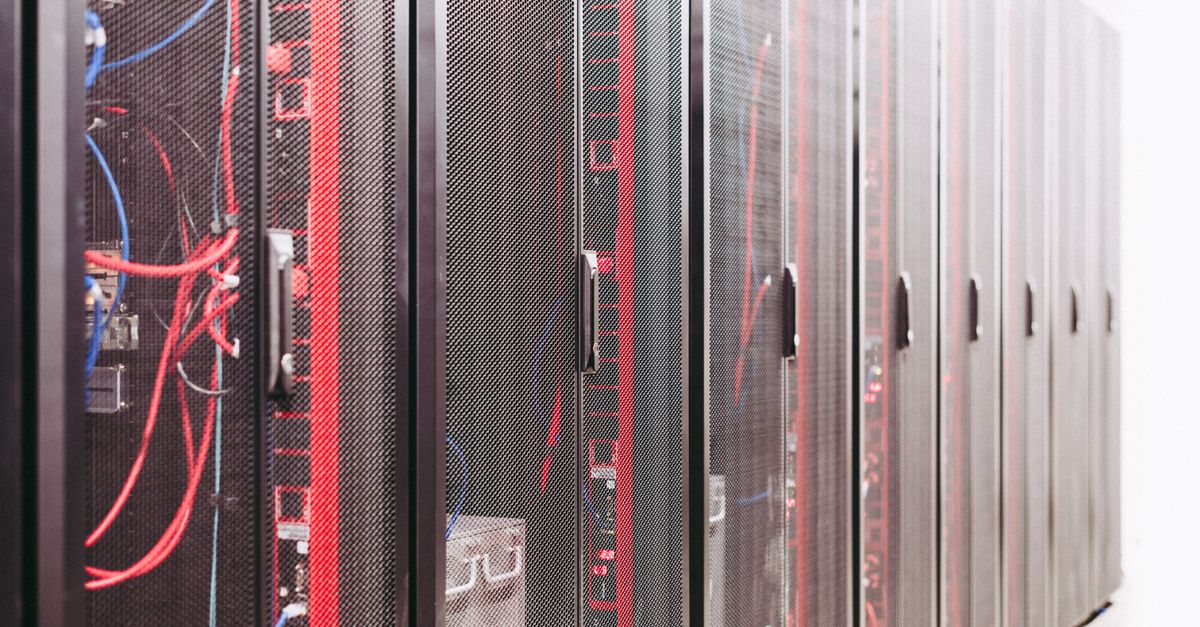
The Power Wall: Why AI Is Outrunning the Grid
The artificial intelligence industry has a power problem. Not a theoretical, five-years-from-now problem, but an immediate one. A single hyperscale AI training campus now draws 1 to 2 gigawatts of continuous power. To put that in perspective, that is roughly the output of a full-sized nuclear power plant dedicated to a single building complex.
Grid operators in Virginia, Georgia, Texas, and Arizona have already warned that the pace of data center construction is outstripping their ability to add generation capacity. Dominion Energy in Northern Virginia, which hosts the densest concentration of data centers on earth, has pushed interconnection timelines to 2030 and beyond for new large-load customers. The same story is repeating in Dublin, Frankfurt, Singapore, and every other data center hub.
The numbers are stark. Global data center power demand was approximately 50 GW in 2024. Industry projections estimate this will exceed 120 GW by 2028, driven almost entirely by AI workloads. Renewable energy sources, while growing, cannot fill this gap alone. Solar and wind are intermittent by nature and require massive battery storage systems to deliver the firm, uninterrupted baseload that AI infrastructure demands.
This is not a grid modernization problem. It is a physics problem. And the physics points to nuclear.
The Nuclear Pivot: 10 GW and Counting
In 2025 and 2026, the world's largest technology companies collectively committed more than 10 GW of nuclear capacity specifically for data center operations. These are not feasibility studies or white papers. They are signed agreements with deposit payments, site selections, and construction timelines.
Microsoft: Restarting Three Mile Island and Beyond
Microsoft signed an 835 MW power purchase agreement with Constellation Energy to restart the Three Mile Island Unit 1 reactor in Pennsylvania. The plant, which had been shut down for economic reasons in 2019, is being refurbished to supply carbon-free baseload power directly to Microsoft's data center operations. This deal alone represents enough electricity to power approximately 800,000 homes, channelled instead into AI compute.
Beyond TMI, Microsoft has invested in multiple SMR developers and signed additional nuclear procurement agreements, signalling that nuclear is not a one-off experiment but a core pillar of its energy strategy.
Meta: 4 GW Through TerraPower and Oklo
Meta has been the most aggressive nuclear buyer among the hyperscalers. The company committed 2.8 GW through TerraPower, Bill Gates's advanced reactor company that builds sodium-cooled fast reactors, and an additional 1.2 GW through Oklo, which develops compact fast reactors designed for distributed deployment. Together, these 4 GW of commitments represent enough power to run Meta's entire projected AI infrastructure through the end of the decade.
Google: Molten Salt Reactors with Kairos Power
Google signed a 500 MW agreement with Kairos Power for molten salt reactors. Kairos's design uses fluoride salt as both coolant and heat transfer medium, operating at atmospheric pressure, which eliminates the need for the massive pressure containment vessels used in conventional light-water reactors. The first demonstration reactor is under construction, with commercial deployment planned to scale to Google's data center sites.
Amazon: Multi-Project Nuclear Portfolio
Amazon Web Services has invested in multiple nuclear projects through its Climate Pledge Fund, including stakes in SMR developers and existing nuclear plant procurements. AWS secured power purchase agreements from existing nuclear plants near its data center campuses and invested in next-generation reactor technology for future deployment.
| Company | Nuclear Capacity Committed | Primary Partners | Technology |
|---|---|---|---|
| Microsoft | 835 MW (TMI) + SMR pipeline | Constellation, SMR developers | Light-water (restart) + SMR |
| Meta | 4,000 MW | TerraPower, Oklo | Sodium-cooled fast, compact fast |
| 500 MW | Kairos Power | Molten salt | |
| Amazon | Multiple GW (undisclosed total) | Various | Mixed portfolio |
Small Modular Reactors: The Technology Behind the Pivot
Small modular reactors are nuclear fission reactors with an electrical output of 30 to 300 MWe per module. Unlike conventional reactors that are constructed on-site over 10 to 15 years at costs exceeding $10 billion, SMRs are designed for factory fabrication and modular deployment.
Factory Fabrication
SMR components are manufactured in factories under controlled conditions, then shipped to the deployment site for assembly. This approach borrows from the manufacturing efficiency of the aerospace and shipbuilding industries. Factory production enables quality control, standardised components, and learning-curve cost reductions as production scales.
Radiant Industries is constructing a reactor factory in Oak Ridge, Tennessee, with construction starting in 2026. The facility targets production of 50 reactors per year by 2028, representing a fundamental shift from bespoke nuclear construction to serial manufacturing.
Modular Scaling
The defining advantage for data center operators is modular scaling. Rather than building a 1 GW plant upfront and waiting 10 years for it to produce power, an operator can deploy a single 50 to 100 MW module alongside initial compute infrastructure, then add modules as demand grows. This matches the phased deployment model that data center operators already use for IT equipment, cooling, and electrical distribution.
Land Efficiency
SMRs require less than 10% of the land area of a conventional nuclear plant for equivalent output. A 300 MW SMR facility can fit within the boundary of a typical data center campus, enabling co-location of generation and load. This eliminates transmission losses, reduces grid dependency, and simplifies the power delivery architecture.
Three SMR Designs in Commercial Operation
As of mid-2026, three SMR designs have achieved commercial operation status globally, validating that the technology has moved beyond the demonstration phase. These operating units provide the performance data and regulatory precedent that is enabling the hyperscaler procurement wave. Dozens more designs are in advanced regulatory review in the US, Canada, UK, and UAE.
Why Nuclear Solves What Renewables Cannot
This is not an anti-renewable argument. Solar and wind are excellent technologies that are displacing fossil fuels across the electricity sector. But for data center baseload, they have a fundamental limitation: intermittency.
An AI training run on 10,000 GPUs cannot tolerate power interruptions. A checkpoint failure that loses hours of training progress costs hundreds of thousands of dollars. An inference workload serving millions of users cannot go offline when clouds pass overhead or the wind drops.
| Attribute | Nuclear | Solar + Storage | Wind + Storage | Natural Gas |
|---|---|---|---|---|
| Capacity factor | 90%+ | 25-30% | 30-45% | 85-90% |
| 24/7 firm power | Yes | With 4+ hr storage | With 8+ hr storage | Yes |
| Carbon-free | Yes | Yes | Yes | No |
| Land per GW | ~1 sq mi | ~35-50 sq mi | ~100+ sq mi | ~1 sq mi |
| Price volatility | Low (fuel ~5% of cost) | None (no fuel) | None (no fuel) | High (gas market) |
| Grid independence | Full (on-site) | Partial | Partial | Full (on-site) |
Nuclear's 90%+ capacity factor means a 300 MW reactor delivers approximately 270 MW continuously, year-round. Achieving the same firm output from solar would require roughly 1 GW of panels plus multi-day battery storage, at a land footprint 30 to 50 times larger. For a hyperscale campus drawing 1 to 2 GW, the arithmetic makes nuclear the only practical on-site carbon-free option at scale.
What This Means for the Hosting and Colocation Industry
The hyperscaler nuclear pivot has second-order effects across the entire data center ecosystem. If you operate, build, or lease data center capacity, these shifts will affect your business within the next three to five years.
Power Becomes the Differentiator
Data center site selection has always weighted power availability heavily. With grid constraints tightening globally, facilities with dedicated or behind-the-meter generation will command significant premiums. A colocation facility co-located with an SMR has a competitive advantage that facilities dependent on congested grid connections cannot match.
Pricing Stability for Tenants
Nuclear fuel costs represent approximately 5% of the total cost of nuclear electricity, and uranium prices are far less volatile than natural gas. This means nuclear-powered data centers can offer long-term pricing stability that is difficult for gas-dependent facilities to match. For colocation tenants committing to multi-year contracts, predictable energy pricing reduces one of the largest operational cost uncertainties.
Carbon Compliance Becomes Effortless
As carbon reporting requirements tighten globally, including the EU's Corporate Sustainability Reporting Directive and potential SEC climate disclosure rules, tenants in nuclear-powered data centers inherit a clean energy profile without purchasing separate renewable energy certificates. This simplifies ESG compliance and eliminates the additionality questions that surround REC-based claims.
New Site Selection Criteria
Traditional data center site selection optimised for proximity to fibre routes, population centres, and existing grid substations. The nuclear-powered model opens up sites that were previously dismissed due to limited grid capacity. A campus with its own SMR can be located near cooling water sources, low seismic risk zones, and favourable regulatory jurisdictions, regardless of the local grid's ability to supply gigawatt-scale power.
The UAE Nuclear Context
The UAE is already the most advanced nuclear power adopter in the Arab world. The Barakah Nuclear Energy Plant, operated by Emirates Nuclear Energy Corporation (ENEC), has four APR1400 units with a combined capacity of 5.6 GW, providing approximately 25% of the UAE's electricity. This operational nuclear infrastructure demonstrates the regulatory maturity, workforce capability, and institutional knowledge required to support nuclear-powered data centers in the region.
For data center operators in the UAE and broader Gulf region, the combination of existing nuclear generation, world-class data center infrastructure, and sovereign AI mandates positions the market for nuclear-powered compute facilities. The UAE's commitment to sovereign AI deployment aligns directly with the need for domestically generated, firm baseload power.
Risks and Timelines
Nuclear is not without challenges. The industry must contend with:
- Regulatory timelines: Even with streamlined NRC processes for SMRs, first-of-a-kind reactor licensing takes 3 to 5 years. Data center operators accustomed to 12 to 18 month build cycles must plan further ahead.
- Construction cost risk: While SMR factory production promises lower costs than bespoke construction, the first generation of factories must prove this thesis. Cost overruns on early units remain a risk until serial production is established.
- Supply chain scaling: The nuclear supply chain has atrophied over decades of limited construction. Scaling from a handful of projects per year to dozens requires workforce development, component manufacturing, and quality assurance infrastructure that is still being rebuilt.
- Public perception: Nuclear energy faces public opposition in many jurisdictions, though sentiment has shifted measurably in favour of nuclear since the AI power crisis became front-page news.
The most realistic timeline for the first hyperscaler-commissioned SMR to deliver power to a data center is 2028 to 2030. In the interim, restarted conventional reactors like Three Mile Island and power purchase agreements from existing nuclear plants provide bridge capacity.
Implications for Infrastructure Operators
If you are building, operating, or investing in data center infrastructure, the nuclear pivot has immediate strategic implications:
- Evaluate nuclear-adjacent sites: Properties near proposed SMR deployments or existing nuclear plants will appreciate in value as the behind-the-meter and near-generation advantages become clear.
- Build for high density: Nuclear-powered campuses will support power densities of 50+ kW per rack and beyond. Facilities designed for high-density deployments will capture the AI workloads that nuclear power enables.
- Plan for grid independence: The trend toward on-site generation, whether nuclear, gas, or hybrid, means data center electrical architecture should support islanded operation and behind-the-meter generation integration.
- Monitor regulatory developments: NRC licensing decisions, state siting approvals, and international SMR regulatory harmonisation will determine which markets get nuclear-powered data centers first.
Frequently Asked Questions
Why are tech companies investing in nuclear power for data centers?
AI training and inference workloads require continuous, high-density power that cannot be interrupted. A single hyperscale AI campus draws 1 to 2 GW continuously. Renewable sources like solar and wind are intermittent and cannot deliver firm 24/7 baseload at this scale without prohibitively expensive storage. Nuclear provides 90%+ capacity factors, carbon-free generation, and the energy density required to co-locate gigawatt-scale power directly at the data center campus.
What is a small modular reactor (SMR) and how does it power a data center?
A small modular reactor produces 30 to 300 MWe per module using factory-fabricated components that ship to the site for assembly. Unlike conventional nuclear plants that take 10+ years to build, SMRs can be deployed in 3 to 5 years with modular scaling. A data center operator can start with one or two modules and add more as demand grows, matching power supply to compute capacity without overbuilding.
Which hyperscalers have signed nuclear power agreements for data centers?
Microsoft signed an 835 MW agreement with Constellation Energy to restart Three Mile Island Unit 1. Meta committed 2.8 GW through TerraPower and 1.2 GW through Oklo. Google signed a 500 MW deal with Kairos Power for molten salt reactors. Amazon has invested in multiple nuclear projects through its Climate Pledge Fund. Collectively, these commitments exceed 10 GW of nuclear capacity specifically earmarked for data center operations.
How do nuclear-powered data centers affect hosting and colocation pricing?
Nuclear-powered data centers benefit from stable, long-term power pricing because nuclear fuel costs are predictable over decades, unlike natural gas or wholesale electricity markets. This stability translates to more predictable colocation rates for tenants. Over a 20 to 30 year facility lifecycle, nuclear-powered sites are expected to offer among the lowest levelized cost of energy for data center operations.
Power-Ready Data Center Infrastructure
Rax Data & Energy builds and operates high-density data center infrastructure designed for the next generation of compute workloads. From multi-megawatt deployments to GPU colocation, we deliver the power, cooling, and connectivity that AI demands.
Get in Touch