Intelligent PDU Monitoring and Power Metering for AI Infrastructure
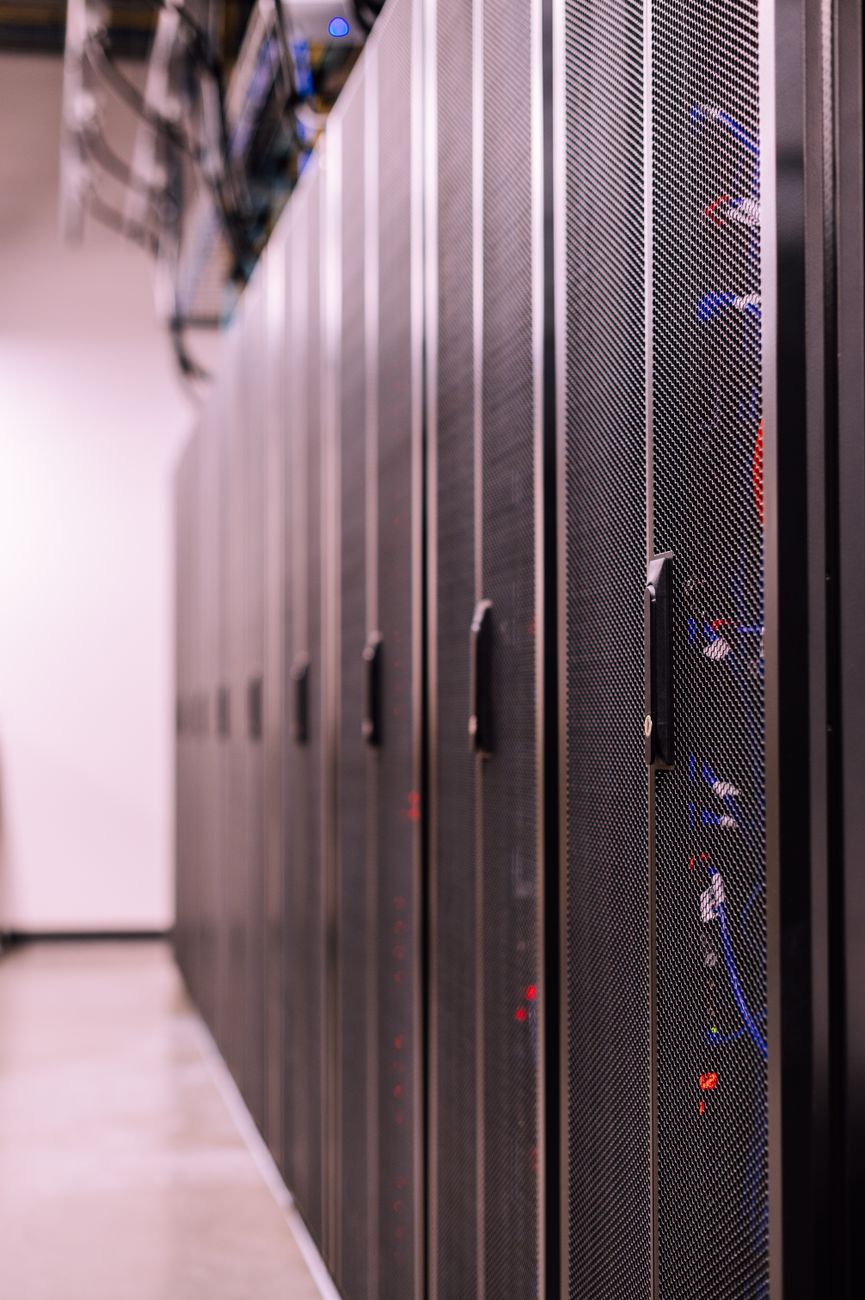
As AI workloads push data center power densities from traditional 5-8 kW per rack to 30-60 kW and beyond for GPU colocation deployments, the ability to monitor and meter power consumption at granular levels becomes mission-critical. Basic power distribution units (PDUs) that simply route electricity to equipment are no longer sufficient—modern AI infrastructure demands intelligent PDUs with real-time monitoring, outlet-level metering, environmental sensing, and API-driven analytics.
Intelligent PDU monitoring enables precise capacity planning, accurate tenant billing in colocation environments, proactive fault detection, and energy optimization strategies that directly impact operational efficiency and profitability. This guide examines the capabilities of modern intelligent PDUs, implementation strategies for high-density AI infrastructure, integration with data center infrastructure management (DCIM) systems, and best practices for data center facilities deploying next-generation compute workloads.
PDU Intelligence Tiers: From Basic to Advanced
Power distribution units have evolved from passive electrical distribution devices to sophisticated networked monitoring systems. Understanding the capability tiers helps operators select appropriate technology for their requirements and budget.
Basic PDUs
Basic PDUs provide simple power distribution with no monitoring capability. They feature input power connection (typically IEC 60309 or hardwired), circuit breakers for overcurrent protection, and multiple outlet receptacles (C13, C19, or NEMA). Basic PDUs are appropriate only for non-critical equipment or budget-constrained legacy deployments where power monitoring is handled at the rack or room level.
Metered PDUs
Metered PDUs add input-level power measurement, displaying total current draw, voltage, and calculated power (kW) on an LCD screen or via basic network interface. This provides aggregate rack consumption data useful for capacity planning and validating that total load does not exceed circuit ratings. However, metered PDUs lack outlet-level visibility—operators cannot determine which specific equipment is consuming power or detect phantom loads from unused outlets.
Monitored PDUs (Intelligent PDUs)
Monitored PDUs, commonly called intelligent PDUs, represent the standard for modern data centers. They provide:
- Input-level monitoring - Voltage, current, power factor, kW, kWh (energy consumption over time) for each input circuit (dual-input PDUs monitor A and B feeds independently)
- Outlet-level monitoring - Per-outlet current and power measurements enabling device-level visibility
- Environmental sensing - Integrated temperature and humidity sensors; some models support external sensor ports for hotspot detection
- Network management - Ethernet connectivity with SNMP, HTTP, and vendor API support for integration with monitoring systems
- Alert thresholds - Configurable alarms for overcurrent, voltage anomalies, high temperature, or sensor disconnection
Switched PDUs
Switched PDUs add remote outlet control to monitored PDU capabilities, enabling operators to remotely power cycle individual outlets or entire outlet groups. This is essential for lights-out data centers, remote troubleshooting, and power sequencing (e.g., booting storage before compute). For ASIC hosting with remotely managed mining equipment, switched PDUs allow operators to reboot unresponsive miners without truck rolls to the facility.
Advanced switched PDUs include power sequencing (configure boot order and inter-device delays), outlet grouping (control multiple outlets as a logical unit), and scheduled actions (automated reboots during maintenance windows).
Why Outlet-Level Metering Matters for AI Infrastructure
The shift from input-level to outlet-level metering represents a quantum leap in operational visibility, particularly for high-density AI workloads with complex power consumption profiles.
Accurate Tenant Billing and Cost Allocation
Colocation providers hosting multiple customers in shared racks or cabinets require per-device power measurement to accurately allocate electricity costs. Outlet-level metering provides indisputable billing data, eliminating disputes over actual versus estimated consumption. For a rack with 8 kW average draw split among three customers, even 10% billing error represents USD 700 annually at USD 0.10/kWh power rates—outlet metering ensures each tenant pays only for their consumption.
Capacity Planning and Right-Sizing
Outlet-level data reveals actual versus nameplate power consumption. Many servers and GPUs never reach full TDP (thermal design power) in production workloads—without outlet metering, operators provision for worst-case draw, wasting capacity. Conversely, some workloads exceed estimates—outlet metering identifies overcapacity conditions before they cause circuit trips.
For GPU servers with 8x NVIDIA H100 accelerators (rated 700W each = 5.6 kW GPUs alone plus 800W for CPU/memory/storage), actual draw during inference workloads may be 4-5 kW rather than 6.4 kW peak. Outlet metering captures these patterns, enabling higher rack density without increasing electrical infrastructure.
Troubleshooting and Anomaly Detection
Outlet-level monitoring detects failing equipment through abnormal power signatures. A power supply experiencing degradation may draw higher input current for same output power due to efficiency loss—outlet meters reveal this before catastrophic failure. Similarly, zombie servers (failed but still powered, consuming electricity without doing useful work) are immediately visible in outlet data.
PUE Optimization and Energy Efficiency
Accurate IT load measurement is essential for calculating Power Usage Effectiveness (PUE), the industry standard metric for data center efficiency. Without outlet-level or rack-level metering, PUE calculations rely on estimated IT load or upstream measurements that include distribution losses, inflating apparent IT consumption and understating PUE.
Intelligent PDUs provide true IT load at the point of use. For a facility with 1.3 PUE, a 5% error in IT load measurement creates 6.5% error in calculated PUE—meaningless for benchmarking or efficiency optimization.
Key Features of Intelligent PDUs for AI Workloads
Selecting intelligent PDUs for high-density AI infrastructure requires attention to capabilities beyond basic monitoring. Features critical for GPU and accelerator workloads include:
High Current Capacity and De-Rating
Standard PDUs rated 30A or 60A at 208V three-phase can support 10-20 kW loads. AI infrastructure requires PDUs rated 100A, 125A, or higher to deliver 40-60 kW per rack. However, actual usable capacity is less than nameplate due to de-rating for continuous loads (80% de-rating per NEC) and branch circuit protection (each outlet circuit typically 20A or 30A).
Intelligent PDUs for AI workloads should provide:
- 100A+ input rating - Minimum 100A at 208V three-phase for 30+ kW racks; 125A or 150A for 40-60 kW deployments
- Multiple branch circuits - Distribute load across 3-6 independent branch circuits (each 20-30A) to allow balancing and prevent single-circuit overload
- Dual input redundancy - Separate A and B power feeds for N+1 or 2N power architecture, with per-input monitoring
- Outlet types - Mix of C13 (15A) and C19 (20A) outlets to accommodate standard servers and high-power devices; some AI-specific PDUs include C39 (30A) outlets for blade servers or GPU chassis
Real-Time Monitoring Granularity
Sampling rate and data granularity affect monitoring usefulness. Entry-level intelligent PDUs may sample every 5-10 seconds and report only averaged values. For AI workloads with bursty power consumption (GPU training jobs spike to full power then drop to idle), high-frequency sampling captures transient peaks that averaged data misses.
Recommended specifications:
- 1-second or faster sampling - Captures power spikes from GPU workload transitions
- Peak hold recording - Stores maximum observed current/power over configurable intervals (1 minute, 15 minutes, daily) to identify worst-case scenarios
- Historical trending - Onboard storage of at least 30 days of sampled data for capacity analysis and anomaly investigation
- Power factor measurement - True power factor monitoring (not just estimated from total kVA and kW) reveals efficiency of equipment power supplies
Environmental Sensing Integration
Intelligent PDUs often include temperature and humidity sensors for hotspot detection. For high-density AI racks, this provides early warning of cooling failures before equipment thermal shutdown occurs. Some models support external sensor ports (RJ45 or proprietary connectors) enabling deployment of multiple temperature probes at inlet, mid-rack, and exhaust positions.
Advanced environmental features include:
- Differential temperature monitoring - Calculate delta-T between inlet and exhaust to assess cooling efficiency
- Proximity sensors - Detect cabinet door open/close for security monitoring
- Water leak detection - Optional external sensors for placement near liquid cooling connections or under raised floor
Network Connectivity and Protocols
Modern intelligent PDUs support multiple management interfaces to accommodate diverse monitoring ecosystems:
- SNMPv2/v3 - Standard network management protocol for polling power, environmental, and status data; SNMPv3 adds encrypted authentication to prevent unauthorized access
- HTTP/HTTPS web interface - Browser-based dashboard for configuration and manual monitoring; HTTPS with certificate authentication for secure remote access
- RESTful API - JSON or XML APIs for programmatic access, essential for DCIM integration and custom automation scripts
- Modbus TCP - Industrial protocol used by building management systems (BMS) for facility-level power monitoring
- Vendor-specific protocols - Some manufacturers provide proprietary protocols offering enhanced features beyond standard interfaces
For multi-tenant colocation environments, PDUs should support VLAN tagging or segregated management networks to prevent tenants from accessing other customers' power data.
Alert and Threshold Management
Configurable thresholds with multi-channel alerting enable proactive incident response before power issues cause outages:
- Overcurrent warnings - Alert at 80% and 90% of circuit capacity, preventing nuisance breaker trips
- Undervoltage/overvoltage alarms - Detect utility or UPS anomalies before they damage equipment
- Temperature thresholds - Multi-level alarms (warning, critical, emergency) based on ASHRAE thermal guidelines
- Communication loss detection - Alert if PDU loses network connectivity or sensor cable disconnects
- Multiple notification channels - Email, SNMP traps, syslog, webhook integration for ticketing systems
AI Workload Power Surge Protection: GPU training workloads transitioning from idle to full utilization can spike power draw by 30-40 kW in under 1 second. Intelligent PDUs with high-frequency sampling detect these surges and can trigger alerts if total load exceeds safe thresholds, preventing unexpected circuit trips that would crash running jobs.
DCIM Integration and Analytics Platforms
While standalone PDU monitoring provides value, integrating intelligent PDUs into comprehensive data center infrastructure management (DCIM) platforms unlocks advanced analytics and automation.
DCIM System Integration
DCIM platforms aggregate data from intelligent PDUs, UPS systems, cooling equipment, and environmental sensors into unified dashboards and analytics engines. Leading DCIM solutions (Schneider Electric EcoStruxure, Vertiv Trellis, Nlyte, Sunbird dcTrack) auto-discover intelligent PDUs via SNMP or vendor APIs and map outlets to specific equipment assets.
Integration benefits include:
- Unified capacity management - Correlate rack-level power (from PDUs) with room-level power (from meters) and facility-level power (from utility data) to identify distribution losses and optimization opportunities
- Automated asset tracking - Link PDU outlets to asset database, automatically updating power consumption when equipment is provisioned or decommissioned
- Predictive analytics - Machine learning models identify consumption trends, forecast capacity exhaustion, and recommend load rebalancing actions
- Compliance reporting - Generate PUE reports, energy consumption summaries, and carbon footprint calculations for sustainability initiatives
Custom Analytics and Automation
For operators with in-house development capability, intelligent PDU APIs enable custom monitoring and automation workflows:
- Dynamic workload placement - Monitor rack power consumption and programmatically direct new workloads to racks with available capacity
- Automated demand response - Throttle non-critical workloads during utility peak pricing periods by integrating PDU data with energy pricing APIs
- Tenant portals - Provide colocation customers with real-time dashboards showing their outlet-level consumption, allowing self-service monitoring
- Anomaly detection - Statistical analysis of power consumption patterns flags outliers for investigation (e.g., rack drawing 15 kW overnight when expected idle consumption is 3 kW)
API-Driven Capacity Optimization
Programmatic access to PDU data enables sophisticated capacity management. For example, a colocation provider can query all PDUs to identify racks with less than 30% utilization, then consolidate customers to fewer racks and decommission underutilized cabinets, reducing cooling costs.
Similarly, for GPU hosting facilities with fluctuating AI training workloads, API data reveals actual peak consumption patterns, enabling operators to offer tiered pricing based on committed power draw rather than worst-case estimates.
Deployment Best Practices for AI Infrastructure
Implementing intelligent PDU monitoring in high-density AI environments requires careful planning to maximize reliability and data accuracy.
Redundant Power Architecture
AI workloads often demand high availability with N+1 or 2N power redundancy. Intelligent PDU deployment must support redundant architectures:
- Dual PDUs per rack - Independent A and B power feeds, each capable of supporting full rack load
- Independent monitoring - Each PDU monitored separately; DCIM aggregates data to show total rack consumption and per-feed balance
- Load balancing visibility - Monitor phase current balance across three-phase PDUs to prevent single-phase overload
- Failover detection - Alert if equipment is single-corded (connected to only one PDU) when dual-corded configuration is required
Network Infrastructure for PDU Management
Intelligent PDUs require IP connectivity for remote monitoring. Best practices include:
- Dedicated management network - Separate VLAN or physical network for PDU traffic, isolated from production data networks
- Redundant network connections - Dual Ethernet ports on PDUs connecting to redundant switches prevent monitoring loss during switch maintenance
- IP address management - Systematic IP allocation scheme (e.g., 10.x.rack.pdu) simplifies troubleshooting and automation
- Time synchronization - Configure PDUs to use NTP for accurate event timestamps critical for correlating power events with equipment incidents
Preventive Maintenance and Calibration
Intelligent PDU accuracy degrades over time due to CT (current transformer) drift and component aging. Maintenance programs should include:
- Annual calibration verification - Compare PDU measurements against calibrated reference meter; adjust or replace PDUs exceeding 2% error
- Firmware updates - Apply vendor firmware updates addressing security vulnerabilities or adding features; stage updates to prevent mass outages from bad firmware
- Physical inspection - Check outlet receptacles for overheating signs (discoloration, deformation), tighten input connections, verify breaker operation
- Data integrity audits - Periodically verify DCIM system accurately reflects physical reality by spot-checking outlet-to-equipment mappings
Cybersecurity Considerations for Networked PDUs
Intelligent PDUs with network connectivity represent potential attack vectors requiring security hardening:
- Default credential changes - Change factory default usernames and passwords immediately upon deployment; use unique strong passwords per PDU or centralized authentication
- SNMPv3 with encryption - Disable SNMPv1/v2 (plaintext community strings); use SNMPv3 with authPriv for encrypted authentication and data transfer
- HTTPS certificate validation - Deploy trusted SSL certificates for web interfaces; disable HTTP access
- Network segmentation - Isolate PDU management network from internet-facing systems; implement firewall rules restricting access to authorized monitoring systems
- Firmware validation - Verify cryptographic signatures on firmware updates to prevent malicious code injection
- Audit logging - Enable detailed logging of configuration changes and administrative access; integrate logs with SIEM (Security Information and Event Management) systems
For switched PDUs with outlet control capability, implement role-based access controls to prevent unauthorized power cycling of critical infrastructure.
Cost-Benefit Analysis and ROI
Intelligent PDUs cost 3-5x more than basic PDUs, requiring justification through operational benefits:
Typical Cost Structure
- Basic PDU (30A, no monitoring) - USD 200-400
- Metered PDU (input-level monitoring) - USD 600-1,000
- Monitored PDU (outlet-level, environmental sensors) - USD 1,500-3,000
- Switched PDU (outlet control + monitoring) - USD 2,500-4,500
- High-capacity PDU (100A+, advanced features) - USD 4,000-7,000
ROI Drivers
Intelligent PDU investment ROI comes from multiple sources:
- Improved capacity utilization - Accurate power data enables 10-15% higher rack densities by right-sizing deployments, avoiding conservative overprovisioning
- Reduced truck rolls - Remote monitoring and switching capability eliminates site visits for manual power cycling or investigations, saving USD 200-500 per incident
- Faster troubleshooting - Outlet-level visibility reduces mean time to resolution (MTTR) for power-related incidents by 40-60%, minimizing customer impact
- Energy cost reduction - Identifying phantom loads, zombie servers, and inefficient equipment can reduce facility energy consumption by 5-8%
- Accurate billing - Eliminates revenue leakage from under-billing colocation customers, typically recovering 5-10% unbilled consumption
For a 1 MW data center with 200 racks, investing USD 600,000 in intelligent PDUs (USD 3,000/rack) versus USD 100,000 in basic PDUs creates a USD 500,000 incremental cost. A 7% capacity improvement yielding 14 additional billable racks at USD 2,000/rack/month generates USD 336,000 annual recurring revenue, achieving 8-month payback before considering other benefits.
Future Trends in PDU Intelligence
Intelligent PDU technology continues evolving to meet emerging data center requirements:
- AI-driven predictive analytics - Embedded machine learning models predict equipment failures based on power consumption anomalies, enabling proactive replacement
- DC power distribution - High-voltage DC PDUs (380VDC) for improved efficiency in hyperscale deployments; requires DC-compatible monitoring
- Liquid cooling integration - PDUs with integrated coolant flow and temperature sensors for direct-to-chip liquid cooling systems
- Blockchain-based energy tracking - Cryptographically verified power consumption data for carbon credit trading and regulatory compliance
- Edge intelligence - PDUs with onboard compute capability running local analytics and control algorithms, reducing dependence on centralized DCIM
Conclusion
Intelligent PDU monitoring has transitioned from nice-to-have to essential infrastructure for modern data centers, particularly those hosting high-density AI workloads. Outlet-level power metering, environmental sensing, and API-driven analytics enable operational efficiencies impossible with basic power distribution.
For GPU colocation and ASIC hosting providers, intelligent PDUs deliver tangible ROI through improved capacity utilization, accurate tenant billing, and reduced operational costs. The incremental investment over basic PDUs pays for itself within months in most scenarios while providing strategic data for long-term infrastructure optimization.
As AI infrastructure power densities continue climbing toward 100 kW per rack with next-generation accelerators, intelligent monitoring becomes not just operationally valuable but physically necessary—without granular visibility into power consumption and distribution, operators cannot safely deploy and manage these extreme loads.
Facilities planning for the future of AI compute should standardize on monitored or switched intelligent PDUs with high-frequency sampling, comprehensive API support, and integration capability with DCIM platforms. This foundation enables both immediate operational improvements and readiness for emerging technologies like DC power distribution and liquid cooling that will define the next generation of AI infrastructure.
For guidance on power infrastructure design for high-density AI deployments, explore our resources on data center facilities, review our knowledge center technical library, or contact our infrastructure team to discuss intelligent PDU deployment strategies for your specific requirements.